


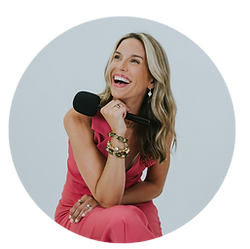


A Doctor's Burnout Story: Her Body Quit Half a Mile From the Finish
Think about the last big thing you pulled off. The promotion, the project, the race you trained for. How long did you sit in it before your brain jumped to what is next? My guest this week, Dr. Joanne Wu, spent 12 years in traditional medicine and got right to the brink of burnout, and it took her body giving out on a trail to make the lesson stick.
Joanne's parents immigrated from Hong Kong and both became nurses as second careers, so she grew up watching people chase a dream and refuse to quit. She went to medical school knowing she wanted to be a healer, then kept going. Eighteen years studying yoga. Fifteen years teaching it. Reiki. Medical acupuncture trained at Harvard. Food as medicine. After 12 years inside the traditional health care system, watching physician burnout everywhere and standing at the edge of it herself, she went back for an MBA so she could actually change the model instead of surviving it. Today she is a strategic board advisor, an integrative and functional physician, and the founder of Fit2bWell.
Then came the trail race. She had told herself she wanted to run an ultra before her knees gave out, so she dropped into a half marathon trail race without training hard for it. She was running a good clip. With half a mile left, her body simply quit. She ended up on the ground, crying, strangers stopping to hand her food until she could get up and finish. In her words, it woke me up that I thought that I could push.
What she teaches now is the practice of enough. Not lowering the bar, but building the ability to sit in this moment, unattached to the next milestone, and be genuinely fulfilled by it. That practice has an audience. The American Medical Association found that 41.9% of physicians reported at least one symptom of burnout in 2025, down from 48.2% in 2023, and its research also shows women physicians report higher burnout and about 33% lower odds of being satisfied with work-life integration than their male colleagues. The people who are best at pushing are the ones most likely to push straight past the warning.
You do not need an MD to recognize your own version of this. Deloitte's 2025 Women @ Work study, which surveyed 7,500 women across 15 countries, found only about half of women rate their mental health as good and just four in 10 feel able to switch off from work. Joanne's reframe is the part I want you to keep. Backing off, canceling the course, saying no, pausing the training plan, that is not failure. She calls it a sign of courage. Her mantra is three words long and she says it every day. Let it go.
TRANSCRIPT:
Erica: Hey, girl. By now, you know I have Her Collective, my online community for ambitious women who are done doing it alone. Her Collective is for the women who are smart, capable, and driven, but they find themselves stuck on the sticky floors like self doubt, burnout, and waiting for permission that quite honestly never comes. Inside HER, you get more than motivation. You get real support, real strategies, and real momentum.
Erica: We work on things like clarifying what you want now and what's coming next, building confidence without burning yourself out, navigating hard conversations, career moves, and leadership moments with clarity, and surrounding yourself with women who actually get it. This isn't about hustling harder. It's about moving intentionally with the right tools and the right people in your corner. If you're ready to stop spinning, start choosing yourself, and build a career in life that actually feels aligned, I'd love to welcome you inside her collective. You can learn more and join us at www.joinhercollective.com.
Erica: Because honestly, girl, you were never meant to do this alone.
Erica: I'm your host, Erica Rooney, and today, I have doctor Joanne Wu. Now Joanne is the president at WithHealth Medical Group, and WithHealth delivers on the promise of precision care by changing the health care experience to improve employee health and employer outcomes. Joanne is a strategic board advisor, an entrepreneur and educator, an integrative and functional position, an organizational well-being leader, and a yoga and health coach. So, Joanne, welcome.
Erica: I'm excited to have you today.
Joanne: I'm excited to be here. Thank you.
Erica: Awesome. So I would love to hear a little bit more about your journey, kind of how you have all of these things that are going on with you from being an entrepreneur and educator, the physician in you, the yoga coach in you, all of the things, just tell me everything.
Joanne: Well, I, always knew I wanted to be a physician healer. My parents were both nurses. My father later became a nurse practitioner, and both of them actually these were the second careers we immigrated from Hong Kong, and I really saw their resiliency and chasing after their dreams of taking care of people. And then in medical school, I realized that there was a portion of healing that was ignored or undervalued, which was this I would call more Eastern approach of medicine, more natural medicine. That was before Andrew Weil made a big with integrative and holistic medicine.
Joanne: And so I said, well, why not dabble in learning a little bit more about all these things? And yoga was my really first love and first passion. I was always a competitive athlete, and my triathlon coach at that time frame was was telling me about this thing called yoga, mostly to improve my sports performance.
Erica: Yeah.
Joanne: And when I started doing it, I realized that there was this mind body component that I I never really discovered before. And this idea of being more compassionate with self and feeling more connected. And I wanted to teach it. I wanted to share it. So just like diving deep into medical school, I decided to dive deeper into yoga and yoga therapy, learned from a fantastic array of teachers over eighteen years or so and teaching for over fifteen years, and it's just a continual love and practice.
Joanne: And during that time, I I learned about other complimentary modalities like Reiki, which is a form of energy healing, acupuncture, I trained at Harvard, and food as nutrition. Just, again, living inspired every day, and that's just really grounded me in terms of how I would provide care. After twelve years of of really working hard in the traditional health care system, doing, I would call, quote, quote, normal, what people perceive as medicine, I decided that medical school, didn't give me enough business knowledge to excel in transforming the model of health care, which is an area that I was I became really passionate about. I could see a lot of burnout amongst physicians and nearly at the brink of it on my own and and really wanted to to fix the broken parts of health care. So going back to form my MBA, I came out hungry to really dive into strategy and innovation.
Joanne: And, with health was an opportunity that came on my lap around COVID and digital health boom. So here I am, really continue to pave ways and speaking out my truth and continuing to live inspired.
Erica: No. I love it. And there's so much, I think, that you could do just with your background in, in healthcare and then your MBA and physician burnout and all of that. I know that's a huge, huge problem. And just bringing in yoga and different types of integrative medicine in there to really explore different ways to heal.
Erica: It's not just all chemistry. Right? My mother's a nurse. She always says better living through chemistry, which I'm all for it. But kind of getting down to that next layer.
Erica: Right? What's causing the stress that needs the medication? What's causing the burnout? What's causing the anxiety that's meeting the Xanax? All of those things.
Erica: So I think that's really cool how you integrated all of that. So let's talk about your sticky floor because this is a lot of awesome success that I think you've achieved. So talk to me a little bit about your sticky floor moment and what that was like for you.
Joanne: So as I mentioned, the yoga practice I've groomed over the years has really helped me connect better with self. Self. And through each practice, I feel like I'm peeling my own layer of onions. I like to use that example because there's all these layers that kind of create this surface that we see. And one of the themes that I constantly had to come back to, because it's a practice, is this idea of myself holding me back and really being happy in this moment and being okay with enough.
Joanne: Especially for high achievers, we're constantly searching to be better. Right? We have this growth mindset of really saying, well, I know this is what I know, but there's all this stuff that's out there. And I'm certainly like that and I thrive off of that energy, but there is this idea of saying, well, for now, this is enough and I'm fulfilled. There's this non attachment to the growth so that you stay really present and authentic itself.
Joanne: And I think it's also bringing back to self love and self compassion, which is this thing that I think is more tricky for women. And the more that I spend time with my women colleagues and we share in these stories that can really keep us stuck at times.
Erica: Yeah. One thing that you said that really brings true for me is like when, when you have a very high achiever, who's always looking for that next best thing. Like every time I've landed the next thing, the next career, the next milestone, I don't take time to sit in that and enjoy getting there. Right? That big milestone.
Erica: I'm always like, great. I got this role. What's next? What book do I need to read? What course do I need to take?
Erica: Like, okay, I did this. I'm a big runner. Right. So putting it back into, okay, I ran this half marathon. Now I need to do a full marathon.
Erica: I was so crazy to the point that one time I was like, I've gotta do an ultra marathon, but I've got an ultra runner, but like it was out there. So I felt like I had to entertain that idea. And then somehow reality smacked me upside the head that I was never going to be a 50 miler nor did I mean to be. Right.
Joanne: So how, how
Erica: do you think we can become comfortable right. To take the pause and enjoy that moment of success, right? Whether you've landed the job or you've conquered a new pose in yoga that my handstand or something crazy. Like how can you take the moment to celebrate that and all the work that went into that
Erica: before feeling like we have
Erica: to dive into the next thing?
Erica: Hey there, listeners. If you have ever felt like you're stuck in a place, held back by self doubt, perfectionism, or that pesky inner critic, you're not alone. We all face those sticky floors that keep us from reaching the heights we dream of. But guess what? It's time to shatter those limiting beliefs and toxic behaviors to uncover infinite possibilities.
Erica: My book, Glass Ceilings and Sticky Floors, is your ultimate guide to smashing through barriers, overcoming limiting beliefs, and stepping into your full potential. This book has been endorsed by none other than the great Mel Robbins, best selling author and motivational powerhouse. It's also been featured in Success Magazine, so you know it's packed with insights that work. Inside, you'll find real life sticky floor stories, practical strategies to help you navigate your own sticky floor moments, and a whole lot of inspiration to keep you climbing. This isn't just a book.
Erica: It's your roadmap to success, confidence, and freedom. Grab your copy of Glass Ceilings and Sticky Floors today at www.ericaandersonrooney.com.
Erica: Whether you're in
Erica: the boardroom, the classroom, or just starting out, this book is for you because no one, and I mean no one, deserves to stay stuck, no one deserves to feel small, and you have glass ceilings to shatter. Let's do this.
Joanne: So there was this you and I are pretty active on LinkedIn, and and I love the the community that's there just so positive and and uplifting. And there was this article that one of my colleagues in Atlanta, Shane Jackson, posted about boredom, about this idea of letting ourselves be bored. Because I think that moment of pause sometimes triggers anxiety in us. Right? This trigger is this unknown.
Joanne: It's like, oh, this can't be like this can't be it. There's this the second guessing that can happen. And how do we train ourselves to not translate that feeling of anxiety or boredom into saying, well, I'm not enough. That's a big leap. Right?
Joanne: And that's a story that we're trying to fix. It's just that no, actually this moment where you just feel at ease, at peace, that levity that there's this not this thing that's urging you to attend to or anything. Right. It's great. The silence.
Joanne: I don't know if you've ever done scuba diving before, have you?
Erica: No. I've never done that.
Joanne: Okay. So when you have scuba dive, like you literally all you hear is your breath. And mind you, as a yogi, I'm used to breathing out loud and hearing my breath in the zone. Yeah. But it's I I'm usually listening to a voice or something, unless it's out in nature.
Joanne: But it when you're underwater, that's literally all you hear is that breath, that meditative echo of back and forth. And when I first started doing it, it just had these palpitations. I'm like, oh my gosh, I'm truly alone, but really I'm not. I missed other things. And so I think this is the concept where, we just have to practice more sitting, sitting alone and sitting in beeping, But that's a, that's a practice that's, that's hard.
Joanne: But when, especially our to do list never stops or, and especially when you become a parent or, you're running different organizations, there's always something, but it is good to even if it's just a couple minutes a day, just let yourself sit and be bored, not worrying about the next thing. It's not easy.
Erica: Yeah. And I think because we all have a smartphone, right, with social media and LinkedIn, and like like you said, there's always something to be doing. Like the second we sit down on the couch at the end of the day, checking off our whole to do list, we pick up our phone. And even if it's that mindless scrolling, it takes your brain away from that board activity. But I mean, like you're just constantly looking at something, having that stimulation.
Erica: You're really not truly under the water to go back to the scuba diving thing where you are only alone with your thoughts and just present with yourself. So I think having to take on that practice of being very vigilant and not picking up your phone and inviting yourself to sit with your thoughts in the quiet to be present right there and not just diving head first into social media or something like that is, is challenging.
Joanne: It is. I would have to say how I got into doing meditation was through yoga, was through the active motion, the physical parts of yoga. And then I really started to embrace the sitting piece and the meditation piece. And I wasn't able to really let myself be alone alone for long periods of time until I started diving deep into hiking over the last three years. I, because I just didn't trust myself enough to get lost in it.
Joanne: And then when I started hiking more and understanding trails and looking around me, I didn't have to look at my all trails or my GPS anymore. I didn't have to look for those marks as much anymore. I started to really understand my environment, understand and trust my steps. All of us, it's, it's a, it's a journey. It's a practice.
Joanne: And, but it's so exciting though. It's so fun. You, and you need to those moments of rest where you could just accept and have some non judgment non attachment to what the next thing is supposed to be.
Erica: Yeah. So you talked a lot about peeling the onion and providing these moments of quiet too, as well, so that you can peel the onion. How do you think other people, or how did you really get comfortable with sitting in the silence so that you can peel back those layers and get a little bit deeper?
Joanne: It started off with, again, an active motion of doing whether it's a hiking or the yoga, then then writing. I did got dove deep into journaling, you know, my gratitude journals and stuff. Just those moments where I would have some accommodating physical activity to help get me there mentally. Yeah. Now I just let myself drink my cup of coffee every morning and sit until I get my day going.
Joanne: And I used to have a very difficult time sitting beyond my ten, fifteen minutes, even in meditation. Now I just sit for like an hour in the morning, petting my dog and writing a couple things down and just let myself space out a little bit.
Erica: Yeah. Journaling is something that has totally helped me as well. Just kind of disconnect from the external noise. And it's fun because I like to look back at some of those things and I'm like, half of this is just like babble That doesn't even make sense, but it's that act of getting it out of my brain and onto paper that provides me a little bit of clarity as I move forward with day.
Joanne: It's a detox. Yeah. Yeah.
Erica: It's one
Joanne: of the first it's one of the first things I recommend to people who have racing thoughts at night when they sleep, as opposed to taking a med. I usually just say, if you have those racing thoughts or these feelings, almost like palpitations, they write it down, let that be your buddy. So then you can start letting it go. And I
Erica: think what's challenging is is the doing the work piece. Right? Because you talk about like journal instead of take take a medication. Right? But everybody's first thought is I I can't sleep at night.
Erica: I need to go see the doctor and get a sleeping pill, or I need to take a melatonin, or I need to have more wine or something to put myself to sleep and stop my thoughts. But maybe it's not about stopping your thoughts so much, but what you said, it's about detoxing that brain. Just take a few minutes and journal it out and then see how it goes. Because otherwise you just let that build up, build up, build up until, like you said, you're waking up in the middle of the night and you have these racing thoughts, probably a lot of anxiety.
Joanne: Yeah. And we we don't even realize it a lot of times when we start entering that beginning part of the spiral Mhmm. And then it it tips. So the practice of being, again, resting or saying enough's enough helps you become more attuned. You know, again, you're tuning your brain, you're tuning your spirit, you're tuning your energy.
Joanne: So where you're starting to hit that frame and you need to pull back.
Erica: So one of my questions I think is because I'm a very much a growth deadline site. I told you I struggled with always, and I still struggle with this, always going to the what's next thing. What certification should I do? What book should I read? How do you think someone like me maybe can take a minute to continue to grow?
Erica: Right. Because I enjoy those things, but do it as at a pace that is not so hectic to where I can enjoy the process a little more.
Joanne: I think what has helped me and some of the folks that I have coached and guided is there's sometimes when we make a decision, right. We just say, well, we made that decision, so we should continue with it. Right. And then we have this idea, this preconceived idea, the story that we've created in our head saying that we have to go at X pace. Right.
Joanne: And then if life throws a wrench at us and so forth, we know we starting to notice that that X pace is probably not gonna work instead of saying, well, I'm gonna back off, which sometimes can equal in our brains failure. Right. Which can be very difficult for people who are productive. We push harder. We'll say, okay, well, we'll go even faster to get this out of the way so that life can continue with these other things that we didn't expect.
Joanne: And I have, started, and this is not doing it alone. And this is through the help of so many people in my trusted circle to really say, what taking a step back and putting a pause on this training or this course or saying no, right. Really refreshing my boundaries is not a sign of failure. It's a sign of courage. It really is a sign of us saying, well, I'm not, I'm not worth this anxiety.
Joanne: Like that's, that's not the purpose of this. So no, I'm actually gonna be smart for myself and for all the things that I have in front of me and just say, no, I'm gonna stop. I'm gonna back off. I'm gonna cancel this course. I'm gonna do this, but it's not easy to, to, to reframe, right?
Joanne: To pivot, retell your narrative. It takes again, this moment of being and letting yourself go and forgiving yourself for being so harsh sometimes.
Erica: Yeah. No. I like that you used the word courage too, because that's one of my core values is to always take whenever I'm struggling with a decision or at what pace to move or what to do, I always pause and ask myself, like, what's the courageous thing to do. Right. And sometimes the courageous thing is not to kill myself to get to the end point in a certain amount of time or whatever.
Erica: Sometimes the courageous thing is to admit that maybe that's not for me anymore. Or maybe that what my end result should be is not originally what I had thought into admit that and accept that and take a different path. So I love that you brought that into courage because it kind of connected some dots for me in my brain.
Joanne: But it takes it takes stumbling sometimes. It takes falling. It takes crippling. So I have to say one of my pivotal moments is funny because I I remember we talked about how we were both runners And there was actually this moment where I said and I ran a lot of marathons and triathons too, but it's been a gap. And I told myself, well, I really wanna run an ultra before an ultra two before my knees give up.
Joanne: And I was not training as hard when I decided to go into trail running. I thought trails would be easier on my knees. And there was this race I was just like, oh, yeah. I can just pop into this half marathon trail race. And I remember this was about a year, year and a half ago, and I was running a pretty good clip.
Joanne: And then my last, like, half a mile, my body just gave out. I literally laid on the ground crippling, crying, and all these people around me. And I just thought to myself, I was like, Joy, why? What? What?
Joanne: What are you doing? What am I doing? And at the end, like I, after resting and being, because my body just shut down, I was able to get to the end after some people gave me nourishment and so forth, but it woke me up. It woke me up that I thought that I could push. Yeah.
Joanne: And I was just like, oh, yeah, I can do this training this way, and be more compassionate myself, but my body needed like but it's a balance, and it does take quality. It does take tripping, and it does take that work and that practice to to to go back to it. And it's okay. That's how life is. No one gets to utopia nirvana.
Joanne: Right? That's why it's utopia nirvana.
Erica: Right. Right.
Joanne: It's not the summit of a mountain. There's a range of mountains. And as long as we embrace that a little bit, again, stop being so harsh on ourselves.
Erica: Mhmm. Yeah.
Joanne: I think the narrative will pit pivot.
Erica: Yeah. So I'd love to talk you mentioned your trusted circle, and I would love to talk a little bit about the power of your tribe and how do you lean on this trusted circle to kinda get you through some of these sticky floors.
Joanne: I have a a very diverse trusted circle. And I give shout outs to some of my LinkedIn posts recently. I've seen others posts, but, Asana, who is one of, my, chief community members, very active on LinkedIn and the technology space. And she posted about her tribe. She didn't call her trusted circle her tribe and how there was such diversity.
Joanne: And it totally resonated with me because we need someone to call us out on our stuff. So you, sometimes you need some people in your trusted circle that chances are they're going to challenge your status quo. And then you need people in your trusted circle that when you need that really deep, genuine, comforted hug for just that moment to say nothing at all, that's someone that's in your trusted circle. Right. And then someone who is really not your best friend, you may have fallen out of touch, but professionally, it's very attuned with what you're doing.
Joanne: And it's like that, that mentor that can, can really align with you out in the field and what you do. The, the trusted circle I've groomed over the years includes my dog, which is now who is sitting next to me right now, who has hiked bajillion mountains with me. It's a little French bulldog in the last couple years. And he just he doesn't say anything. I just walk in next to me.
Joanne: Sometimes we get in each other's way, but he's there. And I know that he'll always be next to me because there's just that loyalty that's there. And then I have one of my best girlfriends that we met through yoga who can call me in the middle of the night. We can call each other like that with those minute panic attacks. And and, and we don't have to even say anything like that.
Joanne: We don't have to start off with, I'm sorry. I'm waking you. There's just this expectation that or this knowledge and this trust that we're there for each other. And these moments where we go back to these people that we know, the only goal is just to be who they are, not necessarily be there for me because they're, they're parts of trusted circle for other people. I think it's, it's wonderful.
Joanne: And there have been times, especially during I'm not ashamed to say this as a physician taking care of people during a time of great uncertainty. I had to go see a professional counselor for a pretty regular period of time to make sure that I could be my best so I could serve other people. Caregivers, givers in general, we need those moments to really say, I gotta give back to myself.
Erica: Yep. No. I'm a huge believer in having your tribe. Right? Or or I actually just read a good book by, Brooke Baldwin.
Erica: She calls it huddle. And that's what she calls all of her close female groups or her her close female group is a huddle. And she talks about all these different huddles that she actually studied and observed over time and how they operated and supported each other during tough times, easy times, celebrations, things like that. So I think it's really cool. I too am a member of the dog tribe.
Erica: I have I have new dog. I'm very excited. I just got her actually only a week ago because my very my first dog that I had for, like, fourteen years on my own after college and everything like that passed away in January, and I thought I would not have another dog for, like, the longest time. And then here we are six months later, and I was like, I need your new companion. It's that silence, just presence, I guess, where they're always looking.
Erica: My and she is. She's laying on the couch behind me right now just kinda snuggling away, but I have that. And then I'm a big believer in professional tribes around you. Right? Like you said, your trusted counselor or therapist.
Erica: I have one of those too, right, that I can lean on during that keeps me level. Right? And my therapist does a really great job of asking me all the time, like, how are you taking care of you right now? Because I'll get on with her and I tell her all the things that I'm doing. And she's like, okay, great.
Erica: That's all wonderful. But, like, how are you taking care of you this week? And I'll be like, oh, it's good. Good question. But it reminds me to kind of come back to center.
Erica: Okay. And then it, it also challenged me too, because I'm like, well, shit. I wanna have a good answer for her when I talk to her next week. Tell her I did yoga, tell her I took a bubble bath, whatever. But having those people too at different layers, right?
Erica: Your professional huddler tribe. You're the ones who care for you. Right? So it was your therapist, family and friends, things like that. And then other people just out in the community, sometimes even your tribe on LinkedIn and professional networks, when you see other people post those types of reminders, remind you to be present, take a moment.
Erica: I saw the one where you put hiking with your dog actually over the weekend. I think when, or I saw it over the weekends. Absolutely. Well, Joanne, one question I always ask is what would you tell the Joanne from years ago? Right.
Erica: You're in medical school, you're getting your MBA. You're doing all the things. What kind of advice would you give to yourself all those years ago when you were kind of struggling with that, that, that self layer connecting and the onion analogy and, and pausing to peel back those layers?
Joanne: I think my younger cell always had something to prove. And I don't want to necessarily put blame on my family because I am so inspired and loved by my family. And I I look up to my parents a lot, but there is a cultural overlay around the time, especially when I was growing up where there was an expectation to be. And there was a goal that we're driving towards and what success looked like. Right.
Joanne: There was this picture that was clearly defined. And I thought to please my parents was equal to pleasing myself. Mhmm. And and so I it took a long time to really let that go and remind them and show them in the right words and languages. Because deep down, they they they love me for who I am, but there's this idea of, of feeling like success has to be in, in their picture.
Joanne: And then now I'm bold enough to, to paint my own picture. Right. Obviously in guiding people to do the same and really know that the best success is the sense of feeling fulfilled and non attached to the things that I'm striving for, because it's easy to just hang your hat up on them and then let yourself fall if if something just doesn't go the way that you had imagined or drained or hoped. And those peaks and valleys are usually the hardest to recover from because you're you're swaying from that serotonin and dopamine drive. Right?
Joanne: I am trying to find a more even keel now, even though there might be as aspirations to do great things. I'm just like, yeah, that's great. I hope to do it, but it's okay if that doesn't happen either.
Erica: Yeah. Because to take it back, like we are enough. Right? Like we don't have to keep doing more. We're not there's no end game here.
Erica: Right? The end game for everybody is saying we're all gonna die one day. So, like, let's enjoy those peaks and valleys and try to even them out as much as possible. One thing you said, I think I hear a lot is people going back to that, like the parent pleasing and the expectations that we perceive are set on ourselves, whether they really truly are by our parents and our upbringing or not. But I heard one woman say to me, I either had to be a doctor, a lawyer or a failure.
Erica: Like those are the three options. So it's so interesting this journey that we all, maybe not we all, but a lot of us where we have to kind of deviate from what we think is expected us of us and what we think is going to be successful to find what we truly find to be success. Right. Which could be a yoga and a health coach, or maybe it is being a lawyer who knows, but the real work is peeling back those layers of the onion that you described to figure out what that is for you.
Joanne: Yeah. It's not, it's not easy. Again, life is fluid. Right? So what is yesterday might not be now, but that's why doing the values work is important.
Joanne: I heard you say multiple times, encourage is one of my values. That's those are the north stars that we should kinda think about in life and that that's what's our rock and kinda hold the study. Our aims might change with time, but just kind of go with that flow.
Erica: I know it's important. Absolutely. Absolutely. So Joanne, where can people find you if they want to learn more about what you're doing with yoga and what you're doing in the community, how can they find you?
Joanne: The best way is if people like social media, I feel like that's a wonderful platform. So LinkedIn, I'm very, very active on, certainly my website is attached to my LinkedIn profile as well, but it's fit2bewell.com. I try to make myself pretty approachable to be contacted on social media, even if it's just the pain to say, Hey, I saw you talk about this other person. Can you link me to that person? I believe in the power of community and networking.
Joanne: People power. Yeah. We're not just people. We're just all humans and, genuinely, we just want each other to be happy and do the best we can out there.
Erica: Awesome. Yeah. And any favorite I love to ask this question too. Any favorite mantras or words that kind of help you focus throughout the day?
Joanne: I would have to say that for me, it's just let it go.
Erica: I like it. I need to, I need to adopt that one a lot more.
Joanne: It's not like it's not. Yeah. I'm not perfect at it, but it helps me a lot. It helps me let it be, let it go. But it's, mantras, rituals, all these are probably the best advice I can give people.
Joanne: Like having something that's steady and routine, something that you can go back to that that you trusted there is so helpful in our uncertain world. It just helps us tune out to tune in.
Erica: Awesome. Well, cool. Well, thank you so much for your time today. I think you dropped some awesome gems in here. I personally think I'm gonna make a sticky note that says let it go and put it on my laptop when we finish this.
Erica: But thank you so much, Joanne. It was so great talking to you.
Joanne: Thank you so much. I appreciate you.
Erica: Alright. Have a good one.
RESOURCES MENTIONED IN THIS EPISODE:
- Ready to stop doing it alone and get into rooms of power? Join HER Collective, Erica's community for ambitious women in corporate America.
- Never miss an episode of Glass Ceilings & Sticky Floors.
- Get Erica's book The AI Gap and start closing the gap for yourself.
- Glass Ceilings and Sticky Floors by Erica Anderson Rooney.
- Dr. Joanne Wu on LinkedIn.
- Huddle by Brooke Baldwin, the book on female tribes Erica mentions.
- Dr. Andrew Weil, who popularized integrative and holistic medicine.
- The AMA on the 2025 physician burnout rate.
- Deloitte's Women @ Work 2025 Global Outlook.
RELATED EPISODES:
FREQUENTLY ASKED QUESTIONS:
What causes physician burnout?
Dr. Joanne Wu points to a system that rewards pushing past your limits, plus the high achiever's habit of never sitting still long enough to register the cost. She spent 12 years in traditional medicine watching it happen around her and nearly hit it herself. The AMA found 41.9% of physicians reported at least one symptom of burnout in 2025, and women physicians report higher burnout and lower work-life integration than men.
What is a sticky floor?
A sticky floor is Erica Anderson Rooney's term for the limiting belief or toxic behavior that keeps you stuck, the thing that is coming from inside your own head rather than from the glass ceiling above you. Dr. Joanne Wu's sticky floor was the belief that she always had to be chasing the next thing to be worth something. Naming it is the first step to scraping your foot off it.
How do you stop chasing the next thing in your career?
Joanne calls it practicing enough. You build the ability to sit in the moment you are in, unattached to the next milestone, and let that be fulfilling on its own. Start small with a few minutes of deliberate quiet a day, a journal, or a walk with no phone. She also reframes stepping back as courage rather than failure, which is the permission most high achievers are waiting for.
MORE FROM ME
Follow me on Instagram @ericaandersonrooney and @joinhercollective
SUBSCRIBE & REVIEW
If you loved this episode, please take a moment to subscribe and leave a review on Apple Podcasts. Your support helps us reach more women who need these insights. Thank you for tuning in to the Glass Ceilings and Sticky Floor podcast. See you next week!
Hi, I'm Erica!
In the last 15 years, I climbed to Chief People Officer, 6x'd my income, walked away from a culture that stopped matching my values, wrote two books, and built HER Collective to help thousands of women rise to power and lead in the age of AI. I've learned a thing or two about smashing ceilings and closing gaps, and Glass Ceilings & Sticky Floors is where I open the playbook, the receipts, and the real stories to share it all with you.
_JPG.jpg)