


Hormones, Fatigue, and Why Your Labs Say You're Fine, with Jessica Van Antoine
If your hormone test came back “fine” and you still feel exhausted, this episode is for you. You cleaned up your diet. You work out. You get your seven or eight hours. And you are still crashing by 2:00 PM and snapping at the people you love most. My guest this week, Jessica Van Antoine, founder of Phoenix Functional Health, says that is not a willpower problem. It is a biology problem.
In 2012, Jessica was in her late 20s, working 90-hour weeks inside a wellness center, building a 500-hour nationally certified shiatsu program while taking it herself, and running on caffeine. Then, in the middle of a meeting, something snapped. It felt like glass cracking inside her body. She excused herself, went to her office, and cried on the floor under her desk. Functional lab testing showed her the biological imbalances behind the overwhelm and irritability. Once she resourced her body, she cut back to “only” 70-hour weeks and suddenly felt bigger than her responsibilities. Today she helps high-achieving female founders do the same.
So why does your doctor keep saying you are fine? Standard lab ranges come from the average of everyone who has ever taken that test, and the average person is not very healthy, so you only get flagged if you are an extreme outlier. Functional lab testing uses a narrower, optimal range drawn from people who are actually healthy, and it looks at all of your body’s systems at once, because a hormone imbalance is usually downstream of something else, like blood sugar, inflammation, or the gut. That gap is real. The McKinsey Health Institute and the World Economic Forum found that women spend 25% more of their lives in poor health than men, and McKinsey partner Anouk Petersen has said women have been treated “as though they are small men.”
Jessica turns those lab results into her DRESS framework: diet, rest, exercise, stress reduction, and supplementation, personalized to what your body actually shows. Sometimes the fix is tiny. One of her clients, super fit and exhausted, was doing hour-long Peloton rides at 5:00 PM. They moved the ride to the morning so her cortisol had time to come down, and now she sleeps.
Here is why this matters right now. The 2025 Women in the Workplace report from McKinsey & Company and LeanIn.Org found that about 60% of senior-level women frequently felt burned out, compared with 50% of senior-level men, the highest level in five years. The grind is what got us here, and it is also the stickiest floor I have ever heard. Jessica’s reframe stopped me in my tracks: you are the asset through which everything else runs. Stop stacking wellness hacks you saw on Instagram, get the data, and take care of the asset first. There will be more of you for everyone else, and more of you left for yourself.
TRANSCRIPT:
Jessica Van Antoine: So the hormonal imbalance may be causing your symptoms, but what's causing the hormonal imbalance? Is it a blood sugar thing? Is it an inflammation thing? Is it something from the gut that's messing up with the gut-brain communication? So I really take the approach of looking at all of the systems at once, so we can understand how they're all working together and/or compensating for one another, and we can really understand the root cause.
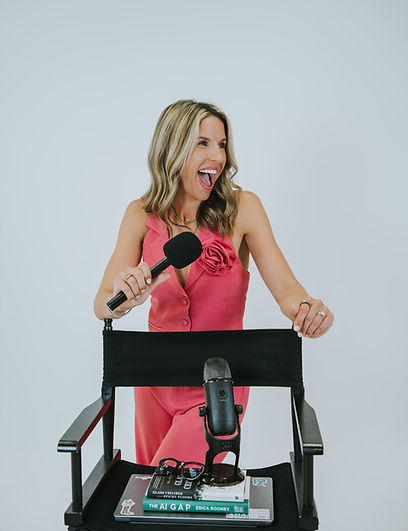
Erica Rooney: Welcome to Glass Ceilings and Sticky Floors, the podcast where we stop playing small, start calling things out, and actually do something about it. I'm your host, Erica Rooney, executive coach, speaker, and a little bit of a movement maker, and I'm on a mission to get more women into positions of power and keep them there.
Erica Rooney: Are you the woman who has cleaned up your diet, you exercise, you sleep seven, maybe eight hours a day, right? You do all the things you're supposed to be doing, and then you wake up and you're still tired, you lose your focus by 2:00 PM, you snap at the people that you love the most. Okay, y'all, sounds a little bit like me.
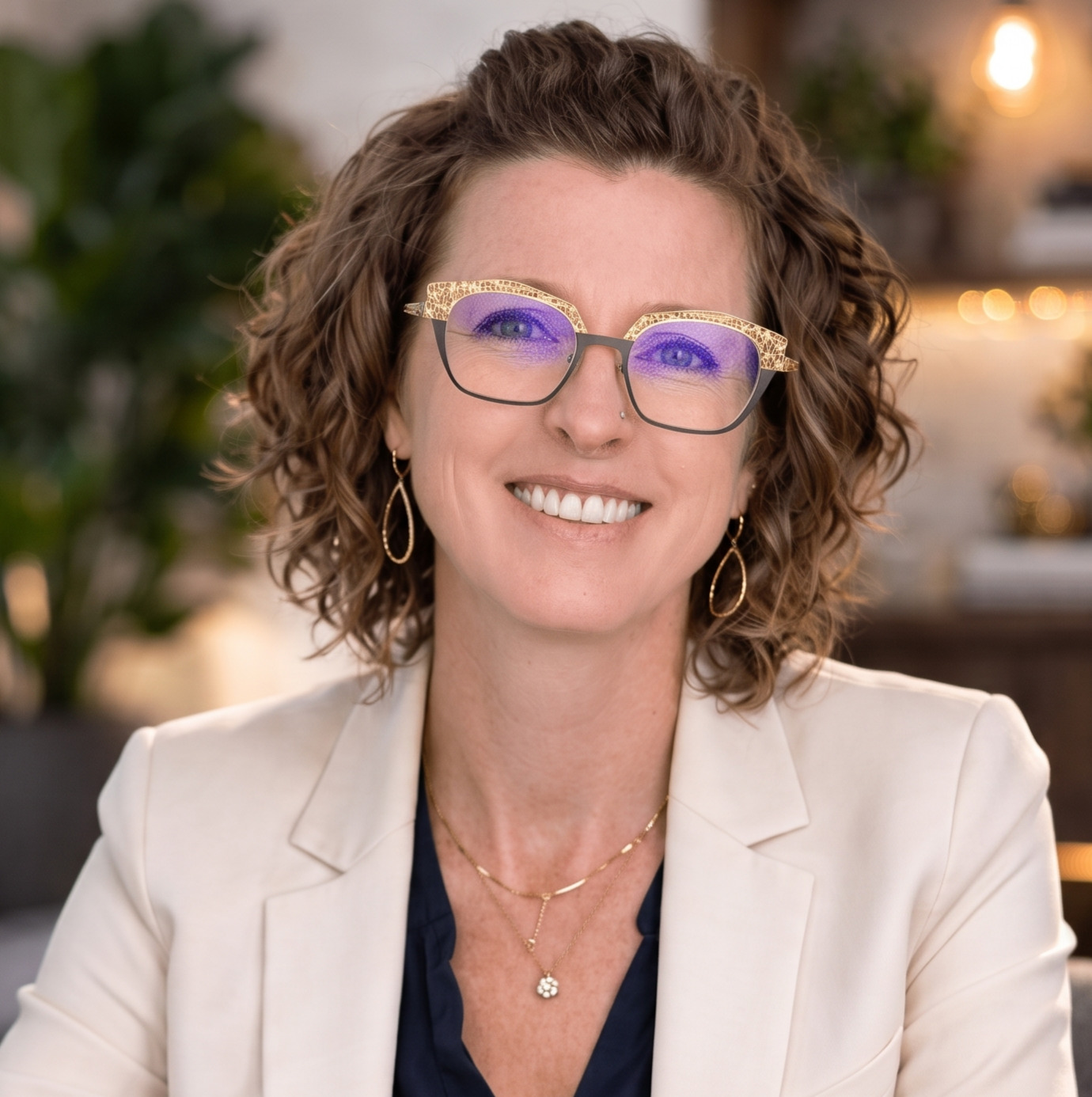
Might be me. Might be a good thing we're having this conversation. Y'all, today's guest says that ain't a willpower problem, that it is a biology problem. And the reason that nothing that you have tried has stuck is because that you've just been guessing instead of testing. Now, Jessica Van Antoine is the founder of Phoenix Functional Health, a performance health practice that was built specifically for high-achieving female founders. Now, her personal story, it is, y'all, it is the one that this show was built for, okay? She was working 90 hour a week, I know y'all been there, inside a fast-growing company, pushing through the exhaustion, masking it with caffeine, and then one day in the middle of the meeting, she had to excuse herself, go to her office, and curl up on the floor under her desk to cry because she just couldn't handle it anymore.
Functional lab testing is what changed everything for her, and now she helps other female founders do the same. Jessica, thank you so much for being on the show. I can't wait to dive into all the things. We have so much to talk about. How are you?
Jessica Van Antoine: I'm doing great. Thank you so much for that intro. I found myself smiling listening to my own story, though it was one of the low points of my life for sure. But it's one of those things where it put me on the path that I'm on now, and I could not be happier, so
Erica Rooney: Yes. We're on the other side of it. But first thing, so I've already teased out that story a little bit, and I love that you share that publicly because I think so many of us, first of all, we just pretend like it doesn't happen and we don't wanna talk about it publicly.
But tell me a little bit more about that. Like, how did you find yourself in that environment, and when did you know that, this has got to change?
Jessica Van Antoine: I was doing a lot at that time, like helping this wellness... It was a wellness center, no less, for which I was working 90-hour weeks. I was also helping build a 500-hour nationally certified shiatsu program, which is the body work version of acupuncture, basically. So studying Chinese medicine and I was also taking that advanced training course, taking that 500-hour course as we were building it.
So I was overwhelmed in so many aspects of my life, and I had, exactly like you said in the intro, I was snapping at people. I was not sleeping enough. I was working too much, over-relying on caffeine. And for me, particularly the irritability was like one of the signs that something was off because I'm generally a really kind of easygoing person, super solutions-oriented, and very capable. But in this meeting, something just snapped inside me. I felt like I had become so overwhelmed, spread thin, so fragile, that if someone so much as said my name, it felt like glass was cracking inside my body. Like I had nothing else to give. It was just like, “What do you want? No, I can't. I...” and in that moment, like the glass did shatter, and so I had to excuse myself and go ugly cry on the floor underneath my desk.
And it just, was a sign to me that, something had to change. And the functional labs actually revealed to me the fundamental biological imbalances that were predisposing me to a sense of overwhelm, to fragility, to irritability, right?
Jessica Van Antoine: And, I found that once I resourced my body, that all of a sudden not much about my external circumstances changed, not much about my responsibilities and obligations changed.
I did cut back and start only working 70-hour weeks, but right? But it was just, again, my body was resourced at the cellular level, and so I just felt bigger than my responsibilities. All of a sudden it was like, “Oh, I got this. No problem.”
Erica Rooney: Yeah. And one thing I would love to unpack is you working these incredibly insane weeks that, I don't even know how you find 90 hours to work. It's that's not uncommon for women for so many reasons, but you are in the wellness industry and your brain knows what you need to be doing, yet we're going, what do you think it was internally that pushed you to work at that level?
Jessica Van Antoine: I was young. I was in my late 20s. It was like my first kind of real opportunity to, be in a leadership role, and so I really wanted to prove myself. And so I think that, I've always had this sort of get recognition and feel self-worth from accomplishing, from achieving. And so that was definitely driving, that behavior.
Erica Rooney: Okay. But let's not gloss over that because that is something that I think so many women do not uncover until they're like well into the C-suite and they are finally recognizing that they are tying their worth and their value to external recognition or validation. And I'd love to hear from you, like where did that click for you?
And then what did you do to kinda step into those changes? And then I wanna dive into all things functional medicine
Jessica Van Antoine: Yeah. It was really a process for me. That was in 2012 that I experienced that breakdown. And at that time, I was three years into a massage therapy career that, unveiled so much. Going through massage school, you'll get more massage more frequently than you ever will in your whole life.
And, it becomes very apparent that your body really does have store emotions essentially, and have a story to tell. So when you're releasing that much and getting that much frequent human touch, a lot comes to the surface. And so I'm really lucky that I went to a school that, focused on the emotional aspect of our beings and the spiritual aspect of our beings in addition to the massage.
So we weren't just learning mechanical techniques that we perform on someone else's body. We were also learning how it all integrates, and that's part of why I was really drawn to Chinese medicine and shiatsu, is because of the framework of how it interprets the, personality and the emotional and mental bodies as they show up through the physical body.
It just became this lens through which everything else became clear. And so that really helped me open my heart and, start to cultivate that self-love that we all want, that we all desire, right?
And that people talk about. It's like, “Oh, just cultivate self-love.” “Oh, just have some self-compassion.” It's like, “Okay, but how do I actually do that?” Like it's easy to say that and to have an intellectual understanding of “Yes, I need to do that,” but then how to actually get there. And it's a process.
It's a practice like meditation. And that's why these things are called practices, It's not just like something you go do and perform.
Erica Rooney: It ain't a flu shot, ladies. You have to do it every day. Now, let me ask you this because I've had other wellness practitioners on here and things, and we talk about meditation and, I know the importance of meditation. But if you can't tell, I'm a very fast-paced person. I'm very high energy, sitting and does not come naturally to me. Do I have to do that or is there something else I can do?
Jessica Van Antoine: There are, shortcuts you can take certainly, like, vagus nerve exercises. And these days with all the wearables and technology, there are like different devices that you can wear that are supposed to bring your, brainwaves into like the theta state or the delta state, kind of the slower brainwaves.
So there are some shortcuts
Erica Rooney: Can you do things like walking meditations or stuff like that? 'Cause, I'm just a
Jessica Van Antoine: Absolutely. I definitely think that beginners should start with guided meditation so that there's at least something, so it's not just silence and then you're just, hearing your mind race, that there's something that you can focus on. And that's why Qigong, I think, is actually a beautiful sort of intermediary for someone who's, never practiced, sitting meditation.
Because you're right, it is hard to go from being super energized and fast-moving and all over the place to, stillness. Not only physical stillness, but also that mental stillness, right? And so Qigong is a moving meditation. It gives you movements to focus on. And the way that I teach it, you're not only focused on the mechanics of what you're doing, and so I, often draw my students' attentions to, what their wrist is doing, what their arm is doing, how that's moving with their elbow, how it's moving with their shoulders, how that's, flowing through the rest of the body.
So there's a lot to focus on while you're moving, in addition to the sort of like mental, emotional cultivation of, the emotional state that we're trying to bring about, right? Like really feeling that state of unconditional love.
Erica Rooney: To noodle on there.
Jessica Van Antoine: Yeah.
Erica Rooney: But I do wanna talk about functional lab testing, and I wanna preface it with, I'm a big science girly. I love science, I love medicine, I love things that can be proven with data. But what I also know is that as it relates to, women's health and things like that, I feel like we've been left out of the data, and I think there's so many women who, for example, I, went and did hormone testing, and they're like, “You're fine.
Go back.” And it's like, “No, I'm not fine. I'm telling you these things.” So what is the difference or what makes functional lab testing, the solution rather than, me spending thousands of dollars to be told I'm fine when I know there's something going on?
Jessica Van Antoine: My first question for you would be like, was that hormone testing through a traditional, like Western medical doctor? Yes. Okay. So therein lies,
Erica Rooney: One, don't do that
Jessica Van Antoine: Well, therein lies a huge difference, right? Because the normal ranges that they're evaluating when they tell you like everything is fine, is actually taken from the average of, in the entire population who's ever taken that test.
And so if you think about the average American, not very healthy, right? And then you also get your standard bell curve of here's the, minimum that we wanna see, here's the maximum that we wanna see, which is kind of a broad range. But so you only get flagged as having an issue if you're a really extreme outlier in one direction or the other.
So functional health, we look at a much narrower range of values for what we consider to be normal, what we consider to be optimal. We're looking for 100% function essentially of, for example, the endocrine system that controls the hormones or any other system that we're looking at. We're looking at the capacity of its function.
At what level is it operating at 70% capacity or more like 95? And so there's one of the huge differences, like those ranges that we're looking at and we consider to be normal are taken from a much smaller subset of the population that, who are actually healthy. And so that's how we determine, what is, optimal.
Erica Rooney: Yeah. I met, after I spent the thousands of dollars on this traditional doctor, I met with a different hormone doctor, and I loved the way she phrased it, which was like optimal or, sorry, normal, with those air quotes, isn't necessarily optimal for you, right? And that we're all different, and I was like, “Yeah.”
And especially for women with our hormones all over the place, like when you go do those things, it's taken at a point in time. So you have to think about doing it at different times during your cycle. I don't know all the details. I'm not a doctor. But talk to me more about what functional lab testing is and like what you can get from it.
Jessica Van Antoine: So functional lab testing, again, from that broader perspective, it's all about the function of the systems of your body. Are they functioning optimally? And are you experiencing a life that is symptom-free? And then it's all about discovery. So my approach to functional health is looking at all of the systems of the body at once, because they don't operate in silos.
Jessica Van Antoine: So in the traditional Western approach, and even some people in the functional health world approach testing in such a way that you come in with your list of complaints, whatever you're experiencing. Someone develops a hypothesis as to what might be going on, where it might be coming from, whether it's the hormones or the adrenals or the thyroid, et cetera, et cetera.
They test that system. The results of that test either confirm or undermine that hypothesis, and then you go from there. But what that doesn't account for is that there are other systems in the body that are affecting the hormones. So if there is a hormonal imbalance, what is that being caused by, right?
So the hormonal imbalance may be causing your symptoms, but what's causing the hormonal imbalance? Is it a blood sugar thing? Is it an inflammation thing? Is it something from the gut that's messing up with the gut-brain communication? So I really take the approach of looking at all of the systems at once, so we can understand how they're all working together and/or compensating for one another, and we can really understand the root cause.
Erica Rooney: Interesting. Okay, and you always say, your body shouldn't be your bottleneck. And I love that. It connects with a doctor that we had on not too long ago. She was an ER doctor that found herself in the ER herself because of overworking. And she always said, “Your biology is the ceiling.” And so I see a lot of parallels here, but my question for you is for that woman who's like, they've done the mindset work, they're setting the boundaries, they've built the systems, but she still feels like she is just dragging herself through the day.
What's actually happening?
Jessica Van Antoine: Again, it's different for every person, and that's the other thing about functional health is that it's not a one-size-fits-all approach. We're really looking for, at that particular individual's biology to understand, again, the root cause of the fatigue, the poor sleep, the crashing in the afternoon, these kinds of things.
So there's really no one-size-fits-all answer to that. So, I'm sorry
Erica Rooney: Tell somebody, “Go get more sleep.” Oh my gosh, right? So many people tell me that. So if you had somebody that was like, “Hey, Jessica, I know you do this. I'm struggling to sleep. I'm always tired. It's just, what do I do?” What would be your first thing? Do you just send them off for lab testing, and then how does it work?
Jessica Van Antoine: So yes and no. So we start with some lab testing because I wanna understand how their body is functioning before any interventions. But it takes a while to get the lab tests back, and so in the meantime, we start looking at things like diet, your sleep hygiene, exercise practices, stress management techniques.
Those are all built into my program as well, because that is what is going to provide the long-term benefit, right? So it's not just about fixing your biology, 'cause you can fix that, but if it's your lifestyle that's, making your biology sort of compensate, then you're just gonna go back to the way that you were.
So it's a holistic approach, right? It's lifestyle and the physiology and the biology and the biochemistry. So we start looking at the particulars of diet. How many times a day are you eating? When are you eating? What are you eating? What are you doing after you eat? There's sleep hygiene, right?
Like you said, just go get more sleep. That's easier said than done. What if I'm not sleeping well? I can lay in bed for 10 hours tossing and turning, but that doesn't do me any good, right? But one of the things that I really focus on are the particular habits that are gonna move the needle the most for this person that's right in front of me.
And so that comes from just a deep dive into their lifestyle and medical history and what they're already doing, what they're not doing, and then layering on the lab data. And so it's all layers upon layers.
Erica Rooney: Very cool. Okay, and then your work specifically, you have a framework that you call the DRESS framework that stands for diet, rest, exercise, stress reduction, and supplementation. And I think what makes your approach different is that these aren't just like generic wellness recommendations. You're not just telling people to go get more sleep, like we just said, but they're specific to what their lab tests actually show.
And so what does that look like in practice?
Jessica Van Antoine: So I do test for food sensitivities, so that has huge implications for sort of that diet category. A lot of people find that they may be eating all the right things, in air quotes, but, eating a really healthy diet, getting enough protein, but they're eating things that their body is reactive to.
And so it's not an overt allergic reaction, but rather just creating some subtle inflammation in the body that is then interfering with things like hormone signaling and the gut-brain communication. And inflammation actually takes a lot of the body's resources to manage. So those are resources that then could otherwise be used for healing or immune function or digestion or cognitive capacity.
So the diet part of things definitely gets personalized to each individual. Now, we do also do some, kind of baseline level blood sugar work, making sure, kinda cutting out processed food and cutting out refined sugars, things like that. Again, every sort of, every category is, individualized to a person.
If you are already doing all the sleep hygiene stuff, like staying off of screens after dinner and using amber light, but you're still not sleeping well, then it's not a sleep hygiene issue. It has nothing to do with your habits. There's something physiological that's driving the tossing and turning you may be experiencing.
The exercise category, definitely as women age, we're... If you're tuned into the health and wellness conversation at all, you're hearing more and more about the importance of strength training, resistance training, not only for just health and longevity, but for the density of bones and osteoporosis prevention.
But the timing of that is important too. For example, I have one client who's super fit, but she... And she has so much trouble sleeping. She's exhausted all the time. And we just uncovered something super simple. She's doing these hour Peloton rides at, 5:00 in the evening, and then she can't wind down and go to sleep.
So we just switched her Peloton ride to the morning so that her body has the rest of the day to come down from, the cortisol that is produced, in that cardio intense workout. And now she's sleeping better, just by making that one subtle shift,
Erica Rooney: So my background is actually in health and wellness. I started as a personal trainer. I still do that to this day. It's crazy. But yes, another fun fact about Erica, that's actually where I'm headed right after this call is I have a personal training client that I've seen y'all for 17 years. But I think what happens, especially for a lot of high-achieving women, is we know we're supposed to be eating these things.
We know we're supposed to be working out. We know we're supposed to be meditating, and there's all of these things that keep piling up on our 90-hour work week that we're already doing. And so thinking about adding even just like a functional lab test is overwhelming in itself, right? I put off that hormone testing for over a year because I just didn't have the time to call.
And so when you think about all of these practices that make you healthy, that make the body, the mind, if you're talking to a woman who is really in the thick of it, she's like on the brink of burnout, maybe she's in burnout, where would you tell her to start?
Jessica Van Antoine: Part of the, work that I do with women also is helping them identify, what's really moving the needle for them so that we can take some of those things off their plate, so that they're not just, stacking another wellness habit on top of their already, like you said, super full schedule and adding another thing to their to-do list.
So it's really honing in on the, practices and habits that are going to affect where they are and where they want to go, where they want to be.
Erica Rooney: I think that's a big thing. And I don't know how you feel about this, but growing up in the health and wellness industry, I had a very certain picture of what it meant to work out and a very certain picture of what it meant to be healthy. And it was a very regimented like strength training, cardio training, mixing in yoga, all of the things.
And when it didn't work, I would go out and I would buy a meditation device to help me. Or, like if I look over here to my right, which you can't see, I've got a Peloton treadmill, a Peloton bike. I've got a red light therapy mat filled with crystals. What the hell, girl? Crystals on my floor, okay?
When I think about all of these things and the perfectionism that a lot of these women tie to it, do we have to be doing all of this or are there pieces of it that are more important depending on who you are?
Jessica Van Antoine: Definitely the latter. There are definitely pieces of it that are more important, depending on who you are. And this is the exact, population that I work with, women that are already, high achieving, and so they're go-getters. When they have a problem, they do what they know to address it.
So they buy the machine, they buy the crystal, they, you know, get the essential oil, they buy the supplement or whatever.
Erica Rooney: Girl, the essential... I only laugh 'cause I have the essential oil, and I also laugh because I feel like these high-achieving women, myself included, it's like, if I buy the thing, it's like this false sense of productivity, like this false sense of moving towards the goal.
Jessica Van Antoine: This is where functional labs like really come into play, right? Because outside of that, you're just guessing. You're just like jumping on the latest wellness bandwagon without actually understanding what it is that your body is asking for. So if it's, stress, management, like I bought the meditation cushion, but do I actually know how to shift my body into parasympathetic mode?
Just sitting on a cushion and breathing for 10 minutes doesn't necessarily get you there. And so nor does that help you identify what it feels like to be there, and therefore then be able to make that your new normal. I help women make sense of it all, essentially. You know what I mean?
Throw this thing out. You don't need that. This is what your body needs based on what the labs say, and then here are the wellness practices that will really help you get there based on, again, what your, body says through the lab data that we get. So whether it's cortisol regulation, whether it's hormonal regulation, whether it's, balancing your gut microbiome to facilitate communication with your brain and to help with cognitive clarity, to reduce inflammation.
There are wellness practices, that facilitate all of those different things. But if you're just randomly choosing this one and that one that you saw on Instagram or you saw some influencer touting, then, you're gonna
Erica Rooney: Laughing because I'm like, yeah, I definitely like... And I know this. I have done personal training for 20 plus years, but I will hear other women and I'm like, “Oh, yep, it's definitely my cortisol. Gotta be.” But y'all, I don't know sh*t about cortisol like in that sense.
Jessica Van Antoine: Yeah, if you're just guessing, you're gonna end up with, hours of your wellness hacks to do every day that actually just aren't really moving the needle for you. And then you're, like you said, you're still gonna be exhausted. You're still, gonna be overwhelmed.
You're still gonna be crashing in the afternoon. Let's make sense of it. Let's get some data and then develop a personalized plan based on what your body needs. And so like your cortisol point, like even one layer, okay, get your cortisol tested, but one layer below that, what's causing this cortisol imbalance?
Is it that your adrenals just can't keep up? Is it that it's being affected by your hormones? Is it that, you've just been in overdrive for too long and your adrenals are exhausted?
Erica Rooney: Probably all the above.
Jessica Van Antoine: Yeah.
Erica Rooney: Listening. But one of the things I really wanted to ask you about, and, this is going back to your experience working the 90-hour week, super stressed, right? So many of us who are in these high-level power positions, who are managing kids and home or a business and their clients and all of these things, the reason we are so successful is because we did push hard, and we grinded, and we made it through.
And so we're always setting ourselves up with that, of “I'm gonna push through this week. I'm gonna push through this quarter. I'm gonna get the kids through this thing.” That's what's made us successful, but it's also what is preventing our bodies from recovering and being in that optimal state.
And damn, that's the stickiest floor I have ever heard. So I would love for you to talk me through when you think about your time in your life and hitting that. What is the advice that you would give a woman who is just in that place, right? They are grinding. That is what has made them successful.
It is what is making them successful, but it is also the bottleneck.
Jessica Van Antoine: You're the asset through which everything else runs. So if you're not taking care of the main asset in your life, then everything else is gonna feel harder, right? Like you said, we as women are givers. We take care of everyone and everything else before we take care of ourselves. We're always putting ourselves on the back burner.
“I'm gonna do this when...,” “I'm gonna do this until...,” “I'm gonna push through until...” and you give so much of yourself to everything and everyone else that then you just feel like there's nothing left for yourself. There's nothing left of you. So you show up at your kid's soccer game, for example, and you're physically present, but you're not mentally or emotionally there.
You're just sitting in your chair, so drained, you're, like, avoiding conversation with other parents because the idea of that just feels so exhausting, just, idle small talk. And it robs everyone and everything else of the best of you, of who you are and what makes you So when women finally choose to invest in themselves in this way, not only is there more of them for all of those other things, there's more of them left for themselves
Erica Rooney: It's true. And I was actually having a little chat with my ChatGPT the other day, 'cause girl knows I'm all up into the AI. But I was feeling like so much jaw tension because I clench my jaw when I'm stressed. It's a little signal that I like to ignore from time to time. And I was also scrolling through TikTok or whatever.
Again, another dopamine hitter, probably shouldn't be doing that either. But I saw somebody that I knew, and she had said, “I recognized I was overworking, so I took a step back to allow my nervous system to regulate and really build in that white space.” And so I heard that, pushed it aside, went back to my busy life.
And when I was talking with my ChatGPT, it literally was asking me the questions of “Tell me your routine. What are you doing?” And it said to me like, “Erica, you are waking up and you are immediately grinding. Like you are working, You're immediately going into mom mode. Then after mom mode, it's bedtime, and you go to sleep.
And even though you might be getting that sleep, you wake up and you grind again, and there is no white space. Nothing.” And yeah, they were like, “If you just give yourself 10 minutes here or 10 minutes there, like you will be able to regulate your nervous system over time,” which made me connect back to my friend who was saying that.
And in her video, she was like, “Yeah, I'm more creative, I'm more productive,” and it's because she's not running on a system that is already depleted, right? It's like a handicapped system, for lack of better words.
Jessica Van Antoine: Yeah, totally. I made a post about this not too long ago about being part of the 5:00 AM club, but I have a different approach to the 5:00 AM club than I think most people do. I get up that early because I want a slow morning. I don't wanna, get up and go. I get up so that I can have some quiet time by myself, do my crossword puzzle, drink my coffee, let my brain wake up before I start checking emails, get to exercise, start on my, meditation, exercise, breakfast, shower, work, start on the, schedule of tasks, for the day.
And I think there's wisdom in that, and this is one of the things that I, incorporate into my program that I have taken from 10 years of teaching Chinese medicine and shiatsu about living in harmony with cycles. And so if you think about the cycle of day and night, like night just doesn't flip a switch and all of a sudden the sun is up and it's full brightness and it's daytime.
There's that gradual gradation of like first light, and then it gets brighter and brighter and same thing at the end of the day, there's a gradual darkening. And so if we take that wisdom into our daily lives and actually start our mornings more slowly and, slowly ramp up to full speed, you will find that there's more of you available.
There's more resource. You have steadier energy throughout the day. And same thing in the evening, like if you start to dim the lights after dinner and just, don't interface and don't be on social media and don't check work emails and be working after dinner, and actually take the time to feel into the relaxation of your body, it will help you drop into the state of sleep better.
You will sleep better, and then you'll wake up more rested. And so just, following that rhythm, there's femininity, there's flow in that. You know what I mean?
Erica Rooney: I love the metaphor of just the sun rising and the sun setting because I'm very much fast-paced, go, kind of person. We don't have time to waste, so let's move, and that really connects the dots for me. All right. Last question that I have for you is for the women who are listening who have normalized the grind, they are always in the hustle.
Fatigue is just a piece of life. It's a phase, it's a stage, because isn't that always it? What do you want her to know, and what is the one thing that you want her to do this week?
Jessica Van Antoine: Again, you are the asset. So if you put yourself first, there will be more of you available for everything else in your life, and everything else will feel easier. One thing that you can do this week is just take a deep breath When you feel you're just like in that moment of go, and I gotta get to the next thing, just pause, take a deep breath and let your shoulders drop
Erica Rooney: I like it 'cause it's a great reminder for me. I carry all my stress and tension right up here on my shoulders, and so remembering to like release that, yes, in the jaw and set it down is, key for me. I'll also add on to that, I'm gonna do a little pitch here. If you're only gonna do one thing this week, hit up my girl Jessica for her founder capacity audit because then you can have that conversation with her.
Tell me more about the founder capacity audit
Jessica Van Antoine: So that's a half an hour call, and we take a deep dive into what you're dealing with, like what you're coming up against, what's preventing you from feeling your best, how that's affecting, your business, your life, your relationships, and really unpack whether it would be worth doing some lab testing, where these things might be coming from and, whether that could move the needle for you. Yeah.
Erica Rooney: I think she's like, “Girl, you probably need them more than anybody listening to this show.” But we love it. Jessica, I'm so glad that you came, that you joined us here on the Glass Ceilings and Sticky Floors Podcast. And y'all, if you are listening and you're like me, and you're grinding, and you're hustling, and you got kids, and you're busy, and you're in the thick of it, let's all take a collective deep breath and maybe sign up for this like functional medicine thing and hit up our girl Jessica so we can get our lives together.
But Jessica, thank you so much for coming on the show. It was so great to have you.
Jessica Van Antoine: So great to be here. Thanks. It's been a great conversation.
Erica Rooney: If this episode resonated with you, don't let it stop here. Send it to a woman you care about, a colleague, a friend, someone who's been on your mind while you were listening. These conversations are meant to be shared, and you never know what one small shift can unlock for someone else. And if you haven't already, make sure that you're following the podcast.
Leave a rating and write a quick review. It helps more women find this space, and it keeps these conversations going. If you're ready to go deeper, come a little closer. Send me a DM. I'll invite you to sit in on a live Her Collective session as my personal guest. No pressure, no strings attached. But you get to experience it, feel the room, and see what happens when women start moving together.
Until next time, y'all, keep going. Keep choosing differently, and let's smash the ceilings and close the gaps
RESOURCES MENTIONED IN THIS EPISODE:
- Ready to stop running on empty and surround yourself with women who get it? Join HER Collective, Erica’s community for women in corporate America.
- Never miss an episode of Glass Ceilings & Sticky Floors.
- Phoenix Functional Health, Jessica Van Antoine’s performance health practice for high-achieving female founders
- Book a Founder Capacity Audit with Jessica
- Jessica Van Antoine on LinkedIn
- Peloton
- ChatGPT
RELATED EPISODES:
FREQUENTLY ASKED QUESTIONS:
What is functional lab testing and how is it different from regular blood work?
Functional lab testing looks at how well your body’s systems are actually working, not just whether you have a disease. Jessica Van Antoine explains that standard lab ranges come from the average of everyone who has taken a test, so you only get flagged if you are an extreme outlier. Functional health uses a narrower, optimal range drawn from healthy people and looks at all of your systems at once.
Why do my hormone tests come back normal when I still feel exhausted?
Normal is not the same as optimal. A hormone panel can land inside the standard range while your body runs at 70% capacity instead of 95%. Jessica also points out that a hormone imbalance is often caused by something else, like blood sugar, inflammation, or gut-brain communication, so testing one system alone can miss the root cause.
What is Jessica Van Antoine’s DRESS framework?
The DRESS framework stands for diet, rest, exercise, stress reduction, and supplementation. Jessica personalizes each category to what a client’s lab results actually show instead of handing out generic wellness advice. One client fixed her sleep simply by moving an hour-long 5:00 PM Peloton ride to the morning.
MORE FROM ME
Follow me on Instagram @ericaandersonrooney and @joinhercollective
SUBSCRIBE & REVIEW
If you loved this episode, please take a moment to subscribe and leave a review on Apple Podcasts. Your support helps us reach more women who need these insights. Thank you for tuning in to the Glass Ceilings and Sticky Floor podcast. See you next week!
Hi, I'm Erica!
In the last 15 years, I climbed to Chief People Officer, 6x'd my income, walked away from a culture that stopped matching my values, wrote two books, and built HER Collective to help thousands of women rise to power and lead in the age of AI. I've learned a thing or two about smashing ceilings and closing gaps, and Glass Ceilings & Sticky Floors is where I open the playbook, the receipts, and the real stories to share it all with you.