


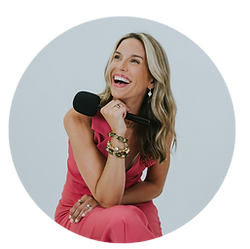


How Ashley Stahl Built a 10M-View Personal Brand
Look at your personal brand right now. Are you building something that can carry you through a quiet season, or are you feeding every platform because the algorithm told you to? My guest, Ashley Stahl, built a personal brand that turned one TEDx talk into nearly 10 million views, a four-year spokesperson deal, multiple book offers, and keynote fees that tripled.
Ashley started her career hunting terrorists for the Obama administration. Then, with tear gas in her eyes during a protest in Istanbul, she got the message that would change everything: she had been invited to give a TEDx talk, even though she had never spoken onstage. She propped her iPhone against a bathroom mirror, made her first speaking reel, got the spot, and watched her coaching business go from doing well to completely waitlisted.
So what are Brand Islands? Ashley sees every platform, from TEDx and podcasts to LinkedIn, Instagram, and Substack, as its own island. Instead of trying to live on all of them, choose one or two a year, master one at a time, and match the platform to the gift you already have. That matters because LinkedIn's 2025 creator research found that 82% of buyers are influenced by B2B creator content, and nearly 80% engage with it every month.
This is also a long game. Ashley's second TEDx talk drew only 8,000 views in its first year, then jumped to 2 million the next year without a new promotional push and eventually climbed close to 10 million. The 2025 Edelman and LinkedIn Thought Leadership Impact Report found that 53% of decision-makers say brand recognition matters less when the thinking is strong. Your best ideas can outrun your follower count.
But the thinking has to sound like you. The same Edelman and LinkedIn report found that 65% of hidden decision-makers prefer a human, less formal voice over an intellectual one. Ashley calls her own gift “word money.” She writes, speaks, and builds on platforms where words can do the work, instead of forcing herself into someone else's content formula.
If you are a woman in corporate America wondering whether you need LinkedIn, Instagram, TikTok, a newsletter, a podcast, and a Substack, this episode is your permission slip to stop collecting platforms. Find the skill that keeps showing up in your work, choose the island that rewards it, and build something worth finding long after you log off.
TRANSCRIPT:
Ashley Stahl: Most people are looking for something that they can only come upon when they're experimenting with life and using their career as a vehicle to calibrate with their gifts. And the problem is that the human experience is one where a lot of us are perfectionists, and we don't wanna be calibrating. We don't wanna be not at the destination. We don't wanna be in the thing that's teaching us the next thing. But the people who really figure it out do not have linear careers. They've been in the experiment.
Welcome to Glass Ceilings and Sticky Floors, the podcast where we stop playing small, start calling things out, and actually do something about it. I'm your host, Erica Rooney, executive coach, speaker, and a little bit of a movement maker, and I'm on a mission to get more women into positions of power and keep them there.
Erica Rooney: All right, y'all. Today's guest, this is bananas.
Erica Rooney: She started her career hunting terrorists for the Obama administration. Then she gave her very first ever speech, y'all, on the TEDx Berkeley stage too, and the audience gave her a, incredible standing ovation. And from there, her coaching business went from, doing good to wait list, no space, bandwidth maxed out overnight. Six years later, she did it again, and her second TEDx talk, this time at Leiden University, went viral. She had close to 10 million views, and it is one of the top 100 most viewed talks on the entire TEDx YouTube channel. That talk alone brought her a four-year spokesperson deal, multiple book deal offers, and tripled her keynote fees. Y'all, tripled. She took everything that she learned about what it actually takes to build a personal brand that works and turned it into a company called the Wise Whisper Agency, where she now helps leaders, authors, and executives craft their signature talk and land their spot on the world's biggest stages. She is also the international bestselling author of a book called You Turn: Get Unstuck, Discover Your Direction, and Design Your Dream Career, and the former host of the You Turn podcast. She believes that your personal brand, it's not about showing up everywhere, and y'all, isn't that a breath of fresh air? I'm exhausted. TikTok, YouTube, Instagram, all the places. It's about finding the one island where everything you are comes through and letting that do the work. And y'all, she's got the receipts. Ashley Stahl, welcome to the Glass Ceilings and Sticky Floor podcast. How are you, my girl?
Ashley Stahl: What a fun start. You played with my bio. You didn't just read it. That's so fun. Thank
Erica Rooney: I like to be real on this show, but
Ashley Stahl: you do
Erica Rooney: oh my goodness. So how's it going? I know you are just flying all over the place these days. You've got Wise Whisper Agency. Like, where's your head at? What's on your mind?
Ashley Stahl: Yeah. honestly, what's on my mind is actually something that you were just talking about, is I, was just at lunch with a friend and I was telling her, “Man, I gotta get back on Instagram,” 'cause I have my brand I've been building, and I post a story probably once every, two to three weeks, and it's usually my dog. And, my team is like, “Ashley, you gotta get back up there.” And I have all these reels, and people who join our programs for speaking and building their career in speaking, they usually will watch all my reels from the past to, build trust with me. I don't make those to go viral, I make those 'cause they're what I have to say, and the right people, they trust me through those. And I was just telling my friend, I'm like, “I don't really... The thing holding me back is I don't have much to say right now.” And she goes, “Then don't say a damn thing.” And it's so crazy because the way I've built my brand is I show up when I have something big to say, and I say it big and I go big for it. And over the years, that's built me such a brand on the internet that carries me through these seasons. And so there's so many moments in time where I'm like, “Okay, I could be upskilling right now with AI and not be posting reels, not be posting TikToks,” because I already did that last year, and I have 200 of them that people are finding every single day. My podcast I did for six years has 600 episodes or 500 episodes, and I went through a season building my business where I was like... And I'm a very consistent person, But it was like I, cannot... I love this podcast, but I can't love it right now when I have this much work on my plate. And I took almost a year off now. It's been, like, seven months. And I'll definitely get back at it because I was in love with it when I was doing it, and I just needed that time, but people are searching those episodes every day. I'm still getting downloads every month. And that's the thing that brand is really about. It's not about talking all the time. It's about saying what you have to say, going all in on it, and, it being the thing that can carry you through seasons of your business and career
Erica Rooney: I love so many things about this, but two things really stuck out. And number one ties into a message that I talk about all the time, and it is such a pain point for me right now, and that is that you have to prioritize this upskilling with AI, right? All of these things, like when you think about it, posting reels, and did my newsletter go out? And, is this graphic perfect because I just spent 30 minutes on it? It's just what we're used to doing. We've got to step out, figure out how to actually make that work with our business, our roles in corporate America, what we're doing, so that we can then be more productive later on, and that we're also not, leaving behind all of these skills. So that was one thing I love. Y'all heard it from her. She is setting aside the nonsense to prioritize upskilling. And then the other thing that I loved, and I wanna dial into this, is that you're not just filling the space to fill the space. if you don't have anything to say, you're being quiet. And I think that is an interesting concept because so many of us have been told, “No, you've gotta post three times a week, and hit your pillars, and make sure you're addressing this,” and there, there seems to be so many rules about it. We're gonna dive into some of that later, but I love that we kicked it off like this. But I'm gonna wind it back because, we did kick off this intro with talking about how you worked in the Obama administration doing terrorism sh*t and fighting terrorism, and now we are on stage, and I'm just like, how did we get here?
Ashley Stahl: Yeah, how did we get here? I feel like the way we got there was I remember where I was standing during 9/11, 'cause I feel like that was, like, a core memory growing up as a millennial is, 9/11 happening. And I feel like for a lot of people that are millennials, it was, like, the first catastrophic thing you ever were presented with in world affairs.
Erica Rooney: So where were you?
Ashley Stahl: Yeah, I was in California. I was in my little, high school and, I was... I remember my parents panicking because they had family, in New York and in New Jersey that worked out there, panicking to figure out if anybody was in the World Trade Center. And I just remember thinking, “Wow, I need help. I need help. I need to do something important with my life.” And when I got to college, I think the weird mystery of our college system is, you're asking a bunch of 18-year-olds to know their life path and spend 50 grand a year on a commitment of a topic that may or may have nothing to do with who they are or what they like. It's a very weird...
Erica Rooney: What did you end up doing?
Ashley Stahl: Yeah, according to the last research I saw, it's been a long time since I've read the research, it was around 27% of people that are in a career path that aligns with the major or the degree that they got. And I would argue a lot of those people are, like, medical profession, like biology, sciences, right? things that you actually do need to know it. So yeah, I, have found that in college, people... I remember the counselor said, “What do you wanna major in?” And I was like, “I don't know.” And so I ended up picking three things, not because I'm an overachiever. I probably am, but, I was scattered. And so I picked government, I picked history, I picked French, and it was a really cool thing to be able to explore all of that. And what I didn't realize beneath it all was that the reason I like history or government is not because I wanna be involved, but because I like stories, I like information, and I like learning. And so it wasn't that I was supposed to be in that niche, it was just a, an interest for me. And that's the problem with a lot of people is there's a big difference between something you're interested in and something that is supposed to be a career path for you. Very, different choice to, go between those two
Erica Rooney: Yeah, for sure. And so you did that. We got into politics, and then you're on the TEDx stage. And what made you apply for a TEDx? Why did you want to do that? 'cause that was back in the day before it was big, before it was popular
Ashley Stahl: I know. It's so crazy actually. I won an award for my work in national security in DC. I was like 24 or something, and it was like 99 people under 33, helping the world or whatever. And this beautiful woman walked up to the awards ceremony, and I'll never forget her, Sarah. And I it was like one of those women, I'm like, “Is there like a halo on her?” she just looks amazing and alive, and life is happening. So I talked to her, I'm like, “Who are you?” And she had won the same award as me, and she said, “Oh, I'm just glowing 'cause I gave my TEDx at the UN last week.” I was like, “Wow, that's so cool.” And I remember saying to her, “I'd love to do that someday.” And I said it like it was way volleyed out into the future, like not today. And I remember she looked at me like a cartoon when I left. We became friends, and I got a cab. It was truly like a movie. And I'm like, “Yeah, maybe one day.” And she looks at me with a smile. She goes, “I'm sure it's coming soon.” And it was like ching, like her smile. And then she texted me the next week. I was in Turkey. I was in Istanbul for work. And there I was, and she was like, “Hey, I got you a TEDx talk.” And I was sitting in a government protest in Taksim Square in Istanbul, and it was like not a nice surrounding. there was teargas in my actual eye. I was like burning in my eyes trying to read the text from her.
Ashley Stahl: And then I got an email from a TEDx event manager saying, “Hey, can you send me your speaking reel?” So I googled what is a speaking reel, and then I saw what that was and was like, “Okay, don't have that. Never have spoken in my damn life,” And then I pulled the curtain behind me in the bathroom of this weird government motel I was put in, and I propped my iPhone against the mirror, and I did I just started talking at it, and that became my speaking reel. I can't believe that I still got this thing. What I found with the TEDx brand is that they're largely volunteer supported, and so a lot of the times your acceptance doesn't hinge on how good your pitch is or how good your video is or how good your reel is, or sometimes even how good your idea is, which it should. A lot of times it can just hinge on does that person connect to you for some reason or another? Are you filling a need that this event has? And it's, all about alignment, yeah, I got on that stage. I hired a speaking coach, thank God. I would've looked like a hot mess, and gave it my all, and that talk ended up going viral. And I'm so grateful and lucky for that because, it just put me on the map as a speaker, and I started getting a lot of speaking opportunities. And I think
Ashley Stahl: that's the thing about purpose and career, is that you don't find your purpose, you come upon it. And, some people are born and they just have a a sense of clarity about what they're supposed to do with their career That's not the case for most people. Most people are looking for something that they can only come upon when they're experimenting with life and using their career as a vehicle to calibrate with their gifts. And the problem is that the human experience is one where a lot of us are perfectionists, and we don't wanna be calibrating. We don't wanna be not at the destination. We don't wanna be in the thing that's teaching us the next thing. But the people who really figure it out do not have linear careers. They've been in the experiment.
Ashley Stahl: So for me, working in national security at the Pentagon ended up being an experiment, albeit a different one than most people. And, I made an impact there. I liked what I was doing, but it wasn't my path. and it sent me into the speaking arena. And I had been helping people on my way into DC get jobs, because I was good at it. It was the recession. I was really good at it. And so the speaking skyrocketed me into a coaching business, and off I went from there
Erica Rooney: Oh my gosh, what a great story, and what I think is, so important to just drill down on is you said yes to the thing even though it was something you had never done. You said yes to the thing even when you had blockers like no speaker reel, no idea what a speaker reel is, right? That is... any of those is enough to stop one person in their tracks, but that is what people have to remember is, number one, growth happens outside of your comfort zone, and number two, you have to do those things before you're ready because are you ever really ready? So I don't think so. I love that story. And, it brought you to everything that you're doing with personal branding too, and I wanna dial in because you've got this concept of personal brand islands. I had never heard of that before you, girl. So I love it, but it's all about the idea that there are so many platforms that you could build on, we kinda hinted on this earlier, and most people, myself included, try to hit every single one of them. I would like, “I gotta be on TikTok, LinkedIn.” Just the other day I caught myself saying, “Oh, maybe I need to have a Substack now because everybody's
Ashley Stahl: I know
Erica Rooney: So talk to me about this framework. How does someone figure out which island they need to be on?
Ashley Stahl: Yeah. Yeah. I think that comes down to your skillset. And also just a reminder, it's almost like the universe doesn't reward you for being everywhere if you're trying to optimize, because the algorithm doesn't like it when you're scheduling things on, a software that releases it all at the same time. Like Instagram, your reels do better if you properly schedule it live right then and there, versus if it's coming through an internet tool that's tied to five other social medias, right? it's like the organic thing. I want to point out that in order for you to be relevant, and this comes from my friend Andrea Crowder, she talks about this. She says that you need, relevance is really about resonance, and what makes people resonate, is when they resonate with something, right? the biggest influencers of our time usually were pretty alive about something that they were posting about. They had the gift, they had the knack. The fitness people, they had the love for the game, and they post about it 'cause they resonate with it and people want to follow along 'cause they resonate with that.
Ashley Stahl: And the problem is that right now social media is becoming this very weird place. it's a beautiful place. You get a lot of information. It's also a very weird place because if you don't have something to say, what you're doing is just posting, for lack of a better term, trash. And I honestly, it sounds judgmental when I say it, but I think anybody who's, in their heart is “Yeah, I feel that way. I don't want to post trash. I don't want to post a video of me doing the same dance move the last 500 reels I saw was doing with the same music clip and the same copy, hoping that I get the same result, that mine goes viral.” there's... Yes, there's a game to business. Yes, we can play the game, but eventually it can become soulless if you don't take care of yourself along the way and really honor where you're supposed to be in your brand. And so For me, this idea that the internet is islands, it's this idea that, TEDx is an island, a podcast is an island. Being a guest on a lot of podcasts is a brand island, guesting alone. being on TV, being on YouTube, being on TikTok, they're all islands. Instagram. And I have found in my business that I spend a year, on every island, like really mastering it and finding a workflow with it.
Ashley Stahl: So back when Twitter wasn't called X or whatever it is now, I was like, “I gotta build on this island,” but I didn't go there until I was done creating a workflow with Instagram and like figuring out how I say what I have to say there. I was like, “Okay.” And I remember I used to schedule a day a week where I would write out my tweets for the month, and I was in like a really spiritual place, spiritual on Twitter. what do I have to say here? what do I really want to say? I also think a lot of people get a lot of wins from saying things that are polarizing on purpose, but it's, one thing to be contrarian, it's another thing to be combative, And like trying to put negativity into the universe. And it's not a, it's not a bad thing to say what you have to say. It's, not a bad thing to have something negative to say. But I think that some people who are listening to this, and myself included, we've gotten caught up in this like social media game. And so the deeper question I would ask people is, “What is your deepest skill set?” for me, I'm a writer. that shows up on stages. our program over at Wise Whisper, we help a lot of people craft talks and get booked as paid speakers. And what's interesting about that is that I've realized a lot of people, it's easy to buy a program that teaches you how to get paid gigs, because if, you're an established speaker that's gotten yourself a lot of paid stages and you've gotten compensated really well, it's not... It can be an art, but it's mostly a science, like teaching people how to do outreach, teaching people how to create their materials, teaching people who to reach out to, how to negotiate, what to put in your speaker contract, et cetera, how to source gigs. But what people don't always advertise that I'm the most proud of is that I feel like I'm an artist. I'm a writer. That's my highest gift. And all the talks I've written for myself for especially TEDx and and with friends, I used to help friends, they've all gone viral. And our clients that we help write talks, about 60 to 70% of them have gone viral specifically on TEDx. I take pride in being the artist I'm supposed to be and like imparting that art upon people. And I can't remember what the quote is, it's “The meaning of life is to find or discover your purpose, and the purpose is to give it away.” But there's all these programs out there of get the thing, but there's not enough about here's the art of the thing, and are you meant to do this art, right?
Erica Rooney: So how does the woman then figure out where she should show up? I think a lot of the people who listen to this podcast are, of course, all on LinkedIn. We're talking women in corporate, growing, climbing. But of course, I think they're drawn to Instagram too, because that's where they get to relax a little bit more and they're finding their people. So how do you figure it out? Do you pick one? Do you pick three? What's your best advice?
Ashley Stahl: Yeah. I would pick one or two platforms a year, and I would line them up, and I would do one at a time, right? So go all in on Instagram for six months, learn everything you need to know about it. Learn everything you need to know about reels. Test reels. I know a lot of people like trial reels. learn all you need to know about what you have to say. I also think different platforms lend themselves to different skills, right? So I know I'm a writer, and that's why I teach people writing their talk and getting booked on paid stages versus, teaching people Instagram and how to make pretty reels, right? I'm, offering what my gift is, and I'm picking platforms that leverage my gift. I would say if you look at your bank account, most of your money, if you're on purpose, is where your skillset is. Like, all my money is word money. look at my account, it's a bunch of words with dollar
Erica Rooney: word money. I got word
Ashley Stahl: I got word money, my friends. I do. And so I think that anyone who comes to me and they wanna make money, I'm giving them word money, right? so I think that a lot of people who are listening, maybe they're getting caught up on, “I need to be here, I need to be there.” Don't go on Substack if you are not a writer. it's not gonna work very well for you, unless you hire a writer, and then it's a job. Do you want your brand to be a job? It will be more enjoyable and more sustainable if you pursue something that allows you to use your gift in those ways
Erica Rooney: All right, here's where my brain is going, and it feels like everyone that I talk to who's got this incredible brand and they've gone viral all over the place has done exactly what you've said, right? They've remained authentic. They've gone all in on what they love. my next door neighbors are TikTok stars. They have 7.5 million followers, and all they do is like dancing because they're dancers, and they love it, and it's incredible. Their whole business and life has changed because of it. But I feel like there are so many women who are sitting here, and they're like, “I have all these things...” Not the dancing, right? But “I have these gifts and these things to share, but I'm never going viral. Nobody's seeing my stuff.” what's the remedy to that?
Ashley Stahl: Yeah. I think that you have to see your brand as an investment portfolio. For example, my second TED Talk, they both went viral, but my second one got 8,000 views in its first year. But as a writer, I knew it was really good. And I didn't know it, like I wasn't in an egotistical... You know when you do work and you're like, “God, that's like my best work. That's like really what I have to say.” There's a... You can feel the energetic alignment between what's on the page and what you're saying. There's that deeper resonance that I was talking about. And I remember when it, the first year, got 8,000 views and I'm like, “What?” And I just was like, “It's supposed to go viral. That's so weird.” I was like surprised. I'm like, “I can't believe not everybody's listening to this.” It was like everything I have to say, and I, people have bought what I have to say. Like I get paid for this. Like this is the thing. The next year, for no reason, everybody always says, “What did you do differently? What happened?” I'm like, “Nothing happened.” Like I didn't I didn't share it. nothing. And it ended up getting two million views the second year. And so what people need to realize is that people who have successful brands are consistent and they're committed, and you, it's really hard to be consistent and committed if you don't believe in what you're saying. So I think that's the deeper thing, is if you haven't done the deeper work of like who am I, what do I have to say, that's gonna show up in your results. Maybe you'll get some sort of, quick little win, but it's hard to keep winning if you're not in that alignment
Erica Rooney: Yes. And it's gotta be a long game. you literally just said your first year you had 8,000 views, and then, time went on and boom, all of a sudden it was going viral. But you said a couple things in there. One of them, like it totally hit the nail on the head for me, because I have two published books. My first one was called Glass Ceilings and Sticky Floors, and that was the book that I should write. It was the book that everybody's like, “You're gonna be a speaker and a thought leader. You've gotta have a body of work.” So I was like, “Yes, absolutely.” And I worked my ass off, and I was proud about all of that work. But my second book, which is called The AI Gap, which just came out in June, that is the work that, I am the most proud of because it felt like the book I was compelled to write. It was such a different vibe and such a different feeling.
Erica Rooney: And so I totally get what you're saying. But I'm gonna share this mantra. This is my mantra this year. A lot of people pick a word. I couldn't settle on a word, so I got a mantra, and it's, “What is meant for me will not miss me.”
Ashley Stahl: Love it
Erica Rooney: And it's just that's the thing. It's like, do what you need to do, what's on your heart, trust the process, and just know that these things don't happen overnight. It takes time
Ashley Stahl: Yeah, it reminds me of that horse and farmer story that I hear every now and again of a man lost one of his horses, and the neighbors are like, “Oh, I'm so sorry you lost your horse. That's so horrible.” He's like, “Maybe good, maybe bad. I don't know.” And then the horse came back with two more horses, and they're like, “Oh my gosh, how awesome. Your horse brought back two horses. That's... You're so lucky.” He's like, “Maybe I am, maybe I'm not. Who knows?” And then his son ran or rode one of the horses, and it kicked him off and he broke his leg. And they're like, “Oh my gosh, that's so unlucky. I hate that happened to you.” He's like, “Maybe bad, maybe good. We don't know.” And then there was a draft happening for the military, and his son wasn't selected 'cause he broke his leg. And they're like, “Oh, that's so awful, that he broke... maybe bad, or that's so good he didn't get picked.” We just don't know, right? We literally don't know, and I think that's why so many people have perfection paralysis, is they, think about... they have a hard time making a choice without realizing, you never really know a choice until you make a choice. You know what I mean?
Erica Rooney: they're so much expectation on it, They're like, “I am going to do this and I expect that outcome.” And then when it doesn't happen, it's depression, anxiety, this never works, and then the whole spiral, right? Yeah. and I love... I haven't heard that version of the story, but I've heard the one where they say, “Who's to say what is good? Who's to say what is bad?” And I'm like, “Ooh.” So I'm glad you reminded me of that. But I'ma take a You Turn and talk about your book, The You Turn. I'm sure everybody does that with you
Ashley Stahl: no actually, but I, the amount of times in that book, 'cause it's Y-O-U Turn, like the amount of car references I had to stop doing to be like, “This is a stop sign. This is a yield. This is a turn signal.” okay, no more
Erica Rooney: No more. No more. Oh my gosh. And it's built on this idea that we've been talking about, and that is don't do what you love, do what you are. So map out, people need to really understand and know their values. They need to maybe take a look back and try to figure out what that red thread is. Because I do agree with you, and I think when I look back on all of the things that I did, it's like the hustle for me was always there. I was a elementary school kid buying Fun Dip at a gas station or like a Walgreens and then take for 50 cents, and then taking it to school and selling it for a dollar because there was no... the demand was real. And I never thought I'd be an entrepreneur. I never thought I would run my own business, and then here I am doing all those things. And it's like you can unpack that as you look backwards. But what other piece of advice, if they're looking back at that red thread, they're understanding their values, is there any other like core piece of advice you think that a woman should hear? Especially if they're like in corporate America, maybe they're feeling stuck, burnt out, all the things. what is it that they need to know?
Ashley Stahl: Yeah, I think going back to these two lanes of what you do and how you do it is really huge because a lot of people think that they're in the wrong job, but they're actually doing the right job, with the wrong place. Like for example, what they're doing is communications or tech or finance. Maybe they're actually meant for that skill set. The problem is their values, right? if you're a salesperson and words is your skill set and you're in a sales job and it's actually good for you, but your core value is integrity and you're selling something you don't believe in, you're being undermined by how you do something. I also think that a lot of people choose core values aspirationally instead of honestly. “Oh, I value peace.” It's yeah, me too, but what do you actually what are the principles you're living by, not just what do you want more of? 'Cause your core values to me are the non-negotiable ingredients and principles by which you're living your life naturally, and they're the filter, I think, for your yeses and your nos. And I think a lot of people, you know, they they pick values of words that represent things they want in their life, but not things that they are, and that makes it really hard to use them as a filter for decisions. So I think corporate women need to say, “What is my gift? What is the skill set I wanna sharpen? And then how do I want that to look? What are my values?” what are my top five things that if I don't have those, I'm not me, I'm not okay, I'm not myself, it's a violation of the soul? so for me, candor is, a huge value. I'm the, such a straight
Erica Rooney: I was just about to say, what are your values, girl? Let's get into it. Amber, number one
Ashley Stahl: think they change over time a little bit, but they are largely... usually most say stay the same, but a couple might change. but I value integrity. I, just feel like there's so many agencies online that it's like there's, some Tinder swindler. consumers are so traumatized by buying things that people don't deliver. And so for me with my team, every day, integrity's at the forefront of my mind. “Did we say we're gonna do that? Okay, we're gonna do that plus one,” right? let's over-deliver on what we promised. Creativity, like self-expression, what is inside me that needs to come out, and, and, realness, candor. And by the way, those words mean different things to different people. you can ask a girl what adventure means to her, and she'll say skydiving, and then you ask a, somebody else, some guy, and he'll say it's trying new restaurants in Miami. So you need to define your values, too, right? it's like dating. if you say that religion is important to you, does that mean it's praying at night, or does that mean you're going to church every day, once a week? defining what things mean to you as a value is just as important as knowing what they are
Erica Rooney: And I think that is a very good exercise for grown-ass people to do because we sometimes, I think, take on these core values as children, through our lived experiences, and some of them are good, and some of them are just ones that we adopt just because that's what we lived. And sometimes you really have to, stop and think about, does that fit what I wanna do, who I wanna be, and how I wanna live my life, or am I on autopilot? And I think a lot of people are on autopilot. But I also think a lot of people don't actually stop to do the core values work because they're sitting there and they're like, “That's some fluffy bullshit that goes on the wall in my office,” right? And I do exactly what you tell people. I'm like, “Figure out those core values and set them aside.” And I always use the example of generosity. I never circle that one, and I always makes me cringe because I don't circle it, and I'm like, “But now I feel like a bad person because I didn't circle it.”
Ashley Stahl: shame is so real, feeling
Erica Rooney: oh my gosh, the value shame. But I just gotta own it, girl. I gotta be like, “You know what? No.” my core three are growth. So is it stretching me? Because if I'm not doing something that's always changing or growing me, then I get bored real easy, and I get real irritable. Health and wellness. I grew up as a personal trainer, so we're always doing the healthful thing. And then courage, and that is because courage is what has pushed me to the heights of my career. It's what's pushed me through the bad parts of my life, and it's what I think will carry me through the rest of my life. But that's what it means to me, right? I'm sure courage could mean 1,000,001 other things. but one of the things that we kinda touched on a little bit, and that was this concept, and we were kinda circling it, but you call it intuition and clarity in the personal branding. And I'm assuming that starts from the core values, right?
Ashley Stahl: Yeah, I haven't thought about them as linked because I, but I, imagine they can be because to me intuition is knowing what you know without knowing why you know it. And I think
Ashley Stahl: we live in a society where the intellectual is over prioritized and the intuitive is under prioritized. it's it's like science, right? If you can't prove it doesn't exist. It's like, I believe our eyesight can only see a certain percent of the... You know what? I'm gonna ask ChatGPT right now. and let's see. What percent of the electromagnetic spectrum can we see, can a human eye see? So if we even just look at that right now, I remember I was... Yeah, so the human eye can only see 0.0035% of the electromagnetic spectrum. So if you you know, if you compare visible light, with what we can see, we are well under.01%, what we see versus what is, really there. we can see visible light, red through violet, but we can't say we can't see radio waves, microwaves, infrared, ultraviolet, X-ray, gamma. There are so many things we can't see. Bacteria. And to me, there's such an ego, of seeing “If I can't prove it with my 0.01% eyeballs, then it's not there.”
Erica Rooney: My.01% eyeball.
Ashley Stahl: I'm like, “What is that?” And, so I really do think that, understanding the intuitive and like connecting to those feelings and I know that the amount of neurons in our gut is equal to a cat or dog's brain. I think it's like millions of neurons that we have in there. and there's a reason you feel butterflies or a pit in your stomach. There's an intelligence to it
Erica Rooney: I love that, and I think, though, it can be really challenging for a lot of people to trust their gut because we have been trained to do exactly what you say. what can we see? What can we verify? Give me, one tip maybe that you did when you really started honing in and listening to that intuition. Is there a feeling? Is there a practice that you did? And that way these women who are listening, myself included, can try that out and, try to be more intuitive themselves
Ashley Stahl: Yeah, the, I think the biggest thing to take away from this is that I believe that intuition is more absolute, meaning it's not emotional, it's not fear-driven, it's not chatty in the mind. It's not very, it's not very chatty. It's very calm and quiet. It's very... Usually it says something like, “This is good for me. This doesn't feel good for me.” And if you're getting a this doesn't feel good, you wanna ask for more information, and maybe you wanna journal it, however you work best, right? if you're more spiritual, you wanna ask the divine, “Hey, can I have more information? Why doesn't this person feel good for me? What is it about this that isn't good for me? Is this good for me?” and asking for more information. A calm conversation of curiosity, a calm heads-up is what intuition is like for me. it's, not like, “Oh my gosh, what if this happens?” That's fear, and that's very different than intuition
Erica Rooney: And then I would just add, and then be patient because as we've already said, homegirl right here had to wait a whole damn year to get all her virality on that one TED Talk. So then you gotta be patient, and you gotta trust that what is meant for you will not miss you. And how I just came full circle there? I'm gonna pat myself on the back for that one. All right, girl. Last question, best question. It's the one I ask at the end of every single one of my podcasts, and that is, if we could go back in time to the Ashley who's got the tear gas in her eyes, and she's getting this email about, about to get on a TEDx stage, and you're sitting there being like, “Is this real life?” What is that one piece of advice that you would have gone back in time and given that Ashley?
Ashley Stahl: I really love the quote by Rumi, “Live life as though everything is rigged in your favor.”
Erica Rooney: Ooh,
Ashley Stahl: I think, the problem with your 20s versus your 30s and 40s, I think, is that in your 20s, you're, experiencing a lot of the workforce and your career for the first time. You don't have reference points. In your later 30s, you go back to places and your favorite restaurant is gone or, things you remember and associate with.
Erica Rooney: has changed
Ashley Stahl: have changed, and change, and you realize your mortality a little bit more, and you can look back and see the sense in... name a crisis from your life, and most of the time people are better because of the crisis they had. very rarely is somebody worse because of the crisis. It's like Winston Churchill says, “If you're walking through hell, keep walking.” It's so crazy to me, people are walking through hell and they stop walking, and they just hang out and get burned in there. And it's not about avoiding hell, it's just about don't sit in it. Don't revel in it, right? And so to me, I've just made the decision to take things from everything. And anytime I'm a victim, anytime I'm like, “This is happening to me. Why me?” I immediately see that as an alarm for me to be like, “Okay, this really sucks. It hurts. What am I supposed to learn? How can I become better?” And I try to get to those questions as fast as I can without invalidating myself. I'll sit in a bad feeling, but I'm not gonna live in it. I'm not gonna reside in it. I'm not gonna change my postal code for my sh*tty feelings
Erica Rooney: I love it. No change in the postal code. All right, girl, where can people find you? We're gonna link everything in the show notes, but for the person listening, just say it out loud so they can remember it
Ashley Stahl: Yes. okay, so my website's wisewhisperagency.com, and you can just reach out to us on the contact page. If you are looking to craft your greatest talk, get paid as a speaker, book yourself on a lot of big stages, that's what we help with. otherwise you can DM me on Instagram. Sometimes I'm in there, sometimes my team's in there, @ashleystahl or @wisewhisperagency
Erica Rooney: All right, that's a wrap. Thanks, Ashley
Ashley Stahl: Thanks for having me
If this episode resonated with you, don't let it stop here. Send it to a woman you care about, a colleague, a friend, someone who's been on your mind while you were listening. These conversations are meant to be shared, and you never know what one small shift can unlock for someone else. And if you haven't already, make sure that you're following the podcast. Leave a rating and write a quick review. It helps more women find this space, and it keeps these conversations going. If you're ready to go deeper, come a little closer. Send me a DM. I'll invite you to sit in on a live Her Collective session as my personal guest. No pressure, no strings attached. But you get to experience it, feel the room, and see what happens when women start moving together. Until next time, y'all, keep going. Keep choosing differently, and let's smash the ceilings and close the gaps
RESOURCES MENTIONED IN THIS EPISODE:
- Ready to close your own AI gap and get more women into rooms of power? Join HER Collective, Erica's community for women in corporate America.
- Never miss an episode of Glass Ceilings & Sticky Floors.
- Get Erica's book The AI Gap and start closing the gap for yourself.
- Explore speaking and signature-talk support from Wise Whisper Agency.
- Connect with Ashley Stahl on LinkedIn.
- Follow Ashley Stahl on Instagram.
- Follow Wise Whisper Agency on Instagram.
- Read You Turn: Get Unstuck, Discover Your Direction, and Design Your Dream Career by Ashley Stahl.
- Watch Three Questions to Unlock Your Authentic Career at TEDxBerkeley.
- Watch How to Figure Out What You Really Want at TEDxLeidenUniversity.
- Learn more about Andrea Crowder, whose “relevance is resonance” idea Ashley mentions.
- Explore ChatGPT, the tool Ashley uses during the conversation.
- Explore Substack, one of the writing platforms discussed.
- Read Erica's first book, Glass Ceilings and Sticky Floors.
RELATED EPISODES:
FREQUENTLY ASKED QUESTIONS:
What is Ashley Stahl's Brand Islands strategy?
Brand Islands treats each platform, such as TEDx, podcasts, LinkedIn, Instagram, or Substack, as a separate island. Ashley recommends choosing one or two platforms a year, mastering one at a time, and building a repeatable workflow before moving to the next.
How do you choose the right platform for your personal brand?
Start with your deepest skill, then choose the platform that lets that skill do the work. If you are a writer, a writing-first platform or a signature talk may fit better than forcing yourself to make visual content that feels like a job.
Do you need to post constantly to build a strong personal brand?
No. Ashley's approach is to say something meaningful, build durable content, and let that body of work keep earning trust during quieter seasons. Consistency still matters, but filling space with content you do not believe in makes the brand harder to sustain.
MORE FROM ME
Follow me on Instagram @ericaandersonrooney and @joinhercollective
SUBSCRIBE & REVIEW
If you loved this episode, please take a moment to subscribe and leave a review on Apple Podcasts. Your support helps us reach more women who need these insights. Thank you for tuning in to the Glass Ceilings and Sticky Floor podcast. See you next week!
Hi, I'm Erica!
In the last 15 years, I climbed to Chief People Officer, 6x'd my income, walked away from a culture that stopped matching my values, wrote two books, and built HER Collective to help thousands of women rise to power and lead in the age of AI. I've learned a thing or two about smashing ceilings and closing gaps, and Glass Ceilings & Sticky Floors is where I open the playbook, the receipts, and the real stories to share it all with you.
_JPG.jpg)