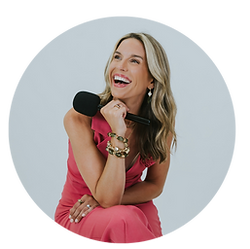


When the Ladder Has No More Rungs: How Women Build Portfolio Careers and Land Board Seats
Look at the career ladder you have been climbing for 20 years. Is there actually a next rung, or one you even want? My guest this week, Natalie Benamou, built an entire network for women standing in that exact spot, and she has driven more than $110 million in revenue as a business strategist and rainmaker along the way.
In March 2020, Natalie was leading a division in trade shows when everything stopped. Booths were half built on the show floor. A giant whiteboard was full of hundreds of events. She moved the whole business online while still trying to figure out Zoom, and by that October she was meeting with girlfriends on video calls who all wanted to get to the C-suite. That group became HerCsuite, a portfolio career network for women leaders in the second half of their careers. Today she also leads HerHealthX, a nonprofit using agentic AI for women's health, and hosts the podcast Women Leaders on the Move.
So what is a portfolio career? It is a mix of work you build on purpose, like a board seat, advisory roles, your own business, and thought leadership, instead of one job on one ladder. Natalie starts women with a simple exercise she calls Love, Like, Capable: what you love doing, what you like doing, and what you are capable of but would rather not do. You are not alone in rethinking the climb. A 2025 study from Chief and The Harris Poll of 1,008 women leaders found that 52% of women in C-suite roles have built portfolio careers. As Chief CEO Alison Moore put it, “Leadership for women today is not a linear path.”
Boards are where the numbers get uncomfortable. The 2026 Spencer Stuart Board Index found women made up just 29% of new independent directors on S&P 500 boards, down from 38% the year before. Natalie is clear that nobody is going to tap you on the shoulder for a board seat. It is the hardest job in any company to get. She walks through the nine types of boards, why presenting to a board already counts as experience, and why your next seat will most likely come from the 25 people closest to you once they know you want one.
Here is the reframe. Running out of rungs does not mean your career is over. It means you get to design the next chapter on your terms, starting with your values, your network, and a little curiosity about AI. If you have done everything right and still feel ready for more, this episode gives you a place to start this week.
TRANSCRIPT:
Natalie Benamou: The S&P went from 38% women on boards to 25% just recently. So that's not in the right direction. But I'm a firm believer in you gotta open your own doors. And what people don't understand is it is the highest position in a company, it is the hardest position to get, and it is not something that you're just gonna get tapped on the shoulder for.
Erica Rooney: Welcome to Glass Ceilings and Sticky Floors, the podcast where we stop playing small, start calling things out, and actually do something about it. I'm your host, Erica Rooney, executive coach, speaker, and a little bit of a movement maker, and I'm on a mission to get more women into positions of power and keep them there.
Y'all, there is a moment in a lot of successful women's careers that nobody talks about, and that is you've hit every milestone, you have the title, you have the track record, you got the pay, you got the team. You have done everything you were supposed to do, and then all of a sudden you look up and you realize that ladder that you have been climbing, there is no next rung, at least not one that you expected or one that you even want.
Now, today's guest has built an entire network for women, and I am so thrilled about this because what I just described right there, that was my story. Now, today we have Natalie Benamou, and she is the founder and CEO of Her C-Suite, a portfolio career network for women leaders in the second half of their careers.
She has driven over $110 million in revenue as a business strategist and a rainmaker, y'all. She is also the CEO and president of HerHealthX, a nonprofit that is using agentic AI to bridge the care communication gap for women. And y'all, she is the host of one of the top ranked podcasts called Women Leaders On The Move. Natalie Benamou, welcome to Glass Ceilings and Sticky Floors. How are you today?
Natalie Benamou: Oh, Erica, what a great intro and I'm so excited to be here with you
Erica Rooney: Oh my goodness. we are just like two birds of a feather, we flock together. I love it. We have very similar missions, very different audiences, which is why we work so well together. But Natalie, talk to me a little bit about Her C-Suite, because this is specifically for women in that second half of their career, really where the ladder starts to run out.
And I would like to know what, kinda sparked your fancy in this chapter of your own life?
Natalie Benamou: All right, Erica, I'm gonna have you close your eyes and think about the Titanic.
Erica Rooney: Oh.
Natalie Benamou: You remember the conductor, and the conductor is keeping everybody going, and everybody's moving along, and they're still playing the music, and people are getting in the lifeboats.
That was March 2020 for me and my company. So I led a division in trade shows, and everything stopped. We had booths on the show floor that were in the middle of getting set up. We had all this stuff going on. I had a giant whiteboard with all the all the programs, all the events that we had, hundreds of events, right?
On this one day, we said, “Okay, we're all just gonna go home for, a week, and we'll go back, and we'll go pick it up. We'll go pick up that stuff.
Erica Rooney: Welcome break, a little hiatus
Natalie Benamou: It's fine. All the guys, just leave the crates on the show floor. don't worry about it. We'll just go back and get it.” that moment was pretty transformational for all of us.
We all remember going into that. And my company and that industry, everything changed, and I helped growth transformation go from in-person, which I love, to all online. And I couldn't even figure out how to do Zoom. I was like, “Where's the... Where... What am I looking at? And where are the what are these small dots at the top?”
Like it was terrible. We all remember these things, right? But along the way, I was the cheerleader. I was the person, like, trying to get everybody feeling positive, whether it was my clients or the team. And I'm a big believer in doors close, windows open. It's up to us to fly through. And I knew at the end of that year it was time to fly through.
So about October, I started meeting with my girlfriends, and we were meeting on Zoom, and there was two groups of us, and we all wanted to get to the C-suite still. I was still thinking “Oh, I'm a DVP. Let's get to the C-suite. Let's just meet and talk about this.” And Her C-Suite was designed around we're the result of the five people famously from Jim Rohn that we surround ourselves with.
And so we started that with that mindset, and we've evolved over time and meeting where women are in this, in that moment of deciding, “What am I gonna do next?” became much more what happened. A lot of the women retired or they left. They were like, “I don't wanna go to the C-suite.” Your story, Erica, of “Oh, what?
This, may not be aligned anymore with what I wanna do,” right?
Erica Rooney: I was just thinking about that was the ... 2020 was actually when I stepped in to those executive level roles, and it, for us, it was e-commerce, so business was booming.
But yeah, it was a pivotal moment regardless either way, but yeah, what a eye-opener in that sense. And okay, so you get this idea, you start launching it, then what happens? Tell me the deets.
Natalie Benamou: So we grew organically, right? We started small and we started partnering with companies. We did mentoring programs with companies, helping women advance, and then we started seeing a trend. Women didn't wanna just do one thing. We're multi-hyphenate. I bet you know plenty of women are like, “You know what?
I like doing this, but I kinda like doing that over there too.” And the vertical isn't, the thing anymore, and especially with AI, you have more opportunities than ever. So we've evolved into the categories that grow along with what women are trying to figure out in that portfolio career.
So you've, achieved all those things, right? You've moved forward in your career, and now you've gotta figure it out. So we've added in things that help women, whether it's getting on a board or entrepreneurship, and then last year we launched Next Elite AI, which is aligned with the things that you're doing, which is, oh my gosh, look at these numbers.
There are no women in the C-suite. There are no women. Where are they?
Erica Rooney: Yeah, Alison Moore, who's the CEO of Chief, an executive network, is double downing on the word multi-hyphenate. I was doing a little research on the website the other day just out of curiosity, and they have it on the front page of their website. So you were ahead of the curve there, girl. But I got a question.
Do you find that most of these women who are entering this second half of their career, are they wanting to stay in corporate? Are they wanting to exit and do their own thing? What is the trend you're seeing?
Natalie Benamou: It's so interesting, Erica, because what started as, “I'm gonna leave and I'm gonna start my own business,” to, “I'm returning,” there'It's going both ways. So some women leave and they start a business, and then you realize it's not what you might have expected. It's not easy, right? It's not for the faint of heart.
So that, it is not, right? So it's gone both ways, and just like women deciding, “I wanna get to the C-suite, that's where we're gonna go,” women are deciding maybe that's not the right thing. We've had women in their 60s land executive roles after they exited, and then we've also had women start careers and start new careers in their, late 40s and 50s.
And not to give the age demographic, but usually if you've been working for, a few decades, you're in that age demographic. And so it is go, it goes both ways, and I'm seeing a trend of return and come back. It just, it depends on the person really.
Erica Rooney: You heard me say wow when I heard you say a 60-year-old woman got an executive level role because
Natalie Benamou: Few of them. We have several.
Erica Rooney: But I'm so used to seeing the age discrimination happen. They don't wanna hire someone in their 60s because they're just gonna retire in a couple years, and what do they know? And so that is impressive that you've got that little fun fact under your belt that you can pull out as a KPI. okay, multi-hyphenate portfolio career. I wanna make sure I'm defining this right. And so when you're talking about a portfolio career, you're talking about bringing in the board role, maybe the business, maybe advisory work, having thought leadership. Is that what you're seeing? And if that is, how do you advise these women to, go about, because that's a lot
Natalie Benamou: It is a lot. I think it's important to start with one of my favorite exercises that I learned actually from one of our founding members was love, capable. So one of the things that I think we don't take a time to pause before we embark on something new, 'cause you might think, “I'm gonna go and get that next career.
I'm gonna, go for that role. I'm gonna start a business.” But you think it's because I liked volunteering doing this, and I'm gonna start a business doing it, and it doesn't always translate. So love, capable is such a simple exercise where you think about what do you love doing every day?
What lights you up? Think about our friend Michelle Peacock, the joy job. what are you doing in your life that gives you joy? And is that a monetizable thing, right? That's the multi-hyphenate. And then is okay. Sometimes you do the you go back into corporate because you love and like it. capable, if you're a business owner, we all have to do taxes and finance whether we like it or not. So not the fun things, right? So you figure out what you love, like, and capable, and it kinda helps guide you a little bit with what you wanna do, but you also have to get real clear on financials. You have to understand what does that look like.
A lot of people don't think about that when they're planning maybe earlier in their career, which they should. I encourage. But certainly as you hit that milestone of 20 years in, you gotta be thinking about that too.
Erica Rooney: Yeah. I've got a good friend, I don't know if you know her name is Cynthia Bentzen-Mercer, and she wrote a book called Now, Near, Next. Oh I it yeah, you'll have to check it out, but it is about planning those next chapters, especially as you're entering that second half of your career because we often just get so tunnel vision, right?
We're like, “Nope, this is the track I'm on.” And when you and I were talking on your podcast, that was part of my story. It's like I had hit this chief people officer role, and I'm looking up and I'm like, “But what's the next rung? This job at a bigger company? Like that's some bullsh*t. I don't wanna do that.”
And that was the moment where I said, “Okay, I've got to figure out what the next steps are while I'm still in this career because we're not being silly with our dollars here. We're not just jumping ship”, But we started planning, and thankfully I was making enough money that we could sock away a lot of it to plan for said exit.
But I don't think a lot of women start planning early enough. I think we're just plodding along, doing our thing, and then we get hit with a layoff, or we look around and we realize that we don't like where we are, or we never thought we would end up here. And so what would you say to a woman who wakes up and finds herself in that position?
There is no runway. What should she do?
Natalie Benamou: I think the first thing is to assess what are your opportunities? Easy, short-term, mid-term, and long-term. You could want that big role again. You could want to be chief people officer again one day. You could say, “You know what? I'm gonna go back,” right? But that takes time. That's not, that's a, not a short runway.
So one of the things that we do in Her C-Suite, is CoLab3, where you're figuring out a way to bridge the gaps, right? You need to surround yourself with someone else that's like-minded that you can bridge the gap with. Maybe there's something you...
And think little easy projects. It doesn't have to be, “I'm gonna go in and sell to 100, $100 million offer,” but think about the small little things that you can do. If you're truly in that position where you're like, “Oh, I need to do something right away,” start making your connections. I think it is most important that you nurture your network all along the way.
I think that is probably one of the biggest things. I don't know, have you seen that? When women are, maybe they're in the same company for 20 years, and they're like, “Oh, I wasn't planning on that exit. I don't have my connections outside,” right?
Erica Rooney: I think it is still one of the biggest gaps that exists today, especially for women, because we don't have the luxury of doing happy hours after dinner and doing all the other things, 'cause we're at home taking care of the kids and running the house and this, that, and the other, right? And no matter how modern a household is, like it's a rough day in my house if I'm not here to help with homework.
Let's just be clear, right? Like ChatGPT can't help through that because it's a kid meltdown, okay? But where I think women have stalled out and what I think they need to be better at is finding the right rooms to network in. I'm not saying just go to whatever meetup at whatever brewery because you don't know who's going to be there.
You need to make sure that you are talking to the people that you already know that have the right connections and say, “What events are going on? Where are you seeing people? Where are you meeting people?” And have them pull you into those right rooms. And there's a lot of women, I'm doing it, I don't know if you're doing it yet, but we're hosting these curated events just to bring together a very curated room.
And what is great about that is you lose the immediate like, “Oh, tell me about yourself.” It is like straight to business. We are here to do some deals. We're here to talk about some stuff.
But Natalie, I want you to go deeper on CoLab3 because one of the things that I think is really interesting is you match women together, I believe in 90 day sprints, right?
So that they can drive collaborative revenue and I love that because number one, I'm not doing it by myself. I'm a very big accountability girly. But tell me more about it, 'cause that just sounded so interesting to me
Natalie Benamou: I I see things in, minority report format. I see Like, right now, like I'm connecting the dots. Like you can't see my dots, but I see the dots. And I lead... One of the programs we lead is, we have is an entrepreneur program for women, and the rule of that is you hire and do business together.
That is that is the purpose. Because if, we don't, what is the honest purpose, right? If we come together, you should be referring each other, you should be doing business together. That's a great idea, but there's still like a little bit of a gap in making that happen, even though you come together and you're talking and things like that.
And so what I was seeing over and over is women talking about the revenue that is not predictable. When, the market volatility happens and the contract is stalled and if you're a solopreneur, you gotta, you're doing a lot of hats and so are you in the business or are you working, on the business, in the business is the age-old thing. And then it's like, what if a competitor comes in? And you and I have talked about this, how I don't believe in competition.
I think we need synergy and creating an ecosystem. But in business, there is a reality that a competitor can swoop in and say, “Oh, I can do this better. I'm gonna do it less,” whatever, so you lose a customer. Or you might have a a big customer leave, so they didn't sign it or they might have left, and then you're sitting there figuring it out.
And I've heard these stories over and I'm like, we gotta solve this. We have to fix this challenge.” How can we do it? When women come together, there is an exponential multiplier, three X equals nine X, so three women, four women multiply out. But they don't know how to meet, so that's where CoLab3 comes in.
Curate, match, assess, match, and then activate. So once they're curated together, they're, matched, curated, and then it's making sure that things are aligned and, Michelle Pekach, I'm gonna reference her again 'cause she,
Erica Rooney: She's a multi-hyphenate woman
Natalie Benamou: She is and she human design really helps in this kind of area where you can see if you're aligned with the people and then delivering three ideas.
'Cause where do people get stuck? They're like, “Okay, that's great. We come together-“
Erica Rooney: What are we doing?
Natalie Benamou: What do we do? There's like this pause, okay. So I gave each group, three ideas based on their synergy and they didn't have to do them, but it's like a starting point so you're not starting from ground zero of I don't...
What do you do? I, where's the synergy? and then just checking in and making sure always what is the problem you're gonna solve?
Erica Rooney: It makes you a dot connector, It makes you a dot connector, so you can see all of those things that are going on. And I do think now, especially with the rise of AI and how it's gonna be harder and harder to be discoverable these days, right? that's just a known fact, that these types of partnerships are truly going to be the way of the future, and it's gonna be me referencing work to you referencing work to me. Because again, same pond, but we like to eat different things, right? that's what we do. And so I would encourage women everywhere, whether you're in corporate or whether you are running your own business trying to generate revenue, have these discussions.
Because even if you are in corporate, like that's where I would get my best ideas from, is in talking to other HR professionals and saying, “Oh, what are you doing in the employee experience issue?” Or when COVID hit, going back to that, it's like, what are you doing for engagement? Are you doing a Zoom happy hour like everybody else?”
“Oh, no, we're doing Zoom Jeopardy.” And so it's just a way to get those creative juices flowing, 'cause you get so stuck in that. But I love a specially curated room, so that one sounds real intriguing. But Natalie, I want to take a small left turn, because I do wanna talk about your Board Ready Summit.
Because one of the things that I hear, and I'm sure you're just gonna be like, “Yes, girl, that's why I have this product. That's why I do this,” is women struggle to get on boards, or the only boards they're getting are nonprofit boards where they ain't getting paid. And it seems like we still can't crack that ceiling.
So I would love to hear your thoughts. First, like what are you seeing? Is that the state? And then tell me about Board Ready Summit
Natalie Benamou: I will tell you that the numbers are not great. So I think we were talking about this, that, the S&P went from 38% women on boards to 25% just recently. So that's not in the right direction. But I'm a firm believer in you gotta open your own doors. And what people don't understand is it is the highest position in a company, it is the hardest position to get, and it is not something that you're just gonna get tapped on the shoulder for.
I think that is the miss, and the path to boards is you have to be very intentional, and it starts with, first of all, it's generally gonna come from the 25 closest people to you, maybe five. That once you know your value and what you offer, and you can say it succinctly, “I am this person, and I am looking to land a board role,” and they know what you want, they'll say, “Oh, Erica, I didn't even know you wanted to get on a board.”
It so happens that this friend... How do you think that men are doing it? They're doing it in conversation. “Oh, I wanna be on a board.” “You do? Oh, I've got a board.” That's how it happens, right?
But you have to know the board type. There's a whole thing that I do about demystifying your path to boards because I think women, we talk ourselves out of so many things, and we think, “I'm not qualified.
I was never in the C-suite. I didn't have a large P&L.” And it turns out today, you know what matters? Is are you an agile, curious learner? And that's why AI is gonna position you to be... That is a competitive advantage for women because M&A and AI, competitive advantage for us
Erica Rooney: That was gonna be one of my questions was like I think a lot of people feel like I've got to have this strong financial background. I need to understand EBITDA and P&L and revenue, and is that the case or can they get one that's more in line with their lane of expertise? do you, think?
Natalie Benamou: I think it's really important to first identify the right board type because there's nine different types of boards. So you don't wanna get on a board that's... You don't wanna align and think, “I'm a, I wanna be on a public board.” That might not be your path, right? But you can be an advisor. You can be an observer.
There's pathways to get to a corporate board if you aren't, maybe you don't have the, as big of an experience to get there. So the first way to get on a board is because you already are on one. Okay, that doesn't maybe
Erica Rooney: Doesn't anyone board.
Natalie Benamou: One is have you presented to a corporate board?
People don't realize. And then the third is nonprofit. So I think people in their corporate roles, they, undervalue and underestimate. If you prepared a deck for the board, guess what? That makes you somebody that people want. And so it's just really understanding what it you know, what are the different pieces, aligning them, and also understanding that it is not, it is the hardest job to get. gonna
Erica Rooney: You led Because I think there's a lot of people who are just like, “Oh, it's a nice to have on my resume. I'll just go do that.” And then they're like, “No, that's not...” it is the highest of the high. You are at the top, and there is a reason for that, And it, and think about how hard it is to get a C-level job. Now go up. It's
Natalie Benamou: Yes. at the board. All accountability stops at the board. All direction. it should anyway. maybe the... If the board's not doing its job, but... So I am a firm believer there's a role, there's a, there is a board for everyone. I really believe that. But you have to get aligned with the right board type, and that's where people, they think, “I'm gonna go on a corporate board.” a publicly traded board, that may not be the right type
Erica Rooney: Not right away. Not right away. right we gotta crawl before we can sprint, y'all. And that is something that I say when I'm teaching AI all the time, because everybody wants to jump straight into these autonomous workflows, and I'm like, “Girl, you're not even using a paid version of ChatGPT.
What are we doing here?” And so this is why I'm so excited that you have Next to Lead, which is your AI fluency program built inside Her C-Suite, and I wanna know, what are you seeing boots on the ground with these senior women in AI? Are they feeling the pressure to figure it out themselves? Are they getting training outside of you? what's going on?
Natalie Benamou: It's funny. It started just like the other programs where I saw these numbers and I'm like, “Wait a second. How many women?” So the thing is, for that group, it's cybersecurity experts, AI experts, women that are on boards, and talking about what is happening in the world, not just the large language model.
'Cause if you look up the trends, they always start with OpenAI is doing this and Anthropic is doing that.” And it's like, what about everybody else? What does it matter to an, what does it matter to an entrepreneur? What does it matter to someone in business? So we dive into that, and then we look at tools.
I call it my DJ tech stack. So I look at tools and I show them like, “Hey, have you heard of Wispr Flow?” I'll just give a little nod out to your, favorite. But have you heard about these different tools that can make your life better, right? and then we talk about trends and then what's happening and what can we do.
And it, there's governance and, things that are important, too. And, really it's it's all-encompassing. But when you're talking about it already makes you ahead of the curve. And I wanna encourage everyone watching, listening, whatever, start a conversation about AI. It doesn't matter that you don't know everything.
Just ask a curious question: How are you using AI?
What are doing? 100%, and we've talked about this before. It is the next general purpose technology. It is going to be infused in everything that we do these days, and guess what? We're already using it, bank fraud, Netflix recommendations. I think it would be really hard-pressed to find somebody who wasn't actively using it already, but they just might not be aware of it.
Erica Rooney: But one of the things that I have noticed is I think a lot of people are skipping the fundamentals, like that AI 101 of how do you really talk to the machine? 'Cause they do wanna just jump straight to these autonomous workflows, and I have to always remind these people, “Y'all, this is like taking a whole new language.”
That's why everybody's saying AI fluency, because it's not just pick up an iPhone and click around a little bit, and you might know some of the things, and you might not. you actually have to learn it. And so when you look at it, like through this lens of like you really gotta educate yourself, you've got to slow...
You gotta find a gap in your calendar, girl, and you gotta plug in some AI learning.
Where do you tell people to start, and how do you... Like, how much do you recommend that they do a week, or what are your thoughts on that?
Natalie Benamou: I think there's so many great programs. Google just came out with one. Anthropic has one. All of the big LLMs have programs that you can take for free. You can do it in LinkedIn. You can do There's plenty, there's no shortage of that basics of just understanding what is AI. Make sure you look at the date, 'cause took a Microsoft one It was old, and I was like, “Okay,” but “I don't even think you offer this anymore.”
It was like... And it was for women, so I was like, “Oh, I wonder what they're doing.” And then I was like, “Oh, it's not really up to date.” make sure you look at the date. do not look at anything from last year because it's changed way too much.
But I think you have to be a curious learner, just like that is one of the number one things we were talking about boards earlier. People that land board roles are curious learners. You have to, you have to allocate time. Whether it's 30 minutes or an hour a week, you have to give yourself time to learn. it's no different than when we were, figuring out, I don't know, the internet when it first came out. Nobody knew what it how do I dial up? What is this sound? what's happening?
Erica Rooney: One of my favorite things is there was like a news show and they were like, “What's that little A with the symbol around it? you gotta have that before your Hotmail.” And I was like, “Oh my God, the @ symbol?” But it's like we all gotta start at ground Yeah. Yeah. Yes, exactly. Yes. Oh my
Natalie Benamou: Was speaking to a group and it was, it was, DJ Your Tech Stack, and I started with, “Okay, you're all using these LLMs,” and we've talked about this 'cause you have women that have to know, they have to have something first before they do it. And I was like, you know, you're all using an LLM.
It's one of these.” And someone raised their hand and they said, “What's an LLM?” And so the learning from that is we are in it and we don't realize where people are. And so it's okay to say, “I don't know.” Please do.
Erica Rooney: Yes
Natalie Benamou: We wanna know
Erica Rooney: I had a woman in one of my very first jumpstart classes, which is just a ... It was two weeks. We're transforming it to four weeks just to give them a little more time to absorb, because, busy women, we ain't got all that spare time in our calendar. And the very first question that was asked when I was like, “Hey, drop your prompt in,” they were like, “In that box?”
And I was like, “Oh, yes, that's the box.” And I was like, “Okay.” But it was just a really good reminder for me to level set myself, because again, I'm in this AI bubble, LLM, AI, agentic, people are, “Ah!” But all right, Natalie, last question, best question. If there's a woman listening today, they've done everything right, they have an incredible track record, the title, the experience, and they are just sitting in that moment where they don't know what they wanna do next, but they know they're ready for more, they know they're ready for that next step, what is the first thing you want her to do?
Natalie Benamou: I think it goes back to really identifying your values.
What matters most to you? Is it your family? Is it you still wanna go for that title? Is it I need freedom? What is most important to you? Identify what your values are. We, did a mentoring program where we helped director-level women, and they We said, “You need to know your values if you wanna get to the next rung, because you're not gonna know if you're aligned or not aligned.”
So I think really getting clear on what matters to you, what is important, and what is your values. And if things don't align, that's when you have to say no, and you should, and say yes when it is, and be excited about it.
Erica Rooney: I'm so glad you said that because I was one of those women that just always thought that was the HR fluff that I was responsible for, and it wasn't until I really felt that values misalignment that I couldn't put a name on it, where I was like, “Okay, that's what this is.” And so I encourage everybody to, know what those things are because it can also fuel that next chapter.
So when I left corporate, I was a workhorse. I was working 60 hours a week. It was bananas, and I was gunning for that clear inbox, girl. If I could get to zero emails, was a winner, right? And I wanted to be very intentional that is not what I did if I was going to be running my own business. And so I don't take meetings after 2:30 or 3:00 usually because I wanna be 100% in, doing the homework thing with my kids, whereas before I was straddling, executive calls while doing fractions, and y'all, that is not something anyone should ever attempt to do.
Natalie Benamou: It's But oh my gosh. with my girls. It's not feel you.
Erica Rooney: Oh my gosh. Natalie, where can people find Her C-Suite? Where can they read more or learn more about The Board Ready Summit and connect with you?
Natalie Benamou: On LinkedIn is our number one. It's my favorite place. So I'm on LinkedIn every day. Connect with me. I love engaging. DM me, ask me a question. I'd love to hear from you. Of course, hercsuite.com and Women Leaders on the Move, you can listen to the podcast there or about 25 other places that you listen. but always you'll find me on LinkedIn and connect. I'd love to hear a question. If you
Erica Rooney: Yes.
Natalie Benamou: What we talked about,
Erica Rooney: Yes.
Natalie Benamou: It
Erica Rooney: I got 50 more questions, so maybe I'll write you an email and ask them. But oh my gosh, Natalie, thank you so much for joining us on the Glass Ceilings and Sticky Floor Podcast. Y'all, check her out. She's got so many different avenues of things. If you're sitting here and you're like, “I'm a Her Collective member.
I don't know”, guess what? I know you know somebody that should be in that room, right? Because we can't all be in the same room. So make sure you check her stuff out. She's got a lot of great things going on. Listen to her podcast. And Natalie, again, thank you for joining. It has been such a pleasure If this episode resonated with you, don't let it stop here. Send it to a woman you care about, a colleague, a friend, someone who's been on your mind while you were listening. These conversations are meant to be shared, and you never know what one small shift can unlock for someone else. And if you haven't already, make sure that you're following the podcast.
Leave a rating and write a quick review. It helps more women find this space, and it keeps these conversations going. If you're ready to go deeper, come a little closer. Send me a DM. I'll invite you to sit in on a live Her Collective session as my personal guest. No pressure, no strings attached. But you get to experience it, feel the room, and see what happens when women start moving together.
Until next time, y'all, keep going. Keep choosing differently, and let's smash the ceilings and close the gaps.
RESOURCES MENTIONED IN THIS EPISODE:
- Ready to close your own AI gap and get more women into rooms of power? Join HER Collective, Erica's community for women in corporate America.
- Never miss an episode of Glass Ceilings & Sticky Floors.
- Get Erica's book The AI Gap and start closing the gap for yourself.
- Want to try Erica's AI class? HER Jumpstart
- Natalie Benamou on LinkedIn
- HerCsuite Network Membership (home of CoLab3 and Natalie's AI fluency program)
- Women Leaders on the Move podcast
- Now, Near, Next by Cynthia Bentzen-Mercer
- Chief, the executive network led by CEO Alison Moore
- Jim Rohn
RELATED EPISODES:
FREQUENTLY ASKED QUESTIONS:
What is a portfolio career for women in the second half of their careers?
A portfolio career is a mix of work you choose on purpose, such as board seats, advisory roles, your own business, and thought leadership, instead of one job on one ladder. Natalie Benamou, founder of HerCsuite, says women today are multi-hyphenate and the vertical climb is no longer the only path. A 2025 Chief and Harris Poll study found 52% of women in C-suite roles have built portfolio careers.
How do women get on a corporate board?
Natalie Benamou says a board seat almost never comes from a tap on the shoulder. Know your value, say it in one clear sentence, and tell the 25 people closest to you that you want a board role. Pick the right board type first, since there are nine of them, and remember that presenting to a corporate board or serving on a nonprofit board both count as experience.
What is CoLab3 from HerCsuite?
CoLab3 is a HerCsuite program that matches women into small groups so they can build collaborative revenue together. Natalie Benamou's process is to curate, match, assess, and activate, then give each group three starting ideas based on their strengths so nobody starts from zero. The idea is simple: when women work together, the results multiply.
MORE FROM ME
Follow me on Instagram @ericaandersonrooney and @joinhercollective
SUBSCRIBE & REVIEW
If you loved this episode, please take a moment to subscribe and leave a review on Apple Podcasts. Your support helps us reach more women who need these insights. Thank you for tuning in to the Glass Ceilings and Sticky Floor podcast. See you next week!
Hi, I'm Erica!
In the last 15 years, I climbed to Chief People Officer, 6x'd my income, walked away from a culture that stopped matching my values, wrote two books, and built HER Collective to help thousands of women rise to power and lead in the age of AI. I've learned a thing or two about smashing ceilings and closing gaps, and Glass Ceilings & Sticky Floors is where I open the playbook, the receipts, and the real stories to share it all with you.