


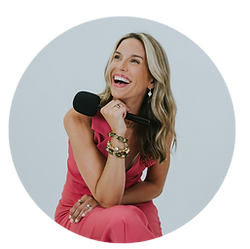


Her Mom Started a Church at 73. She Started a Skincare Brand at Her Day Job.
Think about the last time you said yes when your whole body meant no. My guest this week, Chinenyem Nwadiugwu, spent thirteen years as a software engineer believing she had to do things for people in order to be loved. Today she is the founder and CEO of She Biology, a luxury skincare company, and she still works full time in tech.
The business started with her own body giving out. The stress of engineering showed up as eczema, dry skin, and an insomnia she could not shake, and no dermatologist visit fixed it. So she changed how she ate. She started working out. Her body got better and her mind did not. She reached for CBD to finally sleep through the night, and she remembered her mother, who soaked her feet in the sink every night before bed and came out of it calm. Chinenyem put those two things together, started putting the oil on her own breakouts, watched the inflammation stop, and thought: if this helps me, it can help other people. She shipped samples to friends and family, let them test for six months, sat down for one big feedback meeting, and built a company out of what they told her.
The part I have not been able to stop thinking about is where her people pleasing started. She was a kid at the Boston Copley Library who stacked books all around herself and felt perfectly happy, and she never quite learned how to be vulnerable with a friend. So she learned a different equation instead. Do this action, get this reward. Say yes, be liked. Her fix is one clean sentence: do not do something for someone else unless you have already done it for yourself first. And yes, when she started saying no, she lost some people. She says it was okay.
If saying no feels disproportionately expensive to you, there is a reason. Linda Babcock and her Carnegie Mellon co-authors, the researchers behind The No Club, found that women spend roughly 200 more hours a year than men on non-promotable tasks, the work that helps the organization and does nothing for your career. Their answer to why is the part that stings. Women do that work largely because everyone expects them to say yes.
And if you are sitting on something you want to build but you are waiting to quit your job first, do not wait. LendingTree's 2025 survey found 38% of Americans have a side hustle, 67% of those people are also working full or part time, and women are the group most likely to say that income is essential. Chinenyem did not wait. Neither did her mother, who started her own church at 73, after recovering from stomach cancer. That is the reframe of this whole episode. You are not in a box. You are not one job title. There is no age at which the door quietly closes. Fear is just a feeling, so go pursue the thing responsibly, and stop waiting for the room to hand you permission.
TRANSCRIPT:
Erica: Hey, girl. By now, you know I have HER Collective, my online community for ambitious women who are done doing it alone. HER Collective is for the women who are smart, capable, and driven, but they find themselves stuck on the sticky floors like self doubt, burnout, and waiting for permission that quite honestly never comes. Inside HER, you get more than motivation. You get real support, real strategies, and real momentum.
Erica: We work on things like clarifying what you want now and what's coming next, building confidence without burning yourself out, handling hard conversations, career moves, and leadership moments with clarity, and surrounding yourself with women who actually get it. This isn't about hustling harder. It's about moving intentionally with the right tools and the right people in your corner. If you're ready to stop spinning, start choosing yourself, and build a career and a life that actually feels aligned, I'd love to welcome you inside HER Collective. You can learn more and join us at www.joinhercollective.com.
Erica: Because honestly, girl, you were never meant to do this alone.
Chinenyem: You're gonna be okay. You're gonna grow, and you're not gonna have these feelings of sadness and hopelessness all the time. And you're gonna find a solution to do it. And I want you to trust in yourself and not be afraid of the unknown and just push forward, because you're gonna be okay.
Erica: Today's guest is Chinenyem Nwadiugwu, founder and CEO of She Biology Skincare Corporation. And who doesn't love skincare? If y'all didn't know, I am a skincare junkie thanks to my stepmom. But Chinenyem took what she calls an educated safe risk, starting with a calculated plan which included launching her business while working full time.
Erica: The goal behind her luxury CBD skincare brand is to remind the world that with skincare, you can practice self care rituals that help you focus your mind and decrease the stress in your life. And this girl needs some of that. So, Chinenyem, thank you for being here. So awesome to have you.
Chinenyem: I am excited to be on.
Erica: I'm excited. It is so great. So I would love to hear the quick and dirty version of who is Chinenyem and how did you go from being this full time woman in tech to running a skincare business?
Chinenyem: Oh my gosh. I love when people ask me who is Chinenyem. So Chinenyem started as actually a software engineer, working for thirteen years in IT. And then I started having a lot of stress related skin issues. I had childbirth with eczema and I had a lot of dry skin.
Chinenyem: And so I'd go to a dermatologist, I'd see my physician on and off just to try to fix that issue, but it would never kind of go away. So what I started doing is I changed my eating habits. I started to exercise and work out more, and I saw that was helping me, but that was helping my physical body. I needed something to help my mind. And so that's when I started transitioning into learning how to get myself to sleep at night.
Chinenyem: Because I had insomnia too, from anxiety and stress with it. So I started taking CBD and that would help relax my mind and my brain and help me sleep through the night. Also, I remembered my mother's self care technique. Before she would go to bed or wake up in the morning, she would bathe her feet in the sink, which, she's a small woman, so it'd be okay. But she would bathe her feet in the sink. And I felt like after she did that type of ritual, where it was her feet and her face, she'd be calm and at peace and then be able to sleep.
Chinenyem: So I started to do that also. Now, combining those two items, the CBD and self care, I was like, why can I not apply that to my skincare rituals? And so I just started to actually take the oil itself and put it where I would have breakouts and have eczema, and it would actually stop the inflammation. I said, okay. If this is helping me, this can help other people.
Chinenyem: Let's see how this is gonna go. So that's when I started studying up more on the endocannabinoid system that we have in our bodies and also in the plant. I started working with CBD hemp farm growers and also with chemists who started formulating products that would help our skin. And so that's how She Biology was born, turning skincare routines into self care rituals. And so, still working full time, but also running a skincare business full time, because I love both.
Erica: You are doing it all. You are doing all of these things. So tell me, because, you know, this podcast is all about sticky floors, the limiting beliefs. Like, do you even have these? Because you're just tackling shit left and right.
Chinenyem: I do. Okay. So I do have limiting beliefs. I seriously have them, but the way I get through them, so I read the Bible a lot. I pray a lot and I do repetitions of scriptures a lot, and positive motivation.
Chinenyem: I guess little quotes, and I have them hung around my house. And so when I get a thought that I cannot do something, so like I recently had competed in a grant competition. I was like, I can't do this. I'm scared. I can't talk.
Chinenyem: And so, one, I start doing the opposite. Like, I can do this. I can talk. And I practice. The more you practice something, the less afraid you are. And I also believe that when I am afraid of something, something that is new, it doesn't mean I shouldn't do it, because I don't know exactly what's on the other side, or maybe what's there is a failure part.
Chinenyem: And there's nothing wrong with failing, because you always find a solution. And I always like to go back into the IT world. When you're solving a coding challenge, you're using a lot of different solutions to fix it. The first solution may not be correct. It might not even be efficient, but it'll work. And so I've actually trained myself over the years to accept failure and keep throwing something at it that will actually fix the problem.
Chinenyem: So that is, I guess, what I can say in a whole. Practice, keep throwing solutions at the problem, believe in yourself. I have to believe in myself and have faith in myself that I can do this, and then push out negative thoughts as much as possible and replace them with positive thoughts as much as possible. So yeah.
Erica: I do a ton of that too. What I love that you said though, and I think it's an area that I can work on myself, is recognizing that there is nothing wrong with failure. And you talked about the grant competition and it made my brain go to, I'm doing a keynote speech for a women's group in a couple weeks. Very excited about it.
Erica: It's what I love to do. But girl, if I gotta pull myself to practice that speech, it's like pulling teeth, you know?
Chinenyem: Yeah.
Erica: And I realized it's because, and this is like when I started, right, it's because I wasn't great at it. Like, I didn't just come up and I wasn't just amazing at doing it by myself. And so my brain started spiraling down this, like, you're never gonna be able to get this speech right. You're gonna mess up on stage, all of the way down the negativity drain.
Erica: And as my therapist likes to say, like, Erica, you're not gonna not practice it. So, you know, you're gonna be somewhat okay. But also too, that, like, even if I do get up there and it doesn't go a 100% as planned, that little piece of failure or whatever it is is okay.
Chinenyem: Exactly. And no one will notice except you.
Erica: No one will notice except me.
Chinenyem: Yes. Because you're the expert.
Erica: This is turning into a therapy session for me now.
Chinenyem: Because you're the expert. They see us as the expert because we're on stage, and also not just what they're seeing, but then in the past, what they have already seen, what we have already created, what we have already put out into the world. They're judging based upon that. So if we do make a mistake, people usually haven't noticed, but we notice. Absolutely.
Erica: So how do you go from this place of, like, okay, I'm gonna experiment a little by putting the oil on my own skin issues, to I'm gonna launch this business? Because there's a big gap.
Chinenyem: Yeah. I tend to go all out on things. It's odd. So I had the mind of, oh, I want to own my own business, because I've owned an IT agency before and I've done freelance work before, and I love working on my own. And also, working at DOD, I do work remotely, but I still love to have my own company.
Chinenyem: So I wasn't even thinking about the work it took to build the company. I think every step of the way I was learning, and how to get better at it, and how to actually have a business and handle finances and profit and loss and marketing and branding and building community. Every single step of the way I had to learn how to do it. And my passion is actually with helping people and taking care of their skin and also taking care of their minds. And I have to keep that in focus when I'm learning all these new steps and building a corporation and a business and hiring people. If I keep that in focus, my passion, then I can do the other things, because the other things are challenges.
Chinenyem: Right? We've never done them before. And of course you get scared, but, you know, you have to do these things to make the business successful. And so long as I keep that passion, I can do it. Now, how do I go from doing it small to large?
Chinenyem: I started out with friends and family. I love working with them. Everyone's like, let's talk about this skincare. And so I shipped out the skincare samples to them and they tested it for, I think, six months. And then we had a huge meeting about it.
Chinenyem: And just hearing their feedback, and this was something called the heal salve. The heal salve was meant for pain relief, cramping, or menstrual cycles. And they were giving me feedback on how they were actually using it. Some of them were using it for muscle pain, for arthritis, for applying it to their skin throughout the day while they're working. And I was like, oh, there's so many different usages of this.
Chinenyem: And just learning about always getting your customers' feedback about the product, about the packaging, that actually helped grow it. I really was excited about that part too. So that's when I started moving into that direction of building a skincare company.
Erica: What I think is so important about that message alone is that you're not in a box. Like, you can be an IT professional and have a skincare business. You can be in HR, and if you wanna be a project manager, go do that.
Erica: You can be a marketer, but if you wanna teach yoga, you can go do that. Number one, it's never too late to start something. And then number two, like, you don't have to give it all up. Right? Like you said, you still do this work for the DOD and you still do both worlds.
Erica: And it works for you. And I think that's such an important message, because I think so often we get so far down our career and we're just like, well, I'm in HR. Like, that's me for life now.
Chinenyem: Yeah. No. You do not put yourself in a box. I think as humans, we are very creative individuals and we have multiple things or passions that we love, whether it's a hobby or another job, but we have the ability to do several things. It's just how much we're gonna put into it and how much you wanna get out of it.
Chinenyem: So, yeah, don't put yourself in a box. And then I like when you hinted on age. So my mom, she was in her seventies when she first started her own church. Like, she's a pastor.
Erica: Wow.
Chinenyem: After she recovered from stomach cancer. And she's like, the Lord has me on this earth to do something in this world. And she's turning 73 and opening her own church. Like, if she can do it, I know I can do it.
Chinenyem: So, yeah, you can do multiple things. Don't trap yourself in a box. She was retired, mind you. And opening a church means you have to reach out to the community, create marketing materials, attend a lot of different services. It's just like running an agency, visits, church.
Chinenyem: So don't put yourself in a box. And no matter what age you are, you can do it. Seventies, eighties, sixties, you can do it.
Erica: So I've got a Facebook friend that I went to college with. And I swear every time I see her on Facebook, she's moving, she's doing a new job. I'm like, girl, what is going on over here? And she finally actually posted about it, because I think she got that question so often. And she was like, look, y'all.
Erica: We are here for a good time. We are not here for a long time. She was like, if my heart is called to move to Colorado and I go out there and after six months or a year it doesn't work, I'll come back home. If my heart is called to go try this out for an occupation, I'ma try it out.
Erica: And if it doesn't work, I'ma try something different. And I was like, damn, girl, good for you. Because so often, number one, we're afraid to take the risk. We don't want to take the chance of what does it look like to move somewhere else or try a new job. And then number two, when we do that, sometimes we're afraid to admit that maybe it wasn't the air quote right move.
Erica: You know, and she's putting a whole different spin on it, that, hey, it was the right move for the right time. And that right time might've been six months and now I'm off to go do this.
Chinenyem: Yes. Actually, I know you just put that up, but I just spoke with a friend exactly about that. She started a clothing boutique. And then like a year into it, she's like, I don't know if I'm feeling this. Was I wrong? I was like, no, you're not wrong.
Chinenyem: You put your all into it. You did something, you helped other people with their styling, and now you want to do something else. That's totally fine. You can dip and dab in different areas to see what you love. You're not stuck in one place.
Chinenyem: So I'm happy that she said that, and that she does that, because right, we all live on this earth for not a long time, and time is not our friend. So go ahead and pursue what you wanna pursue, regardless of what people are thinking.
Erica: Yeah. And you're not married to it. You don't have to hold on to it. You know?
Erica: I mean, guess what? Like, you can always get divorced from it.
Chinenyem: You can. You can always do that. Yeah.
Erica: But it's important to not be scared to let go of things that aren't serving you. And just speaking from my own perspective, I know that that would be an area that would be a challenge for me, because I am that person that worries about what other people think of me. Something I'm working on. It's a sticky floor. But that would be a really solid area for me to be like, you know what? I tried it and it didn't work out.
Erica: So now I'm going to do this. I'm not gonna beat a dead horse.
Chinenyem: Yes. Because, like, I also told her, okay, when you do it, do it responsibly, make sure you have the funds and the things to do what you gotta do, but don't worry about what this world is thinking about what you're doing. Just pursue your passion and pursue it responsibly, and then you will be okay. And she's like, okay.
Erica: I love it. Such good advice there. So I have a question for you about sticky floors as well. And especially since you're this woman that is straddling corporate America and being a CEO of your own business, do you find that the sticky floors that you go through, that you experience, show up differently based on corporate America and CEO world, or does the same sticky floor show up in both places? What does that look like for you?
Chinenyem: I think it shows up in both places.
Erica: Same floor, both places. What?
Chinenyem: So, managing people. So I've had to manage people on both sides, still am. And learning how to do it on the corporate side really helped me do it in my own business. So on the corporate side, I like to know, okay, where do you, what do you like to do? What type of person are you? What are your characteristics and how do you solve problems, and how can I help you?
Chinenyem: And that's how I help people grow and how to get tasks done. And then we have what we call sprints. You have a timeline to do something. And I apply those same lessons in my beauty industry, well, skincare business, where I say, okay, what is your passion? What do you like to do?
Chinenyem: Let me get to know you personally. This is the timeline, and also this is how I can help you without micromanaging you. So I believe both worlds, I apply the same knowledge to. And another thing I noticed also is speaking up, in any situation, on both sides, speaking up. So in the IT world it's usually a lot of men.
Chinenyem: I'm used to being around a lot of men and I had to learn how to speak up about problems. Or if I see a problem, and everyone thinks it's okay, but I say this is a problem, I'm not afraid to speak up and say this is the reason why it's a problem. I can do the same thing in this industry.
Chinenyem: It's a newer industry for me, which means I have to meet newer people who are, I would say, more knowledgeable than I am, but I'm not afraid to speak up and challenge something that is, I guess, what's common to do. And so, learning how to do it in the IT world, I can do it now in this world. So I feel like in both places I can apply lessons that I've learned.
Erica: Do people ever tell you that you're crazy for going down this avenue?
Chinenyem: No. Not yet. No one has.
Erica: No one has told you?
Chinenyem: No one has said, what in the world are you doing? But no. I actually got a lot of feedback about, oh, you've grown really quickly in a short time. And I don't see it in my head that I've grown really quickly in a short time. I don't think we ever do. Others see it, but I don't.
Chinenyem: But no, nobody has told me anything crazy yet.
Erica: I was just curious. Because I was like, I know for me, when I ventured from, and I'm in corporate still, I'm an executive, and from that into executive coaching and podcasting, I did get a few side eye looks of, like, what are you doing? Like, don't you already have enough on your plate?
Chinenyem: Don't you have enough going on?
Erica: I know. I see your face. She's giving me the look. But it's hard sometimes. It's not that I listen to those voices, but what I then process is the people who say those things to me. It says more about them than it does about my growth and ambition.
Chinenyem: Tell me more. Okay.
Erica: See, this is a therapy session for Erica. I love it. Yeah. But it's just, I've always been on a growth mindset.
Erica: Like, I joke around and I say it's my growth mindset problem, because I'm always looking to the next thing. And that's what excites me. I want to leave a bigger impact on the world. I want to help more women and do all these things. But often there will be people who are like, you are an executive, you are a mom, aren't you doing enough?
Erica: And I think some of it is said out of just concern. They wanna make sure I'm not overextending myself or doing too much. But sometimes it can come off a little bit of, is that judgy or what? You know?
Chinenyem: Yeah. But I think also our capacity to do things is different than others. I don't know if it's a TD Jakes or somebody, but it was along those lines where it's like, the Lord blesses you with enough capacity to do this, whereas someone else couldn't do it. So even though that person can't do it, you can do it.
Chinenyem: Or another guy who runs 38 companies at one time. I can't do that right now. I know I can't, but he can do it. So I believe our capacity is different for each person, how much we can do things. And it's not impossible.
Erica: And I think it's important to recognize too that we all go through different seasons in our life. Right? And right now, this is a season where I can take on all the things that I'm doing. You know, there may be another season in my life where I'm like, you know what? I need to step back. I need to take a moment.
Chinenyem: That makes sense. There are seasons. Yeah. Because, I guess, go back to my mom. When she was sick, she couldn't run a church. But when she was recovered, she could. So there are different seasons. Definitely.
Erica: Absolutely. Hey there, listeners. If you have ever felt like you're stuck in a place, held back by self doubt, perfectionism, or that pesky inner critic, you're not alone. We all face those sticky floors that keep us from reaching the heights we dream of. But guess what?
Erica: It's time to shatter those limiting beliefs and toxic behaviors to uncover infinite possibilities. My book, Glass Ceilings and Sticky Floors, is your ultimate guide to smashing through barriers, overcoming limiting beliefs, and stepping into your full potential. This book has been endorsed by none other than the great Mel Robbins, best selling author and motivational powerhouse. It's also been featured in Success Magazine, so you know it's packed with insights that work. Inside, you'll find real life sticky floor stories, practical strategies to help you handle your own sticky floor moments, and a whole lot of inspiration to keep you climbing.
Erica: This isn't just a book. It's your roadmap to success, confidence, and freedom. Grab your copy of Glass Ceilings and Sticky Floors today at www.ericaandersonrooney.com. Whether you're in the boardroom, the classroom, or just starting out, this book is for you, because no one, and I mean no one, deserves to stay stuck, no one deserves to feel small, and you have glass ceilings to shatter. Let's do this.
Erica: So in our conversation that we had first, before this one, you talked a bit about being a people pleaser and setting boundaries.
Chinenyem: Oh, yeah. Yeah.
Erica: Tell me all about that, because that is huge for women that I work with. Wanting to make it nice, wanting everybody to be happy. So tell me all about that.
Chinenyem: I don't know where I got it from, and I'm working on it in therapy, but apparently I believed that for me to receive love, I had to do things for people.
Erica: Uh-huh.
Chinenyem: Or to make them like me, I had to do things for people. And so in doing that, I was doing it all through college, adult life, even to now, to the point where I didn't know how to say no. And if I said no, I would feel guilty, or that the other person doesn't wanna be my friend anymore, you know, or this guy doesn't wanna date me anymore. I would feel guilty.
Chinenyem: Then, not saying no, I was not doing a lot of things for myself. I was neglecting myself and taking on so much, things I couldn't even handle. And so it sounds like, okay, I need to learn how to say no.
Chinenyem: Of course, there's therapy, people. Everyone needs to go see a therapist, even if you don't think you have a problem.
Erica: I preach that on this podcast all the time.
Chinenyem: And there's another book that I have, it's about setting boundaries. Reading that book, I've learned that it's okay to say no. It's okay to set boundaries. It's a way to protect yourself, actually, and to love yourself more, and to see who really is in love with you, not your actions of what you're doing, but how you're treating that person or how that person is treating you, not what you can provide for that person twenty four seven.
Chinenyem: Of course, I know there's a give and take in relationships, of course, because you wanna help people. But if it's solely based on what someone can get out of you, it's wrong. And so when you start saying no, you're gonna start noticing people dropping away, and some people staying, because they really are there for you.
Erica: That was gonna be my next question. Did you notice when you started putting boundaries into place, did you lose people from your life, or were you able to identify those that weren't there?
Chinenyem: Yeah. I did lose some people in my life, and it was okay. In the beginning, I was like, oh, wow. It was like a revelation. Like a light bulb just went off and I didn't feel bad anymore.
Chinenyem: I was like, oh, okay. Now I have room to do this. So it's just totally fine. And then, like, some people who are my family, you can't get rid of your family. We did talk less, but as we grew, they realized that this is Chinenyem's boundary and I can't cross it.
Chinenyem: And I would say things like, okay, this is what I can do for you.
Erica: This is
Chinenyem: what I cannot do for you. And so that would help too when it comes to dealing with family.
Erica: I can totally see this as, like, something that starts in childhood. Like, I'm just envisioning this Mean Girls thing, where the one mean queen bee girl is like, if you don't do these things, like, you can't sit with us. Did you experience that? You think, like, growing up, and maybe that just reinforced it?
Chinenyem: I didn't have a lot of friends. I don't remember. I know I was in books a lot. I was always in my classes and studying. I loved going to the library.
Chinenyem: So maybe because I was always in books and not really having human interaction, I didn't really know how to form friendships correctly. So I think that's what it was, now that I think about it. I think we were talking about this. This is a good question. But, yeah, it definitely developed in childhood.
Chinenyem: Yeah. Getting deep here today.
Erica: I love it. I know. Getting deep.
Chinenyem: Because I remember, as we're talking about that, I see myself as a kid. I would go to the Boston Copley Library and just put books all around me. And I was happy with books around me. I didn't need people. And so, you know, going to school, I would talk, but it was always, like, a surface level talking.
Chinenyem: And I didn't go to other children's houses. Like, I didn't do things like that. So it was always around my family or in books a lot. So developing that human interaction, or being vulnerable with our friends, was not something I developed easily. And so I guess, you know, when it came to going into college and getting a job and then being in the IT world, I knew that if I did this action, I would get this reward.
Chinenyem: So with those two together, I feel like that's what came of me always saying yes, yes, yes, yes. This person is happy. I'm getting this reward, and I should do it this way. So, if that makes sense.
Erica: One thing you mentioned to me when we talked last, which I thought was such a good piece of advice, is, like, not doing something for somebody else unless you've already done it for yourself first.
Chinenyem: Yes. Yes. Yes. Yes. Yes.
Chinenyem: Definitely believe in that. If you have not done it for yourself, do not go out of your way to do it for somebody else, because then you're gonna start having feelings of neglecting your own self. You have this internal conflict of, why can I not achieve this for myself? Why would I do it for somebody else? I feel like we have to love ourselves first.
Chinenyem: And also it teaches us how to love other people, when we're doing that task the right way, you know, and for the right reasons. And so, yeah, do it for yourself first. Make yourself feel good. It's okay. It's okay.
Erica: Well, look, this may be a real petty example, but last night I had just made my little bowl of berries and yogurt. That's my little sweet treat at the end of the day. And I was on my way to sit down and my husband was like, will you make me a tea? And I looked at him. I was like, no.
Erica: I will not make you a tea. I was like, I've served people all day long.
Chinenyem: I'm gonna take myself to the couch. Okay.
Erica: Well, I'll tell you, number one, I think he was surprised, because he was like, but you're already in the kitchen. And I'm like, but I'm not making tea. He wasn't doing it because he thinks I should serve him. But I mean, he just asked. People don't think that they're crossing a boundary, or they're not recognizing that, like, yeah, Erica hasn't gotten to sit down all day and she just made herself a snack.
Erica: So sometimes it's just bringing that awareness, because they're totally oblivious.
Chinenyem: Yeah. And that awareness is a sort of boundary too, in protecting yourself, because you already had a long day and you literally just wanna sit on the couch and eat your berries.
Erica: All you want is a tea. And guess what? If he wanted that tea bad enough, he would have gone up and made it. And he did it.
Chinenyem: So the man lived another day. He lived another day. That is funny.
Erica: Well, Chinenyem, if you could go back in time to the Chinenyem with insomnia, you know, not sure where this was gonna go, what kind of advice would you give that woman today? Knowing everything you know now, the experiences about people pleasing and growing your own business. What would that one piece of advice be?
Chinenyem: Oh my gosh. Okay. So the first thing I would do is I would sit her down, make sure I have her full attention. Excuse me.
Chinenyem: And then I would hold her hand. And what I like people to always tell me is like, okay, you're gonna be okay. You're gonna grow. And you're not gonna have these feelings of sadness and hopelessness all the time, or, you know, most of the time. And you're gonna find a solution to do it.
Chinenyem: And I want you to trust in yourself and not be afraid of the unknown and just push forward, because you're gonna be okay. And just remember, you've got people around you who love you, and that you are not alone, and that you can achieve anything you put your mind to.
Erica: I'ma make a little snippet of that and put it out on all the social media so that all of my listeners can just save that as your ringtone, your text tone, you know, your little mantra in the morning, because that is amazing advice. And I think it is so true and so powerful.
Chinenyem: Yeah. Keep reminding ourselves. I mean, sometimes we can feel alone or hopelessness, and our mind is bogged down with these thoughts. But once that shadow is removed from our mind and removed from our eyes, you can see clearly and say that, oh, this person, you know, they care, and you have help all around you. Look what you have already achieved.
Chinenyem: Fear is just a feeling. Make sure you're not trying to cross the street and get hit by a truck. That's scary. Don't do that. But fear in itself is just a feeling, and making sure that you are safe and going through what you're going through to get to the other end.
Chinenyem: Don't be afraid of the unknown. So yeah.
Erica: Don't be afraid of the unknown. My favorite quote, the beauty of uncertainty is infinite possibility.
Chinenyem: The beauty of uncertainty is infinite possibility. Oh, wow. That's amazing. I didn't write that down.
Erica: It is. It's my favorite. It's by my girl, Tunde, on Peloton. And she said it one time, and I was like, that's it. That is the mantra for the whole season of my life. So, well, Chinenyem, thank you so much for being here. Where can people find you? Where can they buy your products?
Chinenyem: You can purchase She Biology at shebiology.com. You can follow us on Instagram and on LinkedIn and on TikTok.
Erica: Woo. I'm gonna link all of those in the show notes and on the social media posts. So make sure that you are running to buy her products. Don't walk, because they might not be on the shelves. But thank you so much for your time today. It was really great to talk to you.
RESOURCES MENTIONED IN THIS EPISODE:
- Ready to stop spinning and stop doing it alone? Join HER Collective, Erica's community for ambitious women in corporate America.
- Grab Erica's book Glass Ceilings and Sticky Floors and start shattering the beliefs that keep you stuck.
- Never miss an episode of Glass Ceilings & Sticky Floors.
- Shop Chinenyem's luxury CBD skincare line at She Biology.
- Follow She Biology on Instagram.
- Connect with Chinenyem Nwadiugwu on LinkedIn.
- She Biology on TikTok.
- The No Club: Putting a Stop to Women's Dead-End Work by Linda Babcock, Brenda Peyser, Lise Vesterlund, and Laurie Weingart, the research on women and non-promotable work.
- Tunde Oyeneyin, the Peloton instructor Erica quotes: the beauty of uncertainty is infinite possibility.
- T.D. Jakes, referenced on the idea that capacity is given differently to different people.
RELATED EPISODES:
FREQUENTLY ASKED QUESTIONS:
Can you start a business while working a full time job?
Yes, and most people who do exactly that are still employed. Chinenyem Nwadiugwu built She Biology into a luxury skincare company while working full time in tech, calling it an educated safe risk with a calculated plan behind it. LendingTree's 2025 survey found 38% of Americans have a side hustle and 67% of them also work full or part time. She started small, shipping samples to friends and family and letting them test for six months before she scaled anything.
How do you set boundaries when you have been a people pleaser your whole life?
Chinenyem's rule is one sentence: do not do something for someone else unless you have already done it for yourself first. She traces her own people pleasing back to a childhood equation, do this action and get this reward, which turned into saying yes to be liked. When she finally started saying no, some people did fall away, and she says that was okay, because the ones who stayed were there for her and not for what she could provide. Therapy helped her name the pattern in the first place.
What is a sticky floor, and is people pleasing one of them?
A sticky floor is Erica Anderson Rooney's term for the limiting beliefs and toxic behaviors that keep you stuck long before any glass ceiling does. People pleasing is one of the most common ones, because it gets praised as being a team player right up until it eats your entire calendar. Linda Babcock and her Carnegie Mellon co-authors found women spend roughly 200 more hours a year than men on non-promotable tasks, largely because everyone expects them to say yes. Naming it is how you start putting it down.
MORE FROM ME
Follow me on Instagram @ericaandersonrooney and @joinhercollective
SUBSCRIBE & REVIEW
If you loved this episode, please take a moment to subscribe and leave a review on Apple Podcasts. Your support helps us reach more women who need these insights. Thank you for tuning in to the Glass Ceilings and Sticky Floor podcast. See you next week!
Hi, I'm Erica!
In the last 15 years, I climbed to Chief People Officer, 6x'd my income, walked away from a culture that stopped matching my values, wrote two books, and built HER Collective to help thousands of women rise to power and lead in the age of AI. I've learned a thing or two about smashing ceilings and closing gaps, and Glass Ceilings & Sticky Floors is where I open the playbook, the receipts, and the real stories to share it all with you.
_JPG.jpg)