


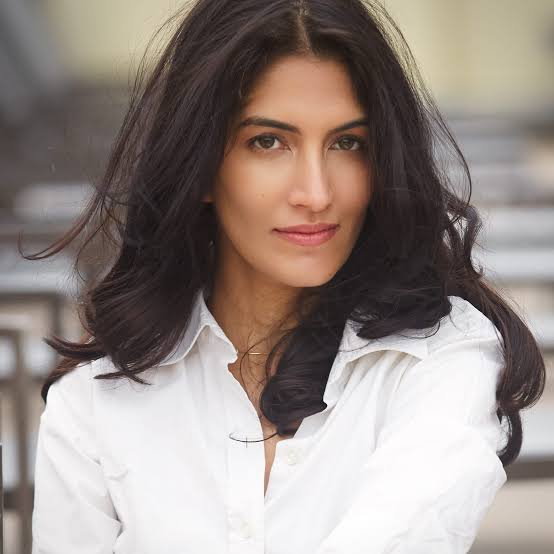



The Truth About Being an Entrepreneur, From a Founder Who Launched in the Middle of a Pandemic
Everybody wants the founder story. Almost nobody wants the part where you have put four and a half years into a product and your friends are asking whether you really want to launch it in the middle of a pandemic.
Surbhee Grover launched anyway. She grew up across India and started her career in Mumbai on Parachute coconut hair oil, one of the largest haircare brands in that part of the world, where she was the first saleswoman her company ever hired because the job was not considered safe for women. She was riding into remote villages on dirt tracks collecting cash. From there she helped launch L'Oreal in India, then boarded her first ever international flight to attend business school at NYU knowing almost nobody in the country. Then came Booz and Company, New York, London, and consulting work across Europe on how big companies grow.
The idea landed in 2016, while she was doing luxury work for De Beers and LVMH. South Asian ingredients and rituals were everywhere, in turmeric lattes and yoga and beauty, and yet almost no South Asian brands sat on luxury shelves. The few that existed leaned entirely on natural or Ayurvedic positioning with no innovation angle. That was the market gap, and Love, Indus was her answer to it: rare ingredients from the Indian subcontinent fused with current technology. It is now carried at Neiman Marcus.
She is refreshingly blunt about the cost. Nothing prepares you for it, she says, and she says it having advised Fortune 500 companies on growth. Her honesty matters because the funding picture behind it is bleaker than the headlines. PitchBook's 2025 All In report found female-founded companies raised a record $73.6 billion, 27.7% of total US venture deal value, but that number counts any company with at least one female cofounder. Companies founded entirely by women got 1.1% of the dollars.
The advice she leaves you with is not hustle harder. It is to build the foundation before you build the thing, to keep the friends who will drag you out of the house and tell you the truth about your business, and to run every big decision through one question: if I did not do this, would I regret it? And the thing she wishes she had told the 20-something on that first international flight is the reframe this whole episode turns on. She would have done it all anyway. She just would have enjoyed it more if she had bet 200% on herself from the start.
TRANSCRIPT:
Erica: Hey, girl. By now, you know I have Her Collective, my online community for ambitious women who are done doing it alone. Her Collective is for the women who are smart, capable, and driven, but they find themselves stuck on the sticky floors like self doubt, burnout, and waiting for permission that quite honestly never comes. Inside HER, you get more than motivation. You get real support, real strategies, and real momentum.
We work on things like clarifying what you want now and what's coming next, building confidence without burning yourself out, navigating hard conversations, career moves, and leadership moments with clarity, and surrounding yourself with women who actually get it. This isn't about hustling harder. It's about moving intentionally with the right tools and the right people in your corner. If you're ready to stop spinning, start choosing yourself, and build a career in life that actually feels aligned, I'd love to welcome you inside her collective. You can learn more and join us at www.joinhercollective.com.
Because honestly, girl, you were never meant to do this alone. Have you ever wondered what it takes to be an entrepreneur? To leave the security of your full time job and dive straight into the unknown? To go against the grain and follow your heart without knowing how the story will end, today's guest is an entrepreneur, a strategist, and a storyteller. Surbhee Grover is also the founder of Love, Indus, an opulent skin care and wellness brand inspired by her personal journey of growing up throughout various parts of India and her experience of regional rituals.
She shares with us her personal journey around the world working with big brands like De Beers and L'Oreal, and then to use her words, get bitten by the entrepreneurial bug. What you will love about today's episode is Surbhee gets tactical about being an entrepreneur. We talk about market gaps, brand focus, unmet needs, and surviving launching a business in the middle of a pandemic. But also we talk about the ugly parts of being an entrepreneur, the work, the emotional investment, and the learning and unlearning that it takes to be successful. If you've ever thought about what it takes to be an entrepreneur, grab a journal and get ready to take some notes because Surbhee doesn't hold back.
Welcome, friends. I am so excited that my friend, Surbhee Grover, is here all the way from New York. Surbhee, how are you?
Surbhee: Doing well, Erica. How are you doing?
Erica: I am fantastic. This is a long time in the coming. Surbhee and I have had to bounce our schedules back and forth, but that is what happens when you're trying to coordinate with a woman who is going all across the world. I would love to just kick off this session by hearing a little bit more about you and your story.
Surbhee: Oh, thank you for having me, Erica. So excited to finally get to have this conversation. So calling in from, I wish I could say very warm New York, but not really. So New York's been playing tricks on us, show showing us a little bit of sunshine and warm weather and then taking it away. And, the Indian in me does not appreciate it.
Erica, I guess, you know, alluding to the Indian, that's where my story kind of begins. That's where I'm from. I was born and grew up in India, and I was, super fortunate because I had a chance to, you know, live across different parts of India. And, a lot of people sort of talk about Indian being India being such a diverse, you know, country. And I was really fortunate because I I actually got to experience that.
So, you know, just growing up, I got to experience what, everyone sort of alludes to this richness of the Indian Subcontinent. And, it truly is more like a continent than it is a country. So, and I started my career, actually in beauty and wellness in Mumbai, working on one of India's largest haircare brands, which is, Parachute coconut hair oil. You may know this already, but for South Asian, oiling their hair is a big deal. And so this hair care brand has been around for, like, a a century, and it's it's sort of one of the largest hair care brands from that part of the world.
And then I moved on to L'Oreal. When L'Oreal was entering, they did market to help launch L'Oreal in India. And it was really interesting to see this really broad spectrum of, consumers and how consumers think about, interact with beauty and wellness products and concepts. So from selling hair oil in the villages of India to, you know, working with, like, a French brand in spas and salons was a very interesting sort of spectrum to to experience in the initial part of, sort of my career. And then I moved to New York to go to business school at NYU, after which I joined a strategy consulting firm called Booz Allen Hamilton or Booz and Company, which is now part of, PwC.
And I specialized in innovation and growth. So helping Fortune 500 companies really think about how innovation can drive growth. I worked in New York for a couple of years and then moved to London as the firm was growing its practice in Europe. So worked in Netherlands, Denmark, Ireland, France, The UK, with a broad spectrum of sort of these companies. And it was really very interesting and very different from what I've done in the initial part of my career, which is helping big companies break through sort of the cycle of growing incrementally, but rather, like, you know, how can you grow exponentially and bring the power of technology and innovation to their companies and the work that they did.
Then got bitten by the entrepreneurial bug as happens to some of us whether we like it or not, and I was sort of in the exploratory stage. I moved back from The UK to New York. And, as I was continuing to do my consulting, just coincidentally, I was doing a ton of work in luxury around 2016. I was doing work for De Beers, the diamond company. I was doing a little bit of work for LVMH, and also a luxury retailer.
And what struck me at that point was I was seeing sort of the growth in a lot of South Asian concepts and ingredients and practices in every walk of life, whether you saw turmeric lattice, so you saw like turmeric and coconut oil and jasmine oil and all of that, or just the way people live their lives, which was, you know, in yoga and meditation. You were also seeing South Asian influence grow a lot in fashion fashion and beauty. And with all of that happening, what was interesting to me was in spite of the excitement and the curiosity about the South Asian concepts and ingredients and practices, there were very few brands of South Asian origin in the eyes of luxury retail. Right? You saw, so many French brands, so many Japanese brands.
There are ton of brands from Korea, but there were very few brands from South Asia that were honing in and harnessing these ingredients and these concepts and and leveraging them to provide a truly popular high performing experience to consumers. And that's where I saw the market gap. What I also saw that handful of brands from that part of the world that did have offerings will focus a lot more on natural or Ayurveda. There wasn't a lot that was about looking at everything from a lens of innovation, which also was my background. So I was obviously biased towards that.
And so all of this sort of led to the idea of Love, Indus, which would combine or fuse these rare riches from the Indian Subcontinent with the latest that technology had to offer. It was also important that the brand focus on things that was sort of unmet needs in the category. So it was very important to me at that point that the brand and what we create as a company is addictive in the lives of the consumers. So those were some of the things that led to the creation of the birth of Love, Indus, and here we are two years later talking about the journey.
Erica: I always think about how do these people come up with these ideas, you know, just like this one. And then you hear your story, and it's like, well, all of this makes sense. But it's such a fascinating story that you just took us with your unique life experiences and innovation and living in Southeast Asia and London and all of these other places. So thank you for sharing that. One of my questions for you, because it's a beautiful story.
Right? Like, the the Instagram worthy story. Was it hard? Was it challenging? Was it scary?
What? What?
Surbhee: Okay. Sorry. I had to laugh. I absolutely had to laugh because, I thought I'd done challenging things in my life in, like, my first job in India. You know, I actually I was the first saleswoman that the company ever hired because it was not safe to do sales in India at that point in time.
We used to go to these remote areas, remote villages. You know, road would be a generous storm for for what the van or the truck used to be on. It was, like, dirt trap, and you would come back late in the night. And these are small villages, so you're only collecting cash. And so, you know, with that or the move, you know, when I came to New York, it was my first ever international flight when I came here to go to business school at NYU.
I'd never seen anything outside of India. So and I had, you know, knew little to no one here in the city or this country. And so I thought I've done challenging things in my life, but I think this by far, I'll be candid, is the hardest thing I've done. Having your own business is because I think a lot of factors play into it. One, there's just so much attachment.
You know, you know, no job and and I've loved my jobs and the places I've worked at and all of that, but I think you're just so forget the monetary or the financial part of it, emotionally invested in what you're creating, that nothing's good enough. And you always wanna work harder and, you know, even a 100% is not enough. So you constantly want to nourish it and nurture it and give it, not just all you've got, but over and above what you've got. The second thing is I think nothing prepares you for it. No job can really prepare you to be an entrepreneur.
And I see that with complete humility that in spite of having advice of the biggest companies on how they should grow and innovate, I had a lot of unlearning to do before I felt like I was sort of really ready and and giving it all. And and I'm still unlearning and I'm still learning, and I don't think that process is ever going to stop. But it it was also challenging because of the timing. Right? We launched right in the middle of COVID.
So there were lots of sort of factors to the point that, you know, friends who had seen me put in, like, four and a half, five years of work into creating these product. We're like, are you sure you wanna launch during COVID? Why don't you just wait another year before this, you know and I feel like, I was ready, and you never know, you know, how things would would have changed, and we decided to launch in the middle of COVID. So because of many factors, some that are just standard to entrepreneurship, some I think that are unique to me, my personality about how I wanna do and what I wanna create, And three, because of just the timing of everything, it's definitely been extremely challenging. And I wanna put this out there because I think a lot of a lot is often talked about about entrepreneurship and the joy, but there is this other side of it that needs to be talked about too.
It is by far the most full blinking I've done either. It is it is so much joy to, like, you know, take things from paper to it being something concrete, and then you would visualize it in a certain way. And then to see the reaction in the market, to see how consumers the love with which consumers and the press and, you know, our community has sort of, adopted the brand to see the repeat rates, to see the kind of reviews we get. There were so many times when I was asked the question, is it worth it? I look back at the repeat rates and I'm like, no.
Every bit of it was worth it. So, yes, it's been an extremely challenging journey, but it's also been phenomenally rewarding. And so for anyone who's looking at, entrepreneurship as an option, I say if you're really thinking about it, no. It's extremely hard, but it's also really, really worth it. Yeah.
Erica: Hey there, listeners. If you have ever felt like you're stuck in a place, held back by self doubt, perfectionism, or that pesky inner critic, you're not alone. We all face those sticky floors that keep us from reaching the heights we dream of. But guess what? It's time to shatter those limiting beliefs and toxic behaviors to uncover infinite possibilities.
My book, Glass Ceilings and Sticky Floors, is your ultimate guide to smashing through barriers, overcoming limiting beliefs, and stepping into your full potential. This book has been endorsed by none other than the great Mel Robbins, best selling author and motivational powerhouse. It's also been featured in Success Magazine, so you know it's packed with insights that work. Inside, you'll find real life sticky floor stories, practical strategies to help you navigate your own sticky floor moments, and a whole lot of inspiration to keep you climbing. This isn't just a book.
It's your roadmap to success, confidence, and freedom. Grab your copy of Glass Ceilings and Sticky Floors today at www.ericaandersonrooney.com. Whether you're in the boardroom, the classroom, or just starting out, this book is for you because no one, and I mean no one, deserves to stay stuck, no one deserves to feel small, and you have glass ceilings to shatter. Let's do
Surbhee: this.
Erica: I can imagine that there are a lot of people out there who really are interested in becoming an entrepreneur and starting their own business, but I can also imagine that it seems so foreign and, like, how am I even going to become this person who launches this and does all this? What would you tell somebody who's like, I I have no idea how to get started?
Surbhee: Yeah. I think having a strong plan is super important. This is, and not to say that the plan will hold. The I will also say with 100% certainty that the plan will not hold, but yet that exercise is extremely important to get organized and to make sure that you're effectively and efficiently using your time and your emotional, financial, and mental resources. I would also say that use the time wisely to truly understand, why you're creating what you're creating, and is there a market for it, and understanding your customers and your consumers.
Like, the the foundation, you know, and in this world of fast, furious, get better, bigger, you know, quickly, I would always say, you know, just pull back and spend a lot of time, like, just putting together the foundation of what it what it is that you're creating, why the world needs this, and why and what is so unique about you that you should be the one offering that to the world. I feel like entrepreneurship is such a lonely journey. I come from a background where, you know, it's either doctors or engineers, which most of most of Indian parents, like, encourage you to be a doctor or engineer. If I have, like, an entrepreneurship gene in my body, like, it is it's probably coming from my maternal grandfather. But the rest of sort of my tribe tends to be mostly, like, bankers, consultants.
And there are a few entrepreneurs, not that many, even fewer women entrepreneurs. I think building your tribe and keeping your friends and family close because it is an obsession. Right? Like, I eat, drinks, leave my startup. So it becomes such an obsession that you actually need friends who are gonna kick you in the butt, who are gonna drag you out, who are gonna show you the mirror, who are gonna give you super honest feedback about your business.
So just make sure that you maintain and don't alienate that rich set of people who, you know, one, for your business, but also for for your sanity and, and to keep you on the right track. And then just knowing that you're never gonna know it all and it will seem really daunting, but at some point, you just have to pull the trigger. And for me, it's usually, like, there's this one question that has guided, like, the most important decisions in my life, you know, and I always ask myself that question that, if I didn't do it, would I regret it? And if the answer is yes, then for me, at least, the writing is very clear. I have to do it.
So why why waste time? Just just get on it and do it.
Erica: And I think it's so important to have a diverse tribe because the tribe that got you here isn't going to be the same tribe that's gonna get you to that next level. Yeah. And I say this because I feel like it's something that I go through where I have dreamed bigger than a lot of people in my family and dreamed a lot differently. Right? And the people in my family, the things that they say to me, they say because they love me and they want to protect me.
But, yeah, it's it's scary to think for them to think about me. Right? And I was having a conversation with a female friend of mine, and she said, you know, my parents still look at me as, like, the 17 year old coming in late, you know, making bad decisions. They can't imagine me doing things that I can do now. And she made a really great point of, like, I haven't lived at home in x many years.
You know? So, like Yeah. They know me, but they also don't know me now. And I was like, that is such a good point.
Surbhee: That's a very good point. Absolutely. And at the end of what also happens is different people have different risk tolerance. Risk has, and for me, like, of I've I would never go out there and say I'm not afraid. I have my fears.
I think we all do. Right? I've never been scared to start from scratch. It's like I've just done it too many times in my life. And so when I ask myself, like, what's the worst case scenario?
It's not if I can deal with it, but that's not a risk tolerance, you know, that that our parents may have. And also, maybe our parents', you know, risk tolerance for us is way lower than it was for themselves. And, also, I think where you were going is very similar in some ways how our lives intersect. Right? Is, you know, the the ambition of what we want to do, like, I've also realized as part of the entrepreneurial journey, not everyone's gonna understand your choices, and that's totally fine.
And you have to be able to make peace with it. It's so funny because I literally was having this conversation with my mom, like, two days ago, and she was like, explain this to me. You were doing so well and this you know, like, why, you know, why do you the boat. Doing
Erica: this. Yeah. Everything
Surbhee: of the boat. Yeah. And it is like it's a drive that, again, it's it's like one of those things where people say, when you have this entrepreneurial drive, you can call it a blessing or a curse, and it is truly both. You know, it's in it's in you, then you've got to scratch the edge. You have no choice.
Erica: Well, the societal expectations, especially of women, are you're gonna get married. You're if you work outside the home, you know, you're gonna have this nice little job, and then you're gonna have kids, and you'll be able to take care of them all the time. And everybody will retire, and you'll have grandkids, and that'll be it. But there are so many of us breaking that mold and saying that's not enough. You know?
It's not enough. I want difference. I want more. My husband and I will get in these conversations where I will be on my laptop on the couch, and he's like, take a break. And I'm like, I don't wanna take a break.
It's so annoying. I'm doing this, and I'm meeting this person. But it goes back to not everybody, even those closest to you, are going to understand. Yeah. He says it from a place of love.
He doesn't want me to be burned out, but it's hard for him to see that, like, that work fills me, and it fills me up.
Surbhee: Yeah. Absolutely. And you also bring up such a important point. I think that's very close to my heart, which is about societal expectations. And I think if I thing that that I want to be a part of the whole tribe that's driving the changes is, like, these expectations and these molds.
Right? When I was moving here in my, early twenties, and that was the thing. Like, that was the age by which in India at that point, like, you were married and had two kids, and I was moving here to do another masters without and taking that loan that and taking my first international flight. It was it wasn't an easy sell to my family, and it was really hard because especially when you've got those significant changes in happening in your life, a lot of, I think, strength comes from your friends, your family, and your network. But at some point, you have to ask yourself, like, what's important.
And the the decision was absolutely the right decision for me. But at least in that same time, sometimes it's not possible to both create change and get understanding. Maybe you'll get one one or the other in a sequence if you're lucky. If you're extremely lucky, you get it at the same time, but then the choice is yours. And there are in in this journey, there's just no shirking away from the path that there are tough choices to be made.
So also, you know, touching on the other point that you were making, I just feel, you know, we we live also in in a very refreshing and wonderful time where a lot of us are challenging, roles and identities. And I don't say that only from sort of a gender fluidity kind of thing. I'm seeing this, in a much more generic fashion in terms of, you know, what you would expect from a South Asia or what you would expect from a woman or what you'd expect relationships to be like, when you'd expect people to get married, if you expect people to get married, if you think they'd have children, when they'd have children. Completely, like, made finally made my parents come to peace with the fact that my dog is the only child that they can that I'm having. So they've kind of reconciled themselves to that now.
But it's I think the word now, because there are change makers, everyone's sort of creating that change in a little way, is also opening up the possibilities for us to really ask ourselves, you know, what do you wanna be? Who do you wanna be? What do you want to create? And and what what gives you joy? And it may not be the list of the standard 10 things.
It's no longer like a drop down, answer to that question. Everyone sort of creating their own mix and match.
Erica: My favorite question that I love to ask everyone is what is the one piece of advice that you would give, you know, the woman who's getting on her first international flight to cross all of the oceans and come to New York knowing everything you know now, what is that one piece of of advice you would give her if she were listening today?
Surbhee: In a heartbeat, believe in yourself. I think I did all those things at some level. I'm sure I did, but there was just so much noise in the system. There was just so much noise, and there was so many norms, that were so different from what I was seeking, that there was a lot of self doubt. And I feel like I still did what I had to, what I needed to, what I wanted to, but I feel like it took away a little bit of the joy of that journey.
If I had just told myself, listen, you've got this. You know you are qualified. You have been independent. You have taken on bigger challenges. This is just new and different.
You will do this. You might stumble and fall. You will get up. You're gonna conquer this. And so I just wish I told myself that so I hadn't so I wouldn't have had that many sleepless nights because it all it always turned out wonderfully well, even better than I had hoped and dreamed for.
Betting 200% on me, like, emotionally, if I just done that, there would have been more peace of mind in that journey.
Erica: And peace of mind is worth its weight in gold.
Surbhee: Yes. Absolutely nothing without it. Like, nothing at all without it. You know, it it all starts there. Like, you have to be feeling good about the decisions you're making, And only then can you put everything that you need, your heart and soul behind those challenges and those opportunities.
Erica: And, Surbhee, where can people find you?
Surbhee: So you can find them on our website, which is loveindus.com. You can also shop for them on our Instagram shop, which is again, Love, Indus, l o v e i n d u s. We are also on Neiman Marcus.
Erica: So we thank you so much. It was so great to hear your story today.
Surbhee: Thank you for having me, Erica. You've been so kind.
Erica: I am so glad that you tuned in today. Make sure that you give me a follow on Instagram, LinkedIn, and all the socials for more content just like this. And one last thing before you go, this is your reminder that it's time to stop putting a ceiling on what is possible and start breaking through it.
RESOURCES MENTIONED IN THIS EPISODE:
- Join HER Collective, Erica's community for ambitious women who are done doing it alone.
- Glass Ceilings & Sticky Floors. Never miss an episode.
- Glass Ceilings and Sticky Floors by Erica Anderson Rooney, endorsed by Mel Robbins.
- Love, Indus, Surbhee Grover's skincare and wellness brand.
- LinkedIn, Surbhee Grover.
- Instagram, Love, Indus.
- Neiman Marcus, where Love, Indus is carried.
- 2025 US All In: Female Founders in the VC Ecosystem, PitchBook.
- ericaandersonrooney.com, Erica's speaking, coaching, and books.
RELATED EPISODES:
FREQUENTLY ASKED QUESTIONS:
What is the hardest part of being an entrepreneur?
Surbhee Grover's answer is the emotional investment. You are so attached to what you are building that 100% never feels like enough, so you keep pouring in more than you have. She also names the fact that no previous job fully prepares you for it, which meant a lot of unlearning even after a career advising Fortune 500 companies on growth.
Who is Surbhee Grover and what is Love, Indus?
Surbhee Grover is an entrepreneur, strategist, and storyteller who grew up across India, worked on one of India's largest haircare brands, helped launch L'Oreal in India, and later consulted at Booz and Company in New York and Europe. Love, Indus is the luxury skincare and wellness brand she founded, fusing ingredients and rituals from the Indian subcontinent with current beauty technology. The brand launched during the pandemic and is carried at Neiman Marcus.
How should I decide whether to leave my job and start a business?
Surbhee's filter is a single question: if you did not do it, would you regret it? If the answer is yes, the decision is already made and waiting only costs you time. Before you jump, she recommends building a real foundation, understanding who your customer is and why the world needs what you are making, and keeping the people close who will give you honest feedback and pull you out of the work.
MORE FROM ME
Follow me on Instagram @ericaandersonrooney and @joinhercollective
SUBSCRIBE & REVIEW
If you loved this episode, please take a moment to subscribe and leave a review on Apple Podcasts. Your support helps us reach more women who need these insights. Thank you for tuning in to the Glass Ceilings and Sticky Floor podcast. See you next week!
Hi, I'm Erica!
In the last 15 years, I climbed to Chief People Officer, 6x'd my income, walked away from a culture that stopped matching my values, wrote two books, and built HER Collective to help thousands of women rise to power and lead in the age of AI. I've learned a thing or two about smashing ceilings and closing gaps, and Glass Ceilings & Sticky Floors is where I open the playbook, the receipts, and the real stories to share it all with you.
_JPG.jpg)