


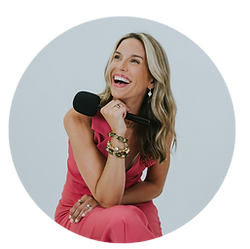


Why the Strongest Guy in the Boat Is Never the Best Leader
Picture six people in a raft, barreling through whitewater, a guide in the back calling every move. Now guess which one keeps the boat upright: the biggest, strongest paddler, or the one quietly tracking how the whole group is moving together.
My guest this week, Meredith Haberfeld, spent a gap year as a whitewater river guide before she ever touched a leadership program, and that boat taught her the lesson her whole career is built on. The biggest, muscliest guys were never the best guides. They were so locked into their own strength that they missed a passenger falling out the back.
The core problem shows up the same way in a boardroom. High-achieving women learn to prove their strength by carrying more, staying visible, and keeping the CEO happy, and mistake that approval for actual leadership. It's an expensive habit. An ICF and PwC study found that organizations investing in real leadership coaching recoup that investment 86 percent of the time, with a median return of 5 to 7 times the cost, which means the leaders skipping the internal work are leaving real, measurable value on the table.
Meredith Haberfeld went from that gap year into molecular biochemistry, got humbled by organic chemistry, and ended up researching how stress hormones affect the immune system before she realized she couldn't spend her life in a fluorescently lit lab. She built ThinkHuman instead, a leadership development and executive coaching firm now running programs for Spotify, Betterment, and SoulCycle. A lot of that work comes down to what she calls blind spot hunting, getting curious, not judgmental, about the patterns you keep tripping over, so they stop running the show from behind the scenes.
In this episode Meredith walks through the stretch zone, the narrow band between comfort and panic that neuroscientist Amishi Jha calls the sweet spot in her book Peak, and why disconnecting from external validation is the fastest way to find it. If you're the one making yourself small so you don't rock the boat, this conversation is your permission slip to go looking for your own blind spots.
TRANSCRIPT:
Erica: Hey, girl. By now, you know I have Her Collective, my online community for ambitious women who are done doing it alone. Her Collective is for the women who are smart, capable, and driven, but they find themselves stuck on the sticky floors like self doubt, burnout, and waiting for permission that quite honestly never comes. Inside HER, you get more than motivation. You get real support, real strategies, and real momentum.
Erica: We work on things like clarifying what you want now and what's coming next, building confidence without burning yourself out, navigating hard conversations, career moves, and leadership moments with clarity, and surrounding yourself with women who actually get it. This isn't about hustling harder. It's about moving intentionally with the right tools and the right people in your corner. If you're ready to stop spinning, start choosing yourself, and build a career and life that actually feels aligned, I'd love to welcome you inside Her Collective. You can learn more and join us at www.joinhercollective.com.
Erica: Because honestly, girl, you were never meant to do this alone. Welcome to the Glass Ceilings and Sticky Floors podcast, the podcast where we get real about the challenges women face in work, life, and leadership. I'm your host, Erica Rooney, HR executive, keynote speaker, and executive coach, and I'm on a mission to get more women into positions of power and keep them there. This is the space where we call it the paradoxes, being told to lean in but not too far, to speak up but not too loudly, be ambitious but not too ambitious. Does that sound familiar?
Erica: Yeah. We're over all that. Here, we break down the sticky floors that keep us stuck, from imposter syndrome and perfectionism to burnout and fear, and give you real strategies to shatter those glass ceilings once and for all. So if you're ready to rewrite the rules, own your power, and take your career and life to the next level, you're in the right place. Today's guest is tackling the core problem in corporate culture, that human behavior isn't dictated by logic.
Erica: What I love is that she isn't just talking about these soft skills. She's actually blending the social, psychological, and neurological science to ignite a transformational change in the world's most innovative companies. Meredith Haberfeld is the founder and CEO of ThinkHuman, a consulting firm that works with fast growth entrepreneurial spirited organizations like Spotify, Betterment, and SoulCycle. Now with a background that spans molecular biochemistry and executive leadership, y'all, I can't wait to dive into that. Meredith Haberfeld is on a mission to prove that when you create the right culture, leadership, and tools, you unleash unique possibilities, and that a new class of hero is emerging in the workplace. She understands the truth.
Erica: Culture eats everything, and the real battle for success is less external and more internal. So with all of that, welcome to the flow, Meredith. How is it going?
Meredith: It's so good. So good to be with you. Excited to spend time chatting today.
Erica: Oh my god. I love it. And we first met on a panel discussion for HR leaders, which was super interesting. And so I got to hear a little bit of your story, but I'm telling you, every time I hear this degree in molecular biochemistry, studying the impact of stress on health, and then I'm like, but she's this badass CEO. ThinkHuman. Like, you gotta walk me through that story.
Meredith: Okay. So I'm gonna wind it back a little bit before that. Really, I consider some of the best training I ever got for what I do now is before I went to college, I took a gap year, and I was a whitewater river guide. Have you ever been on a whitewater river trip?
Erica: Yes. I have. I'm in North Carolina. I love to do it in the mountains.
Meredith: Oh, okay. Great. And have you been on the kind where you're the one paddling yourself, not like a guide who's rowing you down the river?
Erica: No. But I think the last time I did it, I was like 12, so I probably feel like I'm traveling.
Meredith: So to take it way back, for anybody who hasn't been on a whitewater river trip, you're generally with a small handful of people. Let's call it six folks. Sometimes you know each other, sometimes you don't. And then you've got a guide in the back of the boat, and you're in a river canyon, barreling down the whitewater. And the guide is in the back saying, go forward, go back, do a right turn like this. And what I found so phenomenally fascinating is that the biggest, bulkiest, muscliest guys were never the best guides, certainly never the best passengers paddling in the boat. Then somebody pops off the side and all of a sudden we've got a dangerous situation going on, and they didn't even notice, because they're so focused on the thing they can do that other people in the boat are falling in the back, or the boat's flipping because they're misbalancing it. And the people who had the most grace and capability, separate from gender, were the ones who were really focused on how are we operating as an entity, because there's no way we're getting out of here safely if we're not.
Meredith: And so that really turned on a big light switch for me. I was like, oh, that is fascinating about human behavior, that it was so visceral and obvious. So I finish my little gap year, and there are lots more things I could say about insights I had at that time. But going to college, I thought I was gonna do something maybe environmental. I was a big hippie, and then got into science classes. And the ones that really kicked my butt, the first one that just really floored me, humbled me to my knees, was chemistry. I started in it and quit. I was like, I can't do it. These kids know everything. I know nothing. They did AP science classes when they were in high school. I'm not that kid at all. So I quit. Next year, I was like, okay. I can't quit again, so I'm gonna have to work harder than any other class. I'm really gonna have to put my whole heart into it. And once I did, I mean, have you ever had the experience, Erica, where you really dedicated yourself to something, whether it was something you wanted to do or not. What's an experience of yours like that, just so I don't feel like I'm babbling over here by myself?
Erica: I mean, I'll say, I don't consider myself a techie person, but I learned how to build my own website, and I figured out how to code. And now I'm all up in AI, and it's such an interesting perspective, because I still identify as someone who's not a techie person. But objectively, I can see I'm doing a lot of techie stuff.
Meredith: Yeah. And what was the impact on you of really throwing yourself at something that was not necessarily the thing you already considered yourself a genius at?
Erica: Yeah. I think I was surprised that I could get it done. I was genuinely surprised. Definitely felt very proud. This internal pride system of, holy shit, I actually did that without having to pay somebody, without asking anyone to help. I think I was a little flabbergasted that I could actually do it.
Meredith: So basically, all that is how I felt at the end of chemistry. I was like, dang. I may not ever be the biggest chemistry genius, but that was so exciting. I can't believe I did really well. I feel really proud, and now I'm extra interested in it too. It turned on a bunch of things for me. I was like, oh my god, not only can I do this, but because I was throwing so much effort at it, it grew, it developed an excitement and enthusiasm. I was like, alright, I gotta take another step at this. So then I took organic chemistry, and once again I was like, oh my god. In the basement of the chemistry building with tears coming down my face in the middle of the night trying to get my brain to be able to do this, you have to be able to see molecules in three-dimensional shapes, to see how it folds, and then you can know how it behaves. I was like, my brain just won't do this. But I kept going for it, going for it, going for it. We've all had that experience where we're like, I can't. I can't. I can't. But we just keep going. And then all of a sudden, I was like, okay, I can. So that was my entry into biochemistry, and I ended up having some professors at that time who were also such hard asses, not nice, super high expectations, not lovey dovey. That kind of shaped my experience of, alright, I gotta really give something more and extra to be able to do this. And along that journey, the outcome was, I was like, okay, this is fascinating. My whole world got different, from the macro world, to all of a sudden, oh man, there are things happening in our brains that are dictating everything. Why do I think I like this? Why do I feel good at this? There is just a chemistry experiment going on in here for all of us all the time. So that was my entry point, and then I got to do some super interesting research, as you mentioned, on the impact of stress hormones on the immune system, and to fast forward to where I ultimately got to after publishing research and doing a lot of really interesting work, I was like, okay, I really can't spend my life sitting in a fluorescently lit hood, where the air gets sucked out like a vacuum from where you're sitting. I was like, that's just not for me. Power to the people doing that amazing work. Thank you very much for doing it. I was like, I can't, it's not for me. So I had to figure out how to take my love for how human beings work and find a new home for that.
Erica: And thus, Think Human was born.
Meredith: Yeah. There were some things along the way, but yes, that's things.
Erica: It didn't happen just like that. So talk to me about ThinkHuman. I've looked into it, but for someone who's like, what is it, what did they do, give them that high level overview so they can kind of follow that red thread.
Meredith: Great. ThinkHuman is a leadership development company. You mentioned a bunch of companies we work with, but we do a couple of things. One is leadership development programs, a group of people over time within a company. We do a six month senior manager development program for some companies. We do a year long VP development program for other companies. We have some smaller programs too. Cohort based leadership development, where you're really getting to do that both horizontal growth, where you're growing in terms of what you can make happen, and vertical growth, where you are really looking inside and figuring out where there are blockers and removing them, so you're expanding as a human being in ways you will take with you wherever you go. So cohort based leadership development on one side, and then on the other, executive coaching for senior leaders. That's either one on one individual coaching, or team coaching of whole executive teams or functional teams.
Erica: I love the idea so much of the cohorts of the leadership teams, and I actually got the opportunity to do something like that in a similar role. It's a fascinating way to be able to network and grow with your team. And if you wanna talk about a company that really puts its money where its mouth is when it comes to leadership development, I have found those types of programs to be incredibly helpful.
Meredith: As have I. Some of the biggest growth in my own life came from things like that, which is why I was like, alright, that's talking to me.
Erica: Yeah, that's where it's at, right? And I know that you have said before that the real battle for success is more internal than external. And so for me I'm like, hell yeah, that's where all my sticky floor stuff comes into play. And so I'd love to hear from you, what is the most common sticky floor that you have seen with high achieving women when it comes to really unleashing their full potential?
Meredith: I think there's something slightly different whether the person is an entrepreneur or in corporate. For the women executives I work with in corporate, a big sticky point I see is, as women, we're so raised to be pleasing. I pleased my boss, I made my boss happy, the CEO loves what I'm doing, and using that as a guiding light rather than, it's nice when we're pleasing and liked, I mean, not like it's not, I like it too, don't get me wrong, but being able to disconnect from that food source and be like, that's really not ever gonna nourish me, and redirect to, okay, the food source comes from here, and people are gonna like it or not, but I'm gonna be guided and author my story, my decisions, my path, based on not just is the CEO happy with me, but is this really what I think is making the biggest difference?
Erica: Yeah, it's so interesting that you say that, because I had a coaching call earlier from inside Her Collective, and we were talking a lot about decision making. One of the women was making a decision about do I stay or do I go. And we started talking about how women, it's this people pleasing, where we are more likely to put the comfort of others over our own personal needs and desires, especially in the office. Right? I know women who are in roles that they hate because they're like, I just have to see my team through this project, I couldn't do this to my team. And I'm sitting here thinking, so are all y'all just staying, and you're all there and stuck and miserable because not one of y'all will leave? What is going on?
Erica: And so to build off that, Meredith, what would you tell those women? What would you coach them or advise them if that is what they're doing?
Erica: Hey there, listeners. If you have ever felt like you're stuck in a place, held back by self doubt, perfectionism, or that pesky inner critic, you're not alone. We all face those sticky floors that keep us from reaching the heights we dream of. But guess what, it's time to shatter those limiting beliefs and toxic behaviors to uncover infinite possibilities. My book, Glass Ceilings and Sticky Floors, is your ultimate guide to smashing through barriers, overcoming limiting beliefs, and stepping into your full potential. This book has been endorsed by none other than the great Mel Robbins, best selling author and motivational powerhouse. It's also been featured in Success Magazine, so you know it's packed with insights that work. Inside, you'll find real life sticky floor stories, practical strategies to help you navigate your own sticky floor moments, and a whole lot of inspiration to keep you climbing. This isn't just a book, it's your road map to success, confidence, and freedom. Grab your copy of Glass Ceilings and Sticky Floors today at www.ericaandersonrooney.com. Whether you're in the boardroom, the classroom, or just starting out, this book is for you, because no one, and I mean no one, deserves to stay stuck, no one deserves to feel small, and you have glass ceilings to shatter. Let's do this.
Meredith: So for those who are making sacrifices for their team, for this, for that, I think it's okay to do that inside a time bound period. In fact, I think most things are okay inside a time bound period. It's like, I need to do it for fill in the blank, okay, fine, for how long? Because we can always come up with reasons why not, why we can't. So instead of trying to fight the reason, I just like to put a time boundary around it and say, okay, for three months, for six months, for a year, for two years, for five years, for ten years, and you play it out, and it starts to look really ugly. Right? Like, oh, dang, was this gonna be my life in ten years? Okay, so then let me back it up and see how long am I really willing to make this kind of trade off. And usually people come up with some number that they can really live with, and then we start talking about, okay, what are the steps to try to get there, so that when I get there, I'm not just starting, but I'm ready to launch.
Erica: I also tell people, you can't keep moving the goal post when it comes to things like that. Because if you're at work and you're like, I've gotta see my team through this project, another project's gonna hit before that one finishes. You know it. So then you are just continuing in the pattern.
Meredith: Totally. Always does. And probably if they look backwards, oh yeah, there was the project before this one that I said the same thing about. And for the folks where the external validation is rewarding, that's a hard one to disconnect from, because oh man, the board thinks I'm great, the CEO thinks I'm great, I'm not happy in my job, but I'm getting all this external validation and pats on the back and good girl. For the folks in that domain, I think it takes connecting into what is the world you wanna see for yourself, past the commendation and pleasing, what does that world look like and feel like. To me the feels is more important even than the looks. What does that world feel like compared to the world we are operating in right now. Back to the inside versus the outside work, some of that work for me, I know that world of external validation very well. My own path was all about, am I doing good, am I doing good, can I get my gold star, and doing a lot of measurement of am I doing better or worse than fill in the blank, this person, this company, this person I used to know, a lot of measurement. And when I came out on top by my own assessment, I'm like, yay me. And when I didn't, it felt terrible. Being in relationship to that part of myself, oh man, I really get a lot of juice out of measuring myself that way, and it can drive me, but it's not that fulfilling. It's not a hearty meal. When it's good, it's not a hearty meal, and when it's bad, it's definitely not a hearty meal.
Erica: A hearty meal. Yeah. No, I love that you said that, because as I wrote down external validation, and then right under that I wrote "should," and then you started talking about what is that world that you want for yourself, and that is the pause and the breath, the moment we all need to take that a lot of us have never taken, until we start looking around and recognizing how freaking miserable we are.
Meredith: Yeah. And I'm sure this is something you talk to folks about all the time, but the brain is literally not able to not do something. If it's not a thing the brain can do, it is not a capability, it can only do something. And so while we are hating on whatever situation we're in, the brain has no access to any alternatives. In fact, it kind of doubles down on that mechanism, like, okay, this thing we hate, let's think about it more, let's do more because we're thinking about it. And that's kind of how the wiring functions. And it is only with a clear picture of what am I aiming for, and what are the actions that can start to move me toward that, and what are the things that I am doing rather than not doing, that the brain can really dig in, especially in the subconscious, and while we're sleeping, and while we're in the shower, and while we're exercising. We don't even have to be actively working on it. Once we have that picture of where we wanna go instead of where we don't want to be, the brain can start to get really creative.
Erica: Yes. Let me share this quote that I heard the other day. I found it on TikTok, so that's where I got it from, I don't remember who posted it, but he said, your intention speaks in statements, your anxiety speaks in questions. And I was like, oh, that's golden. And it reminded me a lot of what you were saying, how intentional are you getting, what are you thinking about, how are you envisioning this world, or are you sitting there ruminating on all the shit that could go wrong?
Meredith: Yeah. And as long as we're ruminating, unfortunately that breeds more of itself. It's like a colony of more.
Erica: I know, I'm thinking like disease, infections, overtaking the body.
Meredith: Yeah. Meredith Haberfeld, I know you do a lot of work around blind spots and helping people uncover those blind spots. I would love to hear how do you go about helping someone uncover the thing that they don't even know they have.
Meredith: Well, let me first say, I am rarely the coach, so it's really credit to the ThinkHuman facilitators and coaches who do this work, because they're better than me at all of this. I have the good fortune of getting to be here to talk to you about it, but I don't wanna overstep.
Erica: They've got a team, y'all, and that's important to say. This woman's got a team, that's why she's so damn successful, because she's built an amazing team.
Meredith: And I've been good at finding people that are smarter and better than me. Power to them for being willing to hang with me.
Erica: Heck yeah.
Meredith: So blind spot hunting. The first thing is we gotta get really excited about seeing the ugly stuff. It's like when you sweep things out from under the carpet, as long as you're sweeping them under there, you're like, oh, there's nothing there, there's nothing there. Even though we're tripping on the carpet all the time, and it's like, oh my god, again? Because what's under there? So while it's under there, there's the benefit of we don't have to look at it, but we also keep tripping on it in our life. So you can't do great blind spot discovery, well, it happens in one of two ways. Either it smacks you hard, like the way a heart attack does, where it's just boom, it's coming at you, there's no avoiding it, so there's that kind, not that pleasant. Or there's getting really excited about seeing things about ourselves that we judge. And that's why they're undercover, they're hiding because they're like, oh, that's ugly. So this is a very goofy example, but my daughter Chloe has named the part of her that's anxious as Xena. She's like, Xena's here. And we're like, hey Xena, love you Xena, you're so delicious Xena, thank you for working so hard to make Chloe's life great. And the thing that has done for her, obviously she's a little girl, but the thing that has done for her is made something she judges about herself, wants it to not be there, willing, if you imagine those blind spots are things that want to run and hide when judged, the more they are seen, accepted, and embraced, the more they can come out in all full glory, and we can see them in Technicolor. And it's in the seeing of them without judgment that we can start to do anything with them, other than to have them running the show. So bringing a whole lot of compassion to them, so that when we see them we're like, oh there it is, yay, I can see it, I can see it in action. What's your experience with blind spots?
Erica: I mean, I love to get curious about them. I notice mine a lot, like if I'm being judgmental about someone else, I'll notice immediately that my first reaction is, oh, they must not have done this or whatever. And then I'm like, wait a second, why am I feeling that way right now? And I try to peel back the onion on what that looks like for me. But I'll also often say, I think the blind spots, it's when I look at it through the lens of all of the moments where I'm getting feedback that I'm uncomfortable with, are the things I need to dig deeper on. They do. And I need to shine more of a light on, or the things that I get defensive on. So, for example, if I'm in an argument with my husband about whether or not he put the damn thing on the grocery list or not, why is this a ten minute argument? Right? And it's like, well, let's peel back the layers of the onion and figure out why am I reacting that way.
Meredith: So good. So the things you get judgmental or defensive about, you get curious about, you're like, oh okay, cool, what is that? I love that. My amazing friend Willie Jackson, years ago, he was talking to me about our own racism, and he said, where does yours show up, Meredith? This was years ago, maybe 2015. And I was like, I don't know, I'm not really sure. And he's like, come on girl, we all got it. He's my age, maybe a little younger, a peer of mine, a black man. He was very, come on Meredith, cut your crap, I'll tell you about mine, you tell me about yours. I'm really not sure. And he was like, alright, I'll tell you what, you go hunting, and you get excited when you see it, and you call me and you share with me about it when you do. And I was like, really? And he was like, yeah, you call me, you share, and I will celebrate you, high five you. And I was like, okay, that seems scary, but I'm gonna try. It's part of the promise. I went hunting, I found something, I called him up on the phone, I was like, okay Willie, this is it. He was like, that's amazing Meredith, so good. And I was like, wow, that little gremlin was willing to come out and be seen when I was willing to get curious, and even for me enthusiastic about, I'm gonna see it and I'm not gonna judge it, I'm not gonna make it wrong, I'm just gonna see it in all its glory. Because then once it's out, I can start to work with it and play with it, and not feel bad that something exists about me that needs to grow.
Erica: Well, it's like all these things we always say, you don't talk about that, and then we don't talk about it, but then it just festers underneath the surface.
Meredith: For your whole life. Shows from behind.
Erica: Yes, so that is fascinating, I love that, I'm gonna go hunting for that too. I also know that a lot of the leadership coaching that happens within ThinkHuman really pushes people to be more proficient at operating outside their comfort zone, which is where I love to dabble, just outside, little bouts of discomfort. But scientifically speaking, how can we use our understanding of the brain and stress hormones to make taking courageous leadership risks feel less scary?
Meredith: Love this question. Okay, I'm gonna go nerd fest here for a minute.
Erica: You're out on me, you're all nerd out.
Meredith: There's a cellular process called apoptosis. What that process is, is a very healthy process where cells automatically tell themselves to shut down. They're like, something's wrong here, we gotta close this house down. In many types of cancer, that process has gone awry, it's not working. So where you want a cell to be like, something wrong here, let's shut this down, that's not happening. So basically, nerd fest number one, you want apoptosis to work well. Now the effects of stress on apoptosis, small amounts of stress hormones, neurotransmitters and hormones, small amounts aid the process of apoptosis, it works better with small amounts, starts to work worse, goes awry or funky when you get into the crisis zone, if you're just hammering it with stress hormones, that's different. But the absence of stress hormones at all, not good. Apoptosis is kind of at the two poles, with none, it doesn't work well, and with too much, it doesn't work well. But that sweet spot, which you can think of like comfort zone, stretch zone, panic zone, doesn't work well in the comfort zone, doesn't work well in the panic zone, but the stretch zone is where we are physically optimizing our bodies and ourselves. So the immune system actually functions better, and eliminates illness, specifically cancer, when we are putting ourselves into that stretch zone. So the same way we could be like, oh I gotta drink my green juice, or do my exercise, that experience of putting ourselves into the stretch zone is an actively beneficial process to our physical body.
Erica: Interesting. So I'm like, you are nerding out and I love it, oh my gosh, I don't even know where to go with that next, but I'm a big fan. I always say go right outside that comfort zone, because every single time it expands just a tiny little bit. You don't have to take these big massive scary risks. For me, I just so thrive off of these incremental approaches that help people, because sometimes they think they gotta go all the way, and I'm like, yeah.
Meredith: And then you do that, you run back into the comfort zone, you're like, let me shrink back, but those small steps really do add up.
Erica: They add up. I tell people all the time, this is my number one go to quote. If you were trying to save a hundred dollars, and someone came up and gave you twenty dollars, you wouldn't throw it in the trash and say it's not good enough.
Meredith: Yep. All of those little steps add up. But we get so impatient, at least I do, with, I'm taking steps, I'm taking steps, I'm not seeing it, how come I'm not seeing it? Somebody had a quote about, we expect ourselves to produce more than is possible in the short term, but when you look from a certain point backwards over time, over a longer period, we accomplished way more than what would be expected. And so we're setting ourselves up for this frustration, where we're like, by the end of this year I should have done, instead of, let me just set the goal way out there.
Erica: Yeah, right? It makes me think about that, it's not a cartoon, but it's a visual of the guy chipping away in the tunnel, and he was this close to a pile of gold, just a couple more shovel digs away, but he gives up, because again we expect these immediate fast paced results, and that never happens. And so I don't know about you, but for me I feel like when I do that, I try to find other ways to measure my outcomes in ways that I can actually control. So for example, if somebody wanted to lose 10 pounds, I wouldn't weigh my success on if I lost 10 pounds or not, I would weigh my success on, did I fuel myself with healthy foods, did I move my body the way I said I would, how am I feeling, that's how I would measure my success. But do you have any tips for that?
Meredith: This isn't a direct answer to your question, but what you had me thinking about is how we interact with not getting the result. When we're looking for the result and we don't get the result, what's our reaction? And I have found that the most productive thing to do on the heels of not getting the result is a whole boatload of action. So instead of being like, oh man, I failed, I feel bummed, I wanna take my foot off the gas, those are the moments where it's just like, even if it produces no effect, I'm gonna do 10 actions right now before I stand up from my desk. Because those 10 actions, I don't know what they're gonna produce, but it's like fueling the fire on a popcorn pan. Instead of me just walking away with some narrative in my head about what's happening, let me put 10 things out into the universe and see what starts to heat up, because some little kernel, I don't know what it's gonna be, is gonna pop. Maybe not right now, probably not right now, but at least I can walk away from my desk knowing, alright, I just put 10 new things into motion.
Erica: I love that. Every time you get a rejection or a no, or something that didn't turn out the way you wanted, do 10 things that might spark some possibility somewhere. Meredith, that is gold. So with that, I will say thank you so much for joining us.
Meredith: It's so fun to talk to you, Erica.
Erica: Oh my gosh, yeah. Tell me more, if people wanna hear more about ThinkHuman, or they're interested in it, where can they go to learn more?
Meredith: ThinkHuman, with a dash in the middle, dot com.
Erica: I love it, super easy. Alright, if today's conversation lit a fire under you, here's your next move. Don't keep it to yourself. Share this episode with a friend, drop a review, and let's keep the conversation going. Remember that your potential is limitless, and the only thing standing in your way are those sticky floors. But guess what, you have the power to break through them. So go out there, take up some space, and let's shatter some ceilings together.
RESOURCES MENTIONED IN THIS EPISODE:
- Join HER Collective, Erica's community for women in corporate America.
- Never miss an episode of Glass Ceilings & Sticky Floors.
- Grab The Al Gap, Erica's book on closing the AI gap for women in corporate leadership.
- ThinkHuman, Meredith Haberfeld's leadership development and executive coaching firm.
RELATED EPISODES:
FREQUENTLY ASKED QUESTIONS:
What is blind spot hunting in leadership coaching?
Blind spot hunting is ThinkHuman's approach to uncovering the patterns you can't see in yourself, the ones that show up when you get judgmental or defensive. Instead of shaming the parts of you that need to grow, you get curious about them so they stop running the show from behind the scenes.
Why isn't the strongest or loudest person in the room always the best leader?
On a whitewater river trip, the biggest, strongest paddlers were often the worst guides, because they were so focused on their own strength that they missed teammates falling out of the boat. The best leaders are the ones tracking how the whole group is moving together, not just their own output.
How do I stop tying my worth to external validation at work?
Start by putting a time boundary on any sacrifice you're making 'for the team,' even six months or a year, and picture what your life looks like if that becomes the norm. Then get clear on what the work actually feels like to you, not just whether the CEO approves, since that food source will never fully nourish you.
MORE FROM ME
Follow me on Instagram @ericaandersonrooney and @joinhercollective
SUBSCRIBE & REVIEW
If you loved this episode, please take a moment to subscribe and leave a review on Apple Podcasts. Your support helps us reach more women who need these insights. Thank you for tuning in to the Glass Ceilings and Sticky Floor podcast. See you next week!
Hi, I'm Erica!
In the last 15 years, I climbed to Chief People Officer, 6x'd my income, walked away from a culture that stopped matching my values, wrote two books, and built HER Collective to help thousands of women rise to power and lead in the age of AI. I've learned a thing or two about smashing ceilings and closing gaps, and Glass Ceilings & Sticky Floors is where I open the playbook, the receipts, and the real stories to share it all with you.
_JPG.jpg)