


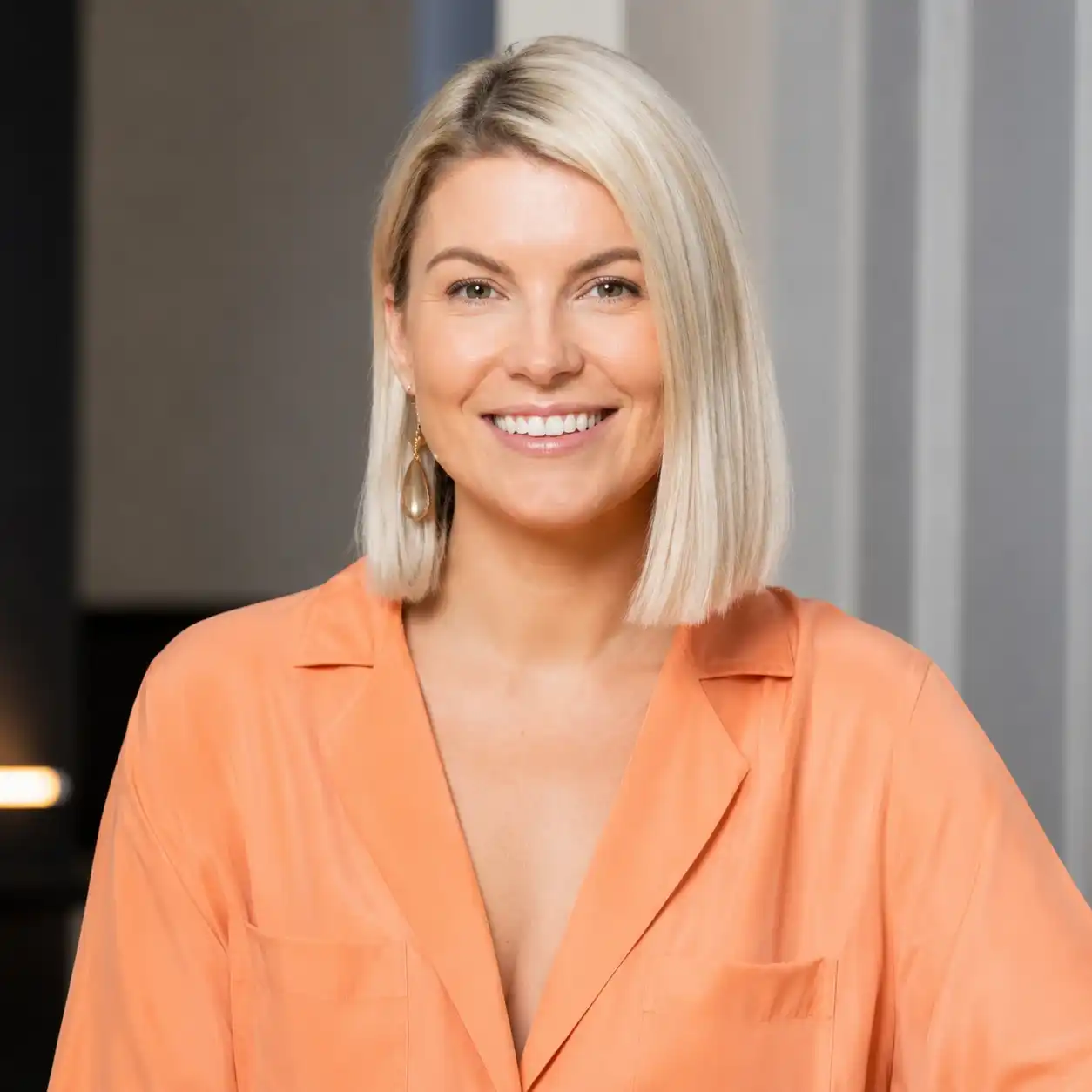



How a 26-Year-Old Convinced Her CEO Dad to Build a $4M Leadership Company
How many meetings have you sat through, panicking that someone would call on you? Emma Green sat through one early in her marketing career and doesn’t remember a word anyone said, she was too busy praying no one would ask for her opinion. Today she’s the founder and CEO of Your CEO Mentor, a leadership company she built with her father that has done more than $4 million in revenue in under four years.
In 2018, Emma and her dad Martin Moore, then CEO of a multibillion dollar energy company, both quit their jobs to build a leadership company from scratch. Their podcast No Bullshit Leadership and Wall Street Journal bestselling book of the same name grew into one of the biggest leadership brands in the world, built to fix the “accidental manager” problem Emma saw everywhere in corporate.
So what is an accidental manager? It’s someone who is technically brilliant and gets promoted into leadership with zero training on how to actually lead people, so the team underneath them pays the price.
Emma isn’t alone in that meeting-room panic. A 2025 Barriers to Leadership survey from WomenTech Network, of more than 4,200 women, found 21% report experiencing imposter syndrome very frequently or always, compared to 12% of men. Emma’s fix wasn’t waiting to feel confident, it was tallying the wins until the feeling caught up. That’s the real definition of confidence: an action you take before you feel ready, not a feeling you wait for.
TRANSCRIPT:
Erica: Hey, girl. By now, you know I have Her Collective, my online community for ambitious women who are done doing it alone. Her Collective is for the women who are smart, capable, and driven, but they find themselves stuck on the sticky floors like self doubt, burnout, and waiting for permission that quite honestly never comes. Inside HER, you get more than motivation. You get real support, real strategies, and real momentum.
Erica: We work on things like clarifying what you want now and what's coming next, building confidence without burning yourself out, navigating hard conversations, career moves, and leadership moments with clarity, and surrounding yourself with women who actually get it. This isn't about hustling harder. It's about moving intentionally with the right tools and the right people in your corner. If you're ready to stop spinning, start choosing yourself, and build a career in life that actually feels aligned, I'd love to welcome you inside her collective. You can learn more and join us at www.joinhercollective.com.
Erica: Because honestly, girl, you were never meant to do this alone. Have you ever wondered what the hell am I doing here in this meeting, at this table, in this role? Today's guest shares her story of overcoming imposter syndrome and tapping into her own corporate struggles to become the founder and CEO of Your CEO Mentor, a multimillion dollar business that she runs while being a wife and a mom. Emma Green identified a critical need for practical and high performance leadership development. She was so motivated to close this gap that she convinced her dad to leave his position as CEO of a multi billion dollar energy company to embark on the shared journey where leaders can unlock their full potential.
Erica: Emma focuses on their podcast, No Bullshit Leadership, and their digital course, Leadership Beyond the Theory. And out of all of my guests, she is the one that I had to turn the tables on myself and ask her, how the hell do you do it all? Emma, welcome to the podcast from now to next.
Erica: How are you?
Emma: Hello. Thank you so much for having me. I am very well and super excited for this conversation.
Erica: I am so thrilled that you are here and that you are making time for us on your vacation. I wanna just kick this off and say, where are you from?
Emma: Well, my accent's probably a little different from some of your other guests. I am from Sydney, Australia, but I'm in Boston right now visiting my dad and my stepmom. So
Erica: Making it so easy for me to record. So I love that. You are a mom. You are a CEO. Obviously, a world traveler from halfway around the world.
Erica: I cannot wait to have your perspective, but let's just jump in and kick it off. What is your come up story? How did you get from account manager to CEO and founder? I am so interested.
Emma: Yeah. So I'll tell I'll try and tell the short version of the story. Like all things, there's many, many things that happen along the way that kind of push us in a certain direction. But in 2016, I was working as a customer services director for a marketing agency, and I loved my job. I love marketing.
Emma: I still do. Our business is pretty much all marketing, no sales. It's the way I like to do it because it's it's fun. It's the fun stuff for me. But I was working in a marketing agency, and I just had so many bosses in my career that were technically brilliant, so they're amazing marketers.
Emma: But they really struggled with the leadership stuff. So they struggled with getting the best out of me and my colleagues. And I was really lucky. I had my dad, Martin Moore. He was the CEO of a multibillion dollar energy business.
Emma: And he would mentor me through any of the challenges that I was having, helping me manage up, helping me to, you know, make moves that would put me in a really good position for promotions or, you know, to go down the routes that I wanted to go down. And I was so lucky. He was even mentoring some of my friends. You know, my friends would text me and say, hey, what would Marty do in this situation? And in about 2016, I just I'd kind of had jack of it, to be honest, because I just wanted to be doing amazing work.
Emma: And the leadership around me, I felt was, I guess, stopping me from being the best that I could possibly be. And I just I said, dad, there's got to be something we can do. There's gotta be some way to get what's in your head out to other people in the world to really help them, you know, help my bosses that I'm struggling with the way that you've helped me through my career. And at first, he said, well, we could write a book. And I said, don't be ridiculous.
Emma: I'm not gonna write a book. Because the book is so old school, which is funny now that we have a Wall Street Journal best selling book, but that came later. And I said, it's it's not gonna be a book. It's gotta be online. It's gotta be digital.
Emma: That was where I was really interested in the marketing world, and I just produced a podcast that had gone really well for a client. And so that was kind of the road that I wanted to go down. We spent a few years figuring out what the business model might look like and making sure we had the funds that would push us in the right direction so that we weren't constantly chasing money and clients and things like that. We wanted to set everything up really solidly from the beginning. So we spent a couple of years doing that.
Emma: And then in 2018, we both quit our jobs, and we went all in on our company, which is called Your CEO Mentor. And it's a high performance leadership development company, really content led. So we've got, you know, a podcast, No Bullshit Leadership. It's, you know, one of the biggest leadership podcasts in the world. We've got our, Wall Street Journal best selling book, No Bullshit Leadership, and we have an eight week online leadership program called Leadership Beyond the Theory, which has done just over $4,000,000 in revenue in the last kind of three and a half, four years.
Emma: So what that had has really proven to us is that what we're putting out there in of the content is very much needed. And it really is that no bullshit cut through practical leadership approach that actually helps people. It's not just the theory that you read through in a book and, you know, you take one or two things out. It's like this is actually what you need to do in your day to day in these real life situations because it's come from Marty's brain who's had to do it all in the trenches over the last thirty years. So as you can tell, I'm pretty passionate about it.
Emma: But, yeah, that's the that's the come up story. I basically made my own CEO role so that I could, have that title, but there you go. That's that's the story.
Erica: What's just mind blowing to me is you're like, I'm gonna go all in on this. You were able to take the leap yourself, but you also convinced your own father to take the leap as well.
Emma: Yeah. I mean, we have been best buds for a really long time. So when my parents divorced, I eventually moved in with my dad, and he had no idea how to parent a teenager. So we were just buddies. We were just friends.
Emma: And, I think that's kind of carried over into our working relationship because we have a really deep respect for what the other person does. And, you know, he respects my expertise, and I respect his. And I think that really close trusting friendship that we had was, you know, made the basis for a great business partnership. So when I was convincing him, it did take me a couple of years, and I did really, really have to get ducks in a row so that it felt solid enough for him. But once we did that, it was definitely a no regrets move.
Erica: Number one, the need is obviously there. You're doing amazing in what you do, but I am actually a chief people officer by day. So I am in all things HR, and I see so many, what I like to call, accidental managers. They're those people who've been promoted. They put in all those leadership roles, but they have just no clue how to actually lead people.
Erica: And then you get the people under them who are really struggling. Like you said, you were struggling to grow under some of your leaders, and it's really challenging. So kudos to you for kind of taking your own problem and then convincing yourself and your dad to make a multimillion dollar business out of it and writing a book.
Emma: I think some of the best business ideas come from that need. And, as you said, these accidental managers, they're amazing at their technical expertise. They're they're very experienced, but they're novice leaders. And I don't think there's enough education that happens between that technical expert to leader transition, and that's where a lot of these problems come from is that you're either expected to do what your boss has done, which for the most part, most bosses aren't that fantastic. So you the modeling that you've got is pretty poor, and then there's no real, you know, impetus from the organization to actually train you to be a leader because they just go, well, we're giving you more money and we're giving you the car and we're giving you a corner office and you better figure out how to do it.
Emma: And so that's why the b to c market has been really wildly popular for us because people are realizing within themselves, hold on. I need to upskill myself to be able to do this. My organization is not gonna do it for me. So it's as you said, it's changing that story around the accidental manager and for people to go, I'm now a technical expert. You know, I wanna be a leader.
Emma: How where is that transition? How can I make that transition really successfully? And that's kind of, you know, where we try and focus.
Erica: You're also attracting the best of the best because one of the messages that I tout when I'm doing coaching, when I'm doing training is always you have to be your biggest advocate. So you're attracting the people because this is a b to c model who want to get better. They're not waiting on their organization to teach them something. They don't feel like their organization owes them something. They're like, I'm gonna do this for me because it's what I need to do to succeed.
Emma: Absolutely. And that's why we say we have no dickheads in our courses. There is no one in our courses that we think you're a bad egg. Everyone who comes, are open to learning. Everyone's open to learning, and they don't think they know it all.
Emma: They don't believe their own bullshit. And when you come with that open mind, that's when you're gonna get the most out of the content. And it what's been interesting is that, yes, we have focused on a b to c market, but leaders, you know, leaders will come in and then go, okay. My team needs to do this. And then my organization needs to do this.
Emma: And so what's, you know, start as the b to c focus also creates a b to b, for us as well without us actually going out and having to compete with the big boys who have these huge sales and marketing teams. So it's it's a really beautiful natural flow into from b to c to that b to b market.
Erica: So you talked a bit about the struggle with leadership. And on this podcast, we talk all about the sticky floors, especially that keep women back from busting glass ceilings. When I say that to you, what is that story or that pivotal moment in your life, whether that be imposter syndrome, perfectionism, fear, burnout, you name it, what was that for you, and how did you overcome that?
Emma: The story that probably resonates with me the most if I think back to when I was in corporate was I just started a new job, a new marketing agency. I was really excited about it, but I think I've always had this chip on my shoulder about not finishing my undergrad degree. And just at the time, it was it was not the right degree for me, and I wasn't at that point in my life where I felt as though I wanted to continue struggling through and paying for it if I knew that I didn't wanna end up doing that. And so when I dropped out of uni, I just thought, you know, there's there's two ways to do this. There's do university and follow that road, or try a million different things and try and work out what you're good at and what you like.
Emma: And so that's that's kind of the route that I took. But I always had this chip on my shoulder that I wasn't smart enough because I didn't finish my degree, and I didn't know enough to be able to contribute in, you know, these, I suppose, conversations that I felt were potentially above my head. And I'd started this new job, and within the first few days, I was brought into a strategy session about a client. And there are about 10 other people in the room, all brilliant strategic minds and, you know, social strategists and campaign strategists and all every single person basically from the company who was someone. And I remember just sitting there and thinking, please do not call me to ask me for my perspective.
Emma: I wasn't even listening. Like, my eyes would just glaze over because I was so panicked that they would ask me what I thought and that what I was gonna say wasn't gonna be smart enough that kind of go, oh, why do we hire this girl? You know? And it's so ridiculous looking back now because I know that I had so much that I could have shared. And over time, I became more comfortable with that group and I found my voice and where I kind of sat within the those other, you know, brilliant minds.
Emma: But at that point, I just remember this, like, just burning in my seat, wanting the world to swallow me up because I just felt as though I didn't have enough value to share. And so that's really one of the things, you know, when we talk about imposter syndrome, it's probably one of the only times I can really strongly feel in my in my body that I had it. And I just went home that night, and I just started crying to my boyfriend. I was like, look, I just I can't ever feel like that again. I do not wanna feel like that again.
Emma: So I've gotta work on that, pushing myself to speak when maybe I don't know what's gonna come out of my mouth or I don't know if it's gonna be the smartest thing that said, but I have to trust that I have something valuable to share. Otherwise, I wouldn't be in this position now. And so, really, it just was over time forcing myself to contribute. As an introvert, I just generally find that difficult. So kind of, you know, forcing myself to do that was the only way that I could really get over it and just, you know, tallying the wins.
Emma: Just going, well, I contributed when we were talking to the Contiki client over there and the client said, oh, that's a fantastic idea. So tick, you can do it, Emma. That went on my tally board. Yes. Okay.
Emma: You can do it. You can do it. And then over time, it just it I stopped feeling that way. I just started going. It's not about your undergrad.
Emma: It's about your experiences and what you can offer other people. That was it.
Erica: Were you able to name that it was this feeling of imposter syndrome right away? Because I know I have had that exact feeling sitting in a meeting, listening to other people talk, and I'm having this, oh, shit moment. Like, how can I get out of this? And at the time, I could not put the words imposter syndrome to it. Of course, now hindsight is a gift.
Erica: I can look back and I can say, oh my gosh. That was absolutely what I was feeling. But how was that for you?
Emma: I don't think I called it imposter syndrome. Maybe when I spoke to my dad about it, he may have. But it was I was I was less worried about finding the label for it and more worried about finding the solution for it. So I just I just followed the I don't wanna feel like that ever again. So how can I get around that feeling?
Emma: Yeah.
Erica: Very good.
Emma: And I still I still do feel that feeling, but I know it now straight away. I know when I'm feeling that because it just is the thing that you feel it in your body. So, yeah. I think in a way, I think you should always be pushing yourself into rooms or situations that potentially feel like they're too big for you. Otherwise, I don't think we're we're growing as much as we could be, but it's having that ability to send her back in and go, you're here for a reason.
Emma: Give the value that you can potentially give, and whatever happens is moot point. Because you've pushed yourself forward into that situation and, you know, busted through your own comfort zone. So I just was decided never to let that stop me from doing something that I wanted to do again.
Erica: Well, I will share this story with you mainly because your dad was there. So when I met your dad, was at a keynote speaking boot camp, and I signed up for this boot camp after talking with one of the partners with the community, which is called Impact eleven. Had no idea what this community was. They just said if this is what you wanna do, you need to go. So I show up.
Erica: I go to the happy hour, and I'm like, okay. Great. I'm gonna meet all these people. And I walked in. And your dad was actually one of the first people that I talked to, but I very quickly realized that everyone knew everybody and that these people were doing this, like, professionally for a living already.
Erica: And I was like, holy shit. I'm just a chief people officer. What the hell am I doing here? And I was like, oh my god. I gotta get out of here.
Erica: Like, what am I doing? And I made it through the happy hour. When I say I made it through, I'm an extrovert by nature. So to sit through something like this and feel almost out of my skin, Couldn't see it right in that moment, but sat through the whole thing, enjoyed myself, but still was like, holy crap. Got into the elevator, got back to my room, and I kinda had this moment where I was like, what are you doing, Erica?
Erica: What is going on here? And I realized that I was, like, sitting through and living through imposter syndrome, and I was like, you've got two options. You can go through with this boot camp and just talk to everybody, learn as much as you can, or you can, like, hide in your hotel room all weekend. But that's kinda just how it shows up. And when you say you can feel it in your body, you really can.
Erica: It is wild, but you can't really put that label on it until you remove yourself and you can look back, and then you can make that decision of what am I gonna do next.
Emma: Yeah. And so what did you do?
Erica: Girl, I showed up, and I was like, I'm a do this. I'm a volunteer. When they ask for people. I'm a raise my hand, and I had a great experience. And now I'm in the community, and, you know, it's fabulous.
Erica: It's wonderful. It was such an amazing moment for me because I love talking about all of these limiting beliefs, and here I was going through it in real time.
Emma: That's it though because we have you know, obviously, we're the quotation marks leadership experts, but we still make dodgy hires. We still make slow decisions. We still sometimes I go, hold on. Who is accountable for that? And, you know, there are times where, you know, we do that as well.
Emma: So I think that's all part of the learning process, and kudos to you for getting out there and doing it because a lot of people would have stayed in their hotel rooms. So all you need to do is go find the friendly Australian in the room. That's that's my hot tip for you.
Erica: I don't know that we're so lucky to have friendly Australians in every room, but what I think is the biggest takeaway is that confidence is not a feeling. Right? Confidence is an action, and it is about doing it when you don't want to, when you don't feel like it, when it's not comfortable. And that's when you need to do it the most because if you're not feeling that uncomfortable, is it really confidence that you need? You know?
Erica: Or are you just really pompous? I don't know.
Emma: Yeah. And we talk about this a lot when it comes to having difficult conversations and tough conversations. You know, you just have to keep doing it enough. You have to be doing the actions enough until it feels comfortable. No one is born.
Emma: Well, I think very, very few people would be born, and maybe they're psychopaths, feeling completely comfortable with very difficult situations, you know, having to, say, terminate someone's employment or, you know, have those really difficult performance conversations when things have been left for so long. You just have to keep doing it again and again and again. And after the first 100 conversations, you'll feel you'll feel much more comfortable, you know, than the first couple. They're gonna go terribly or they, you know, they might surprise you. But, generally, you know, they're not gonna be your best conversations.
Emma: But the more and more and more times you put yourself into those situations where you're gonna have those difficult conversations, you become more comfortable. So exactly the same as confidence. You just keep pushing yourself and pushing yourself, and you get more confident. And, you know, it's the it's the inspired action that makes the difference.
Erica: Inspired action perfectly said. As the CEO and founder, you've been from corporate America. You're now living the dream. How do you intentionally create these spaces that are intentional, that are equitable for women, for everyone, you know, within your company. Hey there, listeners.
Erica: If you have ever felt like you're stuck in a place, held back by self doubt, perfectionism, or that pesky inner critic, you're not alone. We all face those sticky floors that keep us from reaching the heights we dream of. But guess what? It's time to shatter those limiting beliefs and toxic behaviors to uncover infinite possibilities. My book, Glassy Leads and Sticky Floors, is your ultimate guide to smashing through barriers, overcoming limiting beliefs, and stepping into your full potential.
Erica: This book has been endorsed by none other than the great Mel Robbins, best selling author and motivational powerhouse. It's also been featured in Success Magazine, so you know it's packed with insights that work. Inside, you'll find real life sticky floor stories, practical strategies to help you navigate your own sticky floor moments, and a whole lot of inspiration to keep you climbing. This isn't just a book. It's your roadmap to success, confidence, and freedom.
Erica: Grab your copy of Glass Ceilings and Sticky Floors today at www.ericaandersonrooney.com. Whether you're in the boardroom, the classroom, or just starting out, this book is for you because no one, and I mean no one, deserves to stay stuck, no one deserves to feel small, and you have glass ceilings to shatter. Let's do this.
Emma: I think that's just by coincidence, we're an all female team other than my dad. So it's probably easier to do it in that sense because I just think about what I want and what I would want. So all this stuff, like, you know, pay equality, you know, is very easy for us to implement. But, you know, if we hire the right person for the job, it's not that we've consciously gone out there just to hire women. It's just been what has happened when we've gone out to recruit.
Emma: But, you know, things like having a hybrid work environment. I mean, this is we started this business with, you know, some days working from home, some days in the office. So we do Monday, Friday at home, Tuesday, Wednesday, Thursday in the office. I think that's a big part of, you know, helping women get stuff done in their life that they need to. I've got a lot of friends who are doing a well, what is meant to be a nine to five, which is really a seven till seven.
Emma: And they don't have the flexibility to go to the doctors or get errands done and stuff, you know. So I think that hybrid that hybrid work is really important for us. So we're not just spending our weekends doing that, the stuff that, I don't wanna say, like, it falls to us a lot of the time, to be honest, you know. Just that general work. And then, you know, in terms of maternity leave, I mean, our business isn't big enough yet that I feel like we need to put a cookie cutter policy in place.
Emma: So like everything with every single person, it is flexible and customized just like it was with my maternity leave. I was away for as long as I needed to be. I came back when I wanted to come back. I just don't think unless you're running a massive organization. I don't think we need to be doing that stuff yet because we are just focused on, like, how can we keep the capability within our organization, keep our people productive, working effectively, but also enjoying their personal lives.
Emma: Like, that is incredibly important to us. So there's no one size fits all. Everyone's motivations are different. Everyone's family and life situations are different. And yeah.
Emma: I just it's just the way I am. I just don't feel as though there needs to be one policy that I look back to and go, well, this is the way we do things, when that might not suit the individual.
Erica: Out of curiosity, what is the maternity or parental leave in Australia?
Emma: Yes. So I think I mean, I don't don't quote me exactly on this, but I'm just
Erica: going to the fire.
Emma: Yeah. To the to the legalities of it. Unpaid leave is twelve months protected by law. So you can go on leave, and the organization that you're with has to hold your job for twelve months. And you have to be able to come back into it at that point in time should you want to.
Emma: So whether you come back after six months, nine months, twelve months, whatever it is. I think our paid maternity leave is eighteen weeks total shared between both parents, and that's it, the minimum wage. And then many organizations have extended, so they'll go, okay. Take your eighteen weeks from the government, and we'll give you another eight. We're we're pretty well looked after, but then you look at some of the European countries that are twelve months paid leave, and you kinda go, alright.
Emma: We're better than The US, but we still got a ways to go. So yeah.
Erica: I was gonna say either way, you're better off than The US.
Emma: Yes. Yes. I know. It's it's, pretty poor over there, right here.
Erica: What I love is that you said that it is not this cookie cutter situation, which you're absolutely right. Everybody's motivations are different. Everybody's lives are different. And why we think we can take a black and white policy and apply it to all of these different people, especially when we're talking so heavily about diversity, equity, inclusion, belonging in The US. We know that we can't do that.
Erica: What I would love to ask you next is what do you think that this level of flexibility does for women when they are looking at going to work or having kids and coming back?
Emma: I think it gives them options. I think having the option to take time off if that's what you wanna do or get back into your career if that's what you wanna do. I think it just gives them those options to make decisions that are best for them and their families. And, you know, for me, I got back into work pretty quickly. But it's not because I had to.
Emma: It's because I wanted to. It's because my brain was starving for, you know, adult conversation and strategy, and I had so much creativity that I needed to be able to get out in ways that were more than just stacking cups and watching miss Rachel. So, I think it gives them that choice to go, what do I actually wanna do with my life? And not feel as though they just have to go back into work because otherwise, they're gonna lose their job and then their child is gonna be negatively impacted. They've actually got that space to bond with their baby and do all those beautiful things in the first year, you know, that I personally think that the moms and kids need to do together.
Erica: How long did she take?
Emma: It was about three months. Yeah. So I was kind of dipping in and out on different things. So, you know, things that maybe I had set up or I was the custodian of before I went on leave. And, you know, there would just be a few questions or bits and pieces that came through to me.
Emma: But what we did was in Asana, which is our project management tool, we just had a board that had kind of two sections on it. One, Emma, you know, immediate look at, one, Emma, back from leave. And so I would log in whenever I wanted to, maybe once a week, and I would look at that immediate list and go, okay. Is there anything from there that I can knock off or that, you know if there was actually anything urgent, which I think there only was one time the team texted me, which was fine. But I could just go in my in my own time, have a look at the board.
Emma: I feel like doing some work right now. You know? I feel like doing something a little bit different. So I would go in and do those things. And then the other board was just for things when I got back from maternity leave so that they didn't, you know, fall to the wayside.
Emma: That could have been in three months or twelve months. So, I had that flexibility to kind of to do what whatever I wanted to do there. But
Erica: You're also running a company, so it's kinda hard to completely shut it down and walk away.
Emma: And I love it. You know? I love the business, and I love the team, and I talk to my dad every single day, like, 10 times a day. And so it is actually difficult for me to, you know, when I say, dad, what did you do today? He's talking about podcast episodes and, you know, speaking engagements and things like that.
Emma: And so that excites me, and so I wanna keep talking about it. So, yes, there wasn't really I was never gonna fully, check out, but I had the flexibility. I had set the team up in a way that I could if I wanted to. And that's why I say having those options is really important. If you feel as though you don't have options, that's where the stress comes from.
Emma: That's where the anxiety comes from. So I was very lucky in that sense. But I created it that way as well over the last few years.
Erica: And how do you feel that becoming a mom has impacted your work? And before we started recording, you mentioned you have, two older stepchildren that you have been with for almost their entire lives. How has now having a newborn impacted your work?
Emma: I think before I had Florence, I was nowhere near as productive as I could have been. I think I get so much more done in such a small amount of time because I have to. I'm I'm definitely more present in whichever sphere I'm in. So if I'm with Florence or the girls, I'm with them. And I used to be, you know, maybe I'd be helping one of the girls with one of their assignments, but I'd also have my phone if my notifications were on.
Emma: I'd be checking or whatever. Now I just don't. Now if I'm with any of the girls, I'm just completely focused on them and I'm doing stuff with them. And that also means when I'm working, I'm completely focused on work and nothing's gonna take me off that. So I think it's really helped me to fine tune my in present skills and just being in the present instead of being in the past or the future, which is very easy to do in both your professional and personal lives.
Emma: So that's probably the biggest thing that I've got out of it is just, you know, being able to focus in, be really productive, and focus on the things that I'm doing at that particular moment instead of worrying about anything on the on the outside.
Erica: Did you anticipate that?
Emma: No. I thought that I would be a lot more stressed, but I'm it's actually gone the other way because I don't know. I think I think I thought that because I would have so much more on, you know. I'd have there's the stuff with the girls that I had before. I'd have the business.
Emma: I'd have the house. And then I'd have the baby. I've got two dogs as well. So that, you know, they're a whole thing with the, you know, crazy Kelpie Greyhound that's always barking. It needs lots of walking and stuff.
Emma: You know, it's it's a lot. Like, I got a very full life. My husband has his own business as well. He travels a lot. So there's there's so many bits and pieces in there, and so I just thought that I would be more stressed.
Emma: But what it actually did was help me to be less stressed because I just let go of things that I couldn't deal with in that particular moment and just thought, alright. I'll deal with that later. I'm I'm doing this right now, and I'm focusing on this. And I think that's been a really it's it short circuited me, I think. It is something that I really needed to learn, to be present, and focus on the things that was right in front of me, but I didn't anticipate that.
Emma: No way.
Erica: Me either. And what I will tell you is I have interviewed so many women on this podcast who that is exactly what they say is that motherhood has become their superpower because the amount of work that they can now fit into a normal eight hour day because they don't know what's gonna pop off next. They don't know if they're gonna get a call from the day care or the nanny that says you gotta come home and Yeah. Pick up this sick kid or do whatever. So it has been so refreshing to, number one, hear that experience.
Erica: And number two, be able to say that to other women who are maybe concerned that by having a child or diving into motherhood that it is going to impact their career in a negative way, that it's actually a superpower. So thank you for sharing.
Emma: Well, I was I was very worried about that. That was my biggest anxiety about the whole parenthood thing and the whole having a baby thing was that, you know, this business means so much to me. It's it's, you know, my dad's livelihood. It's not just it's not just a business. It's a part of our DNA.
Emma: And I can't I couldn't imagine a world where I wasn't in the business as heavily as I had been before I had Florence. And that was the thing that kept me up at night. I was thinking how on earth am I gonna continue driving this multimillion dollar business and turning it into what my dad and I had envisioned together. If what if I don't want to anymore? What if I have this baby and I just love her so much?
Emma: I wanna be a stay at home mom forever. You know what? And it's funny. Like, my therapist said to me when I was talking to her about this, she said, you know, do you think you're gonna have a personality transplant? When you had you know, the second Florence comes out, you think you're just gonna your whole personality is gonna change, you're not gonna have drive, you're not gonna have ambition, you're not gonna wanna do all these amazing things and test yourself and challenge yourself and, you know, create this amazing thing with your dad.
Emma: Do you actually think when she comes out that's what's gonna happen? And I said, well, I feel a bit silly now because no. Obviously not. And she goes, okay. Well, you just don't think about that.
Emma: When you when you start going down this snowball of what happened to if, you're not your personality is not gonna change. Your priorities might change, in which case, you're gonna have to change the way that you get things done, but it's not gonna change your drive or your ambition or all the goals that you've set out for yourself. So that was a really,
Erica: yeah, that was
Emma: that was it came to fruition. That was something that was true, and I was very happy that I didn't lose all of that.
Erica: Which I bet you get asked all the time. How do you do it all? How do you be a mom with three kids and a CEO running a company?
Emma: With a lot of help. So this is this is something I was googling a lot, trying to figure out before I had Florence how I was gonna do it all because, you know, I'm very I'm of that mindset that you can have it all just not at the same time. And I was trying to think, you know, how am I just gonna be able to do the basic things that I wanna be doing? And I don't have any family around where I live. So it's just my husband and I and the kids.
Emma: And, you know, I've got some great friends, but they've got their own, you know, babies and families and everything. So I don't don't really have anyone to lean on. And so I was really, particular about outsourcing. So when Florence I had a bit of, postpartum depression for about only for about, you know, five weeks or so, but that was enough for me to go, okay. I need I'm gonna need help.
Emma: I'm gonna need a support. And so I got a an amazing nanny, and she is still Florence's nanny now. I think Florence probably loves her equally as much as she loves me. They have a really, really beautiful relationship. So, she works four days a week.
Emma: So I've still got that one day a week with Florence. And so getting that support was really important. So especially because my husband travels. So I've got the nanny. I have a cleaner and a house keeper.
Emma: So, you know, I don't wanna be going, well, should I do this laundry or, like, play with my daughter? So, you know, that helps. I still, obviously, do think she only comes, you know, a couple of two days and a couple of hours a day, but it's it's getting some of those things like doing the sheets and, you know, washing the floors and all those things that I really just don't wanna be doing and that I could if I was working for that hour, I would be making way more money than if I was doing the laundry. I order food when I can or, you know, I look forward in the week and say, okay. You know, my husband's gonna be traveling this day and this day, and I'm gonna be traveling on this day.
Emma: So I'll order food in for these days and just, you know, kind of look forward and outsource as much as I can so that I'm not going, alright. It's a Tuesday night. Let's make dark a la ranche. Like, it's just not gonna happen. So yeah.
Erica: I love it. And I wanna highlight this because I think it's super important. You also have a therapist to help you keep your mental health in check.
Emma: That's right. Yeah. So I huge. Yeah. I outsource as much as I can.
Emma: And I think, you know, obviously, I it I haven't always been in the position where I could do that. Like, it's been a real grind to get me up to the point where I can actually afford to have that help. But that was that is something that I planned. Like, my husband and I got married over five years ago and we already had the other girls. And so there was a bit of a time pressure on because we're thinking, oh, we want them to be close in age and whatever else.
Emma: And I just wasn't at that point in the business where I would have been able to afford all this help, but I knew that I couldn't run the business the way I wanted to unless I had the help. So it's been a real grind to get to that point, and I recognize that I'm really lucky to be able to do that, but the you know, that's that's the honest answer of, like, how I do it all is that I have a lot of help. But it means that I can spend time, you know, with my family when I can, and I can I can work on building this business which pays for all the things to happen? So it's it's very circular, but it's just the way that it's kinda worked out for us and keeps my stress lower. I wanna say low, but just lower.
Erica: And I tell people all the time, my biggest parenting flex is that my mother lives five minutes around the corner.
Emma: So he's so good. Yeah.
Erica: We were talking earlier about your father and Kathy coming to watch your baby with you while you go to a mastermind. Yeah. And that is just one tiny piece of the village that it takes to raise a child because the other pieces of the village are where you can outsource. Yeah. And Yeah.
Erica: That's okay. I remember when I was a new mom, my son Hudson was, I don't know, barely two, and he'd never eaten fast food. I was very much against fast food. Didn't wanna give him any of that. Right?
Erica: And I remembered I had to work late one day, and I documented this on Facebook at the time because that was the only social media around about how I was picking up Chick fil A. And I had to give myself the pat on the back because it was the healthiest of fast foods. But guess what? He's fed, and now I think he's literally, as we speak, eating pizza probably at the ping pong table outside. So they're alive, they're healthy, they're well.
Erica: That's all that matters.
Emma: Oh, I hate. I was trying to be not trying to be a non screen parent, but I was just you know, we don't have much screen on at home because, you know, she's always out doing things. And when I was, I was actually asked my mastermind group. I said, you know, I'm about to bring Florence over on, which is pretty much twenty four hours of traveling from Sydney to Boston. And, I said, you know, any hot tips?
Emma: And one of the moms in there who runs a really big business, she goes, you know, I've just been doing long haul flights with my kids, and I was totally non screen mom. And then I just I, like, have all the screen while you're traveling, and that's what I did. Beau has only just started liking screen, and I'm like, you know what? I don't even care. Like, watch the screen until you're over it, because that's just what you have to do to get through, and I think that's totally cool.
Erica: You do what you gotta do. It applies to business. It applies to motherhood.
Emma: That's it. Yeah. Completely agree.
Erica: Well, one last question for you. What is the one piece of advice that you would give to Emma from years ago when you're going through corporate not America. I can't say corporate America, can I? When you're going through corporate, not corporate Australia, and you're exposed to these leaders who are not helping you grow. You have no idea that you're gonna be the CEO, that you're gonna create this business.
Erica: What is that one piece of advice you would give her today?
Emma: Can I say two?
Erica: You can say as many as you want, honestly.
Emma: So I think the first one would be take control of your own career. So don't let a boss or, you know, an HR department or something tell you where you're gonna go. Spend time kind of mapping out what does the next step look like and the step after that and the step after that. And what do I need to do to get there? Where am I lacking?
Emma: Like, what are the things that you can see that people in that level above you are doing? And having those conversations, talking up at that next level, and really just putting the onus on yourself to develop rather than waiting for someone else to develop you because I think you can be waiting forever. So that would be the that would be the first thing. The second thing would be to get a trusted adviser. Now we talk a lot about getting mentors, and mentors are, you know, fantastic.
Emma: But mentors only reflect back to you what you're telling them, and they don't have context of the players in your organization or the people who are in the room with you when that happen. They only hear your side of things. And that's I think a mentor is fantastic and it's really helpful for forward planning and inspiration and helping you get to those bigger goals. Or if you have a mentor specific in, say, if I had a legal mentor that I could go to and say, look, I've got a legal issue. Can we can you talk this through with me?
Emma: Mentors are fantastic in that sense. I think a trusted adviser is absolutely invaluable. So a trusted adviser, we talk about this a lot in our content, is someone who works for you, if you're a leader, who can give you the unvarnished truth respectfully about what they see in terms of your behavior. So they are the ones that are able to go, you know, pull you aside and say, hey. You know, you're a bit rough on Sarah in that meeting.
Emma: I think, you know, you could have gone down this direction, but it might just be worth considering x y z. Or, you know, just any insight that they can give you about the way you are behaving in real time because I think a you will always project a certain version of yourself to a boss. So there's always you know, your boss can't be your trusted adviser. Your boss can performance manage you, but that they're not gonna see the nitty gritty things in real time. That's what a trusted adviser is gonna be able to do for you.
Emma: So if you can find yourself a trusted adviser within your organization who will respectfully give you the unvarnished truth about what you're producing, you know, any the quality of things you're producing, how you could potentially do things better, things that you've done really well, I think that is an incredibly valuable person to help you grow and develop faster and therefore get to that next level quicker.
Erica: Emma, that advice is golden. Perfect.
Emma: Golden advice. I just think people talk a lot about mentors, but and like I said, there is a place for mentors, no doubt. But I think the trusted adviser is the person who can really help you to, tweak those parts of yourself that you don't even know need to be tweaked, those blind spots that you might have. So, yeah, that's probably what I'd be trying to do if I was back in corporate. And I have my trusted adviser now as well.
Emma: So, you know, living the preach.
Erica: Love it. I love it. Well, thank you so much, Emma, for being here. Safe travels to your mastermind and all the way back home. It was awesome to have you on the show.
Emma: Thank you so much. I hope I provided some value for your listeners, and I've loved being on.
Erica: I am so glad that you tuned in today. Make sure that you follow me on Instagram, LinkedIn, and all the socials for more content just like this. But one last thing before you go, This is your reminder that it's time to stop putting a ceiling on what is possible and start breaking through it.
RESOURCES MENTIONED IN THIS EPISODE:
- Join HER Collective, Erica’s community for women in corporate America who are done doing it alone.
- Glass Ceilings & Sticky Floors, never miss an episode.
- Glass Ceilings and Sticky Floors, Erica’s book on smashing through the beliefs that keep you stuck.
- Your CEO Mentor, Emma Green and Martin Moore’s leadership company.
- LinkedIn: Emma Green.
- Instagram: Your CEO Mentor.
- No Bullsh!t Leadership by Martin G. Moore.
RELATED EPISODES:
FREQUENTLY ASKED QUESTIONS:
What is an “accidental manager,” and why does it matter?
An accidental manager is someone promoted into a leadership role because they were technically brilliant at their job, without ever being trained on how to actually lead people. Emma Green built Your CEO Mentor specifically to close that gap, since accidental managers, however well-intentioned, often hold their teams back.
How common is imposter syndrome among women in leadership?
It’s extremely common. A 2025 survey from WomenTech Network of more than 4,200 women found 21% report experiencing imposter syndrome very frequently or always, nearly double the 12% of men who say the same.
What's the difference between a mentor and a “trusted advisor,” according to Emma Green?
A mentor offers guidance based only on what you tell them, while a trusted advisor sees you in real time and can give you the unvarnished truth about blind spots you can’t see yourself. Emma recommends building both relationships, since a boss, by definition, can never be a true trusted advisor.
MORE FROM ME
Follow me on Instagram @ericaandersonrooney and @joinhercollective
SUBSCRIBE & REVIEW
If you loved this episode, please take a moment to subscribe and leave a review on Apple Podcasts. Your support helps us reach more women who need these insights. Thank you for tuning in to the Glass Ceilings and Sticky Floor podcast. See you next week!
Hi, I'm Erica!
In the last 15 years, I climbed to Chief People Officer, 6x'd my income, walked away from a culture that stopped matching my values, wrote two books, and built HER Collective to help thousands of women rise to power and lead in the age of AI. I've learned a thing or two about smashing ceilings and closing gaps, and Glass Ceilings & Sticky Floors is where I open the playbook, the receipts, and the real stories to share it all with you.
_JPG.jpg)