


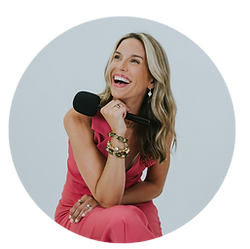


Why You'll Lose 90% of Your Eggs by 32 (Fertility Doctor Explains)
At a women's networking event in New York, Erica met a woman who casually mentioned she'd already frozen her eggs. "I ain't gotta worry about none of this right now," she said. "I can do what I want." That one line stuck with Erica, because it's the exact opposite of how most women talk about their fertility.
Here's the number most women never hear until it's almost too late: according to Dr. Jamie Knopman, reproductive endocrinologist and director of fertility preservation at CCRM Fertility of New York, women are born with all the eggs they will ever have, and by age 32, 90% of them are already gone. Getting a period every month doesn't change that. As Jamie puts it, "menses doesn't equal motherhood." And the medical world has caught up to what she's said for years. A 2025 ACOG committee statement confirms infertility is recognized as a disease by the World Health Organization, the American Society for Reproductive Medicine, and the American Medical Association, not a stress response or a personal failing.
Jamie's new book, Own Your Fertility, lays out exactly what to do with that number. She calls it "the reproductive pivot," the moment a woman stops letting her biological clock write her timeline and starts writing it herself. Workplaces are starting to catch on too: a 2026 IFEBP survey found egg freezing coverage among employers has climbed to 18%, up from just 2% a decade ago. In this episode, Jamie walks through when to freeze, what IVF myths to ignore, and how to reclaim reproductive choice on your own terms.
TRANSCRIPT:
Erica: Hey, girl. By now, you know I have Her Collective, my online community for ambitious women who are done doing it alone. Her Collective is for the women who are smart, capable, and driven, but they find themselves stuck on the sticky floors like self doubt, burnout, and waiting for permission that quite honestly never comes. Inside HER, you get more than motivation. You get real support, real strategies, and real momentum.
Erica: We work on things like clarifying what you want now and what's coming next, building confidence without burning yourself out, navigating hard conversations, career moves, and leadership moments with clarity, and surrounding yourself with women who actually get it. This isn't about hustling harder. It's about moving intentionally with the right tools and the right people in your corner. If you're ready to stop spinning, start choosing yourself, and build a career and life that actually feels aligned, I'd love to welcome you inside Her Collective. You can learn more and join us at www.joinhercollective.com.
Erica: Because honestly, girl, you were never meant to do this alone. Welcome to the Glass Ceilings and Sticky Floors podcast, the podcast where we get real about the challenges women face in work, life, and leadership. I'm your host, Erica Rooney, HR executive, keynote speaker, and executive coach, and I'm on a mission to get more women into positions of power and keep them there. This is the space where we call out the paradoxes: being told to lean in but not too far, to speak up but not too loudly, be ambitious but not too ambitious. Does that sound familiar?
Erica: Yeah. We're over all that. Here, we break down the sticky floors that keep us stuck, from imposter syndrome and perfectionism to burnout and fear, and give you real strategies to shatter those glass ceilings once and for all. So if you are ready to rewrite the rules, own your power, and take your career and life to the next level, you're in the right place. Alright, y'all.
Erica: Today's guest is tackling the core problem that hits every ambitious woman facing her thirties: that paralyzing fear and all of the misinformation out there around her biological clock. I know y'all are gonna be so interested in this. Dr. Jamie Knopman is giving women the science and the strategic plan to take charge of their bodies and their future.
Erica: She is a highly respected board certified reproductive endocrinologist and the director of fertility preservation at CCRM Fertility of New York. Y'all, this woman is known for her honest, no nonsense approach, and she is dedicated to demystifying IVF, egg freezing, and surrogacy. She's also the author of the book Own Your Fertility: From Egg Freezing to Surrogacy, How to Take Charge of Your Body and Your Future.
Erica: I think that's super awesome. Books like that didn't exist for me in my thirties. So Dr. Knopman, welcome to the podcast. I don't wanna forget that you're the medical director of Chick Mission, which is a nonprofit helping young adult cancer patients with fertility challenges. So, girl, you out here doing the most. How'd you find time for me today?
Dr. Knopman: Thank you for having me. That's a very nice introduction. I appreciate all the kind words.
Erica: I love it. Well, you're out there doing the most. I would love to hear a quick background. Did you always know you wanted to be in fertility, or did you just kind of fall into that by chance?
Dr. Knopman: I always knew I wanted to be a doctor since I was in the second grade. I read a book about Elizabeth Blackwell, the first female physician, and I was like, oh, I wanna be a doctor. I was pretty linear in my path. I went to undergrad, took the MCATs, did all that sort of stuff. I worked for a year after undergrad at Memorial Sloan Kettering in the Breast Center, and I thought I wanted to be a breast surgeon and help women who had cancer. When I got to medical school, I realized I really wanted to focus on women's health and actually liked the field of OB GYN because that was where I felt I could do it even more. Once I was in an OB GYN residency, I was fascinated by hormones and fertility, and I found myself in a fertility fellowship after that. That's where I got here.
Erica: I love this, because fertility and hormones are having a moment right now. Menopause is too. I'm hearing more than ever the anger around the lack of information on women's health. Do you see that as well?
Dr. Knopman: A hundred percent. When we were residents, we never learned about menopause. Nobody taught us. And now we talk about perimenopause and menopause all the time. It's really changed. I graduated residency almost twenty years ago, but we have seen dramatic changes in what we teach our young residents.
Erica: That's good to know. Okay, so one thing you talk about a lot is the emotions and feelings around this whole biological clock, the anxiety, the misinformation, the shame. I think a lot of women see this biological clock as a sticky floor of some kind that holds them back. Where do you see this show up in your work?
Dr. Knopman: It sort of does. The problem with female fertility is that our ovaries are gonna tap out at a pretty young age relative to the success we can have professionally and personally. Most women are going to see a real change in their fertility when they get to their mid to late thirties, and a lot of us will not be ready to have children by then, or won't have completed our family. So if we don't address this at a young age, we're gonna find ourselves struggling with infertility when we're ready to have a family. We have to be cognizant that we're born with all the eggs we're ever going to have, and by the time we hit 32, we're gonna have lost 90% of our eggs. Now that's not to fearmonger and tell women they must have kids in their twenties. It's just to say, if you're on a plan that involves not having children until 40, you should address this at an earlier age.
Erica: You said 90%?
Dr. Knopman: By the time you're 32. Yep.
Erica: That's insane. I didn't know that.
Dr. Knopman: Most people don't. I'm born with all the eggs I'm ever gonna have. By the time I hit puberty, I'm down to 350 to 500,000. People incorrectly assume that as long as they're getting their period, they can get pregnant. When I was a fellow, we used to write abstracts for scientific meetings, and I came up with the slogan menses doesn't equal motherhood. What I mean by that is just because you're getting a period, it doesn't mean the quality of your eggs is able to make a viable, healthy pregnancy. We need to remember that.
Erica: Alright, let's talk about egg freezing then. For anyone listening who maybe isn't ready to have a child yet, when should we start thinking about freezing our eggs, and what does that process look like?
Dr. Knopman: I think we should do it in our twenties, which is shocking for some people to hear. But our twenties are when we have our highest quality, highest quantity of eggs, and it's also when you get a lot more bang for your buck on the back end. Egg freezing had the experimental label removed from it in 2012. I call them in my book the OG egg freezers, women who froze their eggs initially. They were in their mid forties. So when the data came out, people said egg freezing was terrible. Of course it was, the quality of those eggs was long gone. As the age of the egg freezing patient has shifted downward, success has increased. Most women aren't having kids in their twenties, at least in a lot of major metropolitan cities, so we should address fertility preservation in our twenties.
Erica: Fascinating. Okay, you mentioned your book, and this is what I really wanna dive into today. First of all, you're a very busy woman, you're a full time doctor. How did you find time to write a whole book?
Dr. Knopman: I was very fortunate to have a collaborating author. I think a lot of people don't own that. I always say medicine is a team sport, we win together, we lose together. I have a nurse, an embryologist, medical assistants. If I don't get people pregnant or help them preserve their fertility, it's all of us. Same thing with writing a book. I'd venture to say most nonfiction books you read are written with a collaborating author. Maybe people just aren't open about that, but I would not have been able to do this on my own. It's a massive task, and while I think I'm a pretty good doctor, writing wasn't my first love.
Erica: There's no wrong way to have a baby, and there's no wrong way to write a book. What inspired you to write this book, and what's the main mindset shift you want women to take away from it?
Dr. Knopman: The pandemic really motivated me. I saw an increase in the number of women freezing their eggs, and a shift in who was freezing, more younger women coming in to do it. I also felt like my message was only as loud as the four walls of my office for the patients I was seeing. I felt we needed to take this message and share it with women beyond the people we see, and I felt there was a real need for a good fertility book.
Erica: I love it. You also talk a lot about the blame and regret some women have, thinking they should have done things differently. What advice do you give them?
Dr. Knopman: I always say, if we could live life backwards, we'd all do it differently, but that's not the way life works. I'm very open, I tell people I went through a divorce I never thought would happen. If I could live my life in reverse, maybe that wouldn't have happened, but that's not the way it is. So we can mourn the loss of something, our eggs, a marriage, a cancer diagnosis, whatever it is, we mourn that, but then we must gather ourselves and move forward. Otherwise we stay stuck in that grief or anger or bargaining, and we don't get to where we ultimately want to be, which for a lot of my patients is being a parent.
Erica: I imagine you have people who don't have successful transfers and have to come back to you several times. How do you help these families through that, and how do you keep showing up in a time that's so tough?
Dr. Knopman: It's definitely not easy. That's something they don't teach you in medical school, how to deliver bad news. I wasn't good at it when I was a younger physician. I think as I've gotten older I've gotten better with it, mostly because I've been on the receiving end of bad news myself. I think it's really being a partner on a journey, being present, letting someone just cry, you have to find what your role is to help that individual or couple continue on their journey. But it's also being honest, because fertility is a business, there has to be a stop point. If I let patients do endless egg freezing or endless IVF, I'm not really doing my job. I need to say, you can have a family, but not in this way, and you have to make a change.
Erica: Hey there, listeners. If you have ever felt like you're stuck in a place, held back by self doubt, perfectionism, or that pesky inner critic, you're not alone. We all face those sticky floors that keep us from reaching the heights we dream of. But guess what? It's time to shatter those limiting beliefs and toxic behaviors to uncover infinite possibilities. My book, Glass Ceilings and Sticky Floors, is your ultimate guide to smashing through barriers, overcoming limiting beliefs, and stepping into your full potential. This book has been endorsed by Mel Robbins, best selling author and motivational powerhouse, and featured in Success Magazine. Inside you'll find real life sticky floor stories, practical strategies, and a whole lot of inspiration to keep you climbing. Grab your copy of Glass Ceilings and Sticky Floors today at www.ericaandersonrooney.com.
Erica: I imagine you're seeing women at such a sticky floor point, because I'm thinking about myself and a lot of my friends. You hang your hat sometimes on being a mother, and this idea of exactly what that means and what that looks like. That's a tough job, girl, to help people through.
Dr. Knopman: Most of us always think we're gonna be a mom, it's something that seems ingrained, something that will happen. So if somebody like me says, I don't think you're gonna be able to have a genetic child or carry your pregnancy, it's so counterintuitive that it's a jarring thing that hits you and you have to core shift. I have to help you, and sometimes I can't be totally honest and blunt all at once, I need to slowly baby step it, no pun intended, to get the person there and hopefully watch them make a change.
Erica: I know, I've heard a lot, especially from corporate women, that we're very stressed and anxious about work, and that's the reason we're not getting pregnant.
Dr. Knopman: That drives me crazy. Infertility is a medical disease. We don't tell patients who have cancer, maybe you should just go have a spa weekend and eat some healthy food. The reality is it's not just fixing your stress. Infertility is a disease. Mitigating stress is good for all of our organ systems, our brain, our heart, everything, but just decreasing stress does not change the outcome of your disease.
Erica: I come from a long line of nurses, and you're the first person I've ever heard refer to infertility as a disease, and I think that's super powerful. For people out there carrying that shame, when you hear that it's something like a disease you don't have control over, I think that might relieve a bit of the shame. Is that what you're seeing?
Dr. Knopman: For so long we try and will it, we're like, if I do this then I can change it. But the reality is, for most of us, we cannot. And we have to accept that, because if we don't, it's a really negative spiral, and it impacts every aspect of your life.
Erica: With IVF, I know there's a lot of myth and random information out there. What's the single biggest misconception about the process that, if you could wave your magic wand, would be gone forever?
Dr. Knopman: That the pill causes infertility. I have heard that so many times, and it's just not true. The pill does not cause infertility. Can it mask infertility? Sure, because when you're on the pill you're going to get regular periods, that's the point of the pill, but it doesn't cause infertility. Number two, that if you just de-stress you'll get pregnant, that's a total bunch of bullshit. And number three, that you don't need to think about your fertility until you're 40. I've seen so many women where I'm like, where have you been? You gotta come to this way earlier, and it's a shame we don't teach women that they need to address it at younger ages.
Erica: I do think it's starting to be a bit more mainstream and less taboo.
Dr. Knopman: A hundred percent. Even in our waiting room, it used to be people would come in with a hat and sunglasses, looking down. Now with the influx of egg freezing patients, I gotta give them credit, they come in with their friends, it's like happy hour, oh my god, we're all here together. That has really taken away a lot of the stigma of infertility or fertility treatment, and that's very powerful in my opinion.
Erica: I was at a women's event in New York, and there was a woman I'd never met before, and we were chit chatting, and she was talking about how hard it is to date these days, especially in New York City. And she said, that's alright, I already froze my eggs, I ain't gotta worry about none of this right now, I can do what I want. And I was like, okay then, but to see that level of empowerment around it.
Dr. Knopman: I actually think it helps women date better. I got a divorce, so I am somewhat of a matchmaker, but I do think it takes a stress off of it. I'll say to a patient, this attitude going into a date is not helpful, being like, if I marry him tomorrow, then I have kids by a certain time. I think if you freeze your eggs, that timeline sort of relaxes a little bit, you loosen up that grip, and you're able to live your life a little and say, okay, is this the right person, maybe this is not the right person, and maybe I need to stop fighting it just because I wanna have a child in x number of years.
Erica: There absolutely were clocks running through my head every year, like, how old am I? It's hysterical, I was at a function last night and somebody was talking about how their 26 year old cousin is about to have a baby, and I'm like, but that's a baby.
Dr. Knopman: Oh my goodness. I don't think I've seen a 20 year old couple come in with infertility in years. At least in New York City, people don't try in their twenties anymore.
Erica: It just reminds you how quickly time flies. I'm done having kids, so that's not a conversation I need to worry about, but it does make me think of when my daughter gets older, I love this idea of empowering her with the knowledge to get out there and freeze her eggs.
Dr. Knopman: This is what I say, I wrote an article with my collaborating author for Oprah about why I'll freeze my girls' eggs at 22. It's not that I'm telling them to have children, or telling them to freeze their eggs, what I'm saying to them is that then you have reproductive choice, and the timeline is according to you, not according to your body. I got a lot of flack for that article, you're a fertility doctor, you have the resources, and I own that. But the landscape has shifted dramatically, so many more employers are covering this because they have to, because women spoke up in droves and said, I'm not gonna work here if you can't cover egg freezing. I do think we're starting to move the needle on what's offered to female employees by their employers.
Erica: We're definitely seeing more in menopause support, I haven't seen as much on the egg freezing yet myself, but I'm super hopeful for that. For any woman listening whose organization doesn't offer any of this, how can they advocate for these practices in their workplace?
Dr. Knopman: Go to your HR department. I've had patients tell me, I went to HR and I changed it. Go you. You can go in and say, I looked online and 15% of the businesses in our area, our tech companies, are covering one round of egg freezing or embryo freezing. Work with HR, because together you guys can actually make change.
Erica: I love this. In my body of work I always talk about the SNAP method: stop and notice the physical sensations happening in your body, name what that thing is, ask and answer the deep and personal questions, and then get to the P, the pivot. I'm done having kids, but I'm so passionate about this because I love these choices and pivots you're giving women when it comes to their reproductive schedule. You're telling them, you don't gotta hurry up and find a man, you don't gotta just take your eggs, go freeze them when they're good, and take back that control. Two things you've said today have blown my mind: that infertility is a medical disease, and that freezing your eggs gives you reproductive choice.
Dr. Knopman: Yep, I call it the reproductive pivot. You can then move either way. Now, people say, well, egg freezing isn't a guarantee, and that's true, but we buy insurance for our house, we have flood insurance or fire insurance, and you may unfortunately have a flood and your insurance company may not pay up, but you're not gonna live on the water and not have flood insurance because that would be really silly. Same thing, if you know you're not having kids till 40, you should freeze your eggs. It doesn't mean those eggs are gonna work, but it means you're gonna have a way better chance entering that flood if you have them frozen.
Erica: I love it. Are there any other massive, life changing pivots like those two, that you see frequently and wanna drop with us today?
Dr. Knopman: I think what I've learned is, I am a culprit, I'm a type A, you just keep pushing, pushing, pushing, but the journey of life is circuitous. I have a quote in my office I love, fall down seven times, get back up eight. Life knocks the shit out of you, we have all been there. You may not have infertility, you may lose a parent, you may have cancer, whatever it is, but you have to gather yourself up and push forward. I say this to my kids all the time, what are you gonna do, just lay on the floor and be miserable the rest of your life? It's not fair, it's not this, it's not that, you have got to gather your shit and get back up and keep going, because that's the only way you're gonna live your life.
Erica: That's so powerful, and I agree with all of that, because what other choice do you have.
Dr. Knopman: So let's get a move on.
Erica: What are you excited about in the world of reproductive health right now? Are there any cool studies or anything you think are gonna be super interesting?
Dr. Knopman: So much. I always say the fastest moving area in medicine as a whole is genetics. Genetics has moved medicine forward in every aspect so much faster. I think it's amazing what we can test embryos for in terms of health and medical disease. I think the marriage between genetics and fertility is only gonna have incredible results as time goes on.
Erica: Fascinating, I love that. Alright girl, where can people find you, and where can they buy your book?
Dr. Knopman: I have a website, DrJamieKnopman.com. I have an Instagram account also with that name, and the book can be purchased on Amazon or Barnes and Noble, you can preorder it. It's called Own Your Fertility, its pub date is January 13. I'm super excited and very grateful to get to share this piece of work with the world.
Erica: And it's spelled K-N-O-P-M-A-N, for you people listening.
Dr. Knopman: Correct.
Erica: Oh my gosh, Dr. Jamie, thank you so much for coming on and talking about this. I know so many women who I'd love to share these pivots with. Listen, if you're listening today and this conversation lit a fire under you, here's your next move. I don't want you to keep it to yourself, I need you to share it with somebody you know. I need you to drop a review and get out there on Amazon and buy Dr. Jamie's book. Let's keep this conversation going. Remember that your potential is limitless, and the only thing standing in your way are the sticky floors. But guess what, you have the power to break through them. So go out there, take up some space, and let's shatter some ceilings together.
RESOURCES MENTIONED IN THIS EPISODE:
- HER Collective, Erica's community for women who are done doing it alone.
- Glass Ceilings & Sticky Floors, follow the show for more episodes like this one.
- The AI Gap by Erica Anderson Rooney.
- Own Your Fertility: From Egg Freezing to Surrogacy, How to Take Charge of Your Body and Your Future by Dr. Jaime Knopman.
- Dr. Jaime Knopman's website.
- Dr. Jaime Knopman on Instagram.
- The Chick Mission, the nonprofit helping young adult cancer patients preserve their fertility, where Dr. Knopman serves as Chief Medical Officer.
RELATED EPISODES:
FREQUENTLY ASKED QUESTIONS:
Is it true I lose 90% of my eggs by age 32?
According to reproductive endocrinologist Dr. Jamie Knopman, yes. Women are born with all the eggs they will ever have, and by age 32 roughly 90% of that original supply is gone. This isn't meant to scare women into having kids in their twenties, it's a reason to address fertility planning earlier if you're not ready yet.
What does "menses doesn't equal motherhood" mean?
It's a phrase Dr. Knopman coined during her fertility fellowship. It means getting a regular period does not guarantee your eggs are still capable of producing a healthy pregnancy. Egg quality and menstrual regularity are two separate things, and confusing them is one of the most common fertility myths.
When should I start thinking about freezing my eggs?
Dr. Knopman recommends women consider it in their twenties, when egg quality and quantity are at their highest, rather than waiting until their late thirties or forties. Freezing earlier gives a woman more reproductive choice and a better chance of success later, without dictating when or if she has to become a parent.
MORE FROM ME
Follow me on Instagram @ericaandersonrooney and @joinhercollective
SUBSCRIBE & REVIEW
If you loved this episode, please take a moment to subscribe and leave a review on Apple Podcasts. Your support helps us reach more women who need these insights. Thank you for tuning in to the Glass Ceilings and Sticky Floor podcast. See you next week!
Hi, I'm Erica!
In the last 15 years, I climbed to Chief People Officer, 6x'd my income, walked away from a culture that stopped matching my values, wrote two books, and built HER Collective to help thousands of women rise to power and lead in the age of AI. I've learned a thing or two about smashing ceilings and closing gaps, and Glass Ceilings & Sticky Floors is where I open the playbook, the receipts, and the real stories to share it all with you.
_JPG.jpg)