


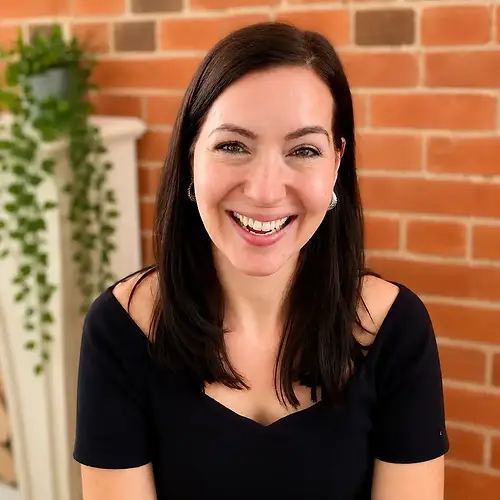



The Billion-Dollar Job She Quit to Ask Women Around the World About Courage
Look at the job you don't want to leave right now. Are you staying because you love it, or because you're scared nothing else will ever measure up? My guest this week, Gina Gallaun, spent a decade helping the fintech company Wise scale into a billion-dollar business, and she'll tell you flat out that by the end, fear was the only thing keeping her in the chair.
Three years ago Gina asked herself one question before she let fear answer for her: what would I do right now if I wasn't afraid? The answer was to quit her job in Estonia, pack a bag, and travel the world interviewing women about what courage actually looks like in an ordinary life. That trip became her book, Embrace Your Brave in 30 Days, thirty true stories built so you can read just one a day.
Gina calls her approach demoting fear to an advisory role. It doesn't get thrown out of the room, and it doesn't get to run the meeting either. She lets fear name its specific concern, listens to it fully, then lets the part of her that knows her values make the final call. That instinct to check in with the room before we act isn't a personality quirk. Naomi Eisenberger, the UCLA psychologist whose research first mapped it, found that the brain processes social rejection through some of the same circuitry it uses for physical pain, which is why the fear of being judged can feel every bit as real as a threat to your safety.
If you're the woman still at that job you privately admit you're only staying in out of fear, you're not alone in it. A February 2026 ResumeBuilder.com survey found 57% of U.S. workers now identify as job huggers, staying put out of fear of the market rather than loyalty to the work, up from 45% just six months earlier. Gina's reframe is permission to stop calling that safety. Demote the fear, hear it out, and then let the part of you that knows what you actually want cast the final vote.
TRANSCRIPT:
Erica: Hey, girl. By now, you know I have HER Collective, my online community for ambitious women who are done doing it alone. HER Collective is for the women who are smart, capable, and driven, but they find themselves stuck on the sticky floors like self-doubt, burnout, and waiting for permission that quite honestly never comes. Inside HER, you get more than motivation. You get real support, real strategies, and real momentum. We work on things like clarifying what you want now and what's coming next, building confidence without burning yourself out, navigating hard conversations, career moves, and leadership moments with clarity, and surrounding yourself with women who actually get it.
Erica: This isn't about hustling harder. It's about moving intentionally with the right tools and the right people in your corner. If you're ready to stop spinning, start choosing yourself, and build a career and life that actually feels aligned, I'd love to welcome you inside HER Collective. You can learn more and join us at www.joinhercollective.com. Because honestly, girl, you were never meant to do this alone.
Erica: Today's guest is the kind of woman who doesn't just talk about courage, she lives it. Gina Gallaun has a story that starts in Germany, winds through Estonia, and takes us all over the world. Gina traded the corporate world for global adventure, traveling to new places and interviewing women about their stories of bravery. And her journey led to this book that I think you'll love called Embrace Your Brave in 30 Days. It is filled with inspiring real life stories that will leave you ready to take your next leap.
Erica: Now if you know me, courage is one of my core values, and Gina is the perfect person to help us dig into what it means to live bravely, to live with courage. So let's dive in. We're going to welcome Gina to the Glass Ceilings and Sticky Floors podcast, the podcast that will empower you to shatter limiting beliefs and toxic behaviors to uncover infinite possibilities so you can live your best life. I'm Erica Rooney. Hey.
Erica: And I'm on a mission to bring more women into positions of power and keep them there. I am obsessed with all things growth and abundance, and I'm here to talk you through the tried and true secrets to get you to level up your career and your life. Y'all, we talk about the hard stuff: imposter syndrome, perfectionism, fear, and burnout. So pull up a seat, pop in an earbud, and let's dive in.
Erica: The one word that I would use to describe today's podcast guest is brave. And I'll tell you why, y'all. Gina Gallaun is a woman of the world. She was originally from Germany, but she moved to Estonia in her early twenties because she wanted to make her mark in Europe's leading startup nation. And she actually helped a startup called Wise grow into a global billion-dollar business. So she's a smart cookie, right?
Erica: But after a decade there, y'all, she quit her job to travel the world. And then she did something that I think is pretty amazing. She interviewed women on the topic of courage. And if you know me, or if you've read my book, or if you've ever listened to this podcast, you know that courage is one of my core values. So when Gina connected with me, I was super fired up to talk to her.
Erica: So, Gina, welcome to the Glass Ceilings and Sticky Floors podcast. How are you?
Gina: Yay. Thank you, Erica. I love your energy. That intro was so fun to listen to. Thank you. I'm doing great, and I'm really excited to be here with you today.
Erica: Oh my gosh. And y'all, I didn't even tell you this, but now Gina's in Colorado, and she and I were just chit-chatting before we hit record. Y'all, first of all, let me tell you, it is like 90 degrees in North Carolina here today in November. And Gina's over here telling me she's got a blanket of snow.
Gina: So I'm wearing my sweater right now. Yeah.
Erica: And I'm like, over here sweating my butt off. But Gina, I want to learn more about you. Okay, y'all, also, she wrote this entire book called Embrace Your Brave in 30 Days. It's real life stories from women around the world that inspire you to live boldly. And I've been having so much fun reading these stories because they're short stories, and I read them to Hallie, my six-year-old. But Gina, what inspired you to write this book?
Gina: You know, I had this moment three years ago where I felt uninspired for my future. Listen, you've also had to figure out your journey, you know, and what to do next. I did have a great job. Of course it was exciting. I mean, Wise is an amazing place to work, and that was the coolest thing ever, to build up that company.
Gina: And I just felt in my heart that my main reason for staying there, for continuing, would have been fear. The fear that I'd never find anything that compares, never find anything better or anything as good as this. That was my main motivation for staying. And that motivation doesn't feel good, right? It's fear-motivated. So no wonder I was uninspired. So I checked in with myself. I love this question. I asked myself, what would it be like for me to do if I wasn't afraid right now?
Gina: And the answer that came to me is, oh, you know what I would really love to do is go on a world trip, travel the world, meet interesting people, have good food, but most of all, interview women about what courage had looked like in their everyday lives. And that was the curiosity. Curiosity feels so much better than fear. So I decided to do that and went on that trip.
Gina: And I did feel so inspired, in the end, that I wanted to share those stories with other women, and their daughters. So that's how I ended up on your podcast right now.
Erica: And that's how I'm here today. Well, I love it, and I think it's fabulous. I mean, there is a lot of fear, I think, in just taking a solo trip, right? Let alone a solo trip around the world, places where you don't speak the language and you've never been before. So, number one, that is a big act of courage. How did you find the courage? Well, let me back it up. Did you always consider yourself a courageous person?
Gina: Absolutely not. I would say I grew up... okay, I don't want to stereotype, and I have this assumption, if somebody actually has statistics on this, please let me know after the podcast, but I have this assumption that Germans scan a little more for what could go wrong, as opposed to dreaming big, which I see more in America. That's also a beautiful skill, by the way, because that makes us amazing engineers, since we build in all the redundancies so those machines cannot break, right? But I think I grew up kind of scanning for what could go wrong, which is a bit of a fear thing. So I don't think... no.
Gina: And I wasn't even aware I was doing that until my twenties. Then I met people who just live life differently, and I could tell something's different. And I became aware that a lot of what I was doing, even in how I build relationships, was kind of fear-motivated. Like, I'd say things or not say things because I was afraid of how you'd respond if I did or didn't.
Gina: So I started learning about that, and then realized what I really wanted to do was look back at my life and feel like I made brave choices toward the life I want. But that didn't come naturally for me. I really had to strategically surround myself with people who are like that, because you become like the people you spend the most time with. It's really been a process.
Erica: I mean, that resonates so much with me, because one of my sticky floors has always been the fear of what other people will think.
Gina: Oh, I hear you.
Erica: You know? And it doesn't just snap out of that one, right? You always have to constantly remind yourself that it is okay to show up authentically. And I tell myself, and I tell the women I work with every day, that showing up authentically every single day is an act of bravery, because there are so many people out there who will judge you, who will not like you, who will think you're crazy. But there are also equal amounts of people who will think what you're doing, who you are, what you stand for, is great. You know? But like you said, it is that choice every day to show up, to act with courage, to be authentically you.
Erica: And one thing I'd love to touch on, Gina, too, is I want to go a little more into the backstory than what I just said, because you've done a lot. And what I love that you wrote about in your book, and I underlined it twice, y'all, literally. She made some hard decisions, and I'm going to read this to you. She goes: "During my twenties, I made some hard decisions that felt like diving headfirst through a wave." Here's the magical sentence, y'all: "I completed a marriage in which both my partner and I agreed the most loving thing to do would be to let each other go."
Erica: And I want y'all to just hear that for a minute, because this is not a divorce podcast at all, but I love how you framed that, Gina, because everybody I have ever met, with the exception of one other person, has looked at divorce as a failure. They've looked at it as if they didn't do something right, or it was a complete failure. I love that you phrased it as: you completed a marriage. Talk to me a little bit about that.
Gina: Oh, yes, I'd love to. When I grew up, probably many people can relate, in a religious environment, I remember hearing the sentence "divorce is not an option" so often, even into my marriage, even while both my husband and I could tell, oh, this isn't good. We couldn't really see each other's weaknesses with gentleness.
Gina: And I think that's what makes marriage healing and beautiful, that somebody knows you better than anybody else. They see your weakest, most horrible flaws. And of course they won't always be happy about it, but in general, they try to be gentle with you. And if you're not able to do that, it's just so destructive, to be in a marriage with somebody who can't be loving toward your weakness. I don't think it's a loving thing to do.
Gina: But I had to really work through that idea that divorce is not an option, that you're stuck. And, not to make this any sort of theology or philosophy podcast, I've really evolved my opinion. But that sentence came from church. And at one point I thought, okay, so church, the Bible, there's this point where people go to Jesus and ask him, out of all the laws in this book, so many, what's the most important? And he says, to love others and to love yourself, and to love God.
Gina: So really, if there's anything I feel like I should have taken away from growing up in church, it's, okay, what's the most loving thing to do for you and for me? And then there's a guy called Dr. Henry Cloud, and he wrote a book, I don't remember the exact title, oh, it's called Necessary Endings. And he used that wording, to complete a relationship when it's the right time. That really was a breakthrough reframe for me, to make that decision.
Erica: Oh my gosh, it's an amazing reframe, and I love it, because it's one we still just historically look on as a failure. So to see it as, you know, I completed that marriage, it's like, hell yeah, you did, Gina. You completed it. But what I also love about it is that in this book you talk about demoting fear to an advisory role in the decision-making process. And I was like, oh, now we're getting into strategy, y'all. I love this. So talk to me. How do you demote the fear? Tell me.
Gina: Yeah, I mean, mostly what didn't work for me is the idea to just ignore the fear. I came from a place where the fear would make the decision for me. I'm feeling, let's say, the sweaty armpits, the sweaty fingertips, right? I'm feeling fear, and I would just act based on that fear, move out of the situation or whatever. So that didn't lead to very satisfying results.
Gina: So then the next thing is, okay, before we do anything, what do we do with the fear? Ignoring the fear did not work for me at all. It's still there. That way, it doesn't resolve in any way. I'm still having sweaty armpits. So then this idea to say, okay, I see you, I see you, sweaty fingertips, I see you, fear. Tell me what your concern is. And then to really listen to the concern and discuss it.
Gina: Sometimes I imagine sitting around a table, and I imagine that emotion speaking up with all its concerns, and going, okay, that's a good point, and here's something else to consider, my value is, say, authenticity, or courage, that's something important to me. And then, what would it look like for us to do here? You know, the emotion, and then the part of myself that knows my values.
Erica: Well, I love it, because I literally, on my notes here, just drew a round table, and I get this concept of, invite fear, go ahead and invite fear, because fear isn't always a bad thing. So invite fear to the table, but also invite things like courage and bravery and hope and love, and invite all of those other emotions to the table as well. They all get to sit and listen.
Gina: Yes. And then also, how do you talk to them? I've really noticed, this sounds a bit woo-woo, but when I use language like, hey, I see you, you're so nervous about this, it makes sense, here's what we could do, it's weird, but it's almost like some part of me feels seen and validated. And then the big emotion can calm down a little, because I'm being heard, I'm being seen, like somebody's talking to me, we can figure this out. That also helps.
Erica: I love it. When you were writing the book and interviewing all of these women, what kind of questions were you asking them?
Gina: I started with something like, what in your life has required a bunch of courage of you? And people would say, oh my gosh, the situation in my family life, or at work, or romance, or friendship. And they'd start telling these stories, and then I'd ask follow-up questions, like, okay, how did it feel in your body? The fear, how did it feel? And then I was super interested in the part where people figure out why they're feeling their fear, a creative way to navigate through the fear to the other side, to get to what they really want. I'm really interested in examples of how people do that. That was my favorite part.
Erica: I'm a big believer in evidence, and that's what I love to have, and that's what's always helped me overcome a lot of my limiting beliefs. Like when I think about imposter syndrome, and oh my gosh, women can't be in the C-suite, I can sit there and say, no, that's not true, because I've seen other women in the C-suite. I've seen myself in the C-suite. Women can be successful business owners. Oh, yes, I can, I've seen several.
Erica: And even when it comes to my own moments in life, especially now as a full entrepreneur, I'm sure you can resonate with this, but there are so many moments when you run your own business where you're like, oh my God, what am I doing, am I going to make the bills this month, are people going to like me, are they going to like what I do? You want to talk about how to unleash all of your insecurities, just be your own boss, and that'll unleash every insecurity you've ever had, right? When we're sitting with all of these insecurities, how do you move through them?
Gina: Oh my gosh, I love your examples of reframe, or not reframe, like listing evidence, listing facts, like you just mentioned. Just this morning, I was speaking to somebody who read the book, also in North Carolina, and she was telling me she got a text message this morning, somebody was criticizing her work. She's also self-employed, and somebody was criticizing the way she did her work, and she had this pretty big emotional response, because it does feel so uncomfortable when people don't like what we do. And this whole idea that we shouldn't care about what people think, actually, from a brain science perspective, that's not true. Our brains are built to be part of community and to see others mirror back to us who we are. Biologically, that's how we work.
Gina: So what she did, I thought this was so funny, she started listing some facts. And the fact she listed was, this is a tiny text on a very small phone. And I just loved how she added that dimension, to reframe the situation. But there are so many different ways to move through fear. So, I mean, we could tell a few example stories.
Erica: Yeah, let's do an example. Tell me your favorite example story about moving through fear that's in the book.
Gina: Oh my gosh, that's so hard, I'm looking up because I have the photos of the ladies up there, I love them all so much. I'm thinking about which one would be... okay, so one that fits the story of fear of what people think perfectly. This is her name is Ciela. She's from Hungary. She grew up in a family that had super clear expectations for her path in life: get a safe job, live in Hungary, live close to family, and, of course, have kids early, right? That was very clear, communicated to her from the very beginning.
Gina: And she just knew she wanted more adventure in her life. She wanted to live abroad for some time, to have that experience, and her family was obviously not a fan of that idea at all. So she had this conversation with fear as the advisor, of like, man, if I lose my relationship with my family, that would be tragic, they're really important to me. And also, if I don't go and do this, live abroad for some time, I will forever regret it, and I would probably feel resentment toward my family, which long term doesn't help the relationship at all.
Gina: So she decided to go anyway. But here comes the part that to me is so creative and so fascinating. So she went anyway, she moved to England, and while she lived in England, even though she'd done the thing her family didn't want her to do, she called her mom every morning on the way to work, not out of guilt, but because she really cares about the relationship. She was able to live her value of wanting adventure and live her value of having a good family relationship. And actually, through those phone calls every morning, she says her relationship with her mom became ten times better and more intimate, because now they'd worked through something where one person had upset the other, but while still being kind and loving. She didn't say, screw you, I'm doing my thing, and if you don't support me, you'll never hear from me again. She was like, I'm going to do my thing, I'm sorry it upsets you, and while doing my thing, I'm still going to invest in our relationship, because you matter to me too.
Gina: And then, after seven years in England, she just felt one day that it was time to move back. She'd had all the adventure she wanted. So now she actually lives around the corner from her family, and she's convinced the relationship is so much better because she worked through that fear of disappointing people in this creative way.
Erica: Hey there, listeners. If you have ever felt like you're stuck in a place, held back by self-doubt, perfectionism, or that pesky inner critic, you're not alone. We all face those sticky floors that keep us from reaching the heights we dream of. But guess what? It's time to shatter those limiting beliefs and toxic behaviors to uncover infinite possibilities.
Erica: My book, Glass Ceilings and Sticky Floors, is your ultimate guide to smashing through barriers, overcoming limiting beliefs, and stepping into your full potential. This book has been endorsed by none other than the great Mel Robbins, bestselling author and motivational powerhouse. It's also been featured in Success Magazine, so you know it's packed with insights that work. Inside, you'll find real life sticky floor stories, practical strategies to help you navigate your own sticky floor moments, and a whole lot of inspiration to keep you climbing. This isn't just a book, it's your roadmap to success, confidence, and freedom. Grab your copy of Glass Ceilings and Sticky Floors today at www.ericaandersonrooney.com. Whether you're in the boardroom, the classroom, or just starting out, this book is for you, because no one deserves to stay stuck, no one deserves to feel small, and you have glass ceilings to shatter. Let's do this.
Erica: Well, I love that story, because I think we so often think it has to be a certain way. We always envision, of course, the worst-case scenario, that if I follow my bliss and do this courageous thing, my relationships will be ruined, or I won't make any money, or whatever scary thought you insert there. When in reality, it doesn't have to be that. In reality, you can own your own business and have reliable income. You can live halfway across the world and still have great relationships with people on the other side of the world. It doesn't have to be one or the other. And I think that's so powerful. Gina, how has life changed for you, good or bad, since you've really embraced living a life filled with courage?
Gina: The first thing that comes to mind is that I feel more alive, more often. Because what happens when I face a fear and walk through it, I still don't like that feeling, but there's a story in the book that still blows my mind, she's actually really inspiring to me, her name is Sheena, from Ireland. She has the story about how at 15 she traveled to India by herself, feeling all the fears of this new place, and how she learned on that trip that if she works through the fear and the discomfort of the unknown, on the other side is what she calls a new amazing normal. Like, she gave the example of driving a rickshaw, the first time she had to call a rickshaw and negotiate, so scary, and then be in it, the traffic is crazy, and you hope you arrive at your destination. So it felt scary. But then she found herself, two weeks later, just negotiating rickshaw prices with ease. And she said to herself, this is an amazing new normal that I unlocked by allowing myself to work through the discomfort.
Gina: So now, she's in her late thirties, and she says when she has to give a presentation at work, in front of thousands of people, and she feels the discomfort, the fear, she actually savors that fear, because she knows after that fear is a new amazing normal. To be honest, I don't savor my fear yet, I want to get there. So I still feel it. But what I noticed is that when I walk through it, on the other side, I feel more alive. That's the big thing.
Erica: I don't know that I'm at that point where I savor the fear yet.
Gina: Yeah.
Erica: No, not at all, but that's a great aspiration. I feel like that's the marathon distance of embracing fear, of leaning into the fear. But I love that you say that. One of the exercises I do with a lot of my clients, and I've talked about it on this podcast before, but I love speaking about it because I think everyone should do it, I call it my "one brave bite a day." That's doing the one thing that scares you, that makes you nervous, that you don't want to do, but you know you should, take that brave bite. And I'm a big fan of keeping a journal of all of those brave bites, because that fear will come back. New level, new devil, right? Every time you reach a new level of success, or conquer something, there's a bigger fear right around the corner. So when you take those little bites and put them in a journal, the next time you're facing another one of those big fearful things, you can go back to that journal and remember how terrified you were when you did that first big ask, or the first time you got up on stage, or the first time you told your boss, hey, that's not something you can say to me, whatever it is, you have the evidence right there. So I'm a big fan of taking a brave bite a day. Gina, what do you think about a brave bite a day? Do you take one every day, or is it more, I'll do it when it comes to me?
Gina: Oh, I love that concept, and that you take notes of it too. I have to share one example story, and then I'll answer your question. I had this funny assumption as I was putting the book together and putting it out into the world, I assumed this would most serve women in their thirties and forties. And I had this thought that women in their fifties, sixties, seventies have courage figured out, that at that point they're just courageous no matter what.
Gina: But then I found out that actually there are a lot of women older than that who buy this book and message me. For example, April, from Oregon, she said that all her life she'd worked with traumatized horses, had them be okay, she loved that work. And just when she turned 70, she started having this fear that she was too old to do this work, that it's dangerous and she's just too old. And then she read through all these stories, journaled through the prompts, and asked herself, what if I'm not too old? What would I do here if I wasn't too old? And she came up with practical ideas, like buying herself a protective vest while she's on the horse, so if she falls she'll be safe, and going to the gym to build her muscle strength. And now she's back in the work, feeling alive again, and she said, I realized I'm never too old to live an active life that's meaningful to me.
Gina: But basically what you're saying is there's always new fears that present themselves. I literally thought at 60 I'd be so cool, no more fears facing me. But at this point I'm thinking I'd better train that muscle for how to respond to fear, because they'll probably keep presenting themselves until the very end. But if I can learn how to navigate through them with my own personal style, I'll be okay.
Erica: I think we're entering this new era where, when you and I were growing up, nobody knew what was good for kids or not, so it was just, go outside and play until the streetlights come on, and you'll be fine. Now we recognize that things like confidence are taught, bravery is also taught, but we were never taught that, right? So we were just like, oh my gosh, you're either brave or you're not. And it felt that way, when in reality, no, no, no, you can teach these things. So I'm really hopeful, and I see it when I'm working with other women, they say, can you talk to my daughter too, because I want her to get these skills now. And I'm like, wow, yes. So I'm very hopeful that the next generations coming up are going to be able to walk in with more tools to combat the fear, and to live and act and work with courage that maybe we really had to figure out on our own.
Gina: Yes, I think I'm right there with you. There is a really big hope for that, because that's the other surprise I had while putting my book out there, another big group of people who love the book is moms who read it with their daughters. And, oh my gosh, they're being so mindful, because now we know kids learn from modeling, right, how things are done. So if they can have good models for how to face fear, they're set up for success. So it's really exciting that that's happening now, and you're doing that, and I'm figuring out how to do that too. That is a good thing.
Erica: We all are. Well, Gina, tell me more about what you're doing now. You're back in Colorado, you're done traveling the world. What's going on in the life of Gina?
Gina: Yes, well, of course, I love figuring out who this book serves most, and then hearing from them. And I have some ideas for some next products, so it's fun to work on this. But in my personal life, I've had a new challenge I've never had before. So on that world trip, I didn't actually solo travel, by the way. I asked a good friend, four days before my plane left to go to the other side of the world, hey, do you want to go on a world trip with me? And she said, I have a full-time job, I might have to move some meetings, but I'm not saying no, let me come back to you.
Gina: So she made it happen. From a different time zone, she had her meetings at 6 AM, I have hilarious photos of her in her pajama bottoms, sitting there in a professional meeting, just pulling it off, absolutely inspiring. But we're traveling together, and we go to Denver Startup Week, and she meets this man. And then she comes to me and says, Gina, I found this guy I think you should meet. He has baggage, he's divorced, he has two kids, but he has a great beard, you should totally meet him, is what she said. But really, what she knew about me is the values I'd been looking for in a partner. And so we clicked, and I thought this was actually really brave. I thought, I have a chance to give love a second chance, after having had a marriage that wasn't so great in my twenties. And that actually felt scarier than, for example, quitting my job. I think it depends on how much pain you've experienced in the past in a certain area, and those things become more scary if you have bad experiences.
Gina: But I decided to move here, give us a chance. And then two years later, we got married. So the new thing I'm figuring out now is how to be brave in a situation where way more is out of your control than I'm used to. Before, single, no kids, at work a lot was in my control, I could fire people, I could hire people. But in a blended family situation, there are so many parties involved, and a lot is out of my control. So that's actually a new skill I'm developing now, when there are things I cannot change, what does it mean for me to be brave in that situation? And I've accepted it fully, and I have my support, and I love how that's making me grow into someone better, even.
Erica: Yeah, oh, that's amazing. And what a great meet-cute story, here you are traveling the world, your wing-woman girlfriend is like, I got someone with a great beard right around the corner, let's go. Oh my gosh. Gina, well, where can people buy the book? Where can people find you?
Gina: Yes, well, on my website, wavesandwords.org, waves, like the wave in the ocean, and words, like we're talking. So that's my website, and you can buy the book there, and I actually have a discount code, 20% off, with the code STICKY, you know, like sticky floors, where you get 20% off. And there on my website you have all the social media linked as well.
Erica: Oh my gosh, that's so generous, Gina. And guys, I am loving this book, Gina sent me this copy, she was so generous to even put sticky notes in there for me, but there really are some great stories in here. Hallie is loving reading it. So buy it for yourself. The stories, literally, if you're watching on YouTube, you can see it, but they're just like a page, it's an easy read, and you just do one a day. So it's really cool, and just a really good pick-me-up, especially if you need to lean into that sticky floor of fear and pull in some more courage. But Gina, it was so great to have you on the podcast today. Thank you for coming and sharing your story and talking about your book. It really is such a cool piece of work.
Gina: Oh, thanks, Erica. This was so much fun.
Erica: Oh my gosh, y'all, what an incredible conversation. Gina's story is a masterclass in courage, resilience, and choosing to live boldly. And her book, Embrace Your Brave in 30 Days, is filled with those short, impactful stories that are perfect for anyone looking to bring more bravery, more courage into their life, whether you're tackling a big fear or just showing up authentically every day. Now you can grab your copy at wavesandwords.org and use the code STICKY for 20% off.
Erica: Trust me, y'all, this is a great coffee table book, that's where it's found its home in my house, and you'll want to share it with everyone you know. And listen, if today's episode spoke to you, I'd love to hear about it, share your favorite takeaway, tag me on social, and let's keep this conversation going.
Erica: But until next time, I want you to remember: the only ceilings that exist are the ones we place over ourselves. Let's smash through them together.
RESOURCES MENTIONED IN THIS EPISODE:
- Ready to close your own sticky floors and get more women into rooms of power? Join HER Collective, Erica's community for women in corporate America who are done doing it alone.
- Gina Gallaun, wavesandwords.org (use code STICKY for 20% off).
- Embrace Your Brave in 30 Days by Gina Gallaun.
- Necessary Endings by Dr. Henry Cloud.
- Wise, the fintech company Gina helped scale to a billion-dollar business.
RELATED EPISODES:
FREQUENTLY ASKED QUESTIONS:
What does it mean to "demote fear to an advisory role"?
It's the practice Gina Gallaun teaches in Embrace Your Brave in 30 Days of never ignoring fear and never letting it make the decision either. You let fear name its specific concern, hear it out fully, and then let the part of you that knows your values have the final say. Gina says ignoring fear outright never worked for her. It just meant the fear never resolved.
How do you know if you're staying in a job out of fear instead of love?
Gina spent a decade at the fintech company Wise and only realized near the end that her real reason for staying was fear she'd never find anything as good again, not love for the work itself. A February 2026 ResumeBuilder.com survey found 57% of U.S. workers now call themselves job huggers, staying out of fear of the market rather than genuine loyalty. If your honest answer to why you're staying is fear rather than love, that's worth sitting with.
What is Gina Gallaun's book Embrace Your Brave in 30 Days about?
It's a collection of thirty short, true stories Gina collected while traveling the world interviewing women about what courage looks like in everyday life, built so you can read one story a day. It follows women navigating divorce, career risk, family expectations, and starting over later in life. You can find it at wavesandwords.org with the code STICKY for 20% off.
MORE FROM ME
Follow me on Instagram @ericaandersonrooney and @joinhercollective
SUBSCRIBE & REVIEW
If you loved this episode, please take a moment to subscribe and leave a review on Apple Podcasts. Your support helps us reach more women who need these insights. Thank you for tuning in to the Glass Ceilings and Sticky Floor podcast. See you next week!
Hi, I'm Erica!
In the last 15 years, I climbed to Chief People Officer, 6x'd my income, walked away from a culture that stopped matching my values, wrote two books, and built HER Collective to help thousands of women rise to power and lead in the age of AI. I've learned a thing or two about smashing ceilings and closing gaps, and Glass Ceilings & Sticky Floors is where I open the playbook, the receipts, and the real stories to share it all with you.
_JPG.jpg)