


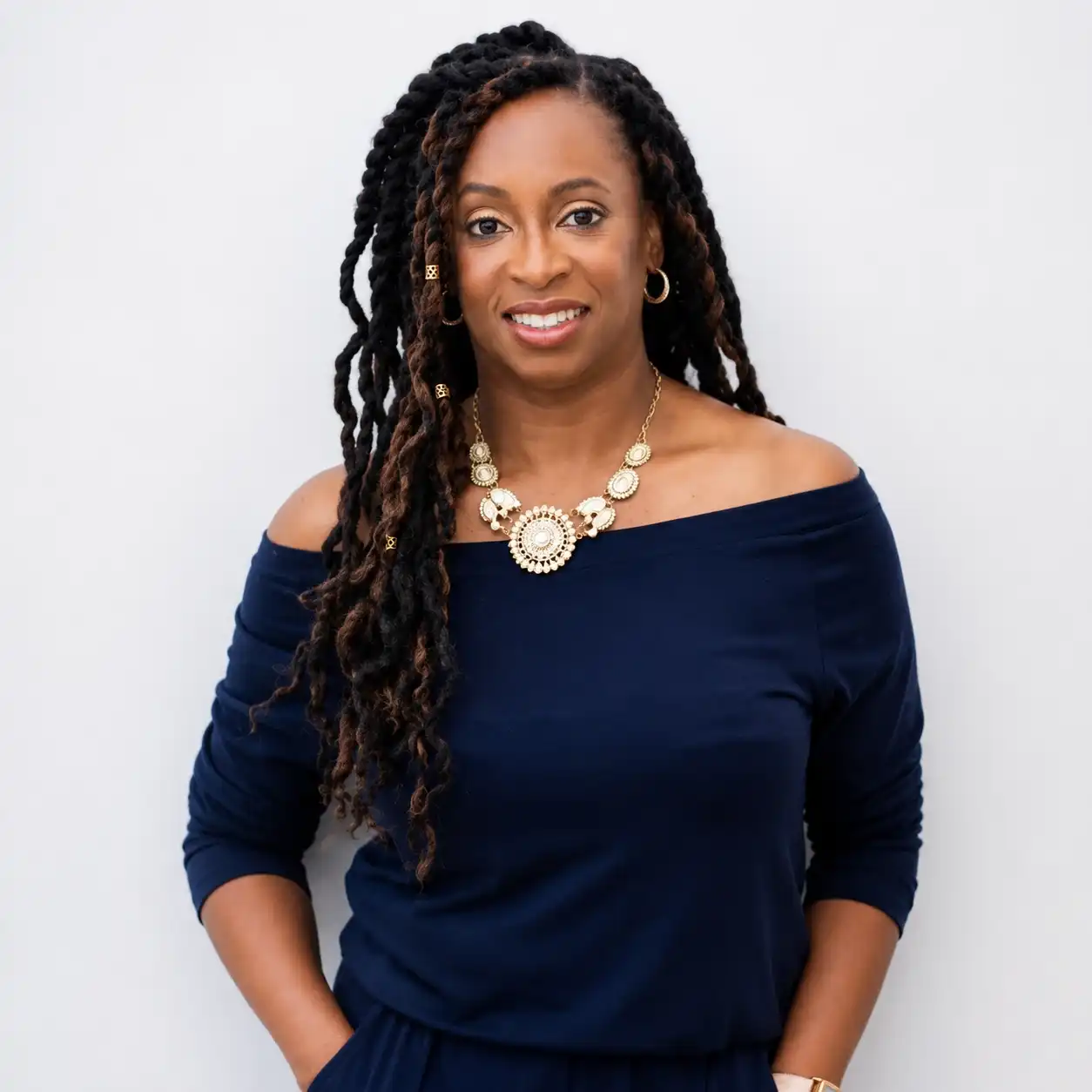



From Being Called "Too Intimidating" to Coaching the Executives Who Said It
Think back to the last time you felt excluded, really excluded, and sit with what that felt like. Sacha Thompson asks leaders that exact question for a living, and it’s the reason her clients, many of them the executives she once found intimidating, actually change.
Sacha spent years inside corporate DEI roles hitting the same ceiling: leaders with good intentions and zero tools. In one toxic role, internal politics got so bad her hair started falling out and she developed ulcers before she finally left to build The Equity Equation in 2020, now working mostly with middle-aged and older white male executives on inclusive leadership.
The concept at the center of her work is psychological safety, an environment where people can contribute, push back, and be honest without fear it will be held against them, and it’s measurably different from simply being included.
McKinsey research finds employees on psychologically safe teams are 50% less likely to quit, and Gallup has found high-psychological-safety workplaces see 81% higher engagement. Sacha’s own sticky floor wasn’t a hostile workplace, it was being boxed into “just a marketer” in environments that wouldn’t let her contribute beyond her lane. The question she now asks every leader she coaches, “have you asked them what they need,” is worth asking about your own team today.
TRANSCRIPT:
Erica: Hey, girl. By now, you know I have Her Collective, my online community for ambitious women who are done doing it alone. Her Collective is for the women who are smart, capable, and driven, but they find themselves stuck on the sticky floors like self doubt, burnout, and waiting for permission that quite honestly never comes. Inside HER, you get more than motivation. You get real support, real strategies, and real momentum.
Erica: We work on things like clarifying what you want now and what's coming next, building confidence without burning yourself out, navigating hard conversations, career moves, and leadership moments with clarity, and surrounding yourself with women who actually get it. This isn't about hustling harder. It's about moving intentionally with the right tools and the right people in your corner. If you're ready to stop spinning, start choosing yourself, and build a career in life that actually feels aligned, I'd love to welcome you inside her collective. You can learn more and join us at www.joinhercollective.com.
Erica: Because honestly, girl, you were never meant to do this alone. When have you felt excluded in your life? What did that feel like? Could you imagine feeling that way every single day that you had to come to work? These are the questions that Sasha Thompson, the Inclusive Culture Curator, asks to get leaders from all walks of life to understand inclusion.
Erica: She has over twenty years experience in education, nonprofit, and tech, and her work is about removing barriers and providing support to achieve equity and build inclusive workplaces. It is her calling, the work that she has always been meant to be doing, but she had to go through some sticky floors of being in toxic and psychologically unsafe work environments to get there. We'll cover her journey and you will walk away with so many tangible actions that you can take to get unstuck if you are in a toxic environment or if you want to improve the one you work in.
Erica: Welcome to the podcast from now to next, Sasha, where we talk about all things sticky floors, those limiting beliefs, toxic behaviors, and systemic issues that hold us back from busting glass ceilings. How are you today?
Sasha: I'm doing well, Erica. Thank you for having me.
Erica: Well, I am so excited for this conversation. You are the founder and CEO of The Equity Equation, and you come to us with just so much experience in the inclusion and psychological safety arena, which I cannot wait to hear more about and share with everybody listening today. So let's dive right in. Tell me more about who you are and the equity equation.
Sasha: Absolutely. So I am Sasha Thompson. I am the inclusive culture curator. I started the equity equation a few years ago. I've been doing diversity, equity, and inclusion work throughout my career, but really found that there were some gaps that I was seeing.
Sasha: And so, decided, you know what? I can do this kind of on my own. I was kind of hitting those ceilings, those glass ceilings, and had them in those sticky floor moments, throughout my career and realized that, you know what? I actually know more than some of the people that are supposed to be above me, and why am I letting their inexperience hold me back? Right.
Sasha: And so just kind of launched my own thing back in 2020. Knew I had some resources that were kind of right at my finger fit fingertips to tap into, and so did that. So, yeah, it's been an absolutely fabulous journey the last few years.
Erica: I bet it has. What were some of those gaps that you were seeing in the workplace?
Sasha: Yeah. So part of that was just my experience with leaders, my director, leaders. And they had great intentions when it came to diversity and inclusion, but they just didn't know what to do. Right? It was like, okay.
Sasha: Well, I understand. I see. I hear. But now what? And so it was really having those tangible opportunities to not just learn, but ask questions in a way that was safe, and then give them kind of those touch points of, okay.
Sasha: If this is the situation, this is how you can respond. And so trying to fill some of those knowledge gaps, but it wasn't just the knowledge gaps. It was the giving them the gumption to actually say or do something, in a way that it's okay to be scared. Like, it's okay to not have all the answers. It's okay to ask questions even if you are in a leadership role.
Sasha: And so that's a lot of the work that I do right now, my team and I do now is kind of coaching leaders to fill in some of those gaps and be okay with asking questions and teaching them how do you coach people through these situations without you even having to know all of the answers. Right? And so it takes a lot of the onus off of the leaders to be the guru of all things equity and inclusion when you have enough kind of basic understanding and knowledge to be able to ask the right questions and guide people in ways that could at least help them see that, okay, you care, and you're not just throwing this off to HR or throwing this up to legal because, oh my gosh, we're gonna get sued. Right? That's not always the response.
Sasha: And so helping them kind of get those just get the ability to be able to stand in that discomfort.
Erica: How do you get people to really understand that we all have these unconscious biases? And, you know, we have to recognize them and do the work to recognize them because I think there are so many people that just immediately go into defense mode and wanna say, I'm not racist. I'm not sexist. I'm not homophobic. Therefore, none of this applies to me.
Erica: Right.
Sasha: Part of that is doing our own internal work. Right? So many times when you're going through these classes, you're going through these trainings, it's about awareness of what's kind of outside of you and who you are. Right? So it's very easy to say, oh, I'm not that.
Sasha: I'm not tied to that. I'm not connected to that. What we do is we start with, okay. Let's figure out who we are. What are our identities?
Sasha: And how do we show up? What has shaped who we are and how we make decisions and how we see the world? And so it forces us to think about how we were raised and the types of environments that we were raised in. And if I worked in a if I worked in a place that I didn't see anybody that looked like me, how that impacted me. So we're doing a lot more of that internal work and thinking about, okay, what were some times where you felt excluded as a kid?
Sasha: Like, what did that feel like? So you're tying back to things that everyone can relate to in some way, shape, or form. Because when I start to talk to you about what did it feel like to be excluded as a kid, kid, right, you were the last one picked to play dodgeball or whatever it was, you start to then connect to those feelings. Well, imagine someone having that feeling that you had as a kid every single day in the workplace. So now we're tying into empathy.
Sasha: Right? And people can associate or at least connect to being empathetic to someone else's, story when they know that they've felt that in some way, shape, or form themselves. Right? So it's less about unconscious bias than it is understanding how we have been shaped and how we see the world based on our background and experiences.
Erica: So interesting. I love it.
Sasha: Yeah. I mean, it's it really is a lot because and I and I'll be honest. It took me a while to have these moments. Like, this is the path that I need to take people through because I kept seeing, oh, well, we did this unconscious bias, you know, session, and I know I have it, and they would just kind of move on. Yeah.
Sasha: Okay. Well, where did these thoughts and beliefs stem from? Right? What where did you first hear x, y, and z? Where did you first learn x, y, and z?
Sasha: And, again, it's not to blame parenting. It's not to blame, you know, the circumstances that you were brought up in, but it helps you see, like, okay. I live this very privileged life in this way. Other people were having those same different experiences in that same space. Right?
Sasha: And so you become very aware of not everyone experiences the world the same way that I do.
Erica: I just love examining and breaking down the evolution of DEI in the workplace as well because it started off as just a diversity initiative, then it was diversity and inclusion, then it was diversity, equity, and inclusion. Diversity, equity, inclusion, and belonging. And I don't think it's done transforming yet. We don't know what we don't know, and we don't know what this is gonna look like or where it's gonna take us, but we do know that we have work to do.
Erica: What do you think that the future looks like?
Sasha: So it's very interesting that you asked that question. I think it's been evolving, but nothing has really changed. And I say that because I have a cousin who retired from doing this work for forty years. And this is before it was called DEI. This is, you know, right when it was affirmative action and that was happening in the workplace, and it's the same conversations.
Sasha: So the evolution and, again, you're also have to take into consideration some of the societal issues and challenges that are taking place right now, especially in The US. And so for me, the evolution is less about the terminology than what is the end result that we're looking to achieve. Right? So very rarely do I talk about diversity, equity, and inclusion when I'm talking to leaders because I know that, that can be triggering for some, that can, you know, cause eye rolls. I go, my gosh.
Sasha: We gotta keep talking about this stuff. How I do it, I call it sneaking in the vegetables. Right? We're gonna just slide it on in there. You're not gonna even realize that it's diversity, equity, and inclusion work because it's about the end result.
Sasha: I want people on my team to feel valued. I want people on my team to be seen, heard, connected. Right? So I can talk about inclusive leadership. I can talk about psychological safety.
Sasha: I can talk about emotional intelligence, but do so in a way that is more inclusive and putting in a lot of the challenges and issues around diversity, equity, and inclusion that so many people are trying to just check the box with. Right? So especially equity. Very few organizations actually talk about equity. They have the e as part of what they're doing.
Sasha: But if I talk about equity as providing support or taking away barriers to success, right, and I talk about, okay, what Erica needs to be successful is very different than what Sasha needs. So how do you support that? You can't be talk about, equality in that way because everybody gets the same thing when it's equality. We don't have the same need. But when we talk about equity, I am providing Erica what she needs in order to succeed versus what I need to succeed.
Sasha: Right? So we're modeling the behavior of the terminology, and that's kind of the work that we really strive to do. And I think that's gonna be the future of this work. You're gonna see more around inclusive leadership. I'm working on a project now where it really is, like, how do we get these people leaders the skills, the resources that they need to be inclusive leaders, not just talk about it.
Sasha: Right? But what do we need to do to build equity into our day to day, to build psychological safety into our day to day? And how do we, create an environment where that leader is a coach to their employees and truly trying to get the best out of them so that everyone can be successful.
Erica: I posed this question the other day to several colleagues, but what is your opinion on the question, what does it mean to belong at work?
Sasha: So I'm of the mindset that I think belonging is just another letter that's thrown into the algorithm because belonging to me is about being inclusive.
Erica: Mhmm.
Sasha: Right? But I also believe that you as an organization can't make me belong. That's something that I have to feel, and you can't be responsible for. What you can be responsible for is creating an environment where I feel included, valued, seen, and connected. And it's up to me to determine if I belong.
Erica: Thank you. So we were touching a little bit on this earlier when we were talking about equity in the workplace, and you talk a lot about mentorship as well, especially to drive inclusion. And I feel like those two might be connected in some way. So how do they play into each other?
Sasha: You know, so it's interesting. Throughout my career, I've had mentors. And when I think back on who they were, they always didn't look like me, and it always wasn't a formal relationship. I think back to the people that just gave me advice or, hey, Sasha. There's this project that I think you'd be great to be a part of and giving me these opportunities, and giving feedback.
Sasha: And when I say feedback, that's not always just, like, negative. Right? So positive and negative, opportunities to learn. And I think that, there's so many leaders that have the opportunity to mentor. But, again, what it comes back to is what is familiar to us.
Sasha: And so there that bias, that affinity bias comes up because they then start to mentor people that look like them or remind them of people in their families, which tends to not be as diverse, as you they would think that it is. And so when I think about mentorship and inclusion, and equity, and it all kind of ties in, it's how do we see that spark in someone that doesn't look like us? How do we see that potential in someone that may be struggling a bit? Right? That, okay.
Sasha: You know what? I think I can give them some guidance. That takes bravery in order to do that. And so that's kind of where I think we can go with mentorship is making sure that everyone is getting that opportunity, and we're not just mentoring people that like us.
Erica: So on your LinkedIn page, you talk about toxic environments and psychologically unsafe environments. What's your story around that? I wanna dig in here.
Sasha: Oh my gosh. You know, it's actually been several environments that I've been a part of, and I think it was the last place where, I was leading an inclusive marketing team, and there were some internal conflicts where our HR department felt that all DEI efforts needed to come out of HR. I was in marketing. And I was not tied to recruiting. I was not tied to, you know, anything that had to do with hiring people into the organization.
Sasha: My job was to increase the number of underrepresented technologists in the industry, right, through telling their stories and highlighting them as part of our, you know, conferences and putting them on stage so that it wasn't just a middle aged white man that was always kind of on stage. And that environment started to become very political and toxic and, you know, there's that term, the term Karen. Like, she became my Karen, and that I would have a conversation. And then the next thing I know, I'm being called in because I was threatening, and I would and I'm like, really? Were we in the same conversation?
Sasha: Because that's totally not what happened. You know, I was called a bully. I was so my name was kinda being disparaged at these higher levels. And it got to a point where it was impacting my health. My hair was falling out.
Sasha: I had started developing ulcers. I was the stress of just trying to maintain and stay above my head above water, just became too much. And so I ended up leaving that place. But well, let me even before I left, what ended up happening, was George Floyd. And all of a sudden, this person who had zero DEI experience and proudly told everyone that, you know, this was the first time she's ever done this type of work.
Sasha: It was the hardest work she's ever done, and didn't know what she was doing, though creating me to be this huge monster within the organization. Now didn't know what to do because black folks were starting to speak up. And all of a sudden now wanted to hear what I had to say. And I'm like, you know what? No.
Sasha: I'm I'm good. So, I made the conscious decision when I left that I needed to create an environment or a space where I needed to feel valued, seen, heard, connected. I needed to feel, psychologically safe. Right? Where I can learn in a way that was conducive to who I was, where I could contribute in ways that were meaningful to me, where I could push back to folks without feeling, okay.
Sasha: They're gonna use this against me in any way. And after kind of going through all of these checklists of what was important to me, I decided to start my own business. And it has probably been the most fulfilling, it's sometimes scary, decision to make, but I'm doing it on my own terms. I'm growing in ways that I would have never been able to grow if I had stayed within a toxic environment. I am creating opportunities and partnerships in ways that are meaningful and not just superficial.
Sasha: And it's been fabulous. It's it's been absolutely fabulous. And so psychological safety was the first coaching certification that I got, right, when I when I just made the decision mentally that I wanted to leave. And I did that because I knew I didn't have it. And so now I would say 90% of the work that I do is working with organizations to ensure that they're, or create psychologically safe environments.
Sasha: And that's by helping leaders understand how they're showing up in those spaces and giving them the tools and resources to do that.
Erica: Would you say that being stuck in a Hey there, listeners. If you have ever felt like you're stuck in a place, held back by self doubt, perfectionism, or that pesky inner critic, you're not alone. We all face those sticky floors that keep us from reaching the heights we dream of. But guess what? It's time to shatter those limiting beliefs and toxic behaviors to uncover infinite possibilities.
Erica: My book, Glassy Leads and Sticky Floors, is your ultimate guide to smashing through barriers, overcoming limiting beliefs, and stepping into your full potential. This book has been endorsed by none other than the great Mel Robbins, best selling author and motivational powerhouse. It's also been featured in Success Magazine, so you know it's packed with insights that work. Inside, you'll find real life sticky floor stories, practical strategies to help you navigate your own sticky floor moments, and a whole lot of inspiration to keep you climbing. This isn't just a book.
Erica: It's your roadmap to success, confidence, and freedom. Grab your copy of Glass Ceilings and Sticky Floors today at www.ericaandersonrooney.com. Whether you're in the boardroom, the classroom, or just starting out, this book is for you because no one, and I mean no one, deserves to stay stuck, no one deserves to feel small, and you have glass ceilings to shatter. Let's do this. Work environment was your sticky floor?
Sasha: You know what? I think my sticky floor when I when I tie it back to psychological safety and hindsight being twenty, for the most part, most of the environments, that I was in were very inclusive. Right? There were a few where I was the only and folks just didn't get or understand why I didn't fit in as the only because I'm like, I'm not about assimilating. Like, it take me as I am.
Sasha: I was always in environments that allowed learning. Learning was always important. Like, that's just part of the culture, so I appreciate, and I love that. Contributor safety, I was able to contribute in ways, but I don't always it's difficult to contribute when people are putting limitations around that contribution, right, or wanting it in a certain way in a box, especially if that's not how you think or you operate. And so there's a there's a challenge there in many environments.
Sasha: And so the toxicity for me was really in I'm learning all of these things, and I'm I'm someone that is interdisciplinary. And when you're in an environment that, say, you're a marketer, you need to only do marketing things, or your job is to make things look pretty, that's where I struggled. And that for me was toxic because I wasn't allowed to bloom or grow or thrive in ways that were meaningful to me. You have to meet people where they're at. Yeah.
Sasha: Absolutely. Absolutely. And it's not this cookie cutter, okay, everyone's getting the same thing and doing this. No. It's not gonna work anymore.
Sasha: And especially in this post pandemic kind of work world that we're in, I don't think that we'll ever go back to this cookie cutter everyone does and gets the same thing.
Erica: Well and I don't think the cookie cutter ever works. I think that we all, you know, thought that it was more like a checkbox. Right? Like, we delivered the training. We delivered the process.
Erica: We've checked the box. And everybody went through the motions, and then they completed it, and then they walked away from it, taking nothing from it. It didn't actually impact them or the workplace. But I love to take it all the way back to the very beginning when you talked about bringing it all in with empathy and understanding the other person and the way that they operate and the way they view the world is not going to be the same as the person next to them.
Sasha: Absolutely. And, you know, it's it's so funny to me because I've had some leaders that will say, I can't get to know all of the people that report to me. And I'm like, really? So what's what's holding you back from that? And part of it is fear.
Sasha: Right? Because they don't wanna mess up. So it's just easier to treat everyone the same because then I could say I'm being fair to everyone. But are you really being fair? Or are you stepping back into your comfort zone because you're just doing what you feel you would need in order to be successful.
Sasha: Right? So it's like we have to unpack a lot of this mentality of what fairness is and what it looks like, and just yeah. And so it ties back to empathy. And I think that exercise that I shared when we touched back to being the last one picked to play dodgeball, and what did that feel like? Like, what did that where did you feel that?
Sasha: Right? You felt that in your gut. Okay. Let's go let's lean into that. And so what if that's how Erica's feeling every single day when she comes to work?
Sasha: What I would you know, how would you, approach that?
Erica: Well, now where my mind immediately went was to that saying people don't leave jobs, they leave managers. But then we've got these managers who are saying, I'm not gonna get to know anybody because I don't wanna mess up. And, well, now we're a real pickle here.
Sasha: You know, and it's so funny because even in doing the psych safety work with leaders, one of the questions that I ask them is, okay. Well, have you asked John what he needs?
Erica: Simple question.
Sasha: Then it's just like, the crickets that I hear, for instance, you mean actually at yeah. Actually ask him what he needs right now. How can I best support you? And, you know, I'm thinking of a few leaders that I had them ask that question of their employees. And when they got back into their next coaching session, they were like, oh my gosh.
Sasha: Like, I learned so much. And I'm like, really? Okay. So what are you gonna do with this information? Oh, well, I can do this, and I can do this.
Sasha: And so now all of a sudden, these folks that were very, very busy and didn't have the time to get to learn about people, now we're creating these individual plans. And they were excited about it because as leaders, their goal was, like, I just want my people to be happy and thrive and be successful. And so just by asking those simple questions, they now see how they can empower the folks on their teams to get to where they want to go, not where they want them to go.
Erica: People always ask me if we're ever free from our sticky floors, and I always tell them, I don't think that we're ever free from them. I just think that we get better at recognizing when we get stuck. So my question for you is where do you find yourself getting stuck in the work that you do?
Sasha: So it's funny. I actually caught myself about a year and a half ago. So when I first started the Equity Equation, a big part of the work that I did was coaching other DEI practitioners, And I stopped doing that, because I realized, one, I was reliving my own trauma and listening to their stories, and two, I had to force myself to stay into coaching mode versus adviser. Right? And so, I wasn't growing as a coach because I was in that constant battle with myself in trying to tell them, okay.
Sasha: This is what you need to do. Like, no. So I had to kind of let that go and go into the spaces of working with predominantly most of my clients now are middle aged and older white men, that are leaders and executives and teaching them how to be more inclusive leaders. And I think once I made that pivot to what I'm what am I actually passionate about and what am I trying to change, It wasn't that I was trying to change the, experiences of the DEI practitioners is I wanna change the environments in which they're working. And in order to do that, I have to work with these leaders.
Erica: Was that hard?
Sasha: It was it wasn't hard. I think what it was, I was first told when I said that's the pivot I wanted to make, I was told you would be intimidating to a white male leader, if I came at it from the angle of diversity and inclusion. Right? If you come at it from that angle, you won't ever get clients. And so I had to kind of get that negative thought out of my head and, again, go back to, okay, what is it that I'm trying to do?
Sasha: I'm trying to change these environments so that they are more inclusive so that I am not seen as intimidating. I'm five two. Right? Yep. There's nothing in my stature that's intimidating, you know, at all.
Sasha: So I'm like, so if it's not my stature, what about me is intimidating? And really had to think about that. Again, it goes back to that internal work. And what I started doing was, how can I help you be a more inclusive leader? How can I help you, show up more authentic authentically with your team and really change the questions to those leaders, and understanding that many of those leaders love data?
Sasha: And so I when I do the psychological safety assessments, right, I'm giving you data points. I'm giving you this is your psycholog this is the score for your team, and how are we gonna increase this score. Right? So that's less intimidating to them because now I'm their partner in doing this. Making that pivot, was probably one of the best ways for me to get unstuck.
Erica: Sasha, what is the one piece of advice you would give yourself when you were back stuck in a toxic work environment?
Sasha: Oh, that's such a good question. Know your value. Don't let the environment tell you your value because there's so many people that can put this negative energy, into your head and your space, and we already have those negative thoughts in our heads already. And so, if you know your value in who you are and whose you are and your goals, just keep your eye on that. Right?
Sasha: And I think for me, it was knowing that I wanted to do this work. I've been doing diversity, equity, inclusion, you know, all of this type of work since undergrad. And so this was my calling, and I couldn't let someone else because of their insecurity tell me that it wasn't my calling.
Erica: Beautiful. Sasha, I will link the Equity Equation and your LinkedIn in the show notes, but what is another way that people can get in touch with you?
Sasha: Another way that people can probably hear more about me and just kinda my thoughts And this work is I have a podcast as well, called DEI after five. And so every Tuesday at 05:15PM eastern, there's a new episode that's out, and we talk about all of the things that are what I call the dirt in the corner, around DEI. So just topics that people don't necessarily think about when they're thinking about diversity, equity, and inclusion. Yeah. And so you can always find me there as well too.
Erica: Awesome. Thank you so much for being here.
Sasha: Thank you for having me, Erica. This has been fabulous.
Erica: Hey. Are you still listening? I just wanted to tell you, I'm so glad that you tuned in today, and make sure that you follow me on Instagram, LinkedIn, and all of the socials for more content just like this. One last thing before you go. This is your reminder to stop putting a ceiling on what is possible and start breaking through it.
RESOURCES MENTIONED IN THIS EPISODE:
- Join HER Collective, Erica’s community for women in corporate America who are done doing it alone.
- Glass Ceilings & Sticky Floors, never miss an episode.
- Glass Ceilings and Sticky Floors, Erica’s book on smashing through the beliefs that keep you stuck.
- The Equity Equation, Sacha Thompson’s consultancy.
- LinkedIn: Sacha Thompson.
- DEI After 5, Sacha’s podcast.
RELATED EPISODES:
FREQUENTLY ASKED QUESTIONS:
What is psychological safety, and why does it matter at work?
Psychological safety is an environment where people can contribute, push back, and be honest without fearing it will be held against them. Sacha Thompson, founder of The Equity Equation, builds her entire coaching practice around it, and McKinsey research shows employees on psychologically safe teams are 50% less likely to quit.
What is “sneaking in the vegetables,” Sacha Thompson's approach to DEI work?
“Sneaking in the vegetables” is Sacha’s term for teaching inclusive leadership, psychological safety, and emotional intelligence without leading with the term DEI, which can trigger defensiveness before the real conversation starts. The goal is always the same end result: people who feel valued, seen, heard, and connected.
How can a leader start building more inclusive habits today?
Sacha recommends starting with one simple question to each person on your team: “what do you need?” She’s seen leaders who felt too busy to build individual relationships completely change course once they realized how much they’d been missing by treating everyone the same.
MORE FROM ME
Follow me on Instagram @ericaandersonrooney and @joinhercollective
SUBSCRIBE & REVIEW
If you loved this episode, please take a moment to subscribe and leave a review on Apple Podcasts. Your support helps us reach more women who need these insights. Thank you for tuning in to the Glass Ceilings and Sticky Floor podcast. See you next week!
Hi, I'm Erica!
In the last 15 years, I climbed to Chief People Officer, 6x'd my income, walked away from a culture that stopped matching my values, wrote two books, and built HER Collective to help thousands of women rise to power and lead in the age of AI. I've learned a thing or two about smashing ceilings and closing gaps, and Glass Ceilings & Sticky Floors is where I open the playbook, the receipts, and the real stories to share it all with you.
_JPG.jpg)