


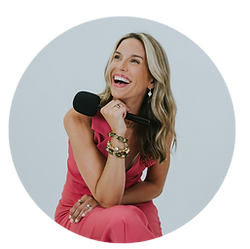


The Stress Paradox: Why a Little Discomfort Might Be Exactly What You Need with Dr. Sharon Bergquist
When was the last time you tried to get out of something hard? A cold shower, a tough workout, an uncomfortable conversation? My guest this week, Dr. Sharon Bergquist, wants you to stop doing that. She is a Harvard trained physician, an Emory researcher, and the author of The Stress Paradox, and her work shows that the right kind of stress can help us nearly double our human capacity.
Dr. Bergquist spent years practicing medicine the way she was trained to: treat the disease, adjust the medication, watch the numbers improve. Then a patient of hers, a woman managing diabetes, went on to develop breast cancer. Her only wish was to live long enough to see her daughter graduate, and she barely did. That loss sent Dr. Bergquist looking for what modern medicine was missing, and it led her straight into the science of hormesis, the study of how the right dose of stress heals instead of harms.
So what is hormesis? It's the kind of stress your body is actually built for: brief, intermittent, and tied to something that matters to you, not the chronic stress of a bad job or a strained relationship your body was never designed to survive long term. Dr. Bergquist points to five ways to trigger it: plant chemicals in your food, short bursts of vigorous exercise, heat and cold exposure, time restricted fasting, and mental or emotional challenges that push you past your comfort zone. The science backs it up. In 2013, researchers led by Carlos López-Otín published The Hallmarks of Aging in the journal Cell, mapping the exact cellular pathways, things like telomere attrition and mitochondrial dysfunction, that hormetic stress has since been shown to counteract.
Here's why this matters if you're a woman carrying a full plate. The American Psychological Association's 2025 Stress in America survey found women are more likely than men to rate their workplace stress an 8 or higher, and most of us have been taught the fix is to eliminate stress entirely. Dr. Bergquist's research says that instinct is only half right. Too much stress is harmful, yes, but so is too little. The goal was never zero stress. It's finding your Goldilocks dose, the small, sustainable pushes that build resilience instead of burning you out.
This episode will change how you think about your cold shower, your afternoon walk, even the meal you skip until noon. Dr. Bergquist walks through exactly how to microdose stress so it works for you instead of against you, and why the goal was never to avoid discomfort. It was to use it.
TRANSCRIPT:
Erica: Today's guest is a trailblazer in the field of lifestyle medicine, a physician, research scientist, and innovator dedicated to helping people take control of their health with science backed solutions. She is the founder of Emory Lifestyle Medicine and Wellness, where she integrates preventative care with cutting edge research on healthy aging and disease prevention. From leading groundbreaking clinical trials in longevity and brain health to designing award winning wellness programs, she is redefining what it means to live vibrantly. Please welcome Dr. Sharon Horesh Bergquist to the show. How are you?
Dr. Bergquist: I am wonderful, and thank you for that lovely introduction.
Erica: Well, you are also an author, so we are gonna get to that. But let's start with your story. What led you, Sharon, to dedicating your career to lifestyle medicine and healthy aging?
Dr. Bergquist: So really, it's because early in my career I had brought everything I had learned from residency, and I was fortunate enough to be mentored by incredible people. But everything I was taught was how to treat disease, and like most physicians, I felt really comfortable doing that. Over time, being an internal medicine physician, one of the advantages of the type of work I do is I get to follow the same patients over time. You get to see what happens throughout their life course, not just one episode of an encounter in a doctor's office. Their disease process was escalating, I was just adding more medication, and their numbers looked good. By many measures in health care we were doing what we were supposed to be doing, but I felt like I should be offering more. There was still so much suffering, so much struggle, and I started to rethink medicine, to reimagine how we could be doing this. That led me down a path of how to use lifestyle, but in a very evidence based way. What's really research, what do we know about what to eat, how to manage stress, how to exercise, to reach the goals that we want. Since that time, I've invested my entire career to really understanding that and doing it in a way that I think changes lives.
Erica: Oh my goodness, I am so excited about that. Preventative medicine is always my favorite. I grew up in health and wellness, so this is gonna be an incredible episode. But I wanna ask you this because you have spent almost three decades in clinical care, research, wellness. Was there a pivotal moment that really made you realize that this traditional way of doing health care was missing something critical?
Dr. Bergquist: There was a patient of mine in particular who had diabetes. We had her well controlled, and over time she went on to develop breast cancer. She'd come to this country, her daughter was a first generation, and her only wish was to live long enough to see her daughter graduate, and she barely did. Her cancer had metastasized, she was incredibly frail, but she was able to fulfill that wish, and I couldn't help but think, could we have prevented this? Could we have viewed the metabolic disease in a different way? What I know now is that the hyperinsulin state that comes from the metabolic disease, from the diabetes, is a contributor to the increased risk of cancer. I wish I knew that before. I feel like I could have changed the life course of people. I think it's seeing this incredible human suffering, but also human resilience, and that just piqued my interest.
Erica: I love that, thank you. Let's dive into the book, because she believes that we need stress to live longer, healthier, and happier lives. So please tell me, because I'm always trying to reduce my stress levels, Dr. Sharon, why do I need more stress right now?
Dr. Bergquist: Well, it comes back to your lovely intro. You love paradoxes, and I've got one for you. The type of stress that we think of when we think of stress is chronic stress: financial hardship, job situations where we feel stuck, poor relationships. These are the types our bodies aren't well adapted for, and that's why they're so harmful. There are stressors that our bodies are adapted for, and those are the type that help us thrive. They expand our potential. The difference is that these types of stressors, the good kinds, are brief, they're intermittent, and they align with our belief system, they're meaningful, they're part of something bigger than us. When we lean into those stressors, the biochemistry of our stress response is not just a simple fight or flight. It's not the same as running from a saber toothed tiger. It has a completely different chemical milieu. Of course there's the adrenaline, but there's also oxytocin, which is a bonding hormone, dopamine, which is energizing, serotonin, which is the happy hormone, and interestingly enough, those hormones reduce our cortisol level, they mitigate our stress, and they're actually protective and helpful while they help us reach a higher level of capability.
Erica: In your book you talk through different ones. We talk through fasting, hot and cold. Walk me through the ones that you have in the book, and then let's pick your favorite and dive into it.
Dr. Bergquist: Of course. I think of stress more broadly than psychological. Stress, in a technical sense, is anything that challenges your body. It could be physical, emotional, mental. In the book I mention five key ones: plant chemicals or phytochemicals, exercising in a vigorous or high intensity way, at least in intervals, heat and cold, which are underutilized, fasting, but in a time restricted way that is kind of moderate, and also in a circadian pattern, and also mental and emotional challenges, though not all of those are good. The common thread in all of those is they are perceived by our body as stress, and these are the types of stress that were inherent in the lives of our ancestors until about maybe two hundred years ago. Over millions of years our bodies have adapted to these types of stressors, and for the first time in human history we have removed those stressors from our lives. Because so much of our genes and how we optimally express them have come to depend on these types of stressors, the lack of them is actually making us more vulnerable to mental illnesses like anxiety and depression, and more vulnerable to physical illnesses like the epidemics of diabetes, heart disease, dementia, cancer. What I really hope people get from the need of these stressors is that they align with a natural rhythm of our body. We are really just restoring what our bodies have come to need, and reconnecting ourselves with our environment and each other in a way that helps us thrive.
Erica: So talk to me about the hot and cold thing, because this one really piqued my interest, maybe because all over my TikTok and Instagram I'm seeing cold plunges and saunas. Do I have to take a freezing cold shower or jump in a cold plunge every morning to make this work for me?
Dr. Bergquist: Oh, thank god, no. There's a lot of interest in this now, and it is more than a trend, there is definitely science behind it. At a cellular level, we know that when our body is exposed to these types of stressors, even though they're physical stressors, very different than emotional stressors, they still release stress hormones, and that activates a process where we do a lot of housekeeping, we repair our cells, we regenerate them, we recycle them, we increase energy in our cells through increasing our mitochondria. Because our cells are the most fundamental units in our body, and we're made of over 30 trillion cells, when our cells are healthier, every part of us is healthier: our brain, our muscles, our heart. So there is science behind doing these, but do you need to buy a cold plunge and a sauna in your home? No. The whole idea is to push a little bit past your comfort zone, but not to the point where it's overwhelming. For a lot of people, just thirty seconds of cold at the end of a shower, whatever temperature the shower is, is enough to trigger our stress response. A hot bath between 102 and 104 degrees can trigger a lot of the same benefits by raising our heat shock proteins, which help repair our proteins. So it doesn't have to be fancy or expensive. I feel so strongly that health is simple, health should be accessible to all of us. It doesn't come with a healthy price tag. It comes down to these foundational and fundamental principles of health: what we eat, when we eat, how much we move. If we get these foundations right, every one of us could be doing this, we could all be living healthier lives. These are just small everyday things that are accessible to all of us.
Erica: Well, I'm very glad that you have given me permission to not have to jump into a bathtub filled with ice first thing in the morning, because I was never gonna do that. But I do wanna talk a little bit more about this idea of giving our bodies a little bit of stress. We've got these five different areas. Are we supposed to make sure we're stressing ourselves in all five areas every day, or do we just pick and choose?
Dr. Bergquist: It's all about microdoses of stress, and it's microdose recovery. Over time you are shape shifting your body to this higher state. So a little bit every day, adding a little bit more plant chemical, that's a fruit or vegetable added to your plate. Doing a little bit more intervals of high intensity, running up a flight of stairs, running to catch a bus. These short, brief intervals add up to a lot. In fact, there was one study looking at vigorous, intensive lifestyle physical activity, short bursts of a minute or two of getting your heart rate up to that vigorous range, and over time they found the risk of heart disease was reduced by fifty percent and all cause mortality by forty percent. The idea is to do these little things but to keep doing them. No health habit works if you do it one time, but these are simple enough and everyday accessible that they can be part of a healthy lifestyle. What we're really looking for is the long game here. There's no quick fix to anything.
Erica: Oh, if only. Dr. Sharon, the next thing I wanna talk about, which I think is huge, especially for women, is sleep. I don't think the majority of us feel like we have it down, and I think the moment these little babies of ours quit waking us up in the middle of the night, we're all hitting menopause and getting hot flashes, and then we can't sleep because of that. So what can we do about this whole sleep thing?
Dr. Bergquist: Sleep is a huge part of recovery, and the reason you need sleep in the recovery is everything we just said about the benefits of stress, a lot of that benefit happens in recovery. In stress mode our bodies set us up to benefit, our body kind of rewires so we can perform more efficiently. It does these housekeeping functions of repairing damage, it recycles abnormal parts, but it's in recovery that we actually remodel and our body prepares to handle future stress better. So the benefits really come in that recovery phase, and stress without recovery stacks up to be chronic stress. The things that can help our sleep are aligning with our circadian biology. Our bodies are optimized to do certain functions in the daytime, like eating and cognitive thinking, and different functions at nighttime, a lot of that healing and repair. Sunlight is a huge part of it, we have a central clock in our brain, in the suprachiasmatic nucleus, about 20,000 neurons that, when sunlight hits our retina, tell us to wake up and raise our cortisol level, and in the evening when it's dark our pineal gland secretes melatonin. So one thing that helps us sleep better is getting sunlight in the morning or even some early part of the evening. It may not be realistic to do this first thing in the morning if you've got kids and places to go, but get natural light. I think we are spending 93% of our day indoors right now, and again we've lost some of that connection to how we need our natural world to function best. In the evening, try to dim the lights an hour before bed, bring them down to about 50% if you have a dimmer switch, and use desk lamps instead of overhead lights, since the type of energy that comes through the light is very different for our retina.
Another really key thing we have at our disposal is the timing of our meals, because we don't just have one clock in our body, we have peripheral clocks. Every part of us, our digestive system, our gut bacteria, has a clock, and these peripheral clocks are set by our eating pattern. When we eat really late at night, and right now in America 45% of our calories are being eaten at dinner or later, these peripheral clocks are getting the signal to wake up and turn on, while the central clock, the day-night one cued by light and darkness, is saying it's time to shut down. Your body's operating in two different time zones, and you're essentially interfering with your body's ability to start to shut down and go to sleep. So the things we have at our disposal that are underutilized to help us sleep better are getting the sunlight, the timing of our meals, and regulating the timing of our bedtime. You generally want to stop eating about two to three hours before bed and start about an hour after you wake up. If you can work on those three variables, your sleep quality will be better, because you'll synchronize all your body clocks, and that helps the oscillations of your circadian rhythm become stronger. You're reinforcing the natural rhythm of your body, and every part of your body functions more efficiently, your brain thinks more clearly, your metabolism functions better. When you eat late at night, your insulin level is actually lower because melatonin opposes insulin, so you get bigger spikes of sugar when you're eating late at night. There are studies now that show women who eat late at night or a large dinner over time are three times more likely to have obesity.
Erica: Interesting. So it's all about getting these different clocks that we all have going on, all of those peripheral clocks, and kind of syncing them up into one. I've actually never heard that before. And it makes complete sense. But here's my question, what about someone who's a super early bird, up at 4 AM, when the sun doesn't come up till seven, or on the flip side, someone who doesn't wake up till ten but goes to bed at eleven? What do we do about those people?
Dr. Bergquist: You can have some variation to this common theme. I get up when it's dark as well because I have to get to work, but later in the morning, or even sometimes at lunch time if I get a minute, I just go outside, even if it's five minutes, and try to get that natural daylight. The key here is if you're a ten o'clock person, try to be consistent, get up at ten every day and go to bed at whatever time every day. That consistency is what's key. Then tell your body, if I'm gonna eat after I wake up, you can create that consistency in your meal pattern, because the circadian rhythm, the reason we have it, is an anticipatory system. Your body wants to know when to open up shop, when to start to digest, and if you're doing it at a different time every day, you're just confusing your body and reducing its efficiency. So whatever your routine is, focus on consistency.
Erica: I love that. And since we have you here, Dr. Sharon, what are some of the biggest levers we can pull to slow down aging and improve our health span, not just our lifespan?
Dr. Bergquist: What's really incredible to me is that this biology of stress we're talking about, the science of good stress, these are all hormetic stressors, and there is incredible overlap with the health benefits of stress and with what causes aging. Our aging biology and our stress biology are unbelievably similar. We have known since the 1990s that about 25% of how we age is genetic and 75% is in our control. In 2013 a landmark study called The Hallmarks of Aging was published, and it broke down the processes and pathways happening in our body that lead to aging, things like instability in our genes, telomere attrition, epigenetic changes, mitochondrial dysfunction, which is a really big part of the process, and loss of proteostasis. These are all cellular mechanisms, but they help us understand what is happening and what's contributing to the process. What's fascinating is that when you look at what we're doing when we go through these brief, intermittent hormetic stressors, they're countering every one of these pathways. They're helping the balance of our healthy proteins, they're helping our telomeres, they're helping our epigenetics. It's incredible to me that by doing these short bursts of stress followed by recovery, we are actually slowing the aging process. What's even cooler is that these same processes lead to all the illnesses we're seeing. At the end of the day, modern day symptoms like fatigue, mental fog, digestive problems, are happening because our cells are getting harmed, and when we don't pay attention, that leads to diseases like diabetes and heart disease, chronic diseases, and if we don't pay attention to that, it leads to premature death. It all comes down to cellular health, and it's beautiful because we're really getting at the very root of all the symptoms of disease and aging when we're tackling them through restoring this natural rhythm of stress recovery that our bodies have come to depend on for us to be our best.
Erica: Alright, I'm gonna take you on a little bit of a left turn, because on this podcast we talk about the sticky floors, those limiting beliefs and toxic behaviors that keep you stuck. One thing I have seen in so many of the women I work with, that I'm friends with, that are just in my community, is we are all terrified of aging, because as women we just get old, but men, they're more distinguished, the gray hair gives them that salt and pepper look. When you are treating your patients, do you notice this disparity between men and women?
Dr. Bergquist: In terms of how they perceive aging, or literally how they're aging?
Erica: How does it impact their mental health, and how willing they are to really dive into what you're suggesting? Are they doing it for the right reasons, or are they doing it because it's more intrinsic to their worth? What are your thoughts there?
Dr. Bergquist: I think for a lot of women, one of our, we have multiple goals. We want to be there for grandchildren, we want to help our kids as much as we can, hopefully into our later years. At the same time, I think we as women kind of struggle with focusing on ourselves, we're so busy taking care of everyone around us that sometimes we even have a sense of guilt when we do take that time for ourselves. I think the key for us is to really recognize that when we invest this time, we are helping everyone around us. I actually don't like the term self care, because it's not really about us. One of the most powerful things about what we're doing when we make these investments is that we are becoming a positive force in the life of those around us. When we are more resilient, we emit a different energy from our heart. From quantum physics, this energy field, this electromagnetic field we have around our heart, our heart knows when we are aligned, when we are doing this work to build resilience, and we emit this energy that attracts instead of repels, that invites creativity instead of fear, it's really a magnet that pulls people towards us instead of repels. We influence our family, and really up to three degrees of separation, without even one word.
So I think one of the reasons I emphasize to my patients to really do this work of focusing on themselves, expanding, and reaching their own power, is because it creates this positive virtuous cycle of being a positive force in the people around you and the people you love, and far beyond that. It's a beautiful win win, it helps us age better and be healthier, and it helps those around us. But the path to it begins with us. It doesn't always begin with doing for our kids and everyone else.
Erica: I know, and I know we always hear put your own oxygen mask on first, but it is so hard to do sometimes, especially if you've got little ones running around in a high powered job. So with all that being said, if a woman walked into your office and laid all that out there, what would be the one piece of health advice you would give her, hey girl, start here?
Dr. Bergquist: I'm gonna say it's the mindset piece, because adding stress, this kind of good stress, it's deliberate, it's a choice, and it's a different mindset because it's a mindset of wanting to grow. So much of health advice is centered around what to avoid, and it creates a mindset of restriction, avoid processed food, avoid sedentary time, avoid chronic stress. But it's very fear based, like if you do not do this, something bad will happen. We're on the other side of this equation, we're saying, okay, what can you do to build resilience? It's a mindset of growth, a mindset of taking control, and ultimately that is where the power is. It's really a mindset of playing offense, we're not playing defense here with our health. So I think it all begins with mindset. What's beautiful is that simply recognizing that stress can be beneficial, instead of having a stress is always harmful mindset, just that mindset switch alone reduces the cortisol reactivity in your body when you encounter stress.
Erica: Incredible. Now when I think about your book, there's so much good stuff in there, I'm through 98% of it, I still got a little bit left if I'm honest, but I wanna know, what is the biggest takeaway you want readers to get from your book?
Dr. Bergquist: I hope that people realize we each have limitless potential for reaching a higher state, for having more capability. And I hope people take away that the path to getting there is experiencing some discomfort. It's not saying you've got to persevere and have grit in situations where you feel stuck, it's not about toughing it out. It's about using stress in a manner that aligns with your beliefs, that helps you increase your capability and your human potential. So it's really in the service of becoming who you want to be, and we can nearly double our human capacity through this process of stress recovery. Hormesis, or good stress, has been tested across different species with different types of stressors, and it's been found that over time we can increase our potential 60 to 90%, which is huge. At the end of the day, most of us are just leaving something at the table, we're not utilizing our human capacity, this given gift that we've inherited in our DNA to reach our highest state. I hope people just lean into it and realize it's okay to have doubts, it's okay to have fears, but there are no shortcuts. We've got to lean into them to get to this other side of becoming more capable, becoming the people we really want to be, and that we were made to do hard things. We all have this ability, and just trust that you can do it.
Erica: Yes, we are made to do hard things. But what I will say, what I really enjoyed about your book, is that it isn't this extreme way of being. I think so often we see these whole 30 diets where you can't have one gram of sugar, and then you've got 75 hard that just sets people up for massive failure. I remember reading these things and I was like, oh my god, I only have to take a thirty second cold shower after I've done the whole hot shower? I could do that. Whereas before it was like, oh no, never gonna happen.
Dr. Bergquist: Right, it's all about sustainability. We're in this for the long game, and it's the microdoses that lead to big gains. Think of your body like a muscle, you don't wanna just start with doing a curl with a 30 pound weight, you're probably gonna injure yourself. That's what a lot of these really intense programs are like, for most people who are starting at zero pounds, going to 30 is not what you wanna do. You can maybe do that for a day or two, you're probably gonna injure yourself, and then you're gonna stop. Think of your body as a muscle, and the way you build a muscle is you start with one pound, then three pounds, then five pounds, and that's really the trick. It's micro stress, not stress with a capital S, that we're after here. The body just expands every time, but it takes a bit of time, you push with a little bit, then your body adapts and builds these adaptations that literally make you stronger, then you push a little bit more, and it does the same. It does this in our brain too, we call it neuroplasticity, where we grow, we literally grow new brain cells from stem cells, and create stronger connections called synapses between our neurons. We are literally rewiring our brain so we can be more creative, make better decisions, improve our mood. It happens in every part of our body, our heart becomes stronger, pumps more blood throughout our circulation. But the key here is baby doses, and that is how this whole life changing process happens.
Erica: Baby doses, baby steps, just sprinkle a little stress on your life, it'll do you wonders. Dr. Sharon, do you have any last nuggets of advice you want them to hear before they go out and grab your book?
Dr. Bergquist: My advice for people is that when you are faced with a situation where there's an opportunity, but it's a little bit scary, or you can ask for something, just pushing yourself a little bit past your comfort zone, know that you are made for this, and that type of stress does not harm you, it actually heals you. Lean into it, do not fear stress. We've been told so long that stress is harmful that we are passing up opportunities for growth out of fear that it's too much stress. If there's anything we can learn from the science of good stress, it's that yes, too much stress is harmful, but not enough is just as harmful. What you really want in life is this Goldilocks, just right amount. That's when you thrive. So say yes. It's okay to have doubts, but lean into it, and I think it can change the trajectory of your life.
Erica: Oh my gosh, y'all grab her book, The Stress Paradox: Why You Need Stress to Live Longer, Healthier, and Happier. Make sure that you get it, it really is an easy and great read. Thank you so much, Dr. Sharon, I really appreciate your time today, your insights, mind blowing, and I love that there's all of these tangible, easy, thirty second things that we can do. So thank you so much.
Dr. Bergquist: Thank you so much for having me. It's been a pleasure.
RESOURCES MENTIONED IN THIS EPISODE:
- HER Collective is HER Collective, Erica's community for women in corporate America ready to break their own sticky floors and get real support doing it.
- Never miss an episode of Glass Ceilings & Sticky Floors, follow the show here.
- Glass Ceilings and Sticky Floors by Erica Anderson Rooney (book endorsed by Mel Robbins).
- Get Erica's book The AI Gap and start closing the gap for yourself.
- The Stress Paradox: Why You Need Stress to Live Longer, Healthier, and Happier by Dr. Sharon Bergquist.
- Dr. Sharon Bergquist's website.
- Emory Lifestyle Medicine and Wellness.
- The essential role of health and wellness in peak productivity.
RELATED EPISODES:
FREQUENTLY ASKED QUESTIONS:
What is hormesis, and why does the body need it?
Hormesis is the science of good stress, brief, intermittent challenges like fasting, exercise, or cold exposure that your body is actually built to handle. Unlike chronic stress from a bad job or a strained relationship, these hormetic stressors trigger a different chemical response, including oxytocin and dopamine, that lowers cortisol and builds capacity over time.
Do you need a cold plunge to get the benefits of cold exposure?
No. Dr. Sharon Bergquist explains that just thirty seconds of cold water at the end of a regular shower is enough to trigger the stress response that repairs cells and boosts mitochondria. The goal is to push slightly past your comfort zone, not to buy expensive equipment.
Can the right kind of stress actually help you live longer?
Yes. Hormetic stress counters several of the cellular pathways linked to aging, including telomere attrition and mitochondrial dysfunction. Dr. Bergquist's research suggests that consistent microdoses of stress, followed by recovery, can increase human capacity by 60 to 90 percent over time.
MORE FROM ME
Follow me on Instagram @ericaandersonrooney and @joinhercollective
SUBSCRIBE & REVIEW
If you loved this episode, please take a moment to subscribe and leave a review on Apple Podcasts. Your support helps us reach more women who need these insights. Thank you for tuning in to the Glass Ceilings and Sticky Floor podcast. See you next week!
Hi, I'm Erica!
In the last 15 years, I climbed to Chief People Officer, 6x'd my income, walked away from a culture that stopped matching my values, wrote two books, and built HER Collective to help thousands of women rise to power and lead in the age of AI. I've learned a thing or two about smashing ceilings and closing gaps, and Glass Ceilings & Sticky Floors is where I open the playbook, the receipts, and the real stories to share it all with you.
_JPG.jpg)