




She Lost Her VP Title in the Pandemic. Then She Built a New One on LinkedIn.
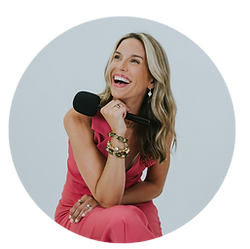
When's the last time someone asked what you do, and your answer became your whole identity? My guest this week, Melissa Cohen, spent over a decade climbing to Vice President at some of the most iconic names in American fashion. Then the pandemic took the job in one swipe, and she had to figure out who she was without the title.
Melissa had wanted a career in fashion since high school, the kid who dressed her Barbie dolls and waited for the September issue of Vogue every year. She built that dream over more than a decade, working her way up to VP at major American fashion brands. Then COVID hit New York City hard, nobody was buying clothes, and Melissa lost her job. She says she didn't realize how much of her self worth was tied to that title until it was gone. She couldn't say she worked at her dream company anymore, and it felt like losing a piece of herself.
Looking for a new role, Melissa turned to LinkedIn, same as almost everyone does. What she found there turned into something bigger than a job search. She started posting, connecting, and telling her own story, and watched the platform shift away from what she calls old LinkedIn, the dry, resume-only version where nobody showed up as a full person. The fear she felt before her first post, worrying it would get zero reactions and just sit there, is more common than it looks. A KPMG study of 750 female executives found 75 percent have experienced imposter syndrome at some point in their careers, and 85 percent believe it's commonplace among women in corporate America.
Melissa kept posting anyway, and today she's one of LinkedIn's top personal branding voices and the founder of her own consultancy. Her experience tracks with what the wider industry is seeing. The Edelman-LinkedIn 2025 B2B Thought Leadership Impact Report found 95 percent of professionals say thought leadership content directly influences their decisions, and 71 percent say it outperforms traditional marketing. Your voice isn't a vanity project. It's a rebuild in progress, even on the days it feels like nobody's watching. Melissa's reframe is simple: acknowledge the fear, try anyway, and let every attempt, even the ones that flop, teach you something for the next one.
TRANSCRIPT:
Erica: Hey, girl. By now, you know I have Her Collective, my online community for ambitious women who are done doing it alone. Her Collective is for the women who are smart, capable, and driven, but they find themselves stuck on the sticky floors like self doubt, burnout, and waiting for permission that quite honestly never comes. Inside HER, you get more than motivation. You get real support, real strategies, and real momentum.
Erica: We work on things like clarifying what you want now and what's coming next, building confidence without burning yourself out, navigating hard conversations, career moves, and leadership moments with clarity, and surrounding yourself with women who actually get it. This isn't about hustling harder. It's about moving intentionally with the right tools and the right people in your corner. If you're ready to stop spinning, start choosing yourself, and build a career in life that actually feels aligned, I'd love to welcome you inside her collective. You can learn more and join us at www.joinhercollective.com.
Erica: Because honestly, girl, you were never meant to do this alone. Have you ever wondered how one's personal journey intertwined with relentless passion and a pivot at a crossroads can lead to discovering your true voice and purpose? Today, we are chatting with one of LinkedIn's most famous personal branding voices, Melissa Cohen, who is an inspiration to anyone looking to stand out as a thought leader. Today, Melissa's going to talk with us about her transformative experience that came out of the pandemic and how these challenges led her to leverage LinkedIn, not just as a job seeking platform, but as a launchpad for her voice and her brand. Melissa's story is a true testament to resilience, adaptability, and the power of finding your voice in the most unexpected of places.
Erica: You are listening to the Glass Ceiling and Sticky Floor podcast, the podcast that will empower you to shatter limiting beliefs and toxic behaviors to uncover infinite possibilities so that you can live your best life. I'm Erica Rooney, and I'm on a mission to bring more women into positions of power and keep them there. I'm obsessed with all things growth and abundance, and I'm here to talk you through the tried entry secrets to get you to level up your career and your life. We talk about the hard stuff here, imposter syndrome, perfectionism, fear, and burnout. So pull up a seat, pop it in earbud, and let's dive in.
Erica: Today, we have with us one of LinkedIn's top personal branding voices, and she is the owner and founder of NBC Consulting Solutions. So Melissa Cohen, welcome to the podcast. How are you today?
Melissa: Thanks so much, Erica. It's great to be here. Thank you for having me.
Erica: I love it. I couldn't be more grateful for your time being able to learn from you and just learn more about you and who you are. So I'd love to just hear from the jump, who is Melissa Cohen?
Melissa: Yeah. Sure. And this is the first time we're sitting down and talking. So super excited. Nice to finally meet, almost face to face, virtual face to face.
Melissa: Yeah. So I work in the fashion industry. It is what I have always wanted to do. I remember the day that I was in high school, and someone came to speak with all of us from a fashion school in New York City, and I said, oh, I can do this for a career. Well, that's really exciting.
Melissa: Right? Because I was that kid who always was making little outfits for my Barbie dolls. I was always eagerly awaiting the September issue of Vogue. Right? It was like the size of the yellow pages.
Melissa: I'm completely aging myself there. People are probably like, what's the yellow pages? But it was a very, very thick issue every September. So I just loved fashion. Right?
Melissa: And so that's what I did. I had a very traditional corporate career in fashion for many, many years. I worked for some pretty well known major American fashion brands, and then the pandemic happened. And I don't think there was an industry that was unscathed, but for sure, fashion was hit pretty hard. Right?
Melissa: No one was buying clothing because no one left their house. If you made yoga pants, you might have been in good shape, but other than that, you were in for a really hard time. And so I very transparently, I lost my job. And when I was looking for a new job full time, I had some tough experiences, and I decided to pivot. And I started my own consultancy where I work with different brands on product development, production, manufacturing, and sourcing, all the things that I love to do.
Melissa: And it was different, but it was also really exciting. Right? All of a sudden, I could potentially work on a couple of different types of product. I wasn't necessarily pigeonholed just in one particular thing. So it was really fun.
Melissa: I learned a lot. I met a whole bunch of interesting people, and I would say it was something that I never thought I would do. If you would have told me that I wouldn't have just immediately gone back to a full time corporate role and that I would have started my own business, I would have said you were completely crazy. So, in a way, really proud of myself. Right?
Melissa: I did something different.
Erica: Oh my gosh. Yeah.
Melissa: And then the other thing that came out of the pandemic, which is partially why we're here, right, is I discovered LinkedIn. So I have had a LinkedIn account because I went back and looked, since 2008. But the first time I ever really engaged was 2020. And I'm not gonna lie. It was initially because I said, oh my god.
Melissa: I'm gonna need to find a job, and I need to leverage LinkedIn because that's what LinkedIn is for. Right? It's for finding a job. And I came to realize it is for so much more than finding a job, and it really helped me to find my voice and figure out who I am, what I want, what I want to do. And it's even become something where I help other people do that because people started to approach me and say, oh my god.
Melissa: I really love what you're doing on LinkedIn. How can I do that? How can I do that too? And so it's really just been, it's been a few years, and it's just been a really interesting journey. And, I think it's proof that you can do things that you never thought of when the opportunity arises.
Erica: Absolutely. Absolutely. And I'm a go deep real quick here with you. Right? Like, time is of the essence, so we're not gonna go we're not gonna fluff around it here.
Erica: When you lost your job, and so many people did, and so many people still are. Right? We are not in a great place from an economy standpoint. So many people are in transition right now or having hard times finding jobs. What was that initial fear for you?
Erica: Because I'm sure there was a lot of the sticky floors that we talk about inside of there because you had been working with some very iconic brands for over a decade. If you look at her LinkedIn, you can tell which one we're talking about here, but she had been there for a long time y'all. What were those initial emotions and feelings that you felt?
Melissa: Yeah. So, I mean, I'm not gonna lie. I don't think I realized how much of my own self worth and self identity was tied up in my job until I didn't have it anymore. And I think that was one of the biggest, I don't know, unlocks, revelations. Revelations is probably a good word.
Melissa: I didn't realize it. You know? I think when you're in it every day, you're just in it, and you're not thinking about that. And then when all of a sudden, I could no longer be identified as working at this, iconic, incredible brand that I loved. I loved the brands.
Melissa: Loved the brands. Loved the product. And people associated that with me. I had my whole wardrobe, which I also wasn't wearing anymore because I wasn't going anywhere anymore. It really made me realize that I felt that I had lost a piece of myself, and I didn't know who I was if I couldn't say that I worked at Ralph Lauren anymore.
Melissa: Right? That was a huge part of who I was. And so I think that was really a shock to me.
Erica: So this process of finding yourself again, right, and reestablishing yourself, what did that look like for you?
Melissa: So it was hard because so I live in New York City, and I do not in any way minimize the effects that the pandemic had on anyone, in The US or elsewhere. But New York City was hit really hard. We had very severe lockdowns. We had a very high rate of infection and a really high rate of people dying, and it was a tough time. You know?
Melissa: I the highlight of my day was putting on a mask and putting on gloves and going to the grocery store because I needed food. That was exciting because I got to leave my apartment. And, all the things that we kind of laugh at now, wiping down the groceries with Lysol wipes. I mean, if you could even get Lysol wipes. You know, I was doing all of that.
Melissa: And so it was definitely a tough time, and that is really where I leaned into LinkedIn. And I started to find a community there and build a network there. It wasn't just reaching out to people to find a job. It was reaching out to people because I really kind of just created that connection and that human interaction. And so many people were in the same boat.
Melissa: Right? And that is definitely a time that LinkedIn became a little less just job search and a little more telling your personal story, sharing who you are, talking about things that were going on in your life. You know, I think way back when you used to get a lot of this isn't Facebook kind of comments. And it's still not Facebook. Right?
Melissa: And I don't think it should be. Nope. I think it should remain exactly what it is, which is a professional platform, a platform for networking and professional conversations. But I don't think that that means that we can't talk about who we are and what matters to us and what our values are.
Erica: I love that you pointed that out because I have been racking my brain for the last few days. I don't know why it's been bugging me so much, but I've been trying to figure out when LinkedIn became less jobsy and more social. And it is. It's social media. And one of the things that I tell a lot of the women that I talk to and work with is, yes, it is a professional platform, but it is your social media.
Erica: And I don't know if you run into this with the people that you work with, but do you get a lot of people who hesitate to kind of explore what it looks like to post on LinkedIn and interact on LinkedIn outside of their job bubble?
Melissa: Yeah. I think absolutely. I think there is still some of that sort of old LinkedIn mentality. Like, I joke about it, you know, like, LinkedIn 2015 or LinkedIn 2018. And the platform has definitely evolved since then.
Melissa: And I think there's just fear in general. Right? I think people are afraid to put themselves out there. The one thing that I love so I'm not on any social media besides LinkedIn. I couldn't be paid to be on Twitter x whatever it is.
Melissa: Whatever it is. I don't know what you call a tweet now and if it's an x. I have never been on Facebook. What I appreciate about LinkedIn is you have to use your real name or at least you certainly should. So it's not the trolling kind of place that social media is.
Melissa: Yes. You're gonna still get people that make comments that upset you, and you're still gonna see things that you're gonna wanna remove some of your feed, and that's just life. But you're not hiding behind the screen name. And people if you post something, people know that you're posting it. And so that's good and bad.
Melissa: Right? For some people, that's really scary. It's really scary to put yourself out there and to say what you think and to let people know what your opinion is on something. And so I get a lot of that too where people are like, oh, I could never post on LinkedIn.
Melissa: Well, I felt that way too. The first time I posted something, I felt so sick after I did it and so worried. What are people gonna say? People are gonna laugh or, oh, no. I'm gonna get no reactions at all.
Melissa: It's just gonna sit there, like sinking like a stone, and nobody's gonna react to it, and nobody's going to comment on it, and it's just gonna be horrible. And it wasn't. I mean, did it go viral? No. It certainly did.
Melissa: It was actually a horrible post. It was terrible. But it got some reactions. One very kind soul reposted it. I got a couple of comments, and I survived.
Melissa: And then I just went from there. And so I always tell people that first step, like anything else, is the hardest.
Erica: You should totally take that first post and take a screenshot of it and put it on your website today to be like, go from this to this.
Melissa: Before and after.
Erica: I love it because it's so true. The first time you do anything, it's not gonna be great. You know? It's gonna be weird. It's gonna feel weird.
Erica: It's gonna feel uncomfortable, but you do it and you show up and you get a little bit better every day. And now this is where you thrive.
Melissa: Yeah. It's really fun for me. Like, people think I'm crazy. It is really fun for me. Every morning and every evening, I mean, with some exceptions, obviously, I do have a life.
Melissa: But that's how I like to spend a little bit of my time. It's a fun place and very supportive. Again, a different kind of social media. It's a very supportive community when you find your people.
Erica: So true. Alright. I'm gonna take us a little bit back in time now, but I wanna pose this question for both your corporate career because you were a VP. You were climbing ladders and shattering ceilings, but also in your life now as a business owner and a founder. When you think about sticky floors, those limiting beliefs and toxic behaviors that keep women stuck, are they different for you in corporate versus entrepreneurship?
Erica: Or do you feel like they show up the same one that shows up, but it shows up differently? I'd be interested to know. Yeah.
Melissa: It's a really good question. I think they're the same, right, because I'm the same person. And I think I like the term sticky floor. It's actually really brilliant. Sticky?
Melissa: It's really sticky? Yes. It's sticky and catchy. I think those sticky floors are very similar for a lot of people. I think many of us, especially as women, find the same ones over and over again.
Melissa: Right? So many women, some of the most accomplished, successful women that I know, they have imposter syndrome or they have had it. They have a lot of self doubt. They have a lot of fear of the unknown. I think those themes are very universal, and it doesn't necessarily depend upon what you're doing so much as that it's just that's a part of life.
Melissa: I think that's part of human nature, and we have to just sort of rewire our thinking. And the only way to do that, I believe, is just push forward. Like, if something scares you, that's okay. You can do something that scares you. It doesn't have to stop you.
Erica: And when you think about your life, you, who Melissa is, what were those sticky floors for you? Hey there, listeners. If you have ever felt like you're stuck in a place, held back by self doubt, perfectionism, or that pesky inner critic, you're not alone. We all face those sticky floors that keep us from reaching the heights we dream of. But guess what?
Erica: It's time to shatter those limiting beliefs and toxic behaviors to uncover infinite possibilities. My book, Glassy Leads and Sticky Floors, is your ultimate guide to smashing through barriers, overcoming limiting beliefs, and stepping into your full potential. This book has been endorsed by none other than the great Mel Robbins, best selling author and motivational powerhouse. It's also been featured in Success Magazine, so you know it's packed with insights that work. Inside, you'll find real life sticky floor stories, practical strategies to help you navigate your own sticky floor moments, and a whole lot of inspiration to keep you climbing.
Erica: This isn't just a book. It's your road map to success, confidence, and freedom. Grab your copy of Glass Ceilings and Sticky Floors today at www.ericaandersonrooney.com. Whether you're in the boardroom, the classroom, or just starting out, this book is for you because no one, and I mean no one, deserves to stay stuck, no one deserves to feel small, and you have glass ceilings to shatter. Let's do this.
Melissa: Definitely had a lot of that sort of imposter syndrome or that self doubt. I think as women, especially, it can be really hard. Right? We always the fashion industry is great, right, because there's a lot of women. It's a very female heavy industry, but really only up until a certain level.
Melissa: When you get to the upper echelons, when you get to the c suite, you're still looking at a much, much higher percentage of men. And I think that that imposter syndrome is always with us. It gets easier as you see more women succeed, and it gets easier as you sort of you have to break through your own self limiting beliefs. Right? You have to just say, you know what?
Melissa: That's not reality. That's just my mind saying something that isn't true. And a lot of us has that. A lot of us have those fears. And I wish there was some magic button that could just make them go away.
Melissa: But for me, that magic button is just saying, oh, it's sort of just acknowledging that that fear is there. I'm just saying, okay. Yep. I have that fear. And you know what?
Melissa: I'm gonna prove it wrong. I'm gonna go ahead and I'm gonna try this. And you know what? If I fail, that's okay too. Not everything that you do is going to be smashing success.
Melissa: You're not going to get accolades for every risk that you take, but a lot of them are going to pay off. And every time you try something, even if it's not successful, you learn something from it, and you can do it better next time.
Erica: Alright. You sound like you're pretty good at accepting failure. I am not. So tell me more about this. Is that true, or are we just acknowledging that failure or we're still going forward anyways?
Melissa: Failure sucks. I mean, I'm not pretentious. Like, yes. I failed. That's awesome.
Melissa: It nobody wants to fail. Nobody likes to fail. But I think also it depends on the environment that you're in and what risk are you taking. I'm not saying go out there and do something crazy. I'm not saying take your life savings and invest it in, well, if you'd invested in Bitcoin, maybe I actually would've I don't
Erica: know why Bitcoin was in my head too, but it was.
Melissa: But I'm not saying to do something super risky that has horrible ramifications if it goes wrong. But don't be afraid to try new things. Putting a post out on LinkedIn when you're frightened to do it is not gonna if it bombs, nothing terrible is gonna happen to you. Trying something new at work with minimal risk. You have to pick your battles.
Melissa: Right? Don't go out out of the gate and try something crazy, but try something new. If it doesn't quite work, how can you tweak it? How can you fix that? What other iterations can you try?
Melissa: What other, I think, thinking outside of the normal constraints of how we work every day is something more of us should do more often. So I will tell you here's a perfect example. When I was at Ralph before the pandemic, we had implemented, and I mean, not we. The company had implemented flexible work schedules. People were working from different locations.
Melissa: Everybody did not have to be in the office five days a week. And when that first started, it was crazy to us. Right? We were like, what do you need? People can work from home?
Melissa: What? That's crazy. And people were scared to do it because they were afraid it was gonna make them look bad. And then we came to realize, actually, we could be very productive working from home. Right?
Melissa: There were people who were commuting up to two hours each way to get to the office every day. So they were getting three and four hours of their lives back, and they could be so much more productive. They were so much happier. That was like a gift, a gift of time, a gift of productivity, and they were genuinely happier employees. So I think we can always try new things.
Melissa: And, you know, it wasn't perfect at first. Right? We had to figure out how do we make sure we had coverage every day because what I do is very product based. Right? Like, my role or my portion of the work could never be fully remote for everyone.
Melissa: Someone has to physically be there. Right? We're touching products. We wanna know how does the fabric feel. How does it drape on the body?
Melissa: Can you move in it? Is the model comfortable? So you have to have some physical presence. During the pandemic, we did it virtually. It was not ideal, and I would never say that we should go back to being a 100% virtual for what I do.
Melissa: So at first, it was tough. Right? We had to make sure we had coverage, that someone was physically in the office, that urgent packages were getting opened, that these fittings were happening. But we learned as we went along, and it was wonderful. Like, people were genuinely thrilled.
Melissa: And then suddenly, everybody was on a remote and hybrid schedule, right, because we had no choice. But it wasn't the norm back then. It was really something that we really found revolutionary and that we had to fine tune and do a few iterations of before we got it right.
Erica: Such a good point. And, I mean, you've just totally opened up my mind to so many things I never thought about when it came to working in remote and different industries with fashion industry in particular. But everything you said, I
Melissa: was like, damn. That's yeah. You can't be you
Erica: can't be fully remote doing that. So thank you for sharing that. That's so interesting. I wanna switch gears to your current expertise. And I say current expertise because I feel like you have expertise in so many different areas, but this is what you are just on fire with right now, and that's thought leadership.
Erica: Why do we even care so much about all this thought leadership today?
Melissa: No. I think it's just more important than ever to have a voice and to use your voice and to be known for something. Right? Whether you want to find your next corporate role, whether you want to launch your own business, whether you want to find people to collaborate with on projects, whether you want to be on podcasts. Whatever your goal is, I think you need to be known for something, and people are looking for that.
Melissa: People want to find subject matter experts and people to educate them on things that they don't necessarily know about. Right? Like, for me, I'm fascinated both for the good and for the bad with artificial intelligence. Right? And I am no expert in that, not by a long shot.
Melissa: So I seek out people who are. There are people that I would if you said, Melissa, who should I follow on LinkedIn to learn about artificial intelligence? I have a name that will come to my head immediately, and that's powerful. Right? That's a powerful position to be in.
Melissa: You become the subject matter expert in it. Maybe you write a book about it. Maybe you have a podcast about it. Maybe that becomes your job. People really want to find people that they can learn from.
Erica: Yes. And what I love about thought leadership is, historically, when we were just all these little individual contributors doing our jobs, going about the thing, busy bee workers, we had thought leadership, but it was only at the very tops of the ladder, and it was from a very small defined group of people. And let's be clear, mainly a lot of older white men. And today's world, we're not living in that anymore. And so all of the posts that we see on LinkedIn, and it just opens up your eyes to so many different perspectives.
Erica: And it was almost like the world kinda put their stamp on it throughout COVID. They said we are done listening to just one perspective. What's your take on that?
Melissa: I think that's an excellent point. I think we do need diverse perspectives, diverse in gender, diverse in background, diverse in the way we think. Right? I've said this a lot to people. I don't wanna live in an echo chamber.
Melissa: Right? I don't wanna only talk with people who think exactly the way I think because that's really boring. Right? That's also like the old LinkedIn.
Melissa: Right? You only connected with people who worked in your industry because what else did you need anybody else for? Oh my god. How boring is that? I think about all of the people that I've met and connected with who are super interesting, super knowledgeable, who I've learned so much from.
Melissa: And, yeah, some of them absolutely work in my industry. A lot of them don't. And so I think that's super important that we have very diverse perspectives, diverse backgrounds. And I think that everybody has something to teach people. Everybody.
Melissa: Everybody has a story. Everybody can learn from that story. Everybody can learn from your experience, whether it's your life experience, your work experience, somewhere you've traveled to. The possibilities are really endless for what you can speak about and what you can teach others about, and there's a huge appetite for that. People wanna learn.
Melissa: Like, there is a thirst for knowledge today, and I think part of that is because we are craving that humanity. As AI kind of permeates a lot of what people are thinking about, I think they're even more drawn to what they know is real and what they know is human.
Erica: Do you think that's why the word of the year from Webster dictionary is authenticity?
Melissa: It very well may be. Yes. I do think that that's a key reason. Right? There's so much chatter about AI and about how what we see may or may not be real.
Melissa: A lot of people are using AI for image generation. I've played around with it a little bit. I've gotten AI headshots done. It's interesting. But I think it's a double edged sword like everything else.
Melissa: Right? People wanna learn from people. People wanna work with people. AI is not a new concept. Right?
Melissa: AI has been around for a really long time. For probably much longer than we even realized, we've interacted with AI. Like, if you've ever used one of those chatbots on a website because you need help with something, that's AI. But it's just gone to a whole other level now where suddenly, everyone is a ChatGPT expert and is using ChatGPT for everything. And thank goodness, I think.
Melissa: For now, it's still pretty easy to tell when someone has used ChatGPT exclusively. I have no issue with people using it to brainstorm, to fine tune things, to kick something off. But I always tell people if they're going to use ChatGPT to write content, for instance, please don't use that as your final. That should be your first draft at most, and then you have to go in. You have to edit it.
Melissa: You have to put it into your own voice because nobody wants to talk to a robot.
Erica: 100%. You have to actually humanize it. You have to humanize it. I love that.
Erica: Well, Melissa, one question I love to always ask everyone on my podcast is if we had to go back to the Melissa who's the VP who lost her job in the midst of the pandemic with this crushing fear of what am I gonna do next, what would be that one piece of advice you would tell her now?
Melissa: Trust that everything's gonna be okay. I once had someone ask me if you were gonna write your autobiography, what would the title be, and I was not given a lot of time to come up with
Erica: a good
Melissa: answer. And what I just wrote down, like, just words for you was it all worked out in the end. And I think that's the advice I would give to anyone. Like, it will be okay, and you don't have to have it all figured out. You can figure things out as you go along.
Melissa: Just get started. Right? Like, we always talk about the first step being the hardest and waiting for that perfect moment. And cliches are cliches for a reason. Right?
Melissa: Like, there is no perfect time to start something. So if you want to start something, just start. Just do it. Figure it out as you go, and trust that it's gonna be okay.
Erica: My favorite saying about what you were just talking about is the best time to plant a tree was twenty years ago. Second best time to plant a tree is today.
Melissa: 100%. Yes. I don't think this has been in a time machine yet.
Erica: No. No. We're still working on that. We haven't done that yet. But, Melissa, if somebody wanted to work with you and learn from you because y'all this woman is on fire on LinkedIn.
Erica: She is a top branding voice for a reason. Number one, obviously, go hit you up on LinkedIn. But where else can they find you?
Melissa: LinkedIn is absolutely the best place. I do have a little mini website, which is just melissabethcohen.com.
Erica: Oh, wonderful. Well, Melissa, thank you so much for sharing your time, your expertise, and your story from VP to business owner. It's so fascinating to me, but thank you.
Melissa: Oh, thank you so much. It was really a pleasure.
Erica: As we wrap up this enlightening conversation with Melissa Cohen, it's clear that her journey from a corporate powerhouse to a trailblazing entrepreneur and a LinkedIn influencer is nothing short of inspirational. Her story reminds me that within every single challenge, there's always this opportunity for growth, for reinvention. And her expertise in navigating this personal and professional transition coupled with her commitment to fostering true and genuine connections and thought leadership on LinkedIn, it offers us these insights that anyone who's looking to carve their own path should really listen to. So thank you, Melissa, for sharing your journey, for sharing your challenges and your triumphs, and reminding us that if we are faced with adversity, the most impactful thing we can do is trust in our journey. Take that first step even if we can't see the end destination and embrace the journey from now to next.
Erica: So don't forget to connect with Melissa on LinkedIn and visit her website at melissabethcohen.com to continue learning from her incredible journey and her insights. Now until next time, remember this. The only ceilings that exist are the ones we place over ourselves. Let's smash through them together.
RESOURCES MENTIONED IN THIS EPISODE:
- Join HER Collective, Erica's coaching and AI-fluency community for women in corporate America.
- Melissa Cohen's website .
- Melissa Cohen on LinkedIn, where she posts daily on personal branding.
RELATED EPISODES:
FREQUENTLY ASKED QUESTIONS:
What are sticky floors, and how did they show up in Melissa Cohen's corporate career?
In her episode with Erica, Melissa describes losing her identity along with her VP title during a pandemic layoff, a classic sticky floor moment built from self doubt and fear. She says these sticky floors, like imposter syndrome, look the same in corporate roles and in entrepreneurship. The fix isn't waiting for the fear to disappear. It's acting anyway.
How did Melissa Cohen build a personal brand on LinkedIn after losing her job?
Melissa turned to LinkedIn during the pandemic to look for a new corporate role, then discovered it could be far more than a job board. She started posting consistently, sharing her real story instead of just her resume, and grew into a LinkedIn Top Voice known for personal branding. Her very first post, she says, felt terrifying and barely got a reaction, and she kept going anyway.
Why does thought leadership matter more than ever for women in corporate America?
Melissa argues everyone benefits from being known for something, whether they want a new role, a business, or new collaborators. The Edelman-LinkedIn 2025 report backs this up, finding 95 percent of professionals say thought leadership content shapes their decisions. For women especially, showing up as a real, diverse voice pushes back against decades of leadership conversations dominated by a narrow group.
MORE FROM ME
Follow me on Instagram @ericaandersonrooney and @joinhercollective
SUBSCRIBE & REVIEW
If you loved this episode, please take a moment to subscribe and leave a review on Apple Podcasts. Your support helps us reach more women who need these insights. Thank you for tuning in to the Glass Ceilings and Sticky Floor podcast. See you next week!
Hi, I'm Erica!
In the last 15 years, I climbed to Chief People Officer, 6x'd my income, walked away from a culture that stopped matching my values, wrote two books, and built HER Collective to help thousands of women rise to power and lead in the age of AI. I've learned a thing or two about smashing ceilings and closing gaps, and Glass Ceilings & Sticky Floors is where I open the playbook, the receipts, and the real stories to share it all with you.
_JPG.jpg)