




The 85/10/5 Rule That Changed How Lindsey McMillion Uses LinkedIn
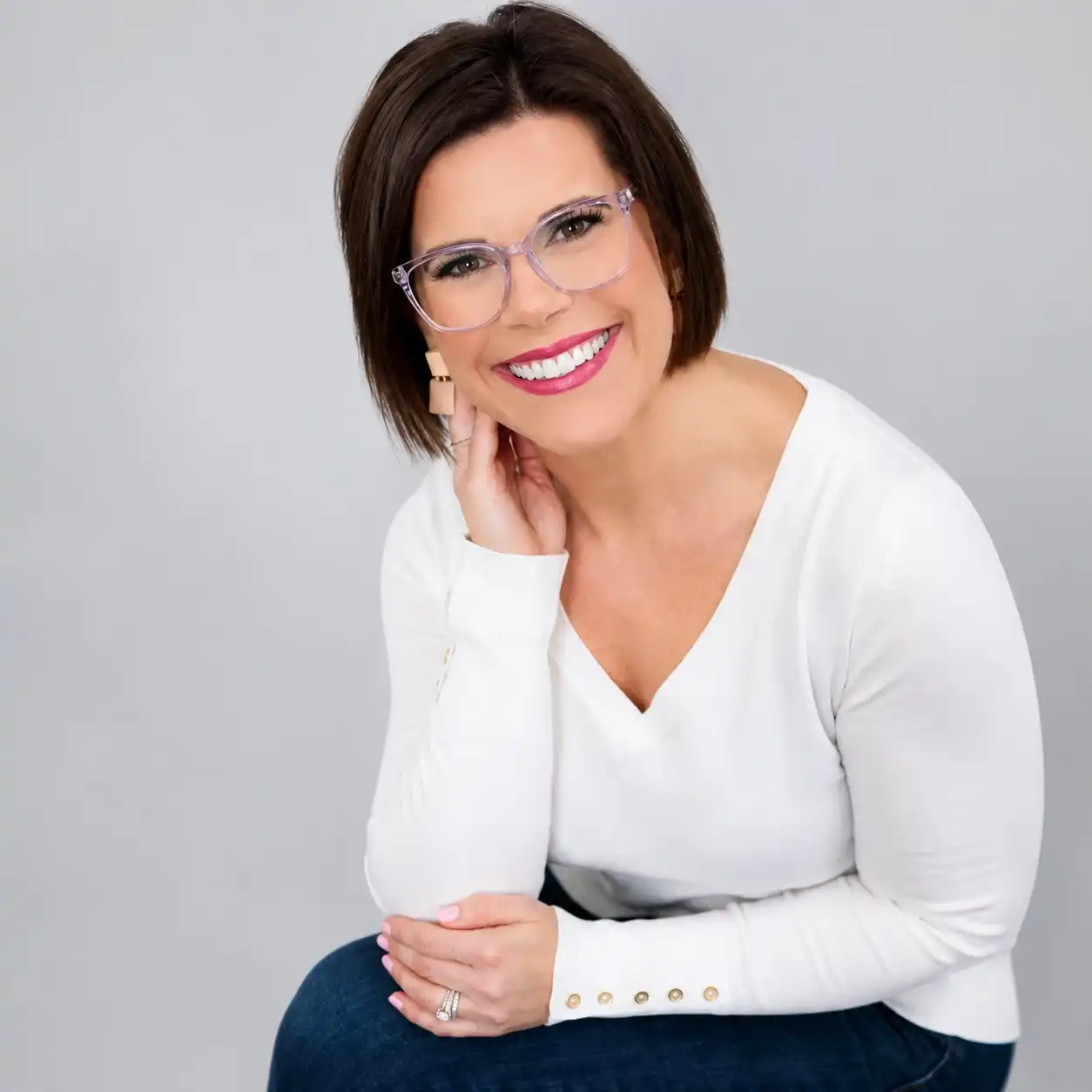
How many of your LinkedIn connections could actually pick up the phone for you right now? My guest this week, Lindsey McMillion Steeman, known online as LinkedIn Lindsey, has spent more than eleven years building a business on the answer to that exact question. Her company, McMillion Consulting, has helped clients turn the platform into millions of dollars in revenue.
Lindsey did not start out as a LinkedIn authority. She started as a salesperson in the DC area selling ink on paper, carrying an entrepreneurial itch she got from her dad but no real plan for where it would lead. Eleven plus years later, and seven and a half of those years running her own company, she has worked with clients around the world and built a signature process called the Profile Transformer that takes the guesswork out of showing up well online.
So what is Lindsey's 85/10/5 rule? It is how she decides who belongs in her network. About 85% of her first degree connections are people she authentically knows and could make a real introduction for. Roughly 5% are friends and family, people she will likely never do business with but who are still professionals worth staying connected to. The remaining 10% is room to grow, people she does not know yet but is building a real relationship with before she ever asks for anything. That kind of intentional profile is not a nice to have. According to LinkedIn's own hiring data, complete profiles generate 71% higher interview rates, and people with fully optimized profiles can get up to 40 times more opportunities on the platform.
That instinct to have everything perfect before you show up is exactly what the 2025 Women in the Workplace report from McKinsey and LeanIn.Org points to when it names a pattern researchers call perfection bias, the tendency for women to face more implicit requirements than men before they are seen as ready. It lines up with what Lindsey found in her own sticky floor. Her identity got tangled up in how much she was selling, and letting go of that grip took therapy, delegation, and a lot of practice sitting in awkward before it got elegant. If a mediocre LinkedIn profile is quietly costing you the interview, the promotion, or the client, this episode is your sign to stop hiding behind perfect and start showing up in public.
TRANSCRIPT:
Erica: Hey, girl. By now, you know I have Her Collective, my online community for ambitious women who are done doing it alone. Her Collective is for the women who are smart, capable, and driven, but they find themselves stuck on the sticky floors like self doubt, burnout, and waiting for permission that quite honestly never comes. Inside HER, you get more than motivation. You get real support, real strategies, and real momentum.
Erica: We work on things like clarifying what you want now and what's coming next, building confidence without burning yourself out, navigating hard conversations, career moves, and leadership moments with clarity, and surrounding yourself with women who actually get it. This isn't about hustling harder. It's about moving intentionally with the right tools and the right people in your corner. If you're ready to stop spinning, start choosing yourself, and build a career in life that actually feels aligned, I'd love to welcome you inside her collective. You can learn more and join us at www.joinhercollective.com.
Erica: Because honestly, girl, you were never meant to do this alone. Have you ever wondered what it takes to turn a simple idea into a thriving business? Or how the challenges and triumphs of one's personal career journey can illuminate your own path. Today, we are joined by Lindsey McMillian Steeman, who is just a dynamo in the world of sales and LinkedIn strategy. She has actually been dubbed Lindsey LinkedIn, and her story is not just about success, which is why I wanna bring it to you today.
Erica: It is about transformation. It's about resilience and the power of connecting. So I want you to join me as we listen in with how Lindsey turned her passion into a profitable venture and how you can apply these lessons to your own career. Lindsey McMillian Steeman. I've gotta kick today off by asking, is McMillian your maiden name?
Lindsey McMillion: Yes. Okay.
Erica: And you had to keep it because McMillian always makes me think about a million dollars. So, like, it's fabulous. You can never lose that. Right?
Lindsey McMillion: 100%. Yeah. Some people are like, there's no way your last name is literally MC million. I'm like, 1,000 no. Wait.
Lindsey McMillion: 1000000%. It is
Erica: 1,000,000.
Lindsey McMillion: 1000000%. Yes. Still
Erica: way better. Oh my goodness. Lindsey, I gotta know more. Tell me a little bit about you personally and professionally.
Lindsey McMillion: Yeah. I've been in sales my whole career. I have been doing what I've been doing, and I'm known as LinkedIn Lindsey. I've been doing this for over a decade, so eleven plus years and under my name and my company for, like I said, about seven and a half of those years. And it's been a wild ride.
Lindsey McMillion: I started as a salesperson up in the DC area selling ink on paper. I've always had an entrepreneurial bend. My dad was a business owner and started his company. I can't say that I thought this would be my track in life, but looking back all the stories led to this journey of where I am today. It's been a great time and get an opportunity to work with people all over the world and make an impact.
Lindsey McMillion: And the fact that we can say my team and I can say, yeah. We've actually helped our clients make millions of dollars through what we teach them is just it's such a blessing, and it's we get to have fun doing it.
Erica: And what is your big teaching methodology? Just high level.
Lindsey McMillion: Yeah. So I am a big believer that LinkedIn is just an entry point for conversation. Your goal is still to get offline to build that human connection, whether it's over Zoom or over the phone or in person. And that's not everyone's approach, and that's just fine because I'm not a fit for everyone. But but really helping people understand that LinkedIn, being the most powerful business online platform there is, that it's really a place to expand your credibility and reputation and your network and your relationships, and also use it as a profitable tool in your business, whether that's for selling or recruiting or simply awareness.
Lindsey McMillion: So I do that through speaking engagements. I get hired to be a keynote speaker in breakout sessions. Companies hire me to do workshops for their sales teams. Oh my gosh.
Erica: I'm a LinkedIn fan. I love being on there, and we'll definitely talk a little bit more about LinkedIn later because I have set in on some of your free master classes that you do, so I know that you know what you're talking about.
Lindsey McMillion: Thanks, Sarah.
Erica: But I also love having these million dollar businesswomen on my show because, number one, you're uber successful. You're doing the dang thing. You're breaking barriers, glass ceilings, gender stereotypes, all of these things. But what we talk about on this podcast is sticky floors, and those are the limiting beliefs and toxic behaviors that keep people stuck. And, Lindsey, in your journey from everything that you were to McMillian Consulting, where do those sticky floors, where have they shown up for you?
Lindsey McMillion: Oh, gosh, Erica. We would turn this into a therapy session if I if we really opened up Pandora's box, but for the sake of your listeners and my reputation, no. I'm kidding. We'll keep it to quite honestly, and everyone has their own journey and learning process. For me, this has actually been a newer learning that you would think I would have known for many years, but it's taken therapy and lots of mistakes and bad decisions to realize that underneath all of the thinking of control and especially growing up professionally being a salesperson, feeling so hardwired that, oh, my identity is wrapped up in how much I'm selling and how much revenue I'm bringing in.
Lindsey McMillion: And if I'm not doing that, I'm worthless. And to getting to where I am today of realizing that the underbelly of all those things was actually fear. And, like, when I think about being a business owner and even prior to that being a salesperson working for companies, just feeling like I care so much about people's experience with me, with my product, with my service, with my team. And those aren't bad things to care about. But when they stifle you from making a move and making progress and helping more people than maybe you think you can, all that goes back to fear.
Lindsey McMillion: Right? Years and years ago, when I did the strengths finder, one of my top strengths was woo, winning others over, which again is great for a salesperson, but it also has a shadow side, right, where it can, again, for me manifest into this space of just being fearful of making mistakes and making wrong choices and becoming paralyzed in that overanalysis. And, yeah, awareness is the first step as they say. And so now I'm just I just pay attention to it. I'm also doing I'll pause because that was your first question of the stuckness.
Erica: No. I love it because perfectionism impacts so many people, and I would actually like to unpack that a little bit more because what you're saying is that the perfectionism was holding you back and that you were not able to grow and do more for your business and for your clients because everything had to be perfect. Is that right?
Lindsey McMillion: Yeah. I would say so. I've gotten better at it because I have learned to delegate. I I can't get to where I couldn't have gotten to where I am today, and I can't get to where I'm going without delegation. So I have come to grips and come to terms with me not being an expert in many areas of my business.
Lindsey McMillion: So I have hired people, and I trust that they are. I'm hiring them and they're doing what they're hired to do. And yet there can still be some tension of avoidance, meaning, oh, they just I'll use my accountant as an example. Right? I am accounting and finances are not my strong suit.
Lindsey McMillion: I know enough about them to be a responsible business owner. And yet admittedly I've made some mistakes and I've said, oh, my accountant's the expert. And so I'm just going to avoid this conversation or this email. And that's not right either. So I think there is just a balance of being an adult and showing up as an adult.
Lindsey McMillion: And also with that, being comfortable with not knowing. I also learned this recent phrase that it it's awkward before it gets elegant.
Erica: Mhmm.
Lindsey McMillion: I'm trying to live in this awkwardness, which no. I hate feeling awkward and uncomfortable and uncertain and, insecure, but I'm trying to get better at feeling that way so that I can get to the other side of, oh, elegance and ease and peace.
Erica: I'm gonna make this uber simplified, right, which is oversimplification of a very complex problem. But perfectionism is the sticky floor, and here, delegation is the solution. Again, very simplified, but when I'm thinking about, like, anyone who is at that stage in their life where they've got so much going on in their business or in their corporate career, like, maybe they are leading a function, that the ability to delegate things that you were either not good at or don't love doing to start is a great way to move through that perfectionism because it's always gonna be there. It's always gonna rear its ugly head.
Lindsey McMillion: Yep. And I would even take that one step further, delegation. And that doesn't necessarily like you just said, it doesn't always just mean hiring somebody or but it can also mean so when I think of how I've gotten unstuck, yes, there's been delegations in my business and mentally and emotionally doing two things. One is bringing in peers. I'm in several little study groups with other business owners who get that sometimes I don't have a business partner, so I can sometimes feel like I'm on an island.
Lindsey McMillion: So in two weeks I have a call with one of my groups where we just get to be human, right? And show up and air our junk and then just get poured into. And so part of it is delegating that isolation, right? So that it feels more communal. I've also hired a coach, hired a business coach.
Lindsey McMillion: I've also joined a mastermind where I'm with people who are leveled up.
Erica: All of that is so powerful, and I'm so excited about this because my word of the year for 2024 is community. And I am all about just pouring myself into the different communities that I'm a part of. But to your point, like, when you are a business owner, when you are a c level leader, when you are in these positions of great success and hard work, there's not a lot of people with you necessarily, and there's not a lot of people in your life who understand that or understand the level of stress and responsibility that comes with that role. And I think a lot of that can tear us down and keep us stuck even further because we're not, like you said, being human and being allowed to talk about what's actually keeping us stuck because you feel the need to show up every day on a 100%, have all the answers ready to go. And that's not uncommon for a lot of women in these types of roles.
Erica: So I love that you're talking about building that community and being intentional in building the community because you will have them there when you are going through those moments of, like, stress and doubt and wondering if you're doing the right thing, and it will keep you from getting stuck. So I think that's
Lindsey McMillion: Yeah. And there's reciprocity in it too. When you're in community, it's just like a relationship. Right? You you get and you receive, but you also give.
Lindsey McMillion: And when you give, you get in return. Right? Even if that person's not pouring into you by default of just think of when you volunteer. Right? We volunteer because it's the right thing to do, but it also makes us feel really good.
Lindsey McMillion: And so being in a community allows you to do the same thing, which also strengthens those neuropathways to make stronger mentally. I think the other piece about community, Erica, and and just regarding getting out of isolation, being unstuck, is that communities, typically, I won't necessarily say always, but in my experience, they all have a season.
Erica: Absolutely. I just read a great quote since we're talking about quotes on this episode. And it said, sometimes you have to walk away from friendships that are 30 years old to make room for the friendships that will carry you for the next thirty years.
Lindsey McMillion: I like that.
Erica: And it was so powerful because we sometimes so tightly cling to the way things were because they are familiar. We know it. We love the familiar. But if you are going to level up and grow and really chase after all those things, these big goals and dreams, sometimes you have to do that.
Lindsey McMillion: Absolutely. Totally agree.
Erica: Yeah. But I'd love to, like, transition a little bit into your business and into LinkedIn because I'm all about LinkedIn. I'm all over it, but you are the queen. You are always doing master classes on it. It's a big part of your business.
Erica: So talk to me about LinkedIn and also connecting with purpose. That is something that you absolutely believe in. Hey there, listeners. If you have ever felt like you're stuck in a place, held back by self doubt, perfectionism, or that pesky inner critic, you're not alone. We all face those sticky floors that keep us from reaching the heights we dream of.
Erica: But guess what? It's time to shatter those limiting beliefs and toxic behaviors to uncover infinite possibilities. My book, Glassy Leads and Sticky Floors, is your ultimate guide to smashing through barriers, overcoming limiting beliefs, and stepping into your full potential. This book has been endorsed by none other than the great Mel Robbins, best selling author and motivational powerhouse. It's also been featured in Success Magazine, so you know it's packed with insights that work.
Erica: Inside, you'll find real life sticky floor stories, practical strategies strategies to help you navigate your own sticky floor moments, and a whole lot of inspiration to keep you climbing. This isn't just a book. It's your road map to success, confidence, and freedom. Grab your copy of Glass Ceilings and Sticky Floors today at www.ericaandersonrooney.com. Whether you're in the boardroom, the classroom, or just starting out, this book is for you because no one, and I mean no one, deserves to stay stuck, no one deserves to feel small, and you have glass ceilings to shatter.
Erica: Let's do this.
Lindsey McMillion: Yeah. Thanks for asking. I I really have always, always loved meeting somebody, learning their story, learning who they're trying to meet, how they're trying to grow, and then thinking of somebody who I might know that I could introduce them to that either that could be a mutual benefit. And the connect with purpose piece really is taking a a belief that I have always had in real relationships and taking it online through LinkedIn. I think that's the point is whatever however you decide to use LinkedIn, have a purpose for it.
Lindsey McMillion: So when I think about LinkedIn and building my network, I and here's where the pendulum can sometimes swing the other way. Because when people hear sometimes what I share about, okay, it's not about connecting with every single person, Then the pendulum swings the other way and people say, oh, Lindsey, you must only connect with people that you know. Right? No. Absolutely not.
Lindsey McMillion: So I have this thing called the hoop eye, w h o, the hoop eye. And what I like to say is when you think about your first degree connections on LinkedIn, about 85% of those connections should be people who you authentically know. Erica, you're one of my 85%. If you were to say, hey, Lindsey. I noticed you're connected to fill in the blank.
Lindsey McMillion: How well do you know them? Would you be willing to facilitate an introduction? There's an 85 give or take five percentage point chance that I'm gonna know that person and be able to facilitate an introduction. Then you've got about 15 percentage points left. So I always say that it's cool if 5% of your network are friends and family.
Lindsey McMillion: Right? So I have two older sisters who are prosecutors in the DC Metro Area. I'm not gonna do business with them, but they're professionals, and they know people who I might need to meet. So I'm okay connecting with them. And then you've got about 10% left, and you say, who make up who makes up that 10%?
Lindsey McMillion: I'm totally good with 10% of your network being people you don't know yet. But you're using LinkedIn as a way to foster, nurture, begin that conversation. Does that make sense?
Erica: Yeah. A 100%. And I'm like, you're gonna get me on my soapbox here because as a chief people officer, the number of people that pitch me cold, right, they connect with me and immediately try to sell me their HR software or their recruiting vendor, and they immediately try to sell me candidates. I get so annoyed by those people. I just want to block them forever because I don't know them, and they're just they don't even know if I have that need.
Erica: It drives me crazy.
Lindsey McMillion: It is it does it's infuriating because, again, these are relationships. Fruitful relationships often aren't transactional. Even if the actual transaction of the good or service is that, it takes building trust. I'm curious for you, Erica. Like, how do you prefer to be prospected to on LinkedIn?
Lindsey McMillion: What would be your preferred way to have people engage with you?
Erica: Yeah. I love it when people engage with me, and I can tell, number one, that they've actually looked at my profile. They know that I'm all about gender equity. They know I'm in the tech space. Right?
Erica: They know a few key things about me. And then if they truly wanna prospect, number one, just start with a normal get to know you email. But then number two, ask me if that would even be something I would be interested in. Because if it's a hard no, if you're trying to sell me a software and I just got a new one and I am never gonna buy this from you for at least three years, like, we don't need to engage in that conversation anymore. We can continue to get to know each other and serve in other ways, but I don't need you to cold pitch me.
Lindsey McMillion: Yeah.
Erica: And so yeah. I was just gonna say the people who get success and, like, engage in relationships, and then three years down the road, I buy that product are the people who want to know me for me, not me for my chief people officer
Lindsey McMillion: title. That's right. I think that and to your point, one thing I also like to encourage professionals who are using LinkedIn is you mentioned the word people who are genuinely interested in you. A really simple way that they can prove that to you over time is by actually engaging with the content that you're posting. Right?
Lindsey McMillion: There's actually a woman's invitation sitting in my inbox right now, and I've noticed, and it's probably been a month and a half, that she has been engaging with my content and commenting on things, and I'll comment on something else. And then she'll see it because she's following me as she's following my profile. And I'm just starting to, like, pay attention that she's not in a creepy way. To me, it's been in a very genuine, authentic way. And now she sent me an invitation.
Lindsey McMillion: And and she can say authentically because I've been paying attention. Hey, I've been following your stuff for a little while. Really interesting love to connect if you'd be open to that. And guess what? I'm open to connecting with her now because she's used LinkedIn as a way to actually foster a relationship instead of just, like you said, going in for the hard sell.
Lindsey McMillion: Yeah. So now truth time will tell when we do connect if she goes in for a hard sell or not. So that's on her, and I'm open to seeing what happens.
Erica: Yeah. And I'm gonna share another perspective from that too. Me being like the cold pitcher here. So I do a lot of keynote speaking as well. There are some people in this community who are, like, known for their craft.
Erica: They're the pros of the keynote speaking world. They charge $40,000 a keynote. They got a banging business model. Right? I don't know all those people personally.
Erica: They may have millions of followers. There is one woman who I love what she does. I love her work. I have always commented on her LinkedIn posts without fail. Every time I see one, I post about it.
Erica: Right? She's never really engaged or responded, which is fine. Guess what? She and I were at the same keynote event gathering community event. And she looked at me and she was like, oh my gosh.
Erica: I know you. And I was like, sure do. I'm the creeper on your LinkedIn page. And she was like, no. Absolutely not.
Lindsey McMillion: But because
Erica: I had been consistently posting and consistently posting and engaging with her comment, not pitching her, that when I actually saw her in real life, number one, she did know who I was, and number two, the connection was instantaneous from there.
Lindsey McMillion: That's right.
Erica: And now we're good friends. So that it's a long game. It is not an instant, let me sell you one product check done. And like you said, yes. That can work out sometimes, but get that long game going.
Lindsey McMillion: Yeah. I love that. Thanks for sharing that story. Like you said, it takes time.
Erica: Any other, like, top tip that for someone who is in the LinkedIn game, they've been doing it, but they're not really seeing the results they want, what would be, like, your next top tip to give them?
Lindsey McMillion: Oh my gosh. All day, Erica, it's the LinkedIn profile. I was speaking with a an executive recruiter this morning, and she is just spitfire, just incredible rock star. And and it seems like she's doing a lot of the right things, and her profile isn't where it could be. It's not optimized.
Lindsey McMillion: It's not what it should be to because here's I always say, I can teach you every button to click in any of the LinkedIn premium subscriptions and platforms and make you a freaking ninja. But all of that activity, all of that efficiency, you know what it does? All of that outreach, it turns eyeballs back on your profile. And people are like, oh, my profile, I think it's okay. It's but you don't know because you're not an expert.
Lindsey McMillion: So if I'm telling you it's not where it could be, that's an opportunity. Right? And, again, it's a choice. You get to choose if you wanna do something about it or if you wanna keep having a mediocre profile out there. Ultimately, it's this idea that if you have a mediocre footprint in this space called your LinkedIn profile, people are going to assume you offer mediocre service, a mediocre experience.
Lindsey McMillion: Right, a mediocre product. That is how much people are using that as a litmus test for what their future experience might be. That's why we have the profile transformer. It's that five step trademark process where we take the guesswork and the heavy lifting off your plate. You don't need to be the LinkedIn expert.
Lindsey McMillion: You don't need to know every single thing that you could be leveraging, but that's why people like me exist to help you level up. And so it's just yeah. The profile. Did I say enough about it? Because that's my soapbox.
Erica: The profile the profile is key. That's what I'm hearing. And I do agree because as somebody who does recruit from time to time, my very first stop is not the resume you submitted online. It is your LinkedIn profile. Now what I wanna also ask you I already know the answer, I think, but I'm gonna ask it anyway.
Erica: Let's pretend that I'm a chief people officer, and I have no dreams of ever leaving my job. It's amazing. I really don't care about LinkedIn because I've been here for twenty years. I'm gonna stay here for the next twenty years. Why do I need to worry about my LinkedIn profile?
Lindsey McMillion: Yeah. So great question. And, ultimately, what I would say and I'll back into the why. But, ultimately, if you don't care, you might wanna consider getting off of LinkedIn altogether. Mhmm.
Lindsey McMillion: Because you could actually be hurting your reputation and your company and brand's reputation and your colleagues if you are in a c suite position. And quite honestly, to me, it's any position. So over the years, I've worked with dozens and dozens, hundreds of financial advising practices. And probably, I don't know, ten years ago, I used to only work with the partners, the leaders, the executives, the producers. And where I had a gap was, oh my gosh.
Lindsey McMillion: The rest of their team is actually on LinkedIn too. So we were only helping the top 20%, but the 80% rest of the people on the team are all on there, and they look like idiots. And they're not idiots. They're amazing professionals who are experts at what they do in their niche, on the bench, on their team. And so what we realized was like, oh, crap.
Lindsey McMillion: We need to actually care about the how the whole team looks because that perspective client isn't just looking at the person they got a voice mail from, isn't just looking at the person they got an email from. They are looking at every single person on the team to decide, okay. Is this a team that I still wanna give my time and money and attention to? If it's for recruiting purposes, is this a team I can see myself working beside and being in the office with or working with if you work virtually or remotely? These are the things that we have to consider.
Lindsey McMillion: It's incredible. Just like Google loves keywords, so does LinkedIn. And, oh, by the way, Google and LinkedIn love each other. Don't you think for one second that your footprint of LinkedIn isn't influencing those around you? And, oh, by the way because, again, I've heard it all.
Lindsey McMillion: I've been doing this so long, Erica. People will say, my market isn't on LinkedIn. You know what? That doesn't even matter because your LinkedIn profile is publicly visible. If you Google your name, your LinkedIn profile is going to be the top, if not one of the top search results, and it's publicly visible.
Lindsey McMillion: So people don't have to have a LinkedIn account to see that profile.
Erica: Also, I'm dying because that was not the answer I expected. Well, it was, but it wasn't. I was expecting like, yeah. Everybody needs to brand themselves, but you took it even further. Okay.
Erica: But, Lindsey, one question I ask everybody on this show because I love your story and your evolution and how your background in sales and everything that you did has carried you to where you are now. And if you had to go back in time and give the Lindsey who had not yet left corporate, not followed her dreams, and not created this amazing company, what would that piece of advice be?
Lindsey McMillion: Oh my gosh. Don't take yourself so seriously. Oh my gosh. I just it got me far in a lot of ways, but it also totally held me back. I think, again, it goes back to that fear piece of, I gotta have it all figured out, and I'm only in my twenties.
Lindsey McMillion: Oh my gosh. Who in their twenties knows what they're doing? Who in their thirties, for like, we we are never going to know it all, and that is okay. So being just more comfortable in the Erica, that's a great question. Let me look into that for you.
Lindsey McMillion: Instead of freezing and being like, oh, I'm a fraud. I don't know what I'm doing. And no wonder they're not gonna hire me and buy what I'm selling. Get over yourself. Have some more fun.
Lindsey McMillion: I listen. I made up for it outside of work having fun, but I think I just could have had a little bit more fun in my early years of my career had I just not taken myself so damn seriously.
Erica: I love that. Life is all about having fun. Lindsey, if somebody wanted to work with you, how can they get in touch with you?
Lindsey McMillion: Yeah. Of course. LinkedIn. And I will say this. Here's a little tip.
Lindsey McMillion: If you are listening and you go to my profile, you're gonna see a follow button. I would love for you to follow me. I'd be so honored, and I'm not necessarily paying attention to that every day. So if you want to connect with me, click on the more button, and then send me an invitation and add a note and tell me that you found me through Erica's podcast. I had a woman reach out to me probably last month, and she put in her personalized note.
Lindsey McMillion: I heard you on fill in the blanks podcast. I'm like, awesome. I'm going to accept your invitation without even looking at your profile. Let's have a conversation and go from there. Like, immediately gave that person credibility.
Lindsey McMillion: So I would love to connect with you when you add a note and tell me it's from this podcast. If you forget or whatever, all good. But just let you know if it's a delayed response, that's why. I am on Instagram. So I'm LinkedIn Lindsey, l I n d s e y.
Lindsey McMillion: And then, Erica, I'd love to offer a little little perk if you're okay with
Erica: me sharing. Yeah. Let's do it.
Lindsey McMillion: Yeah. So we've talked so much about the profile, and I shared a bit about the profile transformer. So that's our platinum engagement. Again, very project based. We we do all the heavy lifting.
Lindsey McMillion: So if you go to McMillion Consulting dot com forward /join, there's a little form, and you can learn more about the profile transformer in that little form. Again, tell me that you heard our episode today, and I'm gonna extend a 20% discount discount in doing that work together. So
Erica: Oh, we love a discount.
Lindsey McMillion: Yeah. I'd love to be able to extend that. So look forward to it.
Erica: Amazing. Well, appreciate that. Thank you for that generous offer for all the listeners. That's amazing. And thank you for your time, Lindsey.
Erica: I love your story. I love what you're doing, and you've given us so many great takeaways.
Lindsey McMillion: Aw. Thanks, Erica. It's been a blast, and I hope this was helpful to your listeners.
Erica: A huge thank you to Lindsey McMillian Steeman for sharing her incredible journey and her insights with us today. Y'all, it's really these kind of conversations that remind us of the power of resilience, of strategic thinking, and truly those authentic connections in both our personal and our professional lives. Now if Lindsey's story inspired you or sparked questions, I'd love to hear from you. Please hit me up on Instagram by sending me a DM or send me a message on LinkedIn and share with me just your thoughts or your questions. And as always, please rate, review, and subscribe to the podcast as you never know when it just might land in the hands of the person that needs to hear it the most.
Erica: Until then, y'all, this is your reminder to stop putting a ceiling on what is possible and start breaking through them.
RESOURCES MENTIONED IN THIS EPISODE:
- Join HER Collective, Erica’s community for women in corporate America ready to break through their own sticky floors.
- Glass Ceilings & Sticky Floors, never miss an episode.
- Glass Ceilings and Sticky Floors, Erica’s book.
- The Profile Transformer by McMillion Consulting, Lindsey’s five step LinkedIn profile process (mention this episode for 20% off).
- Lindsey McMillion on LinkedIn.
- Lindsey McMillion on Instagram.
- Mel Robbins, who endorsed Erica’s book.
- Success Magazine, which featured Erica’s book.
RELATED EPISODES:
FREQUENTLY ASKED QUESTIONS:
What is Lindsey McMillion's 85/10/5 rule for LinkedIn networking?
It's LinkedIn Lindsey's framework for building an intentional network instead of connecting with everyone who sends a request. About 85% of your first degree connections should be people you authentically know well enough to make an introduction, 5% can be friends and family who vouch for you even without doing business together, and the remaining 10% is room for new relationships you are still building.
Why does my LinkedIn profile matter if I'm not job searching?
Because it is publicly visible whether or not you have an account, and people use it as a litmus test for the experience you or your team will deliver. Lindsey has seen entire client teams lose business because only the leaders had strong profiles while the rest of the team looked unpolished, so a mediocre profile can quietly cost you credibility even if you never plan to leave your job.
How does perfectionism show up as a sticky floor at work?
For Lindsey, perfectionism looked like tying her identity to how much revenue she brought in and avoiding delegation because no one else could do it exactly right. She got unstuck by building community, hiring a coach, and getting comfortable feeling awkward and uncertain before things felt easy, which is the same sticky floor Erica coaches women in HER Collective through.
MORE FROM ME
Follow me on Instagram @ericaandersonrooney and @joinhercollective
SUBSCRIBE & REVIEW
If you loved this episode, please take a moment to subscribe and leave a review on Apple Podcasts. Your support helps us reach more women who need these insights. Thank you for tuning in to the Glass Ceilings and Sticky Floor podcast. See you next week!
Hi, I'm Erica!
In the last 15 years, I climbed to Chief People Officer, 6x'd my income, walked away from a culture that stopped matching my values, wrote two books, and built HER Collective to help thousands of women rise to power and lead in the age of AI. I've learned a thing or two about smashing ceilings and closing gaps, and Glass Ceilings & Sticky Floors is where I open the playbook, the receipts, and the real stories to share it all with you.
_JPG.jpg)