


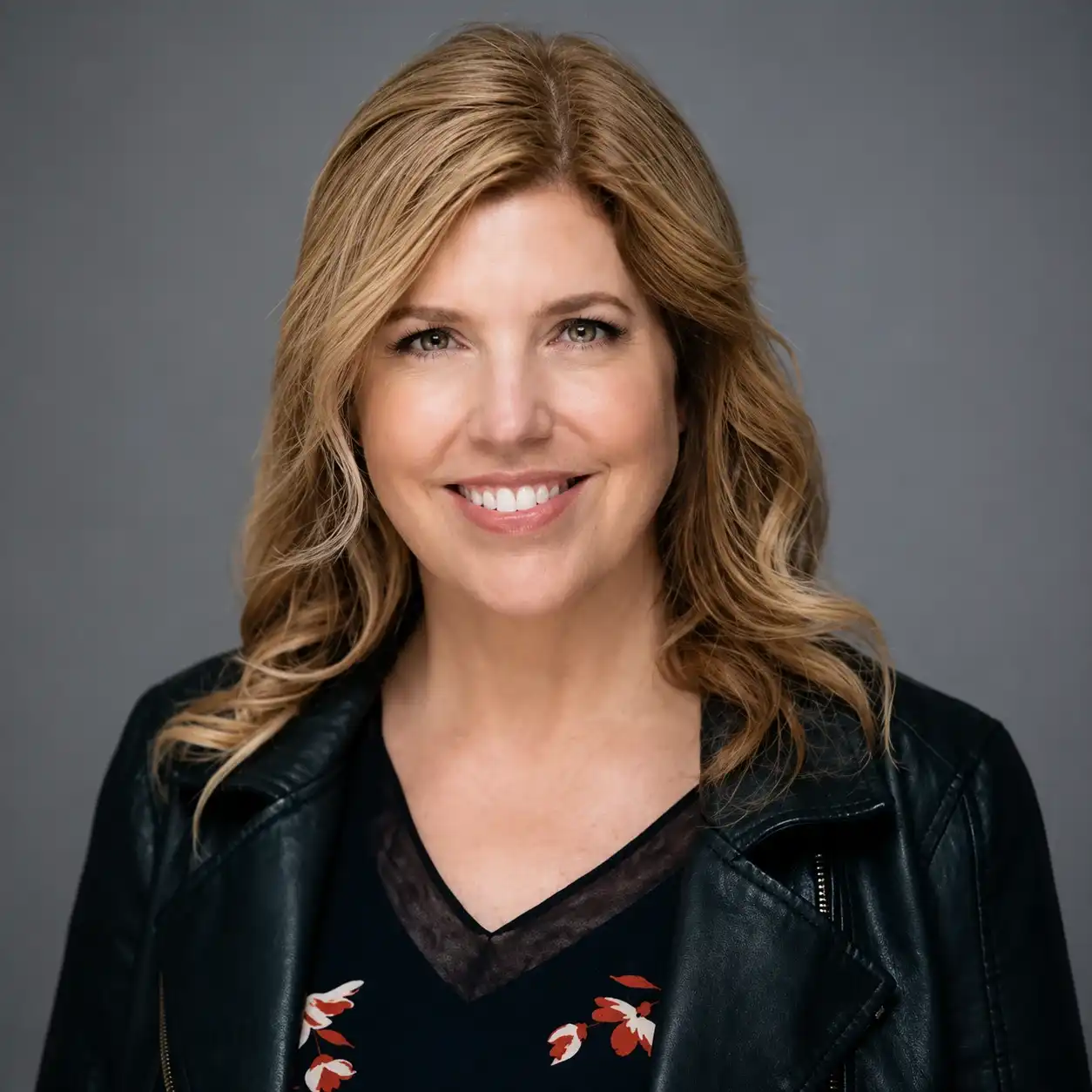



Own Your Sh*t: Dr. Keri Ohlrich on Tall Poppy Syndrome and Owning Your Wins
Read your own bio out loud. Did you flinch? My guest this week, Doctor Keri Ohlrich, is a CEO, an author, a podcast host, a speaker, and holds a PhD in HR, and when Erica listed all of that, Keri's first honest reaction was that it made her a little ill to hear. Her second reaction is the first piece of advice in this episode: own that shit.
She has a sharp eye for how the flinch gets trained into us. She brings up the Inside Amy Schumer sketch where four women with Nobel Prizes and staggering credentials spend the entire panel apologizing, right up to the moment one of them has her legs burned off and says she is sorry. It aired around 2015, and Keri's takeaway watching it a decade later is how little has moved. She also names something most women recognize but rarely have a word for: tall poppy syndrome, the impulse to cut down anyone who stands taller than the field. She is a PhD who introduces herself as doctor and then immediately supplies an excuse for it, every single time, because Mrs. Ohlrich is her mother-in-law.
The structural version of that flinch shows up in the numbers. Lean In and McKinsey's Women in the Workplace 2025 report found only 93 women promoted to manager for every 100 men, and just 74 women of color. Keri's own examples are the parenting pay data and the male colleague introduced as doctor while she was not. The apology is not a personality quirk. It is a rational response to an environment that has been penalizing women for standing tall for a long time.
Then she tells the harder story. Keri grew up with someone who twisted reality, and she is careful to explain that what she wrestles with is not confidence. It is reality. When you are an only child being told you never said the thing you clearly said, you learn to doubt whether the sky is actually blue. That is what made her stay seven years with a partner who strangled her, and it took a friend saying you sound like an abused woman before she could see it. She broke up with him the next day.
Here is why she is on this show. Her advice to her younger self is four words long: be vulnerable, find a friend, and share. Do not do it alone. That is also why the silence is so expensive, and Deloitte's 2025 Women @ Work study of 7,500 women across 15 countries put a number on it: 90% believe that disclosing a mental health challenge to a manager would be held against them. Keri's life is genuinely good now, and she is clear that it took twenty years, a lot of therapy, and a group of women who reflect reality back to her. Nobody can help you with something you have never told them.
TRANSCRIPT:
Erica: Hey, girl. By now, you know I have HER Collective, my online community for ambitious women who are done doing it alone. HER Collective is for the women who are smart, capable, and driven, but they find themselves stuck on the sticky floors like self doubt, burnout, and waiting for permission that quite honestly never comes. Inside HER, you get more than motivation. You get real support, real strategies, and real momentum.
Erica: We work on things like clarifying what you want now and what's coming next, building confidence without burning yourself out, handling hard conversations, career moves, and leadership moments with clarity, and surrounding yourself with women who actually get it. This isn't about hustling harder. It's about moving intentionally with the right tools and the right people in your corner. If you're ready to stop spinning, start choosing yourself, and build a career and life that actually feels aligned, I'd love to welcome you inside HER Collective. You can learn more and join us at www.joinhercollective.com.
Erica: Because honestly, girl, you were never meant to do this alone.
Erica: Have you ever struggled to own your own badassery? Have you struggled with comparison? And let me ask you, who do you call when the shit goes sideways? Today's guest is gonna go straight to the top of my list of people to call. And in this episode, you will hear why. You will be inspired, you may cry, and you will certainly laugh, but most importantly, you will feel seen. Doctor Keri Ohlrich dives into all of the sticky floors.
Erica: Growing up gaslit, overcoming second guessing yourself, comparison, and doing the work to become successful, happy, and secure in your own skin. Own that shit. That is the first piece of advice that you're gonna hear from Keri in minute one of this episode, and that is just the tip of the iceberg. You are listening to the podcast that empowers women to get seen, get heard, and get promoted.
Erica: I'm your host, Erica Rooney, and I've made it my mission to help you break free from the sticky floors, those limiting beliefs, and toxic behaviors, to bust through the glass ceiling. I'm obsessed with all things growth and abundance, and I'm here to talk you through the tried and true secrets to get you to level up your career and your life. We talk about the hard stuff here, imposter syndrome, perfectionism, fear, and burnout. So pull up a seat, pop in an earbud, and let's dive in.
Erica: Welcome to the podcast, Keri. Thank you so much for being here. I am super pumped to have you because you're a badass CEO. You're an author. You're a fellow podcast host and speaker and a woman with a PhD in HR, so it's no wonder that we're already best friends. Thank you for being here.
Keri: Thank you, Erica. I'm so excited to be here. And you're right. I'm freaking awesome. This is amazing.
Erica: Hell yeah.
Keri: It makes me a little ill to hear that, but considering, this is one of the things I was thinking about you this morning. I thought, what do you wanna talk about? And what's the advice for women? And I thought, just what you did and listed those accolades, instead of going, oh, thanks, Erica. Like, it's no big deal.
Keri: It's like, no. As women, we should say, hell yeah. I've done all that. Thank you.
Erica: Amen.
Keri: No sorry for it or anything, but, like, thank you.
Erica: Yeah. Recognize and own that shit. You did a lot of work to get a freaking PhD. So good for you.
Keri: I know. But, yes, that's the first piece of advice we're going with. It is, like, own that shit right there. I've been rewatching Inside Amy Schumer, which is super old. Not super old, but I think it was, like, 2014 or 2015, and it's on Paramount Plus.
Keri: So I feel like I'm plugging it. But anyway, last night, before I went to bed, I just like to watch a comedy. And she had this, it was called I'm Sorry. That was the skit. And she had a male moderator on the panel and four women.
Keri: And when they introduced the women, Erica, it was amazing. It was Nobel Prize winner in chemical engineering, female. Then it was Nobel laureate, then it was the person who, you know, all four females, bananas degrees, bananas everything. And the entire skit was, oh, I'm sorry. Did I interrupt you?
Keri: I'm sorry. I'm sorry. I'm sorry. And then at the end, of course, they have to take it to a level of absurdity. And the man, he spills coffee on the woman, and it burns her legs off.
Keri: This is so stupid. But it was hilarious. And what is she doing as her legs are being burned off? I'm so sorry. I'm so sorry.
Keri: She's apologizing. And I thought, I love that. And it's from 2015, and I thought, oh my goodness. Not much has changed. It's interesting watching this older show, which is almost ten years, and how little progress we've made on that.
Keri: And I just thought, oh my goodness, that I'm sorry. It was just brilliant. It was just such a brilliant scotch on women apologizing. The man brought her, she asked for a water. He kept bringing her the wrong thing.
Keri: He brought her a Coke. He brought her a coffee, and she said water. And all she did was apologize. Oh, I'm so sorry. I'm allergic to caffeine.
Keri: If you could just bring me the water. So he'd bring her the wrong thing and be frustrated with her. And she's like, I know I'm being a diva right now. And I thought, oh my god. I still say that, girl.
Keri: I still say, like, I'm being a diva. I'm like, really? Am I? I'm just asking for water. Just asking for water.
Keri: Is that really a diva?
Erica: No. It's not. But why do we do that?
Keri: Oh my god. Because we're not supposed to be in the spotlight. Like, isn't this fascinating as women? Like, we're so raised to not be in the spotlight and to stand tall. Because if you stand tall, then you're like, oh, you're kind of uppity, and you're kind of, settle down, and you're not supposed to brag on yourself.
Keri: Men do that, and that's kind of accepted that men do it. But it's not really accepted that women do it. And it's not accepted by other women too. To be clear, I don't wanna just blame all of society, but some other women, like you, Erica, said, this is awesome. Own it, Keri.
Keri: There's gonna be other women who are like, she's a little braggadocious, don't you think?
Erica: Pipe it down.
Keri: Pipe it down. Pipe it down. And I'll tell you, just being a female with a PhD, so you can easily call me doctor. And it's so interesting. The men who have PhDs, and they're not medical doctors.
Keri: So I get medical doctors. Everyone calls medical doctors doctor, but the PhDs or EdDs, you know, educational doctors. I see men all the time get, and here's doctor Jack Smith. Right? All the time.
Keri: Even at work, I had someone who worked for me who was a doctor. They introduced him as doctor all the time. And me, they did not. And when I say, hey. You know, it's doctor Ohlrich.
Keri: I see this little eye roll, and it's interesting. More from women on this one than men. Because men will be like, oh, yeah. Damn. That's right.
Keri: Yeah. You're a doctor kinda thing. But sometimes the women are like, oh. And what do I do every time, Erica? I go, you know what?
Keri: Because Mrs. Ohlrich is my mother-in-law, and that's not me. Because I took his name. But I give an excuse every time.
Erica: I was gonna say you're downplaying it.
Keri: I downplay it every single time because I wanna show that I'm like you. Right? Like, I'm part of the community because we're so community based as women.
Keri: And you gotta be part of that community. And if you stand tall, then it's like, oh, what?
Erica: You heard of tall poppy syndrome. Right?
Keri: I was just about to say tall poppy syndrome. Yeah. Exactly.
Erica: I did an episode on that not too long ago, and I love reading about it. It's mainly an Australian term, which I found very interesting.
Keri: It's an Australian term.
Erica: It had not infiltrated the US to the extent that it did Australia, because you see it all the time here. And, I mean, that's not to say that the practice of it didn't infiltrate the US. Just the name.
Keri: Just the name.
Erica: Yeah. But all the time, women are cutting down other women, and I've talked about this a lot lately. And I don't know if it is because there is just this belief that there's only room for one of us at the top, and that's it.
Keri: Yeah.
Erica: Or if it's a self confidence issue, that if I amplify you, that means I'm less than.
Keri: I think it's so many things, Erica. When you think about how we were raised, and I'm older. So even now, I mean, I'm sure there's still girls. But back in the day, there were only a few women at the top, so you kinda have to scratch to get up there. But it was just so part of our society of, like, community.
Keri: Women are communal, and you're raising the family, and you stand in the background, and the man shines. I mean, think of all those male politicians who stand up there, and the female stands right behind. And you see the data of men who have children earn more in corporate than women who have children. And in fact, when you're a woman who has a child, your pay goes down. Second child, it goes down.
Keri: So there's so many factors at play. And then when you think about even your family of origin. It depends, again, where you live and your family, but my family is very much like, you don't brag about yourself. And bragging just means, oh, I'm doctor Ohlrich. That would be considered bragging.
Keri: It's like, but I worked really hard to get that. And so you have the family of origin. You have society telling you. And I remember when I was at college, I worked with some women at the learning center. And I was dating a guy who lived in Europe, and so I would go, I know this sounds ridiculous, but I would go for, like, a weekend or something, because I mean, it was a seven hour flight, and you could do it.
Keri: And I was a college student, and flights were cheap. And I just remember this woman saying, oh, how good for you that you get to go over there. Meanwhile, I was recovering from a guy who strangled me, and she didn't know the whole backstory. So, like, look at me. I actually get to do something fun with my life, when for the first eight years, I was with an abuser.
Keri: But instead, it was like, oh, must be nice for you, and kind of cut it down instead of just going, wow. That's so effing awesome. Good for you. Go travel. Go do it.
Keri: So I still remember that. And I just remember her face of, like, I'm not gonna support you on this because you shouldn't be. You're too young to be traveling right now.
Erica: I didn't have that.
Keri: Yeah. And I didn't have that. Exactly. It's like, I love that these girls coming up now don't have that shit.
Keri: Right? That's amazing. Good for them. They could totally stand on their own and not have to worry as much as we did. That's awesome.
Erica: Alright. So we've talked about what a badass CEO you are and all of that, but we've kinda bebopped around. I wanna hear this come up story. Like, how did we get here?
Erica: Hey there, listeners. If you have ever felt like you're stuck in a place, held back by self doubt, perfectionism, or that pesky inner critic, you're not alone. We all face those sticky floors that keep us from reaching the heights we dream of. But guess what? It's time to shatter those limiting beliefs and toxic behaviors to uncover infinite possibilities.
Erica: My book, Glass Ceilings and Sticky Floors, is your ultimate guide to smashing through barriers, overcoming limiting beliefs, and stepping into your full potential. This book has been endorsed by none other than the great Mel Robbins, best selling author and motivational powerhouse. It's also been featured in Success Magazine, so you know it's packed with insights that work. Inside, you'll find real life sticky floor stories, practical strategies to help you handle your own sticky floor moments, and a whole lot of inspiration to keep you climbing. This isn't just a book.
Erica: It's your roadmap to success, confidence, and freedom. Grab your copy of Glass Ceilings and Sticky Floors today at www.ericaandersonrooney.com. Whether you're in the boardroom, the classroom, or just starting out, this book is for you, because no one, and I mean no one, deserves to stay stuck. No one deserves to feel small, and you have glass ceilings to shatter. Let's do this.
Keri: How do we get here? How far back did you go, Erica?
Erica: How do you get here? Tell me. Where does it start for Keri?
Keri: You know, it's interesting because when I think about the past, there's always been the same theme that's pulled through, which was human development psychology. I remember, I tell this story a lot, I remember in the fourth grade going to the library and looking up how to become a psychologist, a child psychologist, in the card catalog. For those listeners who have no idea what that is, look it up. There's probably a YouTuber.
Keri: Watch a nineteen seventies movie, and you'll see a card catalog. And nineteen eighties. And so I just remember thinking that's what I wanted to do. Never wanted to be in business. But it was always that understanding of people, and they're so fascinating.
Keri: And so to me, I like science, and I like engineers. I never wanted to be an engineer because that doesn't speak to me, but the human part speaks to me. The complexity of the human, why we do things, why you and I could be given the same stimulus, Erica, and then you react in such a different way from me because of the way you were raised, because of your culture. I mean, even the states that we were raised in are so different. So I just love all that.
Keri: And then went to school and realized, oh my. I have student loans, and I gotta do something. So that's a real thing. So it helped make the decision to go into corporate, which I was pretty depressed about.
Keri: I will tell you for the first couple years, I was like, I'm getting dumber by the day, because I was used to academics. I'm reading articles all the time, and I had two masters already. And I was, like, killing it. And then I was like, oh god.
Keri: And then I realized how much good you could do in these organizations, to people who don't even realize that you're doing it. So I'd like to call it subversive psychology. So you can institute all these programs that help people's lives. And, again, they don't even realize you're doing it. And then if you could coach managers, and managers are being nicer to their employees, and employees are happier, and they go home, and they're in a happier state.
Keri: And so you could really kind of change the world through these organizations. And organizations are so powerful, and everyone works for the most part. And so you could really do this amazing stuff. So I think that is why I stayed in it then. I saw that value.
Keri: But my personality probably isn't the best sometimes for certain corporations and really big ones, and I don't do well with bureaucracy, and I don't do well with the process for the process' sake. I'm good with results. So you have a process to get results, but you just don't do a process to do a process, which, the bigger you get, you know this, Erica. The bigger the company gets, the more it becomes, like, process over results.
Erica: That red tape will be wrapping you all up.
Keri: Oh my god. And I go insane. And then also because I can be feisty and because I have a different sense of humor perhaps, and I have different standards of, like, you really should deliver, and I don't care about your ego. It's not about your turf war. The higher up you go, a lot of times it is about, I want to have a fiefdom.
Keri: I need all this turf, and you don't really care about the results. You just care about the boat that you're gonna buy with the next year's bonus and things like that. So I struggled. And so I had hired someone when I was in the Midwest, Kelly Guenther, and we happened to move out to California at the same time. And we've always talked about, well, do we start our own business?
Keri: And we thought, nope. Because my husband's an artist. Like, I'm not gonna, he's the one that doesn't have a real job. I say that with love. But you know what I mean?
Keri: Like, you can't have two people unstable. I have a child. That is a very big concern. And so it just all worked out. It didn't work out at the startup I was at, and so it just worked out that, shit, we're gonna start it. And we started it in 2017 and lived through COVID, figured it out, hustled, and now we wrote the book, The Way of the HR Warrior.
Keri: We're coming out with another book, and you know the title, Erica, Whatever the Hell You Want. And it's really about breaking out of all the expectations that people, society, and you put on yourself. As we realized through HR, just by talking to so many people, those expectations are so crushing. That, again, like you and I were just talking about, as a female, I shouldn't say that I do well. I shouldn't say that I have a PhD. And so what is it, and how hard is it to break through those expectations?
Keri: So I could not be happier having my own business and the flexibility and getting to be my true self with others, and it's amazing. And finding really kick ass women now that I love to surround myself with.
Erica: So here's my question. Because I have talked to you before. You are confident. You are hilarious. Like, all of these things to me.
Erica: And it's like, damn. All of this has to have come easy for her.
Keri: None of it.
Erica: No wonder she walks through life like this. So where is this sticky floor? Because I know we all got them, but what has been your sticky floor?
Keri: Yeah. I probably have always had a thread of badassery. Right? Because I remember, I love telling this story. I remember when I was in the Brownies, which is hard for me to be in any type of organized group because I get really itchy and, like, I hate these rules, and I'm not a big rules person.
Keri: So, like, to just, again, have rules to have rules. And so I remember in second grade in the Brownies, they were like, you have to give 25 cents every time we play after school. And I thought, well, that's just so stupid as f. Like, why would you pay 25 cents? I'm like, you could just come to my house for free.
Keri: We could play. Like, what's the point? And so I remember telling everyone, like, yeah. Let's play at my house for free. Like, come on.
Keri: And everyone said, yeah. I'll do it. And then, of course, that day came, and they were all too afraid to break from the Brownies. Break from the industrial complex. That's the Brownies.
Keri: And so I thought, oh, that's interesting. So I think it was always in me to be like, screw this. This is kinda stupid. But that did not continue. So while I had these moments of standing up and doing certain things, because of my parents and things like that, I was looking for someone who would accept me or love me.
Keri: And so that led me to a poor choice in fella for seven years. So that wasn't very pleasant. And there was, like I mentioned, strangulation and pushing and shoving, not all the time, but enough. I mean, you shouldn't do it once. And I think that it was always this, well, I don't think I articulated, Erica, like, I don't deserve it.
Keri: Like, oh, I don't deserve love or anything. I just figured this is what it is. And because then I was in the system, like, corporate, and because I don't quite fit, I just thought, well, that's what it is. I never quite fit.
Keri: No one really gets me. I don't know if I thought, like, there's not a place for me, but I just thought, well, I guess I'm the weird one, and that's okay. But it wasn't very fulfilling. And so it was only until I got older, I broke up with the person because I remember I was hanging out, probably very drunk, with a friend. And I was telling him my story, and he said, you sound like an abused woman. And I went, holy shit.
Keri: I am. Like, fuck. And so that label, I'll tear up now. Like, oh my god. Like, that label, Erica?
Keri: I was like, shit.
Erica: So you don't ever identify as an abused woman until someone actually named it.
Keri: Yeah. Yeah. And so I think that's, like, the shocking, like, what? And then I went, fuck. He's right.
Keri: And broke up with the dude the next day. Like, seriously. So I think that while, yeah, I had some badassery, there's also the family stuff that I had to deal with. And it's not until someone you trust says something to you and reflects it back. And because I wasn't raised with someone who did that, it was hard for me.
Keri: So I didn't have anyone kind of helping or mentoring. And I think if I did have that, oh my god. I think my life would have changed. I might not work in corporate now. Maybe I'd have a different type of life, but I think that was so important.
Keri: So I think for me, I struggle with what's reality. Right? So I need someone around me to be like, yeah. That was a good presentation, Keri. I'm like, are you sure?
Keri: And it's not as much, it's so weird, Erica. It's not as much the confidence. I know people are gonna say it's obviously confidence, but I was raised with someone who would twist reality. And so when you're raised with someone who somewhat gaslights you a bit, it's not in confidence. It's like, is the sky really blue?
Keri: You know what I mean? Like, you are in this different reality, and so that's what I struggle with. That, honestly, that's, like, the big thing of, yeah, I have a PhD. I'm like, do I really have a PhD? Like, I struggle with reality.
Keri: But when you live with a family that kind of gaslights you a bit, that is what I struggle with. Does that make sense, Erica?
Erica: What did that look like for you growing up? Because I think that would be helpful in explaining it.
Keri: So when you live with someone who, like, when you say, okay. We talked about this, and you said that we were gonna go to the play on Saturday. And instead of saying, oh, yeah. I forgot. Yeah.
Keri: You're right. We're gonna go on Saturday. They're like, I've never said that before. Why would you say that? Why would you say something like that?
Keri: I've never said that. I'm like, remember you said that I was a horrible daughter or something. I've never, oh my, I've never, I don't know why you'd say that. Why would you do that? When you live with that, and when you're an only kid and there's no one else to back you up, you then start to live in this reality of, maybe I didn't say that.
Keri: Maybe that's not the way it is.
Erica: I see what you're saying. It's not a confidence thing, and I get that. But it's almost like this distortion of reality, and you're just trying to solidify, am I living in the right one right now?
Keri: Right. Am I living in the right one? And so whereas you'll say, like, she's funny and a badass, maybe my family would be like, well, you're telling the truth too much. It's not recognized as a strength. Versus, like, no. You're too black and white.
Keri: I never said it like that. You're like, oh, okay. Maybe you didn't. So then it's, well, if you get strangled, I mean, you didn't say anything right after it, so it must be fine. Okay.
Keri: Alright. So, again, like, maybe when your family sends the person gifts after you break up, it tends to destroy your reality on how bad someone who lays hands on you is. So I think that's what I deal with. And so having a group of kick ass women that I go, she's a freaking awesome chick. And they're like, you're great too, Keri.
Keri: You know what I mean? It's like, okay. Wait. I found my tribe. I found them.
Keri: And I don't have to ask about reality as much anymore, Erica. It's not like a daily thing. I have built that clear vision now. But, yeah, in the beginning, it was a lot tougher. And there's therapy, and yeah.
Erica: We all need those people to kind of bolster us up when we're feeling that. Right? Regardless of how you were raised or what your upbringing was like, we all have these sticky floors somewhere
Keri: Yes.
Erica: that are going to, for lack of better words, fuck us up.
Keri: 100%.
Erica: These questions of reality. And we need those women, those men, anyone who can just come back and say, I'm gonna pull you down to reality. I'm gonna bring you back to where this is real. Look at me. This is what it is, and then you can kinda say, okay. Got it.
Keri: For me, that group, because I didn't have that group before. And when you live in isolation, you know what I mean? You don't have the group and you don't have someone kind of helping you and going, oh my god. This is okay. Like, you just don't have that.
Keri: And so that group, whoever that group is, and I mean, it was my husband to start with. Every day when I was dating him, I would ask him, is this okay? Like, am I becoming this? He's like, no. Now I think I ask him once a year. It used to be every day.
Keri: And so, having that group and then being vulnerable with that group, saying, hey. This is what I'm worried about, because no one can help you if you don't tell them what you need help with. No one can help you. So that's why I also don't want people to see me now because, like, the shit's good now, girl.
Keri: Like, if you asked me twenty years ago, it'd be different. But right now,
Erica: I woulda had a list.
Keri: Right. And then I feel like I'm gonna get in trouble for, like, she's in complete denial. But it's like, I have curated a really good life to this point now. Like, I've worked really fucking hard to get to this point on being self aware, making sure I have the right people around me, all these great things that I've done. For coaching, we just talk about some good stuff, but not fundamentally. Like, I'm in a pretty good place, but it takes a long time.
Keri: And I had to be vulnerable, and I have to be aware. And I have to share that with people. I can't do it alone. I think that's my biggest thing, is you can't do it alone. You gotta find people to help you.
Erica: You know what I read in a book one time, and I think it was The Perfectionist's Guide to Losing Control, which is one of my new all time favorite books, written by a therapist who said, I wish that people would go to therapy or get coaching when the shit is good, because then they can capitalize on their strengths and what they have, to use that when the shit is bad.
Erica: Because then they're building their resilience muscle when they don't even need it.
Keri: That's a great point.
Erica: Think of it like running, and I always turn things around to fitness because I'm a fitness junkie here. But if you gotta run away from something, if you're not a runner,
Keri: Yes.
Erica: you can't go very far very fast. But if you run every day when you're feeling healthy and good,
Keri: Yep. Such a great point.
Erica: you can do it. So it's about building those muscles. Sometimes it might feel like, well, I'm in denial. I'm not talking. I've gotta have something. Maybe you don't right now, and that's great. But, like, guess what? When it comes back up or when something terrible happens or whatever, you will be able to rely on everything that you've built now
Keri: I love that.
Erica: to get you through that.
Keri: I love that because, yeah, I try to be super grateful for the times where, like, right now, where I'm like, hey. It's pretty good. You know what I mean? Like, it's great because you're so right. In a year, things can happen.
Keri: In a day, things can happen. And if you have that good network you've been building. I am not a fitness junkie, Erica. But I totally get it.
Erica: You get my analogy.
Keri: I totally get it. But if I have the friendships, I have everything in place. So then if I fall, and when I fall, oh my god. There's this amazing net to catch me, versus I don't have any of that. And so you're right.
Keri: You're prepared. And I prepared, and I'm grateful for what I have. And when it changes, because shit will happen, I have this great support network, and I have people that I can talk to. And I'm not worried. I can just call them, and I didn't have that before.
Keri: So now I do.
Erica: Yeah. I was going through a really hard time last year, got with a therapist, and I'm like you. I'm in a place now where the shit is good. Like, sometimes we're just like, what are we gonna talk about today?
Keri: Yeah.
Erica: And I went through this thought process where I was like, do I quit therapy?
Keri: Right. Right.
Erica: I was like, do I really need to? And then I just kind of went back to that, like, I don't know when someone's gonna pop off. So I kept her around. And then I read that book, and I was like, you know what? Now she ain't going anywhere. She's on the payroll now.
Keri: Yeah. I love it. I love it. No. It's such a good thing because, again, what is that support network and who can you call when the shit goes sideways?
Keri: Because it does. It will. It's life. It's ebbs and flows. And so that's why, to me, I try to be so grateful.
Keri: That's a lesson for me. That's why I'm trying, because I wasn't raised to be grateful. It's more of, like, raised to be negative. Like, what don't you have? Like, look at what they have.
Keri: They're really rich. And I'm like, well, there's only one person who can stand next to everyone and say I'm the richest person in the world. That's it. Everything else is relative. Everything else is relative.
Keri: And so that is my practice of really trying, what am I grateful for? What do I have? And I still, I mean, I go on LinkedIn, and I see, I'm like, why do they have that? I still do it. It's just not as bad.
Keri: It doesn't distract me from my work. It doesn't take me to a dark place. I might stay for a minute, and then I move on.
Erica: And that's number one, totally natural human response. Right? Number two, comparison is, like, the root of all evil in my book.
Keri: It's horrible.
Erica: And I think that women are so terrible at it. And I had this conversation with somebody yesterday, and it kind of goes a little bit into the imposter syndrome, a little bit of the perfectionism. But I don't like to tell people that I'm doing something big, like going after a big goal or a big dream or starting something, until I'm already in it, until I'm doing it, and it's either already done.
Erica: And it's not because I don't wanna talk about my failures. It's because I already wanna be great at it.
Keri: Interesting.
Erica: Let's take this podcast for example. I didn't tell even my closest people that I was doing it until I was already like, oh, yeah. I have this podcast. I've got this many episodes. And it's like, what is wrong with you?
Keri: Right.
Erica: And I think a little bit of it is fear of judgment. Like, what are they gonna say? Who is she to start a podcast? Who is she to apply for that job? And it goes a little bit into the psychology of that. But when I was really trying to peel back the layers of the onion with it, it's just this unrealistic expectation that I put on myself
Keri: Yeah.
Erica: that I'm just great at it even though I've never done it before.
Keri: Yeah. Yeah. Yeah.
Erica: Which is the stupidest thing I've ever heard, because I wouldn't expect anyone that I know, not my kid or anyone, to go out and be great at something right away. Like, I sit there and I preach at my son, like, you're not gonna hit a home run every time you practice. You gotta get better at it. But then here I am, and I'm like, well, I need to have a podcast with 50,000 downloads for the first one.
Keri: Right. It's so kind of in a lot of us who are drivers and who are goal oriented. Like, you just, it's, like, in you. And so to me, how I have to calm it down is I always look for more data. So for podcasts, good example.
Keri: I'm like, of course, you can hit, like, 10,000 downloads. How hard can that be? And then I do the research, and it's like, oh, if you hit 10,000 downloads for one episode, you're in the top 1% of podcasts. And you're like, oh, it's really hard. And so to me, data will calm me down because, otherwise, to your point, Erica, my head will take it to, like, there's, like, billions of people.
Keri: How hard can it be? And then you go, oh, no. It's really, really freaking hard. It's really hard. And so that's where the data helps calm that down.
Keri: But you asked about the comparison piece. And when I see how much in society, and I know this is the big just blaming society, but think of the comparisons constantly that women have to go through, where they're like, look at her at 81. She's amazing. Why aren't you looking like that at 81? And, like, granted, she's effing killing it. Like, I'm so happy for her.
Erica: Don't take that away from her.
Keri: She's fucking killing it. But the message becomes, well
Erica: This is what you should look like. This is what is celebrated.
Keri: This is what's celebrated. And then what do we do constantly? Like, show women without their makeup, and the comparison of, like, all those women's magazines are just like, she drives them crazy in bed. She's got great abs and a baby and this. And so we're constantly kind of putting people on pedestals and saying how great they are.
Keri: And, like, why aren't you doing that? And I've never felt so much of that until I had a baby. And people would be like, well, are you breastfeeding? Well, if you're not, you're a horrible person. I mean, the pressure of conforming to momhood.
Keri: And then what was interesting is I decided to make my own baby food just because I wanted to. And I'm not saying, listen, this kid eats chocolate chip muffins for breakfast. So I am not, I don't want anyone hating on me for, like, oh, you're this earthy crunchy person. No.
Keri: For some reason, I just wanted to make my own baby food. I liked that. But damn, did I get glares. They're like, oh, you make your own baby food.
Erica: Better than everybody else.
Keri: Yeah. Like, I'm trying to be better. And, again, that comparison. And I've never seen so much comparison with mothers on, well, when did he walk?
Erica: It's gonna go all the way back full circle, like, tall poppy syndrome. That of, like, you're over there doing the most, right, by making your own baby food. So, like, let's chop that puppy down.
Keri: Right. And, like, by the way, look at all the other stuff. I didn't breastfeed. Like, I tried. It didn't work.
Keri: And I didn't want to. I tried for one second. My choice. Right? But, like, the judgment, the shame. And so I'm like, well, I make my own baby food, but I'm not breastfeeding. So how do you wanna balance that out? But it was just really the comparison there.
Keri: That's when I felt it. I mean, I felt it all the time as a teenager for body. Right? Because there's one body type you should have, and that's it. There's one hairstyle.
Keri: There's one body type. We're getting so much better at that. But that comparison of, guys, society, this is the way you should look. But then for motherhood, damn. That was the worst.
Keri: I didn't wanna hang out with other mothers because of that comparison and that constant, when did he walk? What did he say? How tall is he? What are his stats? I'm like, oh my god. No. Uh-uh.
Erica: It was always such a crazy ride. And especially when you're looking at all the other societal expectations that are placed on mothers. Right? Like, I felt very fortunate. I don't remember feeling pressure from other people to do certain things, but I felt pressure from myself, going back to that. If I'm gonna do it, I'm gonna do it right, and it's going to be great. And I've never done it before, but I'm gonna be great at it.
Erica: And I remember I wanted to breastfeed, and I married myself to that idea that I was gonna do it for a year. And then, you know, like many women, you get to a point where your milk production slows down because you're doing work and you're doing everything. And I remember waking myself up in the middle of the night to pump so that I would have extra milk. So now I'm, like, sleep depriving myself.
Keri: Right. Right. Right.
Erica: And I'm chasing this expectation that probably wasn't gonna work out for me, instead of loosening the reins and letting it go. So whenever I talk with women, I'm like, you need to loosen your expectation. Yes, those comparisons with the other women and the judgment is real and it is there.
Keri: Mhmm.
Erica: But you are also holding yourself to these standards.
Keri: Oh, yeah. Yeah.
Erica: That was one of the biggest downfalls for me. It wasn't until I accepted the fact that it was okay. And then it was fine. And, like, look. Now all of our kids are eating freaking fruit gummies off the back floor of the car that have dog hair stuck in them. Disgusting. But they're doing it. They're doing it, and they survive.
Keri: And they survive. And I think you're so right, because we've internalized, either we're so driven that we kind of have that, we've also internalized a lot of that expectation. I remember the commercial way back when I was a kid. Charlie, she can bring home the bacon, fry it up in the pan, and never let you forget you're a man. And she looked great.
Keri: She did all this. She cooked. And so if you already are a little goal oriented and then you have all those messages, you're like, well, why can't I do it all? Like, why can't I?
Erica: And now I'm failing.
Keri: And now I'm failing, and I'm totally stressed or my hair is falling out. Like, how can you, like you said, loosen the reins and allow those expectations to go? And I remember one person said to me something about breastfeeding, and it's funny. None of my close friends were like this. It was people, which I was always shocked by, just randos, because you have a kid, decide that they can give you a ton of advice or try to touch your belly.
Keri: And I'm like, what the fuck? Like, absolutely not. And she goes, but don't you wanna bond with the child? And I said, just let me back up a little. Facts right here. This baby, because he didn't come out quickly, was in me for forty two weeks.
Keri: That's a lot of bonding.
Erica: He bonded.
Keri: Like, I'm the only voice he knows. But, again, for each of us,
Erica: trying to fit us into their mold.
Keri: Exactly. And so those expectations, and that's one of the reasons that we wanted to write the book, is that's okay that you have some expectations, but stop putting them on everyone else. Like, really, loosen the reins for yourself. And if you do it for yourself, like you said, Erica, you'll release it on other people too, and so you won't be so judgy. It's just not the healthiest and most fun place to be in.
Erica: But the one question I always ask everybody with every episode is, what is that one piece of advice that you would give the Keri from years ago who's struggling with really understanding and maintaining that reality from the gaslighting that you had to experience and the toxic relationship? What is that one piece of advice you would give her today?
Keri: I would be vulnerable, find a friend, and share. Like, don't do it alone. That's it.
Erica: It's perfect. Well, thank you. This is fun.
Keri: Thank you.
Erica: So much fun. Thanks. Thank you for listening today. Make sure that you follow me on Instagram, LinkedIn, and all the socials for more content just like this. And one last thing before you go, this is your reminder to stop putting a ceiling on what is possible and start breaking through.
RESOURCES MENTIONED IN THIS EPISODE:
- Done doing it alone? Join HER Collective, Erica's community for ambitious women who are ready to stop waiting for permission.
- Never miss an episode of Glass Ceilings & Sticky Floors.
- Erica's book, Glass Ceilings and Sticky Floors, endorsed by Mel Robbins and featured in Success Magazine.
- Abbracci Group, the consultancy Keri co-founded with Kelly Guenther in 2017.
- Whatever the Hell You Want by Keri Ohlrich and Kelly Guenther, the book she previews in this episode.
- The Way of the HR Warrior by Keri Ohlrich and Kelly Guenther.
- Connect with Keri on LinkedIn.
- The Perfectionist's Guide to Losing Control by Katherine Morgan Schafler, one of Erica’s all time favorites.
- Inside Amy Schumer, where the I’m Sorry sketch Keri describes lives.
RELATED EPISODES:
FREQUENTLY ASKED QUESTIONS:
What is tall poppy syndrome?
Tall poppy syndrome is the impulse to cut down people who stand out or rise above the group. The term is mainly Australian, but Erica and Keri agree the practice is alive and well in the US. In this episode it shows up as women downplaying credentials, apologizing for asking for water, and cutting other women down for doing the most.
Why do successful women downplay their accomplishments?
Keri Ohlrich points to three layers: family of origin messages that bragging is unacceptable, a society that accepts self promotion from men more readily than from women, and the real cost of standing tall inside a community that rewards blending in. She introduces herself as doctor and then supplies an excuse for it every time, specifically so she still reads as part of the group.
What does gaslighting do to you long term?
Keri is careful to say what she struggles with is not confidence, it is reality. Being raised by someone who denied things you clearly heard teaches you to question your own perception rather than your worth. Her answer was to build a group of people who reflect reality back to her accurately, which is why her advice is to be vulnerable, find a friend, and share.
MORE FROM ME
Follow me on Instagram @ericaandersonrooney and @joinhercollective
SUBSCRIBE & REVIEW
If you loved this episode, please take a moment to subscribe and leave a review on Apple Podcasts. Your support helps us reach more women who need these insights. Thank you for tuning in to the Glass Ceilings and Sticky Floor podcast. See you next week!
Hi, I'm Erica!
In the last 15 years, I climbed to Chief People Officer, 6x'd my income, walked away from a culture that stopped matching my values, wrote two books, and built HER Collective to help thousands of women rise to power and lead in the age of AI. I've learned a thing or two about smashing ceilings and closing gaps, and Glass Ceilings & Sticky Floors is where I open the playbook, the receipts, and the real stories to share it all with you.
_JPG.jpg)