


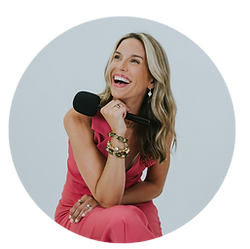


From a $35K Salary to a $13 Million Podcast Booking Agency
Think about the last time you had something worth saying and let someone else say it. My guest this week, Jessica Rhodes, built a $13 million company out of the exact opposite instinct. She started booking her dad on podcasts in 2013, before podcast booking agencies were a thing, and her company Interview Connections has now booked more than 30,000 interviews.
Here is where she started. She was 25, newly a mom, and had just walked away from six years at a nonprofit where she was directing her own office. Her one goal was to replace her salary, which was $35,000, so she could be home with her son. Her first task as her father's virtual assistant was clicking every single link on his website, every Saturday morning, to make sure they still worked. She calls that a demotion. She also calls it the reason everything after it was possible.
So what is podcast guesting? It is getting yourself interviewed on other people's shows as a deliberate strategy, not a favor. You borrow an audience that is already listening, you say the thing you are actually the expert on, and you leave with relationships instead of impressions. And here is Jessica's point for the woman who does not own a business: you do not need your own podcast, and you do not need to be a founder. She has had mid-level managers and department leaders use it to get seen. One of her clients built enough of a name on other people's shows that a senior leader inside her own company heard her and said, wait, that's you. Meanwhile, Edison Research's Infinite Dial 2026 found that 58% of Americans age 12 and older now listen to podcasts monthly, roughly 167 million people, the highest number that study has ever recorded. The room is bigger than you think it is.
Now here is the part I want you to sit with. A 2025 study published in Nature Communications looked at 23 million posts about 2.8 million research papers and found women were about 28% less likely than men to promote their own work. The gap was widest among the most productive women at the top institutions. The higher the performer, the quieter she got. That is a sticky floor. Nobody built it above you. You laid it yourself, out of habit, and it is exactly what keeps you the best kept secret in your own company.
One more thing, because it is my whole lane. Jessica's number one pitching rule is do not let AI write your pitch. She is not anti-AI and neither am I. Use it to research the show, find the topics a host has never covered, organize your list. But Woodpecker's analysis of more than 20 million cold emails found reply rates fell from 5.1% in 2024 to 3.43% in 2026, driven in part by a flood of low-effort AI-generated outreach. The tool was never the problem. Sending something you did not read is.
In this episode Jessica walks you through the one-sheet, the pitch, the green flags, the red flags, the difference between guesting for PR and guesting for revenue, and what she would tell the 2013 version of herself who was covered in baby spit-up and starting over. Her answer: success is not linear. Go get in the room.
TRANSCRIPT:
Coming up on today's episode:
Jessica Rhodes: I just wanted to replace my salary. That's all I wanted at first. I did not have any big aspirations until I started getting that entrepreneurial itch and I was like, "Ooh, wait, I could make more money."
Erica Rooney: I get pitched all the time, so sometimes I will see stellar and I'm like, "Man, I gotta get that person on my podcast." And other times it's straight to the delete bucket.
Jessica Rhodes: She had grown a little celebrity status for health coaching, and one of the higher-ups in her company heard her on podcasts and was like, "Oh my God, that's you."
Erica Rooney: "What in the absolute hell is this bullsh*t? This is not my podcast. Next."
Jessica Rhodes: A woman needs frequent pee breaks throughout the day.
Jessica Rhodes: "Oh, okay, I am a badass."
Erica Rooney: Yeah, I'm not doing too shabby. Like 13 mil, that's a good idea.
Erica Rooney: Welcome to Glass Ceilings and Sticky Floors, the podcast where we stop playing small, start calling things out, and actually do something about it. I'm your host, Erica Rooney, executive coach, speaker, and a little bit of a movement maker, and I'm on a mission to get more women into positions of power and keep them there.
Erica Rooney: All right, y'all. What does it look like to build an entire industry from scratch, from your living room, as a stay-at-home mom, with your dad as your first client? Y'all, that is exactly what today's guest did. All the way back in 2013, before podcast booking agencies were even a thing, Jessica Rhodes started booking her father on podcasts as a virtual assistant and realized that, you know what? She had just discovered something that nobody else was doing yet. So fast-forward to today, and Interview Connections is the world's first and leading podcast booking agency, with over 30,000 interviews booked and $13 million, y'all, in career revenue.
So today's guest, Jessica Rhodes, she is also the author of Interview Connections: How to Rock the Podcast From Both Sides of the Mic, and the creator of the Monetize the Mic program, which helps entrepreneurs turn podcast guesting into real long-term business growth.
So Jessica, I'm so excited to have you on the podcast today. How are you?
Jessica Rhodes: I'm great hearing that intro. I was like, "Dang, girl, you do your research." That career to date revenue, I was like, "That's true." I love it.
Erica Rooney: Hey, 13 mil, that's nothing to sneeze at.
Jessica Rhodes: No, it is not. It's always good to. I had a mentor once, and one of the homework assignments in the program was to go into your QuickBooks and add up your career to date sales. Because I feel like we're always looking at, okay, how many sales do we need this week, this month, this year? And then it always starts back at zero. And when you add up all the revenue, you're like, "Oh, okay, I am a badass."
Erica Rooney: Yeah, I'm not doing too shabby. Like 13 mil, that's a good idea. I haven't even done that yet, so I'm gonna need to do that.
Jessica Rhodes: Yeah. It's a good little. It makes you feel good.
Erica Rooney: It sure does, right? Especially so many of those times we're sitting there and we're always feeling like we're starting at the bottom, or it's the first podcast I've ever done, or it's only the 10th podcast. And it's start adding up those listens and everything like that, and those stats compound over time. So that is a lesson that can be expanded into so many ways.
But I wanna talk about this because I love the fact that you saw this thing that wasn't yet created, and I feel like there's a lot of women out there that have an idea or something that's sitting on their heart, or just ping-ponging around in their brain, but they don't know, number one, is this something that I could even do for revenue as a business? And then they also don't even know how to get that going. So I would love to hear a little bit of your story, kinda how it started out, and then how did you turn it into this $13 million machine?
Jessica Rhodes: Yeah, it started out with a very simple why, which is I wanted to be a stay-at-home mom. That was it. That was my one single why. I didn't wanna be leaving and going to work nights and weekends, or even during the day. I wanted to be home with my baby, who is now 13 years old. I feel like 13 is the lucky number right now. He's 13 years old now. But when I was pregnant with him, I knew there was just something that switched inside of me, and I was like, "I wanna be a stay-at-home mom."
And I knew I couldn't just be a stay-at-home mom and not bring in any income. My husband was in nonprofit at the time. Still is. So I was like, "Okay, I have to make money somehow." And when I asked my parents for advice, I'm like, "Should I go get a job at a restaurant?" My dad was like, "No. Don't do that. You're a new mom." I've never worked in a restaurant before, so that was not the time to start. But I was like, "I don't know."
So my dad is a business coach, and he had always had and has virtual assistants because he worked from home, didn't wanna have all these employees. And he told me about starting a virtual assistant business. He goes, "You're an assistant, but you're your own boss. You're self-employed. You have clients. You could do whatever you want, make whatever schedule you want, make a lot of revenue." And so my dad became my first client as a virtual assistant, and really just showed me how to start a business.
And I got lucky, my first business coach was my dad. But I always tell new entrepreneurs, have a coach. Don't waste time and money trying to figure it out. I was a complete newbie at that point. I didn't know anything about online business, entrepreneurship. I had done door-to-door fundraising, but other than that, I'd never done sales, marketing. All of that was brand new to me, and I needed a roadmap, I needed a blueprint, I needed to ask a million and one questions on a daily basis about how do I respond to this email? What do I say to this person? And how do I do this? So having my dad guide me along in those early days was so critical. And as I got more experience, I didn't need to ask him so many questions, and I started to get that gut intuition of knowing how to navigate different things.
So my dad actually started his business, he had grown a really successful business in print and newsletter marketing, and then started doing this. And he was ahead of his time, too, with marketing because he was using podcast guesting as a strategy for getting new leads and sales starting in 2012. That's when he started getting interviewed on podcasts, and that is why he asked me to get him on more podcasts, because he had already been doing some podcast interviews.
He started his podcast in about 2012, and it was a really great strategy for building relationships, connecting with like-minded entrepreneurs, prospective clients, creating content that allowed his audience to binge listen to him on a regular basis. And in making that more consistent, he goes, "Why don't you help me get on more podcasts?" And so then I took that role on as his virtual assistant. I would find podcasts that he could be a guest on, and then I would invite the host often to be a guest on his show. And so I was just matchmaking and coordinating all these interviews, and that was the seedling of the idea for my company, Interview Connections.
Erica Rooney: Yeah. Now what I love about this too is you were given a very clear picture from someone ahead of you that showcased to you that you can do something that has never been done before, right? And I think that's so important, especially for people who are listening that are wondering, "Is this idea good? Is it not a good idea?" Think about what you could be showcasing for your daughter, your next generation, your child, to just say, "Hey, just because it hasn't been done before doesn't mean it can't be done." And I think that's such a powerful concept that you can learn at a young age.
But I would love to hear from you, Jessica. I'm just thinking about that time in a woman's life when she's a brand-new mom. She's like, "I've gotta figure out some sort of a business. What is even going on right now?" What were some of those emotions or feelings or thoughts that were just ping-ponging around in that brain of yours? Were you feeling very empowered to just go after it, or was there any hesitation there?
Jessica Rhodes: There wasn't hesitation, but I also wasn't feeling super empowered, because I had left my job at a nonprofit organization. I was there for six years. I had climbed up that ladder. I was directing my own office. And I left that job because I knew it wasn't the right fit for me anymore in this new phase of life as a mom.
Erica Rooney: It is a phase, yeah. As you're switching your life to be a mom. And now you're an old mom.
Jessica Rhodes: Yeah. I'm like a mid-level mom.
Erica Rooney: Mid-level mom. I like that. I'm a mid-level mom.
Jessica Rhodes: So I knew that wasn't gonna be the right fit, and so I'm leaving. I'm this director, and now I'm a virtual assistant. It felt like a demotion, which is totally fine, but I really had to reprogram and reframe and just have a new perspective on why I was doing what I was doing, and it really wasn't about the work. I really had to keep my baby at the center of my why, because we know as moms, it's just not always about you. It's about who you're doing this for and why you're doing it.
I did start booking my dad on podcasts within the first few months, but the very first task he ever had me do was check links on his website. So every Saturday morning, I was clicking, and he had hundreds of links because he has print newsletters and templates, and I was just clicking them all, and I'm like, "This is a mind-numbing task." But I just knew that was the first step. That was the first thing to do, and then I expanded and I learned and I grew and I took on more things, and then I started my own agency, and now I'm founder and CEO and grew a six-figure, seven-figure business. But it first started with swallowing my pride and knowing that sometimes you have to take what feels like a big step back to then get further than you would have if you just stayed on the course that you were on.
Erica Rooney: You made a really great point that I don't think we've surfaced on this podcast in a really long time, which is going back to your why. And we see all of these job titles and pay as status markers for ourselves. Even working in the nonprofit world, I know a lot of people are like, "Oh, it's nonprofit. I get this altruistic feeling about all the things that I'm doing." And now here you are with my big heavy air quotes being just a virtual assistant, just clicking links. But getting back to your why, which for you was to be at home, be a present mom, and all of those things, was your key driving factor.
And I think what is so fascinating about this story is in focusing on your why, you were then able to really, call it like a bow and arrow, pull yourself back, and then slingshot all the way forward to 13 million revenue. That is no easy feat.
So I would love to know, as you were kinda going through that new mom world to balancing your relationship with your friends, talking to people that you've seen in old circles, right? How many times do we stop ourselves from doing all of these things because of what other people will think? And I'm wondering if that bubbled up for you anywhere.
Jessica Rhodes: Oh, there were. I was going through a couple of really massive transitions all at the same time, right? I left my job, and so much of my past friendships and community. This nonprofit that I worked at, I worked there all through college and then multiple years after college. So a lot of my very best friends at that time were in that community, and then I left. Not only did I leave that job, I left the nonprofit world. And if anyone has worked in the nonprofit world, there is the nonprofit world, and then there's the for-profit world, and there's this big divide. And I went over to the other side. I went to the dark side. I went to the for-profit side.
And then, just friendships. I was a young mom. I had my son when I was 25 years old. I got married when I was 24. And so a lot of my friends at the time hadn't gotten married or had kids yet, and so there were some friendships that ended or just faded. So there was a lot of change, but I was home with a baby, and that takes up a lot of your mental capacity, where you don't really have the space and mental bandwidth to worry about things other than what's right in front of you.
Erica Rooney: Very true. All right, I wanna take a little bit of a left turn into podcast guesting. And when you think about it through the lens of the people who listen to this podcast, they're gonna be ambitious women in corporate America, they're climbing the corporate ladder. They might be listening and saying, "What do I, as a mid-level manager, need to be on a podcast for? And what would I even talk about?" And what would you say to that person?
Jessica Rhodes: So everyone needs a personal brand now. When you build your personal brand and really claim your authority and your expertise, whether you are a leader in a company or you have your own business, you have a leading edge. You have an advantage over everyone else. I've had clients that are mid-level managers or executives, they're leaders within a department, and they take the initiative to, for example, hire my company to get somebody in their company on podcasts. And then they bring this amazing resource to all the different jobs that they have. So there is a lot of value in showcasing your expertise and your authority on podcasts. And I would also say it is a really great way to build relationships and network with other like-minded leaders in your world and in your space.
And so just like you might have a personal Instagram where you're creating content and building your brand, or you have a blog, or, I've seen where people, I don't know if this is a thing, but resumes that almost look like one-sheets with graphics. It's not just the plain old Microsoft Word document. I do think that there is a leading advantage when you cultivate a personal brand. You don't have to own your own business to get a lot of benefit from creating a personal brand that then benefits the company that you're helping to lead.
Erica Rooney: Yes, and in today's day and age, everybody needs a side hustle too. So how about you take that brand and build it into something? But that's a different podcast for a different day.
I wanna know a little bit more about this. So what would somebody need if they were wanting to really start pitching themselves as a guest? What's that foundation?
Jessica Rhodes: Yeah. So number one, think about your why and what your goal is. What would be the benefit to you as a leader to be on podcasts, to speak about your expertise, to share your story, to provide value to an audience who would learn from you? So what is that why? Is it to make you even more desirable as an employee? Maybe you're looking to elevate up.
We had a client who was working with us for her side hustle, her health coaching business, but she was also working in corporate. And she had grown a little celebrity status for health coaching, and one of the higher-ups in her company heard her on podcasts and was like, "Oh my God, that's you. You work for me." She really did create this celebrity brand by being on podcasts, and it made her really stand out in the company that she was working for, in her full-time job.
So think about what is your why. Do you wanna be more noticeable? Do you want to be more desirable as somebody that recruiters would be reaching out to, saying, "I have a position that's perfect for you."
So get clear on your why, and then what would you need to be interviewed about? What would you need to be speaking about on podcasts that would capture the attention of the people that could make it happen for you? And what is that it? What do you want to have happen to you? Do you wanna be moving up in the company that you're at? Do you wanna be noticed by a different kind of company? What is that it that you want to happen to you? And then who needs to hear you speak, and what do they need to hear you speak about in order for them to notice you and want to connect with you? And then what are the podcasts where you could have those conversations? What are the podcasts that would find those topics, those stories interesting and valuable for their audience?
Create a one-sheet, something that has a short bio about you, some topics you can speak about, questions that hosts can ask you. You can have a graphic designer, now you can have Claude design it, you can have Canva design it. Put together a one-sheet, and that's really how you get started in your podcast guesting journey.
Erica Rooney: I love that. And then what is that special sauce for pitching? Because I don't know, I'm sure you get this too, but I get pitched all the time, so sometimes I will see stellar and I'm like, "Man, I gotta get that person on my podcast." And other times it's straight to the delete bucket. So what is that special sauce?
Jessica Rhodes: So stay away from AI. Stay away from AI, whether it's templates, writing your pitch. We all use AI to an extent. I can see you've got the AI cap right behind you. You've got your book. So I know that AI is, I'm not anti-AI, but if you're gonna use it to help you write, make sure that you do a very thorough editing so that it doesn't look AI.
What I get with a lot of podcast pitches, because on Apple Podcasts, I'm "The Interview Connections" podcast, and then that line that's like, "Podcast guesting for coaches." That's like an SEO title. But then I get pitches that are like, "Hey, I'd love to be on The Interview Connections podcast posse." That's not the name of the show. That's an SEO tool to have all those keywords.
So write it yourself. Make it sound like a human wrote it. This is very basic, but people try to save time and cut corners, and then it ends up costing them so much in results and time because people just delete those emails.
Listen to the podcast beforehand. Research the show. Look up the hosts. Get a sense of their vibe and just write a genuine email. If you were to walk up to this person, why do you wanna be on their show? What is the value that you could bring to their audience? What's a topic they haven't yet done an episode about? You could search their website and see, oh, have they ever talked about this? And say, "Hey, I noticed that you've never talked about this topic. I think it'd be really valuable because I can see that your listeners are X, Y, Z. This is a little bit about me. I've attached my one sheet to this email if you'd like to just see my bio, topics, and questions. My website is here. I'd love to have a conversation with you."
Just have it sound like you're just a genuine human reaching out versus it being some templated, spammy-looking pitch that just went out to 100 different shows at the same time.
Erica Rooney: Yes, and it sounds like no-brainer advice, y'all, but again, I get so many of those every day. I can't even tell you. Also, I get so many pitches of people who are like, "Hey, have you ever thought about writing a book?" And I wanna be like, "You ain't never even clicked on my LinkedIn profile. If you clicked one time, looked at the header, looked at the tagline." It is crazy how people want to cut corners these days.
I will say, though, I don't know exactly how you're using AI to go out and source and do all of these things, but using it for researching what topics have they already covered and what could be a different angle that I might propose is a great one. I recently used AI to source a whole bunch of different podcast topics, and I got this list back and I was like, "Okay, this is looking good." But for example, it had Jenna Kutcher's Gold Digger on there, which you probably already know she doesn't run that podcast anymore. Now, podcasts don't go to the podcast graveyard to die, right? They still stay live on Apple and Spotify and all the places, so you have to know who you're reaching out to. Don't waste your time.
So then I looked at that list and I said, "Oh, I need to go through and ask the AI to pull what were all of the last podcasts published and the date." And then anything that was three months or older, it's like, "No, that's not worth my time." So use AI to do a lot of your deep research, to help you organize your spreadsheets and your pitching process, but in the actual pitch itself, be the person.
And actually, Jessica, I think that is probably the most important advice because when you're podcasting, it is real, it is raw, it is unfiltered. You're sitting down talking to somebody. You need to know that they know their stuff. So how can somebody, I know we talked about the one-pager and stuff, but how can they really stand out to someone in this sea of sameness to be accepted as that one pitch out of 100?
Jessica Rhodes: The one sheet and the pitch, it all needs to be positioned strategically. Sometimes you can really hit the nail on the head and have the pitch be the thing that says, "Yes, you're the one who I wanna have on my show." But I also think it's really important for podcast guests to be creating their own content on their own platform. And that doesn't mean you have to have your own podcast, because a lot of people start getting interviewed as a guest before they start a podcast. And you don't need to have a podcast. But post articles on LinkedIn. Communicate your expertise. Create content on your own.
Because now, I interview podcast hosts like yourself, I do pod swaps, I interview my clients on my podcast, so I'm always inviting people onto my show. Very rarely am I gonna book somebody that just pitches me cold, but if they do, I'm going to want to see, have you spoken about your topic on YouTube? Do you have any videos on Instagram? I want to hear you speak. I don't wanna commit to a whole call with you if I can't hear that our personalities are going to vibe and mesh well together.
So get content of your own created, because podcast hosts will help you reach new audiences and help you take what you're doing and get it out to more people, but you actually have to have content that they're helping to get out.
Erica Rooney: Yes. It's really something when you can sit down and connect the strategies. And I know someone who's got a top-rated podcast, and he gave me some really great advice for pitching, too. And he's like, "Pitch it to them like an idea of, 'Hey, you haven't tried this on your podcast yet, and I thought it would be great for you. If you wanted some more information on it, here's an Instagram reel I did on it, or here's a LinkedIn article.'" And you send them there. You don't pitch yourself. You're not saying, "I'm that person. I'm that girl yet." But you pitch the idea. They go and they check out whatever that idea is, and then they're like, "Ooh, yes." And then that's when they tap you in. And I thought that was a creative strategy.
Jessica Rhodes: That's a good idea.
Erica Rooney: I like that. I really like that. I'm gonna steal it. She's gonna take it and use it. Hey, give me a kickback.
Jessica Rhodes: Deploy.
Erica Rooney: That's right.
Jessica Rhodes: On podcasts.
Erica Rooney: Proof of concept. Okay. I wanna hit, we have a lot of entrepreneurs here that also listen to this podcast. And so one of the things that I wanna touch on is your Monetize the Mic program, because this is built on the idea that podcast guesting shouldn't just be your PR strategy. It's not just about the visibility, but it's a revenue strategy. So I need you to walk me through what that actually looks like. How does a podcast appearance become a client? How does it become a sale? How does it become a real business outcome?
Jessica Rhodes: Yeah. A lot of people do podcast interviews just to try it out and see what happens. But there is a strategy that goes into it, and this is why we created our program, for our clients to not just have a transactional trade where it's like, "Hey, you pay us, we get you on a podcast." That's obviously part of it. But really coaching you on the full strategy from what we've already discussed, which is being really clear on your why and your goals, and what do you want to have happen as a result of being on podcasts. Your messaging, what do you need to talk about? Who do you need to have hear that message in order for you to reach your goals? And then telling really compelling stories.
Stories are a huge part of podcast guesting. If somebody hasn't told any stories, they're gonna have a hard time getting clients from podcast guesting because stories are what create an emotional connection between you and your audience. So tell stories in a way that allow the audience to really connect with you emotionally, and then give a call to action.
That is something that you are inviting the listeners to do to take the next step to connect with you, something that's high value, like free, it's not costing them anything. But it's a way for them to stay in touch with you and guide them to that next step of the process.
And then from there, it's being consistent. This is not a one and done strategy. Podcast guesting, just like anything else you're doing to market your business, podcasts, social media, email marketing, everything that you're doing to market has to be done consistently. There's no end date to marketing unless you're just totally full and you have a wait list and nobody needs to hear from you. We have to be consistent. So getting interviewed on several podcasts every single month.
My client Christina, she's an empowerment coach, she took a break after a couple years because she was busy and things were going great. And then after a few months she goes, "Oh my gosh, my email list growth just went down." And the one thing she stopped doing is podcast guesting. So we think, "Oh, we can just stop. Everything's great." And she said, "I got right back on the mic. I started guesting again."
So be consistent with it, and just have that consistent evaluation. We're listening to our clients' interviews, giving them feedback, coaching them on their storytelling and their messaging, and how they're collabing with hosts, right? Like doing pod swaps and finding ways to deepen their relationships with podcast hosts. Because a lot of hosts will become your client, they'll become a referral partner, they'll make strategic introductions. So that's just a very short overview of how this strategy leads to more clients.
Erica Rooney: Yes. And I would say too, don't be scared to have people who are similar to you and in similar lines of work on your show as well. Like I tell everybody, there's eight billion people in this world. Not everybody's gonna be for me, not everybody's gonna be for you, not everybody's gonna be for either of us. So just open it up. And I'm a big fan, my whole mantra this year is what is meant for me cannot miss me. So just keep that coming.
Jessica Rhodes: I love that.
Erica Rooney: All right, I've got some rapid fire questions. This is not something I normally do, but I was like, I've got so many asks that I have to figure out how to condense it for you. All right, are you ready?
Jessica Rhodes: I'm ready.
Erica Rooney: I'm already intrigued as to what you're gonna say, because I've seen you do both here already. Podcast host or podcast guest, which would you rather?
Jessica Rhodes: Oh my God, that's like an impossible, ugh. There's so many reasons why. I think I'm gonna say podcast host.
Erica Rooney: Oh, okay. All right.
Jessica Rhodes: It's rapid fire, but I'm not gonna give it.
Erica Rooney: You don't have to explain yourself. I didn't ask you for that. Oh my gosh. Okay. Along the same lines, podcast host or podcast guest, which is the better business move for most entrepreneurs?
Jessica Rhodes: Oh, wait. Did I miss the context of the last question?
Erica Rooney: No, that one was which one would you rather do? Check, done, you got it.
Jessica Rhodes: Got it.
Erica Rooney: Along the same lines, which one is better for a business move if you're an entrepreneur, to be a guest or be a host?
Jessica Rhodes: Guest. Be a guest.
Erica Rooney: Okay. All right. Biggest green flag when you get a podcast guest pitch?
Jessica Rhodes: Ooh. The topic is something that I actually wanna talk about.
Erica Rooney: Oh, I love that. I love that. God, I cannot tell you how many times I'll get a pitch and I'm like, "What in the absolute hell is this bullsh*t? This is not my podcast. Next." Oh my gosh. All right, what is the biggest red flag?
Jessica Rhodes: Oh, what I said before, is they have the full podcast title with all the SEO keywords, and it's like they clearly just added it in a template.
Erica Rooney: Lazy bones. I was gonna say too, not doing your research. All right, what is the one thing that every woman should do before her next podcast appearance?
Jessica Rhodes: Go to the bathroom.
Erica Rooney: I love that. That was not where I thought we were going, but you know what? It is not bad advice, ladies. It is not bad advice.
Jessica Rhodes: A woman needs frequent pee breaks throughout the day, so that's gotta happen before you're on a podcast.
Erica Rooney: Your back to backs, okay? Give yourself a minute to breathe between these guesting episodes. Okay, last one and then I have a final question that is always my favorite to ask. But this last rapid fire is I just want you to finish the sentence. Okay? The best kept secret in podcast guesting is.
Jessica Rhodes: The host. Your relationship with the host of the show.
Erica Rooney: The relationship. That is the secret sauce though. Just to bring it back full circle to something you said earlier, it's like we wanna make sure we vibe together. The worst thing that happens is when you get someone on your show and they are just dry and crusty and it's like pulling teeth. And we've all been there. We've all done that.
Jessica Rhodes: Yep, totally.
Erica Rooney: Oh my gosh. And then this is always my last question, best question that I love. If you think back to the 2013 Jessica, who is the new mom, and her dad's like, "Hey, come be my VA." And you're like, "Okay, great. I get to take this gigantic step back from this beautiful nonprofit career I had. I'm covered in baby spit-up," and "Okay, I'm gonna keep my priorities straight, which is being a mom." What piece of advice would you give her today?
Jessica Rhodes: I would just say it's all gonna work out. Trust the process. I would say what we talked about, like a step back. Success is not linear. I think that's the summation. Success is not linear.
Erica Rooney: It's not linear and it doesn't have to all be in one bucket. I think we all expect our success to be this corporate career bucket that does X, Y, and Z when, in reality. And I just lied to you because now I have another question, but did you ever think that your business would be one that you could say, "I've made $13 million in revenue"?
Jessica Rhodes: No. I just wanted to replace my salary, which was like 35,000 a year.
Erica Rooney: That was my salary too, y'all.
Jessica Rhodes: I just wanted to replace my salary. That's all I wanted at first. I did not have any big aspirations until I started getting that entrepreneurial itch and I was like, "Ooh, wait, I could make more money." But no, I just wanted to stay at home and replace my salary.
Erica Rooney: And how has it changed your life?
Jessica Rhodes: It's completely changed it. I think the biggest way it's changed my life is it's got me into personal development. I'm always doing some type of personal development, healing, processing my emotions. It has totally gotten me into a whole new way of being.
Erica Rooney: I love that. Amazing. All right, y'all, absolutely check out all the things that Jessica has to offer. She has her website, which is interviewconnections.com. So if you're like, "Wow, I need to get on podcasts, but I ain't got the time to do it," you know who does. That's what she does for a living. Hit up my girl Jessica. She'll get you booked on some podcasts. Check out the book that we talked about, and also Monetize the Mic. She's got so many avenues for you to check out.
But I absolutely do agree that everyone should be podcasting right now. Everybody should be being more visible, especially if you are a woman, especially if you are in corporate, especially if you are an entrepreneur. We cannot be scared to show up and show our real, authentic selves, which today is Erica Rooney wearing no makeup, y'all. So check that out on the YouTube channel. Hair back, honestly a sloppy Amazon romper, but this is what real life is, okay?
Jessica Rhodes: Honestly, you have amazing skin, so.
Erica Rooney: Hey, that's that summer tan, that summer vibe we got going on. But Jessica, outside of all these resources and all the places I directed people, is there anywhere else they should go and check you out?
Jessica Rhodes: Yeah, so interviewconnections.com. At the very, very top of the website, there's a little banner for a free podcast guesting masterclass. So that's a great next step if you just wanna learn a little bit more, spend a little bit more time with me for free to learn about the strategy. Interviewconnections.com.
Erica Rooney: Amen. Let's do it. All right, Jessica, thank you so much for being on the Glass Ceilings and Sticky Floors podcast.
Jessica Rhodes: Thanks for having me.
Erica Rooney: If this episode resonated with you, don't let it stop here. Send it to a woman you care about, a colleague, a friend, someone who's been on your mind while you were listening. These conversations are meant to be shared, and you never know what one small shift can unlock for someone else.
And if you haven't already, make sure that you're following the podcast. Leave a rating and write a quick review. It helps more women find this space, and it keeps these conversations going.
If you're ready to go deeper, come a little closer. Send me a DM. I'll invite you to sit in on a live HER Collective session as my personal guest. No pressure, no strings attached, but you get to experience it, feel the room, and see what happens when women start moving together.
Until next time, y'all, keep going. Keep choosing differently, and let's smash the ceilings and close the gaps.
RESOURCES MENTIONED IN THIS EPISODE:
- Ready to stop being the best kept secret in your own company? Join HER Collective, Erica's community for women in corporate America.
- Never miss an episode of Glass Ceilings & Sticky Floors.
- Get Erica's book The AI Gap and start closing the gap for yourself.
- Jessica Rhodes and Interview Connections.
- Free podcast guesting masterclass.
- Interview Connections: How to Rock the Podcast From Both Sides of the Mic by Jessica Rhodes.
- Canva, for building your speaker one-sheet.
- Claude, for building your speaker one-sheet.
RELATED EPISODES:
FREQUENTLY ASKED QUESTIONS:
What is podcast guesting?
Podcast guesting is getting yourself interviewed on other people's shows as a deliberate visibility strategy rather than a one-off favor. You borrow an audience that is already listening, speak on the thing you are genuinely the expert on, and build a relationship with the host. Jessica Rhodes built a $13 million agency, Interview Connections, on this one strategy, and she says you do not need your own podcast or your own business to use it.
How do you pitch yourself to be a guest on a podcast?
Start with your why and get specific about what you want to happen as a result. Then build a one-sheet with a short bio, the topics you can speak on, and questions a host can ask you. When you pitch, listen to the show first, research the host, and write the email yourself so it reads like a human wrote it. Jessica's biggest red flag is a pitch that pastes in the full SEO podcast title, because it tells her instantly that a template went out to a hundred shows.
Why do women need to be more visible at work, and what does that have to do with sticky floors?
A sticky floor is the internal habit that keeps you in place, and staying quiet about your own work is one of the most common ones. A 2025 study in Nature Communications found women were about 28% less likely than men to promote their own work, and the gap was widest among the highest performers. Visibility is what turns your expertise into opportunity, and podcast guesting is one of the fastest ways to build it without waiting for someone to hand you a stage.
Not sure where to show up first? Read why one platform, done right, beats being everywhere.
MORE FROM ME
Follow me on Instagram @ericaandersonrooney and @joinhercollective
SUBSCRIBE & REVIEW
If you loved this episode, please take a moment to subscribe and leave a review on Apple Podcasts. Your support helps us reach more women who need these insights. Thank you for tuning in to the Glass Ceilings and Sticky Floor podcast. See you next week!
Hi, I'm Erica!
In the last 15 years, I climbed to Chief People Officer, 6x'd my income, walked away from a culture that stopped matching my values, wrote two books, and built HER Collective to help thousands of women rise to power and lead in the age of AI. I've learned a thing or two about smashing ceilings and closing gaps, and Glass Ceilings & Sticky Floors is where I open the playbook, the receipts, and the real stories to share it all with you.
_JPG.jpg)