




She Woke Up on the Asphalt and Said, I'll Walk Again
A note before you read on. This episode discusses sexual assault, addiction, depression, and suicide attempts, and those parts appear in the transcript below in Holly's own words. If that is not something that serves you today, skip this one and come back next week. If you are struggling right now, you can call or text 988 in the US to reach the Suicide and Crisis Lifeline, any hour of any day.
Here is the moment. Holly Eve was crossing at a crosswalk with her rescue dog when a delivery van sped up to turn and drove through her body. She came to on the asphalt believing she was paralyzed. She says it goes quiet, exactly the way the movies show it. And in that quiet she started murmuring to herself, out loud: I'll walk again.
What makes that sentence land is where she was standing when she said it. Weeks earlier she had been driving the 210 with her eyes closed, praying out loud to be hit by a semi. She had checked herself into an inpatient psychiatric ward rather than be committed. Before that: two sexual assaults in New York, childhood trauma, an alcoholism she did not recognize as one until she got sober, and a husband who told her over the phone from 3,000 miles away that he wanted a divorce, two months after she launched her company. She is twelve years sober now, and she is unusually clear about the order of operations. Your mental health comes before the company. Before the brand. Before anything.
The rest of the story is almost absurd in the best way. A police officer who told her it was time to take her power back and sent her to Krav Maga. A sparring partner who noticed the rash from a natural deodorant and asked five words, have you ever tried lemon, that became a company. An agoraphobic Oxford-trained chemist living next door with beakers everywhere who taught her formulation. A vision board on the wall of a dark apartment with Forbes on it, and then an actual Forbes column. Madame Lemy is now a real brand, stocked at Macy's, and she speaks at USC about suicide prevention.
There is a name for what happened to her. Richard Tedeschi and Lawrence Calhoun at UNC Charlotte spent their careers on post-traumatic growth, and identified five domains where it shows up: a greater appreciation for life, closer relationships, a stronger sense of personal strength, new possibilities, and spiritual development. Their inventory has been translated into more than twenty languages. Holly hits every one of them, and she would be the first to say the growth is not the point and the surviving was. If you gave her one billboard in front of a billion people, she has already told you what she would put on it. It's okay to ask for help.
TRANSCRIPT:
Erica: Hey, girl. By now, you know I have HER Collective, my online community for ambitious women who are done doing it alone. HER Collective is for the women who are smart, capable, and driven, but they find themselves stuck on the sticky floors like self doubt, burnout, and waiting for permission that quite honestly never comes. Inside HER, you get more than motivation. You get real support, real strategies, and real momentum.
Erica: We work on things like clarifying what you want now and what's coming next, building confidence without burning yourself out, handling hard conversations, career moves, and leadership moments with clarity, and surrounding yourself with women who actually get it. This isn't about hustling harder. It's about moving intentionally with the right tools and the right people in your corner. If you're ready to stop spinning, start choosing yourself, and build a career and a life that actually feels aligned, I'd love to welcome you inside HER Collective. You can learn more and join us at www.joinhercollective.com.
Erica: Because honestly, girl, you were never meant to do this alone. Hey, friend. I wanted to pop in and give you a quick disclaimer before the episode starts. In this episode, there is mention of sexual assault, and we talk about mental health and suicide. My primary purpose of this podcast is to help and empower women.
Erica: And while it is so imperative that we bring these topics into the light and talk about them, I know that this may be triggering for you. And if that's the case, skip this episode and tune back in next week.
Holly: It was just this quick thought that a split second decision can really change your life. And I was crossing. I saw the crosswalk light was on, and my dog, because of her PTSD, I felt something. I looked to the right and I was hit by a delivery van who sped up to turn and drove through my body, and I woke up on the asphalt thinking I was paralyzed. I look back at this now, that even when you go through a near fatal accident, things get really quiet.
Holly: It really is like the movies, how it's depicted. That is how it gets. Things were really quiet, and I just started murmuring and saying it softly out loud to myself, I'll walk again.
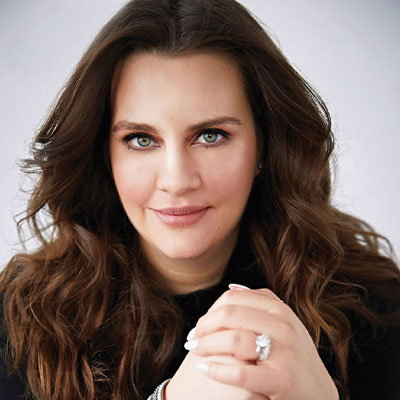
Erica: The woman you're about to meet today is a powerhouse, and I admire her so much just for meeting her one time and hearing her story. Holly Eve is a former celebrity makeup artist, which, how cool is that, turned CEO and founder, Forbes contributor, and a speaker. And she's here today to share her story of mental health recovery and taking lemons and turning that straight into powder.
Erica: Yes. I'll let her explain that whole story. But, Holly Eve, welcome.
Holly: Thank you for having me, Erica, and thanks for the lovely introduction.
Erica: Well, I think it's my favorite to date, just because I had to take the lemons into the story. But before we dive into how you actually made lemons powder, I need you to take it back to the beginning for me. What is your story?
Holly: Yeah. I was working as a celebrity and TV makeup artist. I worked on Project Runway. I worked on The Doctors in LA. I was flying back and forth between LA and New York and really built a career when I was getting into makeup, assisting for really big makeup artists, and had the privilege to work with a lot of different celebrities and on Vogue shoots, and building up to that point in my career.
Holly: When I first moved to Los Angeles, I moved from New Mexico. And the day after I moved, it was serendipitous, I was booked on a shoot. My cousin's friend has a jewelry company and her makeup artist knocked out at the last minute. And she knew that I was working at makeup counters in New Mexico and asked if I could do the makeup for the shoot. And so my dad said it was a good omen.
Holly: It was the first shoot that I had ever worked on moving to LA, aside from working at counters. And it was for a breast cancer awareness photo shoot. And one of the women, Stephanie LaRue, she was one of the models. She had stage four metastatic breast cancer. At the time, I think she was around 31.
Holly: She had been diagnosed about a year prior. And I did her makeup. I did all the women's makeup, and she and I just really connected. We were like soul sisters from day one, and she was about 12 years older than me, and really just took me under her wing.
Holly: She told people we were sisters, and she was the person who really educated me on products, specifically natural deodorant. So that's where it all stemmed from, having eventually, years down the line, my idea to start my company.
Erica: And so keep going with that. She educated you on all this product. Where the hell did these lemons come into play?
Holly: So she was educating me on products, on food, on lifestyle. And I will say it wasn't just changing my deodorant. I think being around her, and like many people, I had some trauma in my background and growing up, and alcoholism ran in my family. And at the time I was also drinking, not realizing that I had an addiction. I am sober now, and I've been sober for twelve years.
Erica: Amazing.
Holly: Thank you. Yeah. It's really changed my life. And I think that at that time, and I'll get to the lemon part, it was really just upgrading my whole life system and how I was moving in the world, products I was using, food that I was eating.
Holly: She helped me at the time become vegetarian. Now I'm vegan, and learning how to meditate. And I would try her deodorants, because with all of these lifestyle changes, she kept harping on deodorant specifically. She kept saying you have to switch to a natural deodorant, stop using that over the counter. She would look at my products, and she believed, in her words, that her diagnosis being so young was attributed to that.
Holly: She said it must be chemicals and products, that there was some link to what we're putting in our foods and products, that it didn't make sense that she was diagnosed with such an aggressive cancer at such a young age. And so I would try her deodorants. I remember she had this salt stick, and I would buy everything at Whole Foods. Everywhere I could find a natural product, and I either got a rash or, TMI, I would smell worse. And so what led to the lemons?
Holly: That's a pretty crazy story. I'll sum it up quickly. I was sexually assaulted in New York City, and it was the second time that it happened there.
Holly: And there was some trauma in my past from childhood, similar things. It's such a weird story, getting back to the lemon, but I was so angry after that happened. And I remember talking to a police officer, and I was visibly just distraught, just feeling like my power had been taken away for so long. And she asked me if I had ever done Krav Maga, and I said, no, what's that? And I was just angry and crying in the moment.
Holly: And she said, it's the most lethal form of self defense, taught to Israeli soldiers. And she said, you should go take some classes. And she looked at me in the eye and said, honey, it's time for you to take your power back. And something about that stuck with me.
Holly: I left the police station that day and I found a class pretty quickly after, on 63rd and Central Park West in New York City. And one of the first classes that I was taking, I was paired with this woman that I always joke, I think she had been doing Krav Maga from the womb. I thought she was going to beat me up. I was terrified of her.
Holly: I was paired with her. I had this crazy rash under my armpit from a natural deodorant, and I didn't wanna scare her, because I was also just afraid of her. But eventually she asked what it was. We were sparring, and I told her it was from a natural deodorant. And then she said five words, a question she asked me that changed the trajectory of my life.
Holly: She said, have you ever tried lemon? And I said, no. I didn't think too much of it, but I thought, after, I'll give this a try, and waited for the rash to clear up. I bought a bunch of lemons and cut them up and used it. And my mind was blown. It worked so well.
Holly: I wasn't sweating. It didn't smell. But even the fact of just putting lemons on, I wasn't understanding, how am I also not sweating? How is this one powerful ingredient from the store working better than all of these natural deodorants? And I say all of that in that story, I gave the kind of condensed version, but we all have things that we go through in life. And if we look back, all of these moments and instances and things that seem really horrific at the time, it leads up to a point.
Holly: And even at that point in that Krav Maga class, I didn't know where that would lead me. And I know now, and some of the things I wish hadn't happened, but at the same time, I'm glad things in my life did happen, because it's led me to this point right now. And it's a really strange way of how I discovered lemons.
Erica: It is such a cool story, though. I don't know that anyone has a story that cool. And, yes, you had to go through some hardships to get there, but, I mean, lemons to lemonade, lemonade to powder. I don't know, but you did it. So tell everybody about your luxury body care brand, because we gotta know.
Erica: Hey there, listeners. If you have ever felt like you're stuck in a place, held back by self doubt, perfectionism, or that pesky inner critic, you're not alone. We all face those sticky floors that keep us from reaching the heights we dream of. But guess what? It's time to shatter those limiting beliefs and toxic behaviors to uncover infinite possibilities.
Erica: My book, Glass Ceilings and Sticky Floors, is your ultimate guide to smashing through barriers, overcoming limiting beliefs, and stepping into your full potential. This book has been endorsed by none other than the great Mel Robbins, best selling author and motivational powerhouse. It's also been featured in Success Magazine, so you know it's packed with insights that work. Inside, you'll find real life sticky floor stories, practical strategies to help you handle your own sticky floor moments, and a whole lot of inspiration to keep you climbing. This isn't just a book.
Erica: It's your roadmap to success, confidence, and freedom. Grab your copy of Glass Ceilings and Sticky Floors today at www.ericaandersonrooney.com. Whether you're in the boardroom, the classroom, or just starting out, this book is for you, because no one, and I mean no one, deserves to stay stuck, no one deserves to feel small, and you have glass ceilings to shatter. Let's do this.
Holly: Yeah. So when I was using the lemons, I was using it for a while and working as a makeup artist and traveling. And then we were in some random city. I think it was working on a Budweiser commercial, and I couldn't find lemons. And then I thought, there has to be an easier way to just pour lemon.
Holly: And I was thinking lemon to liquid, that would go bad. I figured out how to turn lemons into powder in my kitchen. I bought machines, and I didn't know at the time, and I'm glad I didn't know this, but this is how naive to business and chemistry and a lot of things that I was unaware of. I didn't know you could just buy lemon peel powder, but I'm glad I didn't know that, because I bought these machines.
Holly: I was really experimenting. And then when I was using just straight up lemon powder, it wasn't as effective as using lemon itself. I had a male roommate at the time, and I remember him trying my yellow peel powder, and I told him, this is revolutionary. It's going to work. He went to this event, he put it on, he came back and he was so mad.
Holly: He sweat through it, it didn't work, and his whole white shirt turned bright yellow. It felt awful. So then I was like, I'd have to go back to the drawing board. And then I went on Pinterest, Google, YouTube, resources, just seeing what are people using DIY, figured it out in my kitchen, this formula that worked.
Holly: And then I was trying to figure out the scent, but I didn't know really how to work with essential oils. And my neighbor, who I had met one time prior, a year and a half before, he invited me to his apartment and he made me tea. And I was looking around his apartment, and I really thought he was making drugs. And it turned out he was an agoraphobic, Oxford trained chemist who stayed home all the time. I happened to catch him one time a year and a half prior, and he had beakers and glass jars.
Holly: And you've seen Breaking Bad.
Erica: I was just writing down the name Walter White.
Holly: Oh, yeah. It's exactly like that show. And growing up in New Mexico, it's very similar. It was like I'm home, and kind of feeling like, I don't know if I should be in here. But then he explained he was making flavors and different essential oils. And so a lot of the bottles, he was just mixing different scents.
Holly: And I told him, I said, I've been working on this product. I have this idea. Could you help me? And he graciously helped me create all of the scents for my products. And though I figured out the powder and the formula, he really did, like Walter White, he taught me chemistry.
Holly: And at the same time, leading up to how I built the brand, I reached out to a family friend. He's the former VP of Elizabeth Arden R and D. He created the Ceramide capsules, and he worked in the industry for thirty years. Not really knowing him, I reached out to him. He took my call and walked me through the process of how to start a beauty brand. And I think people really do wanna help. And I was able to create this really luxurious line, and I had this idea to merge high end, luxurious packaging with ethically sourced natural ingredients. Because six, seven years ago when I had this idea, it was all mother earth, kinda crunchy looking packaging, and it's changed since then. But at the time, there wasn't anything that was plastic free and really bougie for a product that you're using every day.
Erica: I love it. I'm all about the bougie. And this has been seven years now. Right?
Holly: Yeah. I had the idea in 2016. So close to a little over six years, I think.
Erica: Yeah. That's awesome. And it's been nominated by the LA Business Journal for their fashion and beauty awards. It was accepted into Macy's. Right?
Erica: That's huge. I mean, all of these things. So you are just killing the game. And then you also talk about mental health. What is this passion with mental health?
Erica: Which I'm here for, because I think everybody needs a therapist on speed dial.
Holly: Going back to a lot of the things I was mentioning with just certain traumas that I had gone through, and then going through those assaults in New York, and working on my addiction and alcoholism. I also, as I was building my brand, I was getting ready to get married in Santa Barbara. So I was building my company, getting married to someone who was fourteen years older than myself. Shortly after, I launched my brand at the Malibu Farmer's Market, and then it did really well and I launched it online. And about two months after that, my then husband told me over a phone call, 3,000 miles away, that he wanted a divorce.
Holly: And I really spiraled into one of the darkest depressions that I had ever gone through. And I know now it was not about that person. It was about all the unresolved trauma. More importantly, I hope that if somebody hears this and they're going through a mental health struggle, that they know that that's the most important thing in your life that you have to address first, and far more important than any company or brand or anything. If you don't have your mental health intact, you really can't navigate the world in a healthy, happy way.
Holly: And in that timeframe, I didn't know any of that. I just knew that I was depressed. I had a company, I didn't know how I was going to grow it. I made the decision to move out, thinking this person would come back after me, and that didn't happen. And then I was just left in this small apartment with my rescue dog.
Holly: Looking back at that time, I moved into this dark, small apartment facing the wall with no natural sunlight. And I really just felt closed in and trapped, and became just incredibly depressed. I didn't wanna be alive anymore. And around that time, multiple times attempted to take my life. And they were still attempts, but I wanna say more cry for help attempts, that I knew what I was doing. You know, it's a hard thing to talk about, but I knew it wouldn't be successful, but it was enough for me.
Holly: It was just, I wanted the pain to stop, because I was so depressed and I was in such a dark place. I was in this intensive outpatient care there a few times a week, and seeing a therapist, and trying to get out of this head space I was in, and it just wasn't working. And one of the last attempts that I had, I was driving on the 210 Freeway, and I was trying and praying out loud to get hit by a semi truck, with my eyes closed, and saying the words out loud, dear God, please just let me get hit. And eventually slammed on my brakes and I got off the freeway. And they asked me questions when you're in outpatient. It was very clear that I wasn't okay.
Holly: And so I was admitted into the inpatient program, in the inpatient psychiatric ward. They gave me the option. They said that I could check myself in, or they would fifty one fifty me, which is, if anyone listening doesn't know, that's when they force you in. And so I said I'll check myself in. But even doing that, it's really terrifying when doors close behind you and, again, just feeling trapped. But it did save my life. The doctors, the therapy there, the outpatient. There was one therapist.
Holly: Her name was Aaron. She would some days just talk to me for hours. And I'm a little emotional talking about it, because there are just so many people that just really want you to make it. And sorry.
Holly: I really wanna find her and thank her, because in the moment it doesn't seem like things are getting better, but her just sitting there listening to me talk in circles for hours, and patiently listening and giving advice and guidance and just so much kindness, those small things over time really added up. And then I was working on my depression after that. I was still seeing a therapist at that time, and it wasn't a 100% better, but I was getting better. And she advised me to walk every day at the Rose Bowl for an hour. She said you need vitamin D.
Holly: And I started doing that. I started listening to really positive podcasts, Oprah. I was trying to fill my head. I would put headphones in, so anything that was going into my mind was positive. I made a vision board on my wall of all the things I wanted, of stores I wanted to be in, of my future husband. I put Forbes on there. I had this wall of just creating this life that I really wanted that I didn't have in that moment. And things slowly started getting better.
Holly: On April 11, I got an email from Urban Outfitters. This was in 2019. And they let me know that they wanted to carry my products, which is not common. Usually you email companies, you email stores and buyers, and everyone says no. And then they just keep hearing no.
Holly: It's not common that they reach out to you. And so I took a video of myself that day crying, because there was no one else there, but out of excitement, and really felt like, okay, now my life is going in this positive direction. And a couple weeks after that, I had a call with one of my advisors through SBDC, and I was really excited about Urban Outfitters and that opportunity, but also I had never sold with a store like that.
Holly: So I was really nervous. And she said to me, you know, Holly, 99% of the things you worry about will never happen. We got off the phone, and I was going back and forth between my apartment and the parking structure, because my small apartment's parking structure was across the street, and I was going back and forth. I was gonna go do my laundry that day. And then I was going to go on my walk at the Rose Bowl.
Holly: And I had my dog with me. And I'll just quickly say, I had rescued her two years prior with my ex. We found her in the bushes. She had been hit by a car. She had a broken hip and tailbone. We kept her.
Holly: She had surgery. I kept that dog in the divorce. He kept our other dog. And so she was the reason also that I had to get outside every day, because I had to walk her. And as I was getting in my car that day with her to walk at the Rose Bowl, I realized I forgot the adapter.
Holly: And I realized when I was getting in my car that I forgot that. And my first thought was, I'll just walk without it. And then my second thought was, I wanna listen to music. It was just this quick thought that a split second decision can really change your life. And I was crossing.
Holly: I saw the crosswalk light was on, and my dog, because of her PTSD, I felt something. I looked to the right and I was hit by a delivery van who sped up to turn and drove through my body, and I woke up on the asphalt thinking I was paralyzed. I look back at this now, that even when you go through a near fatal accident, things get really quiet. It really is like the movies, how it's depicted. And that is how it gets. Things were really quiet.
Holly: And I just started murmuring and saying softly out loud to myself, I'll walk again. And I was still running my company from the hospital bed, because I thought, I'm not going to lose this. And when I was in the ER, the weirdest thing happened. There was a male nurse assigned to me. And I think because of his masculine energy, he had more tough love.
Holly: You know, there's a lot of people around you when something like that happens. And I was screaming and in excruciating pain and talking about all my life problems. And it was just he and I for a little while. And he said, there's something I want you to remember. And he came back a little while after and he said, 99% of the things you worry about will never happen.
Holly: I don't know if that's odd or God, that somebody told me that on a phone call before, and then right after that happened. But that whole experience in the hospital really was a spiritual awakening and a second chance, and I really started navigating life differently. And I look back at that now, and when I speak at USC and I share about that, I can say now with full certainty, like, what a badass I am.
Erica: Because that was your reaction.
Holly: Yeah. That was my reaction. And for myself, I just thought, I have to do something with this. There has to be a greater purpose. And I wrote about what I was going through. I submitted it to 20 different publications.
Holly: I kept submitting it to Forbes. I think they were finally like, this woman is not going to leave us alone. And the editor wrote me back and she said, we don't publish one off pieces. Would you be interested in being a contributor? I had never written for a publication before.
Holly: I had Forbes on my vision wall. I manifested that. I was hired to write about entrepreneurship and mental health. I now speak at USC and all over, and on podcasts, about mental health and suicide prevention. And in that time as well, it grew my company.
Holly: It was featured on the Today Show. I met an extraordinary man. I got remarried, and just really built that life that I put on that vision board, with, I think, visualizing it and putting the actions in to have a happier life. I really did achieve that.
Erica: What I think is the full body chills for me is not the praying you would get hit by a semi and then going through that accident. It is the immediate thought after, of I will walk again. That to me is the full body chills moment, because it really just pulls out your inner desire to live and to be all of these things that you are. And all of the work. People who don't inherently struggle with mental health, like depression, anxiety, all of that, don't understand the work that it takes.
Erica: And it's so interesting. I was talking to my therapist today, actually, about some of the most powerful people in the world. Some of the people with the most grit and the most resilience are the people who every day don't pick up a drink, who every day show up, because that shit can be hard. Those are the badass people.
Holly: Yeah. Absolutely. And especially since you gave the analogy of a drink, for people that are sober in the program or getting sober on their own, that is the getting up moment. That is I'll walk again. Because you are actively choosing. By me telling myself I'll walk again,
Holly: that was, in that moment, a physical and mental analogy. I didn't realize it then, but just thinking, I will, I'll fight this and I'll get past it. And I think when it comes to addiction and alcoholism, which I can speak on being sober, is I don't have a desire to drink or use drugs anymore. But in the beginning, having that as a coping mechanism and then choosing every day, that's the battle. And that's the win every day, when you have that choice and you could do that and you choose not to. I think that there are little wins like that that we all can celebrate.
Holly: Mine in that moment was just catastrophic, on the ground, not being able to physically move. But I think if we all look at those moments, what are they for us? Then I think that's where the true change of perception comes into play.
Erica: Absolutely. And I think it's so powerful too, because that was your moment to choose to live and to do all of the things that you had on this vision board. So powerful. What piece of advice would you give people who are struggling with mental health struggles?
Holly: I always say it very simply, that I try to help people, that it's okay to ask for help. When I speak at USC, it's a Q and A always, and Albert Napoli, he's the person who always interviews me in front of his classes, and he always asks me the same question, that if I had one billboard that was seen by a billion people, what would I want it to say? And I always say that it's okay to ask for help. And it's amazing, the letters that I've received after speaking there. I now have over a thousand letters from students, and rarely do people talk about their business idea or wanting help with that.
Holly: They talk about mental health struggles that they've had. I've had people open up that they've been at the same psychiatric ward, that they've had family struggles of alcoholism. I've had one woman who had asked me to go to coffee and told me she was raped and had never told anyone before. And I really think that not only asking for help, that's part of it, but also tuning into the people that are having these discussions. Because I think the more that people are talking about mental health, there's no shame in that.
Erica: Absolutely not. But it's so powerful, because of the stigma that's out there right now, that when you do share that, you are creating this space and you're giving other people permission almost to feel that same way themselves, because everybody feels like they're out there on an island. And I say everybody as in myself, someone who has struggled with mental health and drinking too much and all of those things. It is not something that I would ever have spoken of in the past. But when you shine a light on those things, it makes it okay for others to raise their hand and say me too as well.
Holly: Yeah, absolutely. I think that these conversations need to be had. And not to keep going back to AA, I've gotten sober through AA. I think that that's the greatest highlight of that program. There's no hierarchy, and it's people just at the me too of alcohol.
Erica: Community.
Holly: Yeah. Community, talking about their struggle. There's no shame in that. People can say the most horrific things that they did, and there's understanding there and compassion and no judgment.
Holly: And it's a very spiritual program. And I really have learned to take what I've learned in that program outside, into my daily life, of being compassionate and being of service to others.
Erica: I love it. And my last question I always ask everybody is almost very much like the professor, the billboard question, which is, what is the piece of advice? So you've already given us the advice, which I love, ask for help. Where can everybody find you? Where can they check out these super cool products that you have? How can they get in touch with you?
Holly: I'm on LinkedIn under Holly Eve. Our Instagram is at madamelemy. My direct email, if anyone wants to reach out, it's hollyeve@madamelemy.com. That's the easiest way to get in touch with me. And then our website is madamelemy.com.
Holly: And my Forbes column, if anyone types in Holly Eve Forbes, we have a column on entrepreneurship, startups, anything business related, and also mental health and wellness.
Erica: I love it. And I will link all of that in the show notes. But thank you, Holly, for sharing your story, for being open and vulnerable and all of the things, because it's not easy. It's not an easy topic. So thank you.
Holly: Yeah. Thank you for having me.
Erica: Let me catch you before you run off to the next episode. Will you do me a huge favor? And would you mind scrolling down, tapping those five stars, and leaving me a review? It will truly help the podcast get into the hands of the woman that needs to hear it most. And I've also got big goals.
Erica: I'm trying to get a 100 reviews by a 100 episodes, and your review could tip the scales.
RESOURCES MENTIONED IN THIS EPISODE:
- If you are struggling, call or text 988 in the US to reach the 988 Suicide and Crisis Lifeline, free and available 24/7.
- Ready to stop spinning and stop doing it alone? Join HER Collective, Erica's community for ambitious women in corporate America.
- Grab Erica's book Glass Ceilings and Sticky Floors and start shattering the beliefs that keep you stuck.
- Never miss an episode of Glass Ceilings & Sticky Floors.
- Follow Madame Lemy on Instagram.
- Connect with Holly Eve on LinkedIn.
- Holly Eve's Forbes column, where she writes on entrepreneurship, startups, and mental health.
- Growth after trauma, the research from Richard Tedeschi and Lawrence Calhoun on the five domains of growth after trauma.
- Alcoholics Anonymous, the fellowship Holly credits with getting her sober.
RELATED EPISODES:
FREQUENTLY ASKED QUESTIONS:
What is post-traumatic growth?
Post-traumatic growth is the positive psychological change some people experience after a serious crisis, and it is a researched construct rather than a slogan. Richard Tedeschi and Lawrence Calhoun at UNC Charlotte identified five domains where it shows up: a greater appreciation for life, closer relationships with others, a stronger sense of personal strength, new possibilities for your life path, and spiritual development. Their Post-Traumatic Growth Inventory has been translated into more than twenty languages. It does not mean the trauma was worth it or that everyone grows, only that growth alongside the pain is real and measurable.
How did Madame Lemy start?
With a question in a Krav Maga class. Holly Eve had taken up Krav Maga after a police officer told her it was time to take her power back, and a sparring partner noticed the rash under her arm from a natural deodorant and asked five words: have you ever tried lemon? It worked better than anything she had bought, so she taught herself to turn lemons into powder in her kitchen, and an agoraphobic Oxford trained chemist who lived next door helped her develop the scents. Madame Lemy is now a plastic free luxury body care brand stocked at Macy's.
What is a sticky floor, and can mental health be one?
A sticky floor is Erica Anderson Rooney's term for the limiting beliefs and toxic behaviors that keep you stuck long before any glass ceiling does. Holly Eve's answer to that is the clearest one on this show: your mental health has to be addressed first, ahead of any company or brand or ambition, because without it you cannot navigate the world in a healthy way at all. Asked what she would put on a billboard seen by a billion people, she says the same thing every time. It's okay to ask for help.
MORE FROM ME
Follow me on Instagram @ericaandersonrooney and @joinhercollective
SUBSCRIBE & REVIEW
If you loved this episode, please take a moment to subscribe and leave a review on Apple Podcasts. Your support helps us reach more women who need these insights. Thank you for tuning in to the Glass Ceilings and Sticky Floor podcast. See you next week!
Hi, I'm Erica!
In the last 15 years, I climbed to Chief People Officer, 6x'd my income, walked away from a culture that stopped matching my values, wrote two books, and built HER Collective to help thousands of women rise to power and lead in the age of AI. I've learned a thing or two about smashing ceilings and closing gaps, and Glass Ceilings & Sticky Floors is where I open the playbook, the receipts, and the real stories to share it all with you.
_JPG.jpg)