





How a Surfing Move Can Save Your Life on Land
Think about the last time life knocked you flat. A layoff you never saw coming. A breakup. A diagnosis. A moment where the ground just disappeared. Erica Anderson Rooney has a move for exactly that moment, and she borrowed it from surfing. It is called the turtle roll.
The idea came from a conversation with Britt Frank, author of The Science of Stuck, in the prior week's episode. It stuck with Erica enough to build an entire show around it. She walks through her own wipeout to prove the point: laboring with her first child, an epidural already in, when her son's heart rate dropped and a nurse leaned in and told her that if it did not change in the next fifteen seconds, she was headed for a C-section. She had zero control over that wave. She stopped fighting it, said okay, and his heart rate came back up.
Here is the actual technique. When a wave drives a surfer toward the ocean floor, they pull their knees to their chest and grab the sides of the board to form a protective shield, then drive their head and shoulders forward and kick toward the surface. Erica's metaphor: when life drives you under, you go inward first to protect yourself, then take one small, intentional action, brushing your teeth, putting on real clothes, to break the downward pull and start kicking back toward the air.
This is not just a nice metaphor. Joe Grasso, PhD, vice president of workforce transformation at Lyra Health, says setbacks are one of life's certainties, and resilience is what determines how fast you bounce back and how much stress you carry while you do it. Recent post-traumatic growth research backs the same pattern Erica describes on the show: people who take action recover faster than people who ruminate, and isolation is what destroys resilience, not the wave itself. You already have the muscle memory to pull yourself back up. Take the small step. Then take the next one.
TRANSCRIPT:
Erica: Hey, girl. By now, you know I have Her Collective, my online community for ambitious women who are done doing it alone. Her Collective is for the women who are smart, capable, and driven, but they find themselves stuck on the sticky floors like self doubt, burnout, and waiting for permission that quite honestly never comes. Inside HER, you get more than motivation. You get real support, real strategies, and real momentum.
Erica: We work on things like clarifying what you want now and what's coming next, building confidence without burning yourself out, navigating hard conversations, career moves, and leadership moments with clarity, and surrounding yourself with women who actually get it. This isn't about hustling harder. It's about moving intentionally with the right tools and the right people in your corner. If you're ready to stop spinning, start choosing yourself, and build a career and life that actually feels aligned, I'd love to welcome you inside Her Collective. You can learn more and join us at Collective.
Erica: Because honestly, girl, you were never meant to do this alone. Friends, in last week's episode, The Science of Stuck with Britt Frank, she mentioned a surfing move called the turtle roll. And I could not stop thinking about it. So if you have ever felt like you're caught in these stormy seas of life with just wave after wave hitting you and tossing you down to the floor, listen in. Because girl, first of all, I got you.
Erica: We got you. This whole community has our hands on your back. But also, let's talk about this. Let's explore the turtle roll to talk about how we can overcome anything that life throws at us. Now, I'm not an avid surfer. In fact, I think the only surfing that I have ever done was as a kid on a lake in Florida, and maybe some boogie boarding. But I am an avid beach goer, and I love, love, love swimming in the ocean. I love the flow of the water.
Erica: I love the waves, and I've learned how to swim in the ocean, which, let's be honest, that is a skill. I see people out there in the ocean. You've got the ones who are gracefully dipping and diving in and out of the waves. They're letting the currents take them in, take them out, and they really let the power of the ocean guide them and even help them.
Erica: And these are the people who are kind of going with the flow, right. And then I see the people out there who are straight up flailing. Arms all over the place, legs over their heads. As soon as they get their bearings, wham, another wave creeps up on them, smacks them down to the ocean floor.
Erica: Those are the people who come out struggling, right? Straggling out of the water, seaweed plastered all over their faces and their bodies. Their hair is a wreck. Their swimsuit is half on, half off, exposing body parts and all that.
Erica: So now that I know you got that visual, I want you to stick with me while we dissect this metaphor, because life really is like the ocean. The waves come, the waves go. Some days you're going to have calm and still waters with bright sunny skies. There's a slight breeze. Other days are a storm.
Erica: They are dangerous, scary waves crashing in all around you, right? Here is what I know. You can never anticipate life. Life can truly change on a dime.
Erica: And this turtle roll that Britt described, it's a maneuver that you can use to recover from a spill, but it represents so much more. So stick with me, because it's going to help you also overcome anything that life throws at you. So what is the turtle roll? Simply put, it is a technique that surfers use to get themselves back up to the surface after taking a tumble off the boards.
Erica: So when you get caught in this wipeout, the force of the wave, it can actually drive you down towards the bottom of the ocean floor, right? It comes crashing down. You become disoriented, but the turtle roll allows you to right yourself again. So I did some digging, because again, not a surfer, but as you feel yourself being dragged down and dragged under, you are supposed to pull your knees into your chest and use your arms to grab the sides of the board, which creates this protective barrier that acts almost like a shield.
Erica: And then you drive your head, your shoulders, and your arms forward towards the surface while kicking your feet up to propel you upwards. Sounds complicated. Maybe it's easier in practice. I'm not a surfer, but this motion creates the forward momentum that you need to break that downward pull. Now a few quick turtle rolls and then boom, you're back on.
Erica: You're oriented again. You're ready to, like, go out and surf some more. Okay? So how does this relate to life? Well, I'll tell you, every single one of us is going to have those moments when we feel totally slammed down to the ocean floor.
Erica: Layoffs, breakups, bills piling up, kid issues, health issues, home issues, all the physical and emotional strain can totally throw your life for a loop and drag you down. You really can lose sense of which way is up. And you have this overwhelming feeling of, I don't know which way to go. I don't know what to do or even how to start. And in those moments, the turtle roll is a lifesaver.
Erica: You can go inward. You can go into that protective posture to shield you from the force until it passes, whatever that is. Keep your eyes focused on the most precious things, right? Your family, your health, your life itself, to keep you from getting totally lost and disoriented.
Erica: And then you start taking those small intentional actions that will break that downward inertia and pull to propel you back up towards the air, towards clarity, towards lightness again. Now, sometimes when life gets you way down, all you want to do is hold up in your room and watch Schitt's Creek while you're hiding under the covers. I get it. But just the small act of getting up, of brushing your teeth, is enough, right?
Erica: Sometimes the next day you can put on real clothes. Maybe the next day venture out of your bedroom, whatever it is, take that small action. With each small step, you build greater and greater resilience. You build trust in your resilience and trust in yourself. You begin to know that at a deep inner level, you can, and you will, pull through. You know that you can handle being pulled under for whatever amount of time, because you've gained that muscle memory to recover.
Erica: And each time, the roll builds grit and courage to face the next wave. Now, what I will tell you is that for someone who has struggled with anxiety and depression in the past, that first bout was really tough, because I'd never done it before. I'd never worked through it before. But you lean into the help of your community. You lean into the help of your family and your friends, and you let them help you take those small steps.
Erica: And then, you know, the next time that wave hits you and pulls you down, you know you've done this before, you know you can get through it, you know that you can recover, because here's the thing: another wave will hit. It will bring you down. Some of these waves, you might see them coming. Others you might not, but if you take a deep breath and you trust in your resilience and you go with the flow, you will recover.
Erica: Now, one of my favorite stories to tell is kind of like this turtle roll of life. When I had my first kid, and I was in the hospital room in the middle of all these contractions, I'd gotten my epidurals. Yes, I said plural, because I had several. And all of a sudden, his heart rate dropped and people rushed into the birthing room.
Erica: They pushed my husband to the side and one nurse got right up in my face and she just looked at me in the eyes and said, "If this doesn't change in the next fifteen seconds, you're going for a C-section." Everything that we had planned out, everything that I was going through, was just all of a sudden ripped from me. And the reality was, I didn't have any control over this wave that came crashing into me, but I had this very calm sense come over me. And I just looked at my nurse and I said, "Okay."
Erica: Because number one, what was I gonna do about that? Really, what was I gonna do? It's out of my hands, but I knew that I could overcome this. I knew that I was with my community and that I knew that we would get through it.
Erica: And thankfully, because of what the nurse attributed to me not having resistance and not struggling against these waves that were coming at me, they kind of turned my legs over and it allowed his heart rate to come back up and everything was fine. It relaxed. I knew that it would be okay. And, you know, maybe you can attribute that to science, maybe not. I don't know.
Erica: But in my experience, the fact that I kind of relaxed and took a breath and went with the flow, I let that wave crash over me and move on, and we turned that whole ship around. The nurse did tell me that if I had resisted what they were saying, it probably would have been much worse, and I probably would have had to go for a C-section. I don't know, but I do believe it. So in work, in relationships, in life, when we get overwhelmed, try pulling yourself into that turtle roll mentality. Take a deep breath, block out the distractions, focus on what matters, and start taking the small steps to regain momentum towards your goals.
Erica: Keep pulling until you find that air. It takes practice, y'all, but this is a skill that is going to serve you for life. The waves cannot defeat you. They cannot keep you down. If you know how to recover with a turtle roll.
Erica: So thanks for joining me today on this turtle roll of life. We've got the ups. We've got the downs, but we've also got each other. So, again, if you are not following me out on all of my socials, what are you waiting for? Go click that follow button.
Erica: And remember, it's time to stop putting a ceiling on what is possible and to start breaking through it.
RESOURCES MENTIONED IN THIS EPISODE:
- Join HER Collective, Erica's community for women in corporate America ready to close their own AI gap and get more women into rooms of power.
- Glass Ceilings & Sticky Floors, the podcast this episode is part of.
- The Science of Stuck: Breaking Through Inertia to Find Your Path Forward by Britt Frank, the book referenced as the source of the turtle roll idea.
RELATED EPISODES:
FREQUENTLY ASKED QUESTIONS:
What is the turtle roll, and how does it help with resilience?
The turtle roll is a surfing move used to recover after being knocked underwater by a wave. The surfer pulls their knees to their chest and grabs the board to form a protective shield, then drives forward and kicks toward the surface. Erica Anderson Rooney uses it as a metaphor for resilience: protect yourself first, then take one small intentional action to break the downward pull of a hard season.
How can I recover from a setback like a layoff or a breakup?
Start with one small, doable action rather than trying to fix everything at once, brushing your teeth or getting dressed counts. Research on post-traumatic growth shows people who take action recover faster than people who ruminate, and staying connected to your community matters more than trying to push through alone. Each small step builds the muscle memory to recover faster the next time.
What is HER Collective and who is it for?
HER Collective is Erica Anderson Rooney's online community for ambitious women who are ready to stop navigating career and leadership challenges alone. It offers real support, strategies, and momentum around confidence, hard conversations, and career moves, built for women stuck on what Erica calls the sticky floors of self doubt and burnout. You can join at joinhercollective.com.
MORE FROM ME
Follow me on Instagram @ericaandersonrooney and @joinhercollective
SUBSCRIBE & REVIEW
If you loved this episode, please take a moment to subscribe and leave a review on Apple Podcasts. Your support helps us reach more women who need these insights. Thank you for tuning in to the Glass Ceilings and Sticky Floor podcast. See you next week!
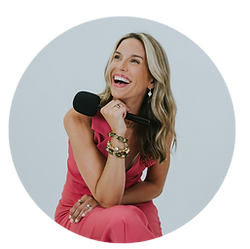
Hi, I'm Erica!
In the last 15 years, I climbed to Chief People Officer, 6x'd my income, walked away from a culture that stopped matching my values, wrote two books, and built HER Collective to help thousands of women rise to power and lead in the age of AI. I've learned a thing or two about smashing ceilings and closing gaps, and Glass Ceilings & Sticky Floors is where I open the playbook, the receipts, and the real stories to share it all with you.
_JPG.jpg)