


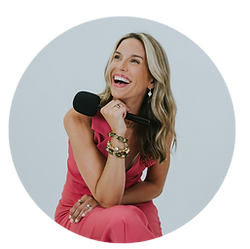


Be the CEO of Your Confidence: Rebecca Black on Beating Imposter Syndrome
What would you do if the version of your life you actually wanted required working two jobs, five days a week, for an entire year? My guest this week, Rebecca Black, worked a full time job from 5:30am to 11:30am, then drove straight to cosmetology school until 8pm, four days a week, just to get her license.
That year built the foundation for everything that came after. Rebecca set a goal to own her own salon within five years of graduating hair school, and she hit it. She built her client book, sold the salon, and pivoted into product development after noticing something unsettling: client after client under 40 who were trying to conceive were struggling, and two of them later passed away from cancer following fertility treatments. A client asked her one simple question, have you ever thought about what you're putting on us, and it sent Rebecca down a rabbit hole into clean ingredients that became an entirely new business.
Rebecca calls the mindset that carried her through every one of those pivots becoming the CEO of your confidence. It means changing how you talk to yourself, taking action even when it's messy, and measuring your results instead of dismissing them. She needed all three, because even after her business was doing three quarters of a million dollars in sales, she still couldn't bring herself to pay herself a dime. That kind of self doubt doesn't disappear with success. A KPMG survey of 750 female executives found 75% had experienced imposter syndrome at some point in their careers, and 85% of them said they believe it is simply commonplace for women in corporate America.
Rebecca's leap from stylist to entrepreneur is part of a much bigger shift. Female entrepreneurs now start 49% of all new businesses in the U.S., a 69% jump since 2019, according to Empower research. If you're sitting on the version of yourself that wants to make a pivot, whether that's a business, a title, or just permission to charge what you're worth, Rebecca's answer isn't to wait until the fear goes away. It's to put your big girl panties on, take the next messy step, and ask for help sooner than feels comfortable.
TRANSCRIPT:
Erica: Hey, girl. By now, you know I have Her Collective, my online community for ambitious women who are done doing it alone. Her Collective is for the women who are smart, capable, and driven, but they find themselves stuck on the sticky floors like self doubt, burnout, and waiting for permission that quite honestly never comes. Inside HER, you get more than motivation. You get real support, real strategies, and real momentum.
Erica: We work on things like clarifying what you want now and what's coming next, building confidence without burning yourself out, navigating hard conversations, career moves, and leadership moments with clarity, and surrounding yourself with women who actually get it. This isn't about hustling harder. It's about moving intentionally with the right tools and the right people in your corner. If you're ready to stop spinning, start choosing yourself, and build a career in life that actually feels aligned, I'd love to welcome you inside her collective. You can learn more and join us at www.joinhercollective.com.
Erica: Because honestly, girl, you were never meant to do this alone. You gotta be the CEO of your own confidence. Y'all, I am giving you that gold nugget right now because there are so many more inside this episode. Today's guest, Rebecca Black, is a fellow Floridian. She is a southern girl at heart who loves her family hard, and she is a dynamic entrepreneur enjoying the phases of her own personal evolution.
Erica: From her roots in the traditional South to becoming a salon owner turned product developer turned advocate for women's wellness and empowerment, Rebecca has navigated numerous sticky floors while carving her own path. We will dive into her experiences, uncovering the valuable insights on overcoming imposter syndrome, following your intuition, and evolving both personally and professionally. Oh, and let me tell you this. Her last tip on how to be the CEO of your own confidence, y'all, it is pure gold.
Rebecca: You are listening to
Erica: the Glass Ceiling and Sticky Floor podcast, the podcast that will empower you to shatter the winning beliefs and toxic behaviors to uncover infinite possibilities so you can live your best life. I'm Erica Rooney, and I'm on a mission to bring more women into positions of power and keep them there. I'm obsessed with all things growth and abundance, and I'm here to talk you through the tried and true secrets to get you to level up your career and your life. We talk about the hard stuff here, imposter syndrome, perfectionism, fear, and burnout. So pull up a seat, pop in an earbud, and let's dive in.
Erica: Rebecca,
Rebecca: welcome
Erica: to the Glass Ceilings and Sticky Floor podcast. What is up with you? How are you today?
Rebecca: Oh my gosh, Erica. I am so good, and I am so glad to be here.
Erica: Oh my gosh. I love it. My fellow Floridian in the house. But, Rebecca, tell me tell everybody listening, who is Rebecca Black? What are you doing in the world today?
Rebecca: Oh, okay, girl. So my whole come up story, like, yes, I am in Florida now. I've been in Florida full time, Erica, I think since, like, 1999, 2000, somewhere right around in there. So I was actually originally born in Alabama. I am a southern girl, and I spent my childhood between Alabama and Florida.
Rebecca: So, like, there's this saying there's, like, Flora Bama. So, like, I kinda am like a Flora Bama girl. There's very much a huge part of me that is just super traditional, like, super southern. But then there's also, like, this other side of me that is very bougie. Like, I've done everything from, like, the beauty pageants to shelling peas, to canning foods, to creating products, to being on TV, to all kinds of different things.
Rebecca: And I think that is because the way that I did come up was, you know, I was raised in a very traditional home. You know, mother and father were there. We were in church. You know, all of the grandparents, we all, you know, went together. It was just like a very familial environment, very, very homebody environment.
Rebecca: And so it was really at a young age. I really kinda always knew that I was, like, a creative person, like that entrepreneur side of me. And when you consider my upbringing, like, that traditional side of that, you can probably imagine that as I began to spread my wings and started growing, got a little bit of pushback from the family. And it wasn't because they were not supportive, because they were 100% supportive. It was just a scary thought for them because they had not they had not done it.
Rebecca: And so, you know, whenever we moved to Florida full time, it was my junior year of high school, and I graduated from a rock ledge high class of 2,001 Raider pride. And, after I graduated there, I ended up moving to Gainesville. You know a thing or two about Gainesville. And, and I didn't know what I wanted to be when I grew up. I didn't know what I wanted to go to school for.
Rebecca: I wasn't a 100% certain of myself at that point. I don't think anybody at the age of 18 to honestly, like, 24 can really be certain of themselves, but that's a whole other conversation. So, you know, Erica, I just really, I put myself through community college, and I moved to Gainesville. And, Erica, when I moved to Gainesville, I didn't even have a car. Like, I told my parents, I'm like, I'm moving to Gainesville.
Rebecca: I had already transferred my job. I had, I had already, like, planned my bus route where I was gonna go so that I could get to work. I had I had, like, all the things lined up. And so I finished my two year, AA degree there. Still didn't know what I wanted to be when I grew up, and so I went to took some computer classes at the local community college here in Brevard County and, ended up getting my AA degree from there.
Rebecca: And I met my first, like, I would say, like, my real employer because that was my first, like, full time job with benefits and stuff like that. So then, Erica, as you can imagine, like, that inner creative side, it's like, okay. Is this it? Like, okay. Like, I have a job.
Rebecca: Like, I'm looking at people who have been in this job for, you know, many, many, many more years than I have. You know? I don't know that they're making that much more money than me, and, like, I'm struggling to pay my car payment. I'm struggling to whole pay my own rent. At this time, rent was only, like, $950 a month.
Rebecca: And so I'm like, how am I going to do this? And I'm like, you know, I always wanted to go to hair school, and I didn't go to hair school right out of high school because I was dating someone who told me that I was too smart to go to hair school, and I needed to get a college education. And so I'm like, now I have a little bit of a college education. I still don't know what the hell I wanna do. So where do we go from here?
Rebecca: So, anyway, I ended up making, making a transition. That was probably the longest year of my life, because I worked from Monday through Friday, from 05:30AM to 11:30AM. Got in my car, ate food, ate my little protein bar in the car, changed my clothes, put my cosmetology school uniform on because that's a year long program. And I went to school Monday through Thursday from 12:30 to 8PM because I had to get my twelve hundred hours in. And so I did that for that year.
Rebecca: I was able to keep my benefits and, because at that time, I really didn't know how I was gonna how I was gonna do the thing. You know? Because, like, coming from where I come from, you gotta keep the benefits. You know? You gotta have insurance and, you know, it's gonna Rebecca, you don't have, like, a full education.
Rebecca: Like, you're not gonna be management material. You're not gonna be able to earn more. You know? And so a lot of a lot of those things, held me back from making that decision to go to hair school, for quite some time. And then once I decided to do that and I graduated, I got my, my state board passed that licensed cosmetologist.
Rebecca: I still hold that license to this day and probably always will because I feel like that was, like, my first moment where I am like, you can take anything in this world away from me, but she will not take that cosmetology license away from me. You just won't do it. And so I'm so thankful for that because it has opened so many doors. And I set a goal for myself, whenever I graduated hair school that within five years, I wanted to become a salon owner, and I did that. I did that.
Rebecca: Once I learned the system of building, like, my own book and getting customers to come back and to be rebooked for, like, a year in advance, I was like, okay. I finally I finally got it. And then I went from salon stylist to salon owner to selling the salon, going into product development, and then helping other people create their own products. And, you know, most recently, just, like, entering the women's wellness space and really just, like, bringing all of that information and all of that experience together to really have real and raw conversations with women. And, honestly, just people in general, but I have such a heart for women because one thing that I notice is that there is this lack of confidence that we all seem to have.
Rebecca: And so I just I really am so excited to be able to help other women, you know, on their come up no matter what stage of it that they that they are in. So that's a little bit about me, and that was like a whole tangent right there, I feel like.
Erica: You left a lot of really great breadcrumbs, though. And what I find so fascinating about your story, and this is what I would really encourage anybody to hear when they're listening to this podcast, is a lot of those breadcrumbs that you talked about, like not going to hear school right out of college because or right out of school because a boyfriend told you not to. Right? Then finally doubling down and doing school and work, all of those little breadcrumbs, like, you did not see or probably even imagine that one day you would be in this product development wellness space. Like, that was probably never anywhere on your radar.
Erica: So there's a lot of this, like, just taking that next step forward even if you have no idea where it's gonna go. When you look back by going to hair school and saying, okay. I'm gonna buy this salon. Take me back to that time. What did you think you were gonna do with the rest of your life at that time?
Rebecca: I thought I was just gonna be a hairstylist the rest of my life. I was gonna have this salon, and I was just gonna do the damn thing and just get on with life. That's exactly what I thought.
Erica: I had a woman on the podcast earlier last year, Diane Wingert, and she talked about continued personal evolution. And it's just this continual growth pattern and always going towards that next thing, never being like, okay. This is final, and this is it. But talk to me about what ignited that change within you to go from owning a salon to the next thing? What was that indicator that kinda flipped the switch for you?
Rebecca: So that's actually more of a personal story because in the salon world, you get to you get to meet people. And you don't just you know, like, your relationship with your hairdresser is one of the most valuable relationships in your life. Like, you tell your hairdresser almost everything because this is one of the things that I love to teach people in the service industry, especially the beauty industry, is that you are one of five licensed professions in the world where your license gives you the ability to touch people. And when you touch people, you inherently build a sense of trust. Think about who else can touch you, your doctor.
Rebecca: Well, what is your doctor doing? They're poking and they're prodding you. Your dentist can touch you. What are they doing? They're poking and they're prodding you.
Rebecca: They're making your gums bleed. They're making you hold your tongue in weird positions, and you don't even wanna talk to them at that point. Okay? You have massage therapists. Okay?
Rebecca: So you're relaxing. You don't really wanna talk during that point either. Like, that is a therapeutic thing that you are doing. Your nurses, you tend to have more conversation with your with your nurses, but still, they are they may be a little more compassionate. You may talk to them a little more than you do the doctor, but you don't talk to them nearly as much as that woman is that is touching your hair.
Rebecca: She's blow drying it, massaging it, giving you all the shampoos and the conditioners and the styling products so that you can continue to look fabulous at home. And so in building those relationships throughout the years, you know, all of your clients become like family to you. And I felt like there was this, like, trend that almost kinda started happening that I started noticing. And I noticed that almost all of my clients under the age of 40 who were trying to conceive were having some issues conceiving. You know?
Rebecca: And so I'm like, that's just weird. I'm like, oh, you know, like, switch over to organic foods. Like, that's gonna help you. And it's like you switch over to organic foods, and that didn't necessarily help. And I have since realized that there's a lot more to it than that, but three of these ladies ended up having to do in vitro fertilization and some type of hormone.
Rebecca: And two of those three of my clients are no longer on the face of this earth because they ended up passing away from cancers. And they left the little ones that they fought so hard to get. And so it's like, why does this happen? So I kinda started asking myself, like, how does this happen? Why does this happen?
Rebecca: And I had a client say to me one day. She says, you know, Rebecca, she's like, you're a super clean eater and, like, organic, and you educate your clients about all of that stuff. She's like, have you ever thought about what you're putting on us as your clients? And it was just like a moment for me. And so I started kinda realizing and doing a really deep dive into ingredients, learning what they are.
Rebecca: How are these manufactured? Like, what is this ingredient? And how does it get here? And it's like, do I want something that they had to use hexane to get it out? Do I want something that is, you know, like the oil rigs that go out there and drill for the petroleum?
Rebecca: Do I want stuff that's made from the leftover, like, super refined, like, they burned it, lit it back up, set it on fire again, put it through some harsh solvents, and let's put it in your shampoo? You know? And so that's really what made me go into the product development side of things. And so at first, it was just very small scale in creating stuff for myself, and then people started consulting with me and being like, hey. Like, how can I clean my stuff up?
Rebecca: And so then I started helping other people do it. And so that's really what switching that light on was for me. Like, hey. There's opportunity here, and I would like to be able to create some kind of bridge between a problem that I see and where I'm at as a professional.
Erica: That's a powerful story, but that also just goes to show you that your view on the world and life can change on a dime.
Rebecca: That one Yes.
Erica: Completely change the trajectory
Rebecca: Yes.
Erica: Of delight.
Rebecca: Yes. Just like your lady said, it's a personal evolution. And, you know, I feel like I've always been a very open minded person. I don't ever feel like I've been like, this is what I want my life to be like in five years. Like, I've never been like, it has to be on a list and it has to be done.
Rebecca: I've never really had that perfectionism side of thing, but on every single situation and every pivot that I have ever made, I have darn sure suffered from imposter syndrome because it's like, I'm not good enough to go from corporate America to being in a salon world, but it was like, I gave myself that negative talk long enough, and then I was like, you know what, Rebecca? Like, yes. You are. Like, you pull those pants up, girl. Like, you put on your big girl panties.
Rebecca: You put your lipstick on, and you go for it. You may fail. You may get into hair, and you may absolutely hate it. I didn't think that I would because I had been doing, like, all of my friends' hair for proms and homecoming, like, the entire time through high school. There was a lot more to learn about it, but, you know, I didn't think that I would fail, but it was just like, I think God gives all of us a calling.
Rebecca: He gives us all a purpose. And, like, for me, it's always felt like a whisper. Okay? And so it's just like, you tried the thing. Like, you did this.
Rebecca: You you're not able to live like it is that you want to live, so what are you gonna do? Like, hey. You hear that little knock? Like, hey. You have this creative side.
Rebecca: And I really think that my entire life really has been divine design because each step has been a series of personal evolutions and in a lot of ways, completely unintentional.
Erica: Hey there, listeners. If you have ever felt like you're stuck in a place, held back by self doubt, perfectionism, or that pesky inner critic, you're not alone. We all face those sticky floors that keep us from reaching the heights we dream of. But guess what? It's time to shatter those limiting beliefs and toxic behaviors to uncover infinite possibilities.
Erica: My book, Glassy Leads and Sticky Floors, is your ultimate guide to smashing through barriers, overcoming limiting beliefs, and stepping into your full potential. This book has been endorsed by none other than the great Mel Robbins, best selling author and motivational powerhouse. It's also been featured in Success Magazine, so you know it's packed with insights that work. Inside, you'll find real life sticky floor stories, practical strategies to help you navigate your own sticky floor moments, and a whole lot of inspiration to keep you climbing. This isn't just a book.
Erica: It's your roadmap to success, confidence, and freedom. Grab your copy of Glass Ceilings and Sticky Floors today at www.ericaandersonrooney.com. Whether you're in the boardroom, the classroom, or just starting out, this book is for you because no one, and I mean no one, deserves to stay stuck, no one deserves to feel small, and you have glass ceilings to shatter. Let's do this. So I was talking I was dropping down my notes, and the two things that I wrote down were intuition leads to evolution.
Erica: Mhmm. So you actually got quiet enough to listen to that intuition. You also listen to those sticky floors a little bit. Right? The imposter syndrome.
Erica: And that's kinda what I wanna dial in on and double tap on because a ton of women feel imposter syndrome. I feel imposter syndrome all the time. And I have found that a lot of women have different either strategies or tips or ways that they can convince themselves to take that next step to just kind of shut up imposter syndrome, if you will.
Rebecca: Yes. Yes.
Erica: How do you get imposter syndrome to shut up for you?
Rebecca: For me, it is a it is a process that I actually, like, recently mapped out. And so I say you have to become the CEO of your confidence. You have to change your mindset. You have to take different action steps, and you have to measure the results that you are getting. You have to become a CEO of your own confidence.
Rebecca: You gotta put those big girl panties on, put your lipstick on, put your lip gloss on. Whatever it takes for you to say, Rebecca, you are putting your behind through hair school. You are doing this. And then once you do that, like Rebecca, you are going to get a job in the salon. I was still afraid to leave corporate America at that point because, again, that was my safety net.
Rebecca: And it's like, you're not good enough. You're not good enough to do hair. Like, you don't even know how to do this kinda cut and, like, whatever it is. Like, that imposter syndrome was still taking over. And so, like, you have to change your number one is change your mindset.
Rebecca: Number one, start telling yourself, yes. I can do this. And, yes, I can fail at doing this. Giving yourself the permission and really allowing your mind. I do this every day.
Rebecca: Erica, there was a part of me today that was just like, I don't wanna do the podcast. Like, you're not good enough to teach people about the sticky floors and glass ceilings. Like, you haven't you haven't reached, like, the ultimate level. Like, who are you? And so I'm like, no.
Rebecca: No. No. No. No. I had to go right back to my mindset.
Rebecca: Rebecca, number one, you have been given all of these situations. You have overcome them. You have learned something from each and every one of them. You know how to take action. It might be messy action.
Rebecca: Take that messy action, and then you start seeing different results. And the results for me, I always measure in, does my life feel more peaceful? Do I feel more fulfilled? Did I help someone else unlock something, achieve something, ignite something? And that's kinda how I always call it.
Rebecca: It's the CEO of confidence, but it started with changing that mindset, taking different action steps even if it's messy, and then measuring the results it is that you get from that.
Erica: I'm a big fan of that last one, measure results. And I feel like this is a step that a lot of people gloss over because we don't like to celebrate our damn selves.
Rebecca: Mhmm.
Erica: So when we get out there and we start the podcast. Right? And I'm, even my own experience, went through the same thing. I who am I to have a podcast? Nobody's gonna listen to me.
Erica: Nobody's gonna like it. I'm not even gonna tell that many people I'm that I'm doing. Yes. And I did it, and I measured the numbers that came out of the podcast. I measured the number of amazing women that I talked to.
Erica: Right? And I looked at the numbers, and I was like, wow. That means I got to have x amount of conversations with people through an AirPod. I got Yes. Impact out there.
Erica: But what happens is we brush it off. We're like, oh, yeah. It's not a big deal. I only got 10,000 episode downloads. Or, oh, it's not a big deal.
Erica: You know? Yes. I only have 50 episodes. Somebody else has, like, a 150 episodes. And we have to remember that number one, measure those results, but recognize that is at the beginning.
Erica: Right?
Rebecca: Yes. Yes. Numbers compound.
Erica: You know, my download numbers, they only get bigger. They don't get smaller. I can't Exactly. Times. So, like, it's so important to measure both the quantitative and the qualitative.
Erica: Right? Because one of the things for me, which goes back to you talking about, does it make me feel more peaceful and more fulfilled? When I did my podcast episodes, I could not ignore the feeling of how lit up inside I was. Right?
Rebecca: And, like, if
Erica: I'm having a bad day and I know I'm coming to talk to you on the podcast, I know that after this hour, it's gonna be so much better because I'm in a great mood. I'm doing something I'm passionate about. So just two snaps for measure your damn results, people, but then going one day, you are going to wish you could look back to where you started and just see how much you've grown.
Rebecca: 100%. And you know what, Erica? I think that so many people get stuck in that comparison mode. Well, you know, I only have one download and they have 10 or maybe I only have 10 and they have a 100,000 just like you said. But you know what?
Rebecca: If you would have never done it, you wouldn't have that one to measure. And that's the part that people always forget. And the measure part for me did not come until a few years ago when, an another limiting belief, another, like, super sticky floor for me was that, like, I don't really like, I'm not good enough to pay myself as the as the CEO of a company, as the entrepreneur side. It's like doing three quarters of a million dollars in sales and not paying yourself a damn dime because you felt like we haven't earned enough for me. We haven't been in business enough.
Rebecca: I haven't created enough to be able to pay myself. And it's like and I found myself, like, as you can probably imagine, like, in a cycle of major self doubt. Like, it took that imposter syndrome to, like, a whole new level. And so I had to learn how to rebuild that, and it's like, how do you rebuild that? And so I started working with a business coach, and it's like, Rebecca, you have to measure everything in life Even if it's not your business, you have to measure everything in life.
Rebecca: Because if you don't, you are not going to know what your cyclone of suck is. Whether it's sucking your energy, whether it's sucking your efforts, whether it's sucking your confidence, whatever it is that is that cyclone of suck, if you don't measure, you will never know what is sucking you in that vacuum.
Erica: So the CEO of your confidence, is this the work you were doing in the women empowerment space?
Rebecca: It it ties into that, and I didn't even really realize that it kinda tied into that. Because, again, I think I have so many blind spots, Erica. It's just like, when people ask me what I do, and I don't know if that's part of my imposter syndrome or if it's my sticky floor or whatever it is. When people ask me what I do, I'm like, I'm just me. Like, I just really love helping people.
Rebecca: And it's like, I can share my stories with you. I can give you my experience. I can make some recommendations for you. I can guide you through the process, but it's like, what do I do? Like, just help people.
Rebecca: And I am just really unapologetically me.
Erica: Can I point something out to you that I found fascinating that you probably don't even realize you do? Please. Alright.
Rebecca: I'm here for it.
Erica: So when I asked you, who are you? Please tell me. The majority of the women on my show lead with their occupation.
Rebecca: Uh-huh.
Erica: You told me you were southern. You told me about your family.
Rebecca: Yes. All of those things more
Erica: in line with the core being of who you are, not what you do. And then when you talk about, like, I'm just me. Like, Rebecca, I would go hard on this one because you are so in alignment with who you are at your core.
Rebecca: Yeah.
Erica: And, yes, you experience the BS of these other sticky floors like we all do, but you are living so authentically true to who you are that you could do anything. Anything.
Rebecca: That almost makes me wanna cry. Like
Erica: As I thought, you probably didn't even know you did it.
Rebecca: Yeah. No. No. Because it's just like you know, that's that's one thing. Like, I remember being in a conversation with one of my friends one day, and, you know, as girls often do, you know, the weight always comes up, like body image issues.
Rebecca: And, you know, she's like, but, Rebecca, you can't say anything because you're skinny. And I'm like, but you know what? Like, I am skinny fat, girl. Like and she's like, what? I'm like, I am skinny fat.
Rebecca: I'm like, you're comparing yourself to me because I have a naturally thin genetic build. And your your genetic build is completely different than mine, and so you're comparing yourself to me. And I feel fluffy because it's like, you know, like, bingo arm, hello. Like, she's she's there. Like, look at her.
Rebecca: It's like, let's be honest with each other. And so it's like, you know, like, that comparison mode. And I find that, you know, oftentimes as women, we really do get into that, and I've just never been that person who's compared myself to other people because I think I always have just it's all I know how to be is just me. I don't wanna be anybody else. I'm not I'm not in competition with anybody about anything.
Rebecca: If I want blonde hair, I'll go get it. I want a different color eye, I'll go get it. I can work for it. I can do it because we all have that ability. Everybody has that ability.
Erica: And I always say, like, it's never fair to compare yourself based on external factors. Right? What someone's highlight reel is, what you see on the outside because you don't know what's going on the inside.
Rebecca: I don't believe a damn thing I see on social media about folks because just like you said, you never know what the backstory is. You never know what the backstory is.
Erica: Rebecca, one question I always love to close with is if you could go back in time to the Rebecca who's trying to make that $9.42 rents in Gainesville, Florida. Right?
Rebecca: Yes.
Erica: Trying to figure out life how she's gonna do it all. What piece of advice would you give her today?
Rebecca: Ask for help sooner. Ask for help sooner because you know what? I think a lot of it has to do with the way that we were brought up, and you do everything yourself. You don't ask for help, and you damn sure don't air your dirty laundry. Ask for help sooner.
Rebecca: Okay. So when you ask for help sooner, you can't do it all. You cannot do it all. And you have to learn from people who have been where it is that you want to go and pay attention that when you tell somebody, like, for instance, whenever I told my parents that I wanted to go to hair school, you know, they were like, are you sure about that? Because you're not gonna find a job that has benefits and the four zero one K and health insurance.
Rebecca: So you have to ask for help from people who have been where it is that you wanna go that say, okay. Rebecca, if you wanna go to hair school, here are the one or two things you must do that can give you tangible takeaways because asking for help will get you it won't be a straight line. It'll still be a little squiggly, but it won't be quite as up and down as often when you ask for help.
Erica: I love that. And, Rebecca, where can people find you if they wanna check out your products, they wanna listen to the Beyond Blonde podcast. Where are we going?
Rebecca: You can just go to my Instagram. I try to keep everything right there. I try not to drive myself crazy, and I try not to hire too many people to, like, undercut the bottom lines, to be honest. So just becca underscore black on Instagram. You'll see me posting in my stories, in my feed, beyond blonde podcast, all the things, my women's events.
Rebecca: You can find it all right there.
Erica: Amazing. And, yes, guys. She's got some great stuff on Instagram. I will link it in the show notes. But, Rebecca, thank you so much for hanging out with me today.
Erica: I absolutely had the best time ever.
Rebecca: Me too. And here's lots of parts for you.
Erica: Oh, thank you. Thank you. Thank you for tuning in today. I am so excited that you joined both me and Rebecca in our conversation, and I hope that you found her story as inspiring and empowering as I did. Now I want you to remember that every step forward, every single step, no matter how small, no matter if you can see the one you're gonna take after that and the next one and the next one, every step is progress.
Erica: Embrace the journey, y'all. Trust your intuition. And according to Rebecca, and I think this is solid advice, don't be afraid to ask for help early, and don't be afraid to ask for help often. Alright, y'all. Make sure that you follow both me and Rebecca on Instagram where we are always there to support and you can find me on LinkedIn, TikTok, all of the other socials too.
Erica: And please, please, please, if you enjoyed this episode, make sure that you rate, review, and subscribe. And until next time y'all, remember, the only ceilings that exist are the ones we place over ourselves. It's time to smash
Rebecca: the room together.
RESOURCES MENTIONED IN THIS EPISODE:
- Join HER Collective, Erica's coaching and AI fluency community for women in corporate America.
- Listen to Glass Ceilings and Sticky Floors and never miss an episode.
- Get The AI Gap by Erica Anderson Rooney and start closing the gap for yourself.
- Rebecca Black on Instagram, where she posts her products, women's events, and Beyond Blonde updates.
- Beyond Blonde podcast, Rebecca's podcast with Erika Van Nest on modern womanhood.
RELATED EPISODES:
FREQUENTLY ASKED QUESTIONS:
What does it mean to be the "CEO of your confidence"?
According to Rebecca Black, it means treating your mindset like a business you actively manage. You change your self talk, take imperfect action instead of waiting to feel ready, and measure your results so you can actually see your own growth instead of dismissing it.
How did Rebecca Black go from hairstylist to clean beauty entrepreneur?
Rebecca built her own salon within five years of getting her cosmetology license, then noticed a troubling pattern: younger clients struggling to conceive, two of whom later passed away from cancer following fertility treatment. A client's question about what she was putting on their hair and skin led her to research clean ingredients, which became her product development and consulting business.
Why do successful women still struggle with imposter syndrome?
Imposter syndrome doesn't fade with achievement the way people expect. A KPMG survey of 750 female executives found 75% had experienced it during their careers, and Rebecca Black says even after her business crossed three quarters of a million dollars in sales, she still couldn't bring herself to pay herself a paycheck.
MORE FROM ME
Follow me on Instagram @ericaandersonrooney and @joinhercollective
SUBSCRIBE & REVIEW
If you loved this episode, please take a moment to subscribe and leave a review on Apple Podcasts. Your support helps us reach more women who need these insights. Thank you for tuning in to the Glass Ceilings and Sticky Floor podcast. See you next week!
Hi, I'm Erica!
In the last 15 years, I climbed to Chief People Officer, 6x'd my income, walked away from a culture that stopped matching my values, wrote two books, and built HER Collective to help thousands of women rise to power and lead in the age of AI. I've learned a thing or two about smashing ceilings and closing gaps, and Glass Ceilings & Sticky Floors is where I open the playbook, the receipts, and the real stories to share it all with you.
_JPG.jpg)