


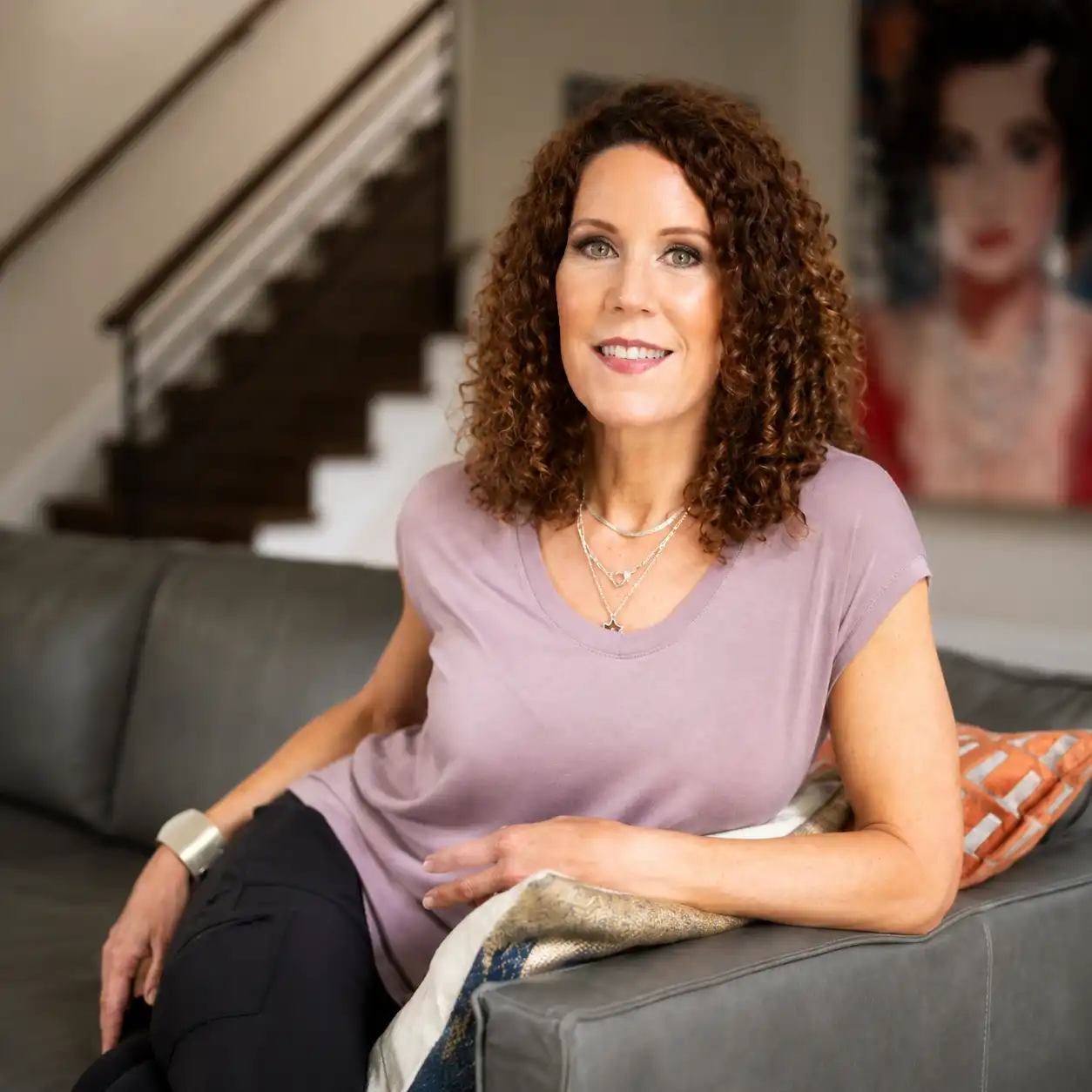



The Sleep Coach's Case for Quitting Sleeping Pills for Good
You lie awake replaying tomorrow's to-do list while the clock creeps past midnight, and you wonder if this is just your life now. If that sounds familiar, you are not the exception. Morgan Adams, a sleep coach and consultant, spent eighteen years learning that lesson from the inside before she ever coached a single client.
Morgan's insomnia started with a breakup and something called sleep onset insomnia, lying awake for two hours most nights waiting for sleep that would not come. Her doctor prescribed Ambien, and she took it regularly for eight years. Roughly eighty percent of people who use sleeping pills report next-day side effects like grogginess and brain fog, and Morgan was one of them. She often did not feel fully alert until close to noon, even while working a job that demanded she write press releases at a moment's notice. It took her boyfriend, now husband, telling her she turned into a zombie at night before she started tapering off the pills under medical guidance and rebuilding her sleep from the ground up.
The tool she leans on most now is CBTI, cognitive behavioral therapy for insomnia, the evidence-based approach that retrains your brain to associate your bed with sleep instead of anxiety, using techniques like stimulus control and sleep restriction rather than medication.
The data backs up what Morgan sees in her practice every week. Women are roughly 1.4 times more likely than men to experience insomnia symptoms, according to a 2025 gender-issues review in the Journal of Sleep Research, and adolescent girls become about three times more likely than boys once puberty hits and hormones surge. CBTI itself now shows effect sizes comparable to sleep medication, according to a 2025 evidence summary in Frontiers in Psychiatry, without the eighty percent side-effect rate Morgan lived through. Your sleep problem is not a character flaw. It is a fixable pattern, and the fix does not start with a pill.
TRANSCRIPT:
Erica: Hey, girl. By now, you know I have Her Collective, my online community for ambitious women who are done doing it alone. Her Collective is for the women who are smart, capable, and driven, but they find themselves stuck on the sticky floors like self doubt, burnout, and waiting for permission that quite honestly never comes. Inside HER, you get more than motivation. You get real support, real strategies, and real momentum.
Erica: We work on things like clarifying what you want now and what's coming next, building confidence without burning yourself out, navigating hard conversations, career moves, and leadership moments with clarity, and surrounding yourself with women who actually get it. This isn't about hustling harder. It's about moving intentionally with the right tools and the right people in your corner. If you're ready to stop spinning, start choosing yourself, and build a career in life that actually feels aligned, I'd love to welcome you inside Her Collective. You can learn more and join us at https://www.joinhercollective.com.
Erica: Because honestly, girl, you were never meant to do this alone. Do you struggle with sleep? If you answered yes, you should know that you are not alone. In fact, fifty nine percent of women report having troubles with sleep, be that falling asleep or staying asleep. I know I've struggled with both.
Erica: So when sleep coach consultant, Morgan Adams, reached out to me, I knew that I had to have her on the podcast. We talk about all things sleep, sleep medication, should you or shouldn't you? We cover screen time at night and why that is a miss. We talk about red light, blue light, and those bedtime routines. So if you make up one piece of that 59%, turn up the volume on this one so that you can start to rest up and recharge so you can keep being that amazing woman that you are.
Erica: Today's guest helps exhausted leaders like you and me get better sleep. And no, no, no. This is not an ad for Ambien or any other sleep aid.
Erica: Today, we have Morgan Adams with us, a sleep coaching consultant who is here to help all of us who struggle to get quality sleep on a consistent basis. Sleep is my favorite, y'all. I love a good bedtime routine, and I have struggled with sleep. So I am so excited that Morgan is here today. Morgan, how are you?
Morgan: I am good. Thank you for inviting me on. I am just thrilled to be here chatting with you about my favorite topic ever, sleep.
Erica: I love to sleep.
Morgan: With two peeps in a pod.
Erica: My bed is my favorite place, but I have never heard of a sleep coach before, so I want to hear, what is your story?
Morgan: Well, there are not a whole lot of sleep coaches out there, but there are more coming. My sleep story really started back eighteen years ago when I was having a huge bout of insomnia that really surfaced because of a struggle in a romantic relationship. But the problem with my sleep at that point was that I had something called sleep onset insomnia, which basically means you have a really hard time falling asleep. I would lie in bed at night most nights for two hours waiting for sleep to happen, and I grew very frustrated. So I went to my family doctor and shared my issue, and I was prescribed Ambien.
Morgan: And I thought, well, what other choices do I have? So I took it. I took it pretty regularly for eight years, and it helped me fall asleep more quickly, which was a relief. But I had some significant issues the next day with side effects. And as it turns out, lots and lots of other people are suffering from side effects.
Morgan: I believe it's something like eighty percent of people who take sleeping pills have next day side effects, like grogginess, difficulty getting out of bed, brain fog. Mine was so bad that I really didn't even feel like I was fully awake and alert until close to noon. I was in a job at that time that required me to be very agile, a public relations type of position where I had to write a press release at the drop of a hat if there was an issue coming up. I remember several times just being frozen at my keyboard because I just couldn't get myself rolling fast enough to do my work. And it got me into a bit of a pinch here and there.
Morgan: I just continued to take the pills because I didn't know of any other way to deal with my situation. Then eight years into that, I met my current husband, who was then my new boyfriend, and he gave of a pinch here and there.
Morgan: I just continued to take the pills because I didn't know of any other way to deal with my situation. Then eight years into that, I met my current husband, who was then my new boyfriend, and he gave me sort of a very loving wake up call. He said, you know, Morgan, when you take these pills at night, you kind of turn into a zombie, and it freaks me out. And I was like, oh gosh, that's not good.
Morgan: You know? So I felt like I kind of got called out, and it made me really stop and think about the longevity of taking these pills. What could these pills be doing to me? Because there were all these side effects. I would have late night eating episodes and, you know, what else could happen?
Morgan: So I decided to go off the pills. What I did was I just tapered down. I cut the pills in half and went through this process. And it is very important, for anyone listening, if they are taking sleeping pills, to taper versus just going cold turkey. What people really don't often understand is that you really need the guidance of the prescribing provider to give you that schedule of titration.
Morgan: It's also very helpful to have a sleep coach as well, to provide that accountability and support, because the physician isn't going to be checking in with you daily, obviously. I was able to do it on my own, and I slept pretty well for several years. Then there was a huge plot twist, and that plot twist was something that we all experienced collectively. That was March 2020, the month of the pandemic when everybody was confused as to what was going on. We didn't know which end was up, and my sleep started to suffer again.
Morgan: I was very concerned because I did not want to go down that route of full blown insomnia. So I started to Google sleep, how to sleep better, and I finally got my sleep back on track. I got an Oura ring to track my sleep, and things picked up quickly. What I ended up doing was just getting really fascinated with the concept that we could very quickly change the trajectory of our own sleep and make it better. So I just started organically sharing what I was doing with people on Facebook, and I was really shocked to learn that a lot of people were struggling at the same time that I was.
Morgan: I knew I wanted to help people with health. I just didn't really know how. And the sleep thing just gelled for me. I was like, okay, I'm really interested in sleep. I want to help women with their health. Sleep is the ticket. And then, in 2021, I launched this sleep coaching practice. So I have been extremely passionate in the past two plus years about helping women mainly get better sleep, overcome insomnia, and not be reliant on sleep aids. So it's been quite a journey for me. That's how I got here.
Erica: Well, I think it's so important because a lot of people don't talk about it. They just assume it's natural to really not have good sleep, ever. And especially women, especially women who have kids, they're like, well, I worry and the kids wake me up and this is just going to be my life now for the next twenty years. So we rely on sleep aids. I have taken sleep aids before. I've taken Ambien before. And the scary thing about that is, you talked about some of the side effects, but some people get into their cars and they drive and they don't even know it. And if a drug can do that, I can't imagine that the benefits of you just not being with it in your brain is better than not getting sleep. But what I'm really interested in, and I want to touch on, is you are diving into this area where you said there's not a lot of information out there. So when someone comes to you and they say, I need a sleep coach, what do you do? What does that process look like?
Morgan: So I really consider myself a holistic sleep coach, and what that really means to me is that I'm looking at all the different areas of your life. I have a pretty large toolkit of tools that I use, and a few of them are looking at nutrition, lifestyle, movement, your chronotype, which is essentially whether or not you're a morning lark or a night owl. And just looking at lifestyle, looking at morning routines and evening routines and how everything is pieced together. One of the really cool tools that I have been developing my skills for is something called CBTI, which is cognitive behavioral therapy for insomnia. It is really the gold standard treatment for insomnia, and it essentially relies upon making behavioral changes to your sleep wake cycle.
Morgan: You're essentially retraining your brain to learn how to sleep again, and the cognitive piece is challenging unhelpful thoughts and beliefs about sleep. So using all of these tools and being very mindful and thoughtful about which client would benefit from which tool, we're able to piece together a good protocol to get these clients of mine sleeping better. It's not an overnight process, really. It takes usually several weeks, maybe even a couple of months to get things back on track. And if you've had insomnia for years, I've had clients with insomnia for twenty years, that's a long time to have learned some unhelpful behaviors.
Morgan: It takes a while to unlearn some of these things. So it's not a one size fits all protocol, it's very tailored to the individual. Sometimes it takes a very short period of time to turn things around, and sometimes it takes a little longer. So that's generally how I work.
Erica: Yeah, this is fascinating for me because I fully subscribe to the cognitive behavioral therapy model and being able to mold your brain and change your brain. But I have never in my life thought about applying that to sleep. I've thought about applying it to all the other sticky floors in the world, right? Imposter syndrome, perfectionism, burnout, but never sleep. So dive in on that one for me for a little bit. If I'm somebody and I have all these terrible sleep practices, look, we'll talk about my sleep practices, I feel like I got down now a little bit. But before, I would drink a bottle of wine to help me fall asleep, and then I would go lay in bed. I'd often watch TV or hang out on my phone for a while until I felt tired enough to pass out, fall asleep, whatever you want to call it. And then I would usually wake up in the middle of the night, stay up for a couple hours, and then fall back asleep again, and never felt like I got good sleep. How would you go about retraining the brain on any of that?
Morgan: Well, your situation would be dealt with very differently than somebody who had insomnia. But with your situation, it would be a very behaviorally based type of scenario where we would work with you on reducing your alcohol intake. I just finished working with a client where alcohol was a bit of a sticky floor for her. She was drinking, like, two glasses of wine a night, and we were able to negotiate a little bit of a change for her plan. And she ended up drinking one to two glasses on the weekend.
Morgan: Right? Because I wanted her to have a clean week where she could really see the marked differences between her sleep on the weekends and the weekdays, and she was able to see that clearly. In fact, she even said something like, I'm not sweating anymore at night. I wonder why. And I'm like, it's probably because you're not really drinking anymore.
Morgan: So she wasn't able to make that connection because the sweatiness was just uncomfortable and messed up her sleep. So it's not a one size fits all. Sometimes their sleep hygiene is squeaky clean. They are doing all the things. They're not drinking. They're eating really clean, but they're still not able to sleep because they have something called hyperarousal, which is when your brain is kind of working overtime. So CBTI is really something that is more behaviorally based. One of the sleep doctors who I have learned from described CBTI in the most brilliant way, because a lot of times people think CBTI means therapy. This doctor said CBTI for insomnia is more like potty training and less like therapy. So I thought that was pretty brilliant, because most of the changes that you're making are behavioral in nature.
Morgan: So there are two main classifications of behavioral change in CBTI. One is called stimulus control. What we're really trying to do with stimulus control is pair your bed with sleep. We don't want you to lie in bed anxious and worried about sleep. The technique with stimulus control is generally, if you're lying in bed for, like, thirty minutes and you're not able to fall asleep, you should get out of bed and do something relaxing, like read a book in dim light in another room. And then when you become sleepy, return to your bed. So that's really retraining your brain on how to sleep. One of the other techniques is called sleep restriction. How you would deal with that is, oftentimes people who have insomnia are spending nine hours in bed to get six hours of sleep. So what we're doing is we're often having them stay up a bit later so that they become extremely sleepy, and they're able to fall asleep a little bit more quickly because they've built up such a huge sleep drive.
Erica: That reminds me of when I sleep trained my infant.
Morgan: Yeah, yeah.
Erica: And I have this picture where he looks so exhausted, but I was like, I'm gonna keep him up because the book said I needed to. And he was sleep trained. He was sleeping through the night by the time I went back. But that is exactly what that reminds me of.
Morgan: Well, so, essentially, those are the two main types of techniques that are used on the behavioral side of CBTI. And it's a very evidence based practice. It's been around since the eighties, so it's pretty effective for most people.
Erica: So let's talk about screen time, because I hear this all the time, about how you should not have your phone in your room. Any kind of blue light is really going to mess with your brain. But for the life of me, I've got to have it. It's got to be there.
Erica: Hey there, listeners. If you have ever felt like you're stuck in a place, held back by self doubt, perfectionism, or that pesky inner critic, you're not alone. We all face those sticky floors that keep us from reaching the heights we dream of. But guess what? It's time to shatter those limiting beliefs and toxic behaviors to uncover infinite possibilities.
Erica: My book, Glass Ceilings and Sticky Floors, is your ultimate guide to smashing through barriers, overcoming limiting beliefs, and stepping into your full potential. This book has been endorsed by none other than the great Mel Robbins, best selling author and motivational powerhouse. It's also been featured in Success Magazine, so you know it's packed with insights that work. Inside, you'll find real life sticky floor stories, practical strategies to help you navigate your own sticky floor moments, and a whole lot of inspiration to keep you climbing. This isn't just a book. It's your road map to success, confidence, and freedom. Grab your copy of Glass Ceilings and Sticky Floors today at https://www.ericaandersonrooney.com. Whether you're in the boardroom, the classroom, or just starting out, this book is for you, because no one, and I mean no one, deserves to stay stuck, no one deserves to feel small, and you have glass ceilings to shatter. Let's do this.
Morgan: So the blue light is not great for us, because it suppresses the melatonin we need to have at night. So I recommend blue blocking glasses to a lot of my clients. If they are using a screen in the evening, it can help mitigate that blue light exposure and block it. Now there is some debate as to how effective the blue light blocking glasses are, because we all have our individual differences. For example, even the thinness of our eye skin could contribute to how sensitive we might be to blue light.
Morgan: But I recommend the blue light blocking glasses sort of out of an abundance of caution. So that tends to be perhaps even more of an issue than the blue light itself. So I like to look at content from the lens of, is it a passive or an active form of content? A passive form of content would be maybe an app, like a breath work app or a meditation app, or TV. But then there's the more active forms of media, and that would be texting, social media.
Morgan: Those things can be causing a lot of reactivity and a lot of stimulation, because you're going back and forth. And, of course, if you're on social media a lot, it can be triggering. You see things you don't like, people get into arguments. So it's really more about being very intentional about the forms of media you're choosing to consume on your device. So let me talk about TV for a second, because I get this question a lot, and people are often quite shocked to learn that I, as a sleep coach, have an evening routine that includes, essentially, as part of my wind down, watching TV.
Morgan: Right? People are like, what? I get very sleepy when I watch TV. After about an hour, I'm like, yes, my eyes are drooping. I'm going to bed now. Here's how I watch TV without it interfering with my sleep. So I'm wearing blue light blocking glasses. I'm watching TV on an actual TV. Sometimes what people will do is they'll watch Netflix on their laptop with their laptop in their lap.
Morgan: That is way too close to be to your screen. So if you can have a decent distance from your TV, that's probably okay. And then I choose content that is not going to be super stimulating, scary, triggering. Have you heard of this series called The Handmaid's Tale?
Erica: Mhmm.
Morgan: Yep. Great content, but, jeez, triggering as hell.
Erica: I was like, not bedtime content.
Morgan: My sleep got very disturbed when I started to watch that and get into it. So I made the decision at that point to only watch things that were light, like Ted Lasso or cooking shows or decorating shows, things that are just kind of neutral or funny.
Erica: I was gonna say that's HGTV, something like that.
Morgan: Absolutely. So that is really, if you're going to watch TV without it ruining your sleep, those are really the tips on how to do it.
Erica: That's so fascinating to me, because I have always heard that it's just this blue light that is the problem. And I do understand that there's all that content, but sometimes I'll read on my phone or sometimes I'll read a book on my iPad. I'm still getting the blue light. When I think through it, and I think about the nights that I'm reading my book on my iPad versus watching TikToks on my iPad, the TikToks keep me up and going, and I want another hit of dopamine. And I'm watching them, watching them, and it'll be an hour of wasted life on TikTok, versus if I'm reading my book, it might be twenty minutes. I'm in the story, and I get sleepy, and I turn it off, and I go to bed. So the key is really that content piece of it.
Morgan: Yeah. And, to your point about reading on a phone or an iPad, we do have some control over the settings. We can actually manipulate our phones to have more of a warm screen. You can just go to your settings, it's fairly detailed, but it's available to look at on Google if you want to, but you can make your screen red. A triple click will make it red. So sometimes I will do that if, at night, I need to check something. I'll make my screen red for a few minutes so that I have no blue light coming from the phone. So there are workarounds to your screens, but you're right. I mean, those little dopamine hits that you get from TikTok or Instagram or whatever can be very alerting and really keep you up.
Morgan: I've had a lot of clients who've had a lot of success just by breaking up with their phone at night. What I really tell them to do, and it takes some discipline, is to put your phone in another room to sleep. Right? And if you need an alarm, orchestrate some kind of other alarm to wake you up. There are many, many different options available on the market.
Erica: You know, what's really worked very well for me is I actually invested in those Bose sleep buds,
Morgan: Ah.
Erica: put in my ear.
Morgan: And
Erica: because I sleep with my husband, and he snores. Y'all, he snores. And I am that mom that anytime I hear a creak in the house, it's a kid waking up. And sometimes they are just waking up to go to the bathroom and going back to sleep. It's fine. But every noise was getting me up, and so I was never sleeping because of that. It's not for everybody. A lot of people don't like to not hear the things around them. But for me, that has been a game changer.
Morgan: If you don't like the idea of something in your ear, you can also look into a noise maker. The one that I use is by a company called Yoga Sleep, and it's like the original OG, old school, you know, device. You plug it in. It's a real kind of basic thing, but it does the job quite well.
Erica: Yeah, I mean, I'm here for it. Like, I — and if you think about it, and I keep going back to my kids on this, because, number one, my kids sleep like rocks. You know? They get a whole night of uninterrupted sleep. And I get it that their brains do not have all of these years of poor sleep habits that you mentioned earlier, but we play white noise for them. We have a wind down routine. We do all of these things. So I guess my next question for you is, what would you tell somebody who is struggling with sleep? What should their wind down routine look like?
Morgan: Yeah. I think wind down routines are very, very important for all of us, and you made such a good point. A lot of moms will make great strides to have that perfect wind down routine for their children, yet they neglect doing one for themselves. I hear this all the time. So I think wind down routines are absolutely important, but I think that they are very personalized.
Morgan: But generally speaking, I think that when you're looking at things with a wind down routine, you want to make sure that whatever you're doing is relaxing and enjoyable and not stimulating, and that can vary from person to person. Very common things that people will do are reading, crafts, journaling, meditating, breath work. Those are all really popular choices. I would say to prepare for bed, it's really important to get your physical environment in good order. So you want to make sure that a couple hours or a few hours before bed, you start dimming the lights in your home.
Morgan: So if you have those overhead bright lights, you want to cut those off, probably put on a table lamp. You also want to make sure that the temperature of your bedroom is a little bit cooler at night. And the reason why we want our sleeping environment to be a little bit cooler is because our core body temperatures need to cool off by a couple of degrees to initiate sleep. The general consensus is your temperature should be, you know, sixty five, sixty six to sixty eight maybe, but it's really a personal preference. So it's really finding your sweet spot.
Morgan: There is no one temperature. But those are some ways you can kind of get your sleeping environment prepped. I actually have a free mini course that goes into morning and evening routines in-depth. That's available on my website. It really does go pretty deep into morning and evening routines and how to structure one for you if you're a newbie and need a little bit more guidance. But they are so very important.
Erica: I love that. And so I'm gonna take that away as, what I do for my children, I must do for myself.
Morgan: Yes. That's a great rule of thumb. That's a wonderful thing to follow.
Erica: Yeah. Well, Morgan, one of the questions that I always ask all of my guests here is, if you could go back in time to the Morgan that was really struggling with sleep, that was relying on sleep aids to get through the night and then struggling through the day, what would that one piece of advice be?
Morgan: This is gonna sound extremely simple, but looking back on some of the things that I was doing when I had insomnia, I had a clock next to me, and I would just constantly look at that clock. And the more I looked at that clock, the more anxious I would get. So as simplistic as it sounds, if you do have struggles with sleep or insomnia, it's really better to just not have a clock in your bedroom at all, because it doesn't really matter what time it is. You're gonna become more anxious if you do the countdown. So I would say that, well, my first thing would, I probably would have loved to have known about CBTI, but that wasn't introduced to me.
Morgan: And a lot of primary care doctors don't know what that is and rely on prescribing medications first line. So number one, I wouldn't have taken the pills. I would have done more research, found someone who provided CBTI. Sleep coaches didn't exist back then. And then, secondly, I would have just completely checked out that clock and not have been looking at it during the night.
Erica: Well, that resonates, because I remember sometimes waking up and being like, please only let it be midnight or something like that. And then I would be stressed because it was 3AM, and I was like, I'm like, it's fine.
Morgan: Yes. That's the exact same scenario that it would play out in my head. It really does us no good to see what time it is.
Erica: That's a good solid piece of advice.
Morgan: Yeah.
Erica: Well, Morgan, I'm going to link your free mini course so that anybody who wants help with their wind down routines, they can access it. They can find you. But where else can people get in touch with you?
Morgan: Yes. Well, I am pretty active on Instagram. My handle is morgan adams dot wellness. I do a lot of video content there, and I'm also on LinkedIn quite a bit. I'm under Morgan Adams. You can find me there. I also offer a free sleep clarity call for anyone who's struggling and needs a little bit of support, thinking that they might perhaps want to work with somebody. I will help you get to the root cause on our call and lay out a couple of next steps for you. So you can definitely reach out to me.
Erica: I love it. That's so awesome. Well, Morgan, thank you so much.
Morgan: Thank you so much.
Erica: Did you learn anything today about sleep that just really surprised you? I knew that little tidbit about screen time was so refreshing for me to hear. But it's going to be a behavior change to come out of that late night Instagram and TikTok scrolling. But if you enjoyed this episode, please rate, review, and subscribe to the show. You never know who may need to hear it. And when you do that, it helps it land in the hands of the person who needs to hear it the most. But one last thing, this is your reminder to stop putting a ceiling on what is possible and start breaking through it. I'll talk to you next time.
RESOURCES MENTIONED IN THIS EPISODE:
- Join HER Collective, Erica's community for women in corporate America ready to close their own AI gap and get more women into rooms of power.
- Follow Morgan Adams on Instagram, for sleep tips and video content.
- Connect with Morgan Adams on LinkedIn.
- Morgan Adams Wellness, home of her free mini course on morning and evening wind-down routines and her free sleep clarity call.
- Yoga Sleep, the white noise machine brand Morgan recommends for blocking nighttime noise.
- Glass Ceilings and Sticky Floors, Erica's book on smashing through limiting beliefs and toxic workplace behaviors, endorsed by Mel Robbins.
- Glass Ceilings & Sticky Floors, subscribe to the podcast so you never miss an episode.
RELATED EPISODES:
FREQUENTLY ASKED QUESTIONS:
Why do so many women struggle to fall asleep or stay asleep?
Women are roughly 1.4 times more likely than men to experience insomnia symptoms, largely because estrogen and progesterone directly affect the brain regions that regulate sleep. Hormonal shifts during puberty, pregnancy, postpartum, and menopause each bring their own sleep disruptions. Sleep coach Morgan Adams also points to hidden habits like nightly wine, screen scrolling, and hypervigilant mom brain listening for every creak in the house.
What is CBTI and how does it help with insomnia?
CBTI stands for cognitive behavioral therapy for insomnia, and it is the gold-standard, evidence-based treatment for chronic sleep problems. It works through techniques like stimulus control, which retrains your brain to pair your bed with sleep instead of anxiety, and sleep restriction, which builds up your sleep drive so you fall asleep faster. One sleep doctor describes it as more like potty training and less like therapy because most of the change is behavioral, not talk-based.
Should you take sleeping pills like Ambien to fix insomnia?
Sleep coach Morgan Adams took Ambien for eight years and experienced the grogginess and brain fog that roughly eighty percent of sleeping pill users report the next day. She stresses that anyone on sleeping pills should taper off under the guidance of the prescribing provider rather than quitting cold turkey, and that CBTI is a first-line alternative many primary care doctors never mention.
MORE FROM ME
Follow me on Instagram @ericaandersonrooney and @joinhercollective
SUBSCRIBE & REVIEW
If you loved this episode, please take a moment to subscribe and leave a review on Apple Podcasts. Your support helps us reach more women who need these insights. Thank you for tuning in to the Glass Ceilings and Sticky Floor podcast. See you next week!
Hi, I'm Erica!
In the last 15 years, I climbed to Chief People Officer, 6x'd my income, walked away from a culture that stopped matching my values, wrote two books, and built HER Collective to help thousands of women rise to power and lead in the age of AI. I've learned a thing or two about smashing ceilings and closing gaps, and Glass Ceilings & Sticky Floors is where I open the playbook, the receipts, and the real stories to share it all with you.
_JPG.jpg)