



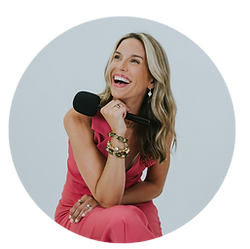


How an $80,000 Money Mistake Turned Tess Waresmith Into a Financial Confidence Coach
Have you ever told yourself I'm just bad with money? My guest this week, Tess Waresmith, believed that too, right up until a financial advisor she trusted put her twenty seven year old self into an annuity built for someone in their fifties. By the time she added it all up, a bad advisor and a bad real estate deal had cost her eighty thousand dollars.
Tess graduated into the 2010 recession, got rejected from more than thirty jobs, and ended up as an aerial acrobat on a cruise ship just to pay her bills. That unlikely gig let her save real money for the first time, so she handed it straight to a financial advisor because she did not trust herself to manage it. He was a fiduciary, legally bound to act in her best interest, and he still steered her into fee heavy products that were wrong for her age. She hit rock bottom in her twenties before she decided to teach herself everything he never explained.
So what is a sticky floor around money? It is the mix of inherited beliefs, like money is scarce or that's for rich people, that keeps smart, capable women from ever starting to invest, long before a glass ceiling is even in view. Tess says most of our money story gets written by the time we are seven years old, just from watching how our parents handled cash. She is not off base. The Motley Fool's 2026 research on women and investing found 64% of women have never invested at all, compared with 47% of men, and that women are 39% less likely to invest in stocks in the first place.
The gap is not about intelligence. It is about access and confidence. A HerWorth study by Beacon Pointe Advisors, which surveyed more than 10,000 women investors from late 2025 into early 2026, found only 31% of women feel highly confident managing their own finances, though that number nearly triples to 36% once a woman is the one actually making the financial decisions in her household. Tess proves the fix is not complicated. You can open a retirement account in ten minutes, invest with as little as ten dollars, and learn the basics in weeks, not years. Your money story was written for you before you were old enough to question it. This episode is your permission to rewrite it.
TRANSCRIPT:
Erica: Hey, girl. By now, you know I have Her Collective, my online community for ambitious women who are done doing it alone. Her Collective is for the women who are smart, capable, and driven, but they find themselves stuck on the sticky floors like self doubt, burnout, and waiting for permission that quite honestly never comes. Inside HER, you get more than motivation. You get real support, real strategies, and real momentum.
Erica: We work on things like clarifying what you want now and what's coming next, building confidence without burning yourself out, navigating hard conversations, career moves, and leadership moments with clarity, and surrounding yourself with women who actually get it. This isn't about hustling harder. It's about moving intentionally with the right tools and the right people in your corner. If you're ready to stop spinning, start choosing yourself, and build a career in life that actually feels aligned, I'd love to welcome you inside her collective. You can learn more and join us at www.joinhercollective.com.
Erica: Because honestly, girl, you were never meant to do this alone. Money, money, money. It makes the world go round. But have you ever had the belief that I'm just bad with money or I don't know how to invest my money or really any limiting thought or belief around your finances? I certainly have had my fair share, and I remember thinking that money would always be something that I had to really work hard for, that balancing checkbooks and keeping a super tight budget was always going to be in the cards for me.
Erica: And my friend Tess here was no different. She is here to share her sticky money story with you, how she lost $80,000 before she took control of her money mindset and how she helps women start investing today. You are going to want to take notes on today's session because Tess dropped some major knowledge bombs on us today. So make sure you have that handy.
Erica: Friends, today we have Tess Waresmith with us, and Tess is super successful in her career as a VP of ops and technology, but that's not what she's here to talk about today. Tess has a passion for helping you break free from the sticky floor of money. And you might be asking, how is money a sticky floor? But I'm gonna let her explain. So, Tess, welcome. How are you?
Tess: I'm awesome. Thank you so much for having me. I love your podcast so much.
Erica: Thank you. Well, I'm super pumped because, number one, everybody needs money. Money is what makes the world go round. But before we dive into how money is a sticky floor, what is your come up story?
Tess: I have probably two sticky floors in this story. The first one is I graduated into a recession in 2010. So couldn't find a job. I got rejected from at least 30 jobs, and I couldn't find anything. And I was super frustrated because I just graduated from university, and I did everything right.
Tess: I had the good grades, couldn't find a job, and ended up working on cruise ships because of that as an aerial acrobat. I was an athlete my whole life. I was a springboard diver, and I had retired after college. And I was like, I'm never gonna do that again. And then I needed money, and the only job I could find was being an actual circus performer.
Tess: So that was my first job. And so that was probably my first sticky floor. But then after, the wonderful thing about that job besides the fact that it was just such a unique experience was that I was able to save a lot of money because I worked on a cruise ship. So I had meals paid for, board paid for. I got hazard pay because the show is kinda dangerous.
Tess: And that was awesome for me because I grew up with a fear of money. I knew that I wanted to make sure I was financially stable. My parents were divorced collectively, like, nine times. So I was very nervous about having enough money and, you know, making sure that I could take care of myself no matter what happened. I grew up with that feeling that that was important.
Tess: But I didn't know how to do it. I didn't think I was smart enough to do it. So instead of learning how to manage my money on my own, once I had some money, I hired a financial adviser to do it for me. And while I believe that this person had my best intentions in mind and they were a fiduciary, which is a financial adviser that has a legal standard of obligation to act in your best interest, unfortunately, they did not end up putting me in investments that were very expensive, sold me products and an annuity that was not suitable for someone my age. I was 27.
Tess: An annuity, this particular annuity, was more suitable for somebody in their fifties. And so after a few years of starting to figure out what they were doing and how it was negatively impacting my money, all in, I probably lost tens of thousands in fees, the opportunity to grow my money because my money was locked away in an annuity that I can't touch forever, by the way. Like, there's no way I can get that money back. I've tried everything, and a bad real estate investment as well. So all in, probably $80,000 down the drain in my twenties for somebody that was really afraid of money.
Tess: So that was rock bottom for me. And then the good news about this story is that fortunately, it happened in my twenties. So I have plenty of time to turn it around. I committed to educating myself, and I learned that investing is not nearly as complicated as we've all been led to believe for a thousand reasons. I drown myself in books.
Tess: I talked to millionaire investors, and I made this great discovery. And now I feel morally compelled for everyone to know that it is far easier than you think to grow your money through investing, and you are totally capable of doing it. So that is my come up story.
Erica: And now you do all of this. You share all of this with everybody. I will say you've got some amazing, like, social media reels and all of those things where you talk about just different quick tips and tricks that people can do to just bite sized educational pieces, which I think is awesome. So I kinda wanna talk about this because it, like, hits real close to home with me. Like, it probably does a ton of people, but I grew up always thinking, like, I would never have a lot of money because that just that was for the air quote rich people. Right? And do you see a lot of that? Like, people just believing that they'll never have money?
Tess: Yeah. That's one of the biggest beliefs is that it's just not possible for somebody like me to have money, that it's a scarce resource. The other thing I see a lot is people starting to make money and then feeling guilty or greedy about it, so they don't put in the work to actually find other ways to grow their money. Another thing I hear all the time is that I'm bad at money, and so I need somebody else to manage it for me, or I'm just bad at money and that's, like, who I am at my core. Where a lot of the times, the people that I'm talking to have never really dove into the psychology of what their relationship with money is, what money story they're telling themselves, what narrative they've created around money.
Tess: And there's a lot of really interesting studies that your relationship with money is largely created by the time you're seven years old, just by what you see with your parents and how you interact with other people and what you see in the world around you and you comparing yourself to, you know, if your friend Timmy's mom picks you up in, like, a Porsche, a nice car. You know that by the time you're seven years old. So you're getting all these bits of data that can form your relationship with money, and then we don't really talk about that. So we don't unpack it. So years later, that might prevent you from going for the promotion because you don't think you deserve that or asking for more money or even realizing that you should be investing because you're like, oh, that's for wealthy people.
Tess: You can start investing with $10. You don't need a lot of money to start investing and growing your money in the stock market. And, also, it doesn't take years to learn. You can do it in very simple ways in a matter of weeks. So there's so many myths when it comes to money and investing and also so many limiting beliefs that we've created just based on our upbringing, and then add on the socioeconomic factors, and it's a whole big thing.
Tess: So there's a lot of reasons why people have strange relationships with money. So, yeah, I see it a lot.
Erica: So how do you start to break free from this sticky floor of money? Because several of the things you said about, like, well, I'm bad at money or I shouldn't ask for that much. All of it. How do people break free from it?
Tess: Yeah. There is a process to do this. And the first thing, it's just like anything else. Awareness is the first step. Right? So in this, I have the savvy investor starter pack guide. And in it, I've added a list of questions to ask yourself about money and things to pay attention to when you transact money. So it's work just like anything else. Right? You have to start bringing awareness to when you transact, when you buy something, how did that make you feel?
Tess: Why did you buy it? And being intentional enough with your actions and pausing long enough to understand why you're buying what you're buying or why you're afraid if you get a bill and immediately have anxiety. Like, what is that? Do you actually not have enough money to pay for it, or do you just have a fear of money? And so the other thing is unpacking some of the beliefs of your parents.
Tess: Like, did your parents tell you that there's not a lot of money you have to be careful? Like, make sure you hoard on to stuff, or you could have the same reaction as your parents or the opposite, and then you could spend a ton of money because of that. So there's a lot of questions you can ask yourself and journal on that will help you start to unpack these things, and it's super powerful to understand where your money beliefs come from, and that's the first step. And then you can work on unpacking them through education and understanding what opportunities are available to you, which there are
Erica: many. I love this. And it's got me thinking about, like, my own money relationship in partnership with my spouse because he and I look at it two very different ways, and I'm just gonna take tax time as an example. So many years ago when I was fresh out of college, making probably, like, $50,000 a year, you know, I'd get my tax return of, like, $3,000, and I thought I was rich. Right?
Erica: Now I gotta pay the government a lot of money every time tax season comes around. And it's so interesting because my husband's been with me for both parts of it. And, of course, when we would get our return, it was like, what are we gonna do? And now we pay taxes, and he just gets so stressed to the max. It's like this whole process of prepping the tax documents, and it's so stressful.
Erica: And then figuring out what it is we owe and the projections and then actually having to write the check. And then once he mails it off, he can breathe again. But I always say to him, like, would you rather go back when we're making $50,000 a year just to get $3,000 in return, or would you rather be in the seat we are today where we are much more financially comfortable, but we have to owe. And I think it's a very big conundrum for him.
Tess: Yeah. It's fascinating psychology around the things that people will do with their money that they think, or that they think is gonna save them money. Or, for example, related to what you just said, there's this zero tax myth. Right? That if you don't pay any taxes, like, you've beat the system.
Tess: But the goal shouldn't be to not pay taxes. The goal should be to reduce your taxes and earn as much as you possibly can. Like, that's the goal. So there is so much psychology around all of these things, and that's, like, such a perfect example, Erica, of, like, something that's probably worth unpacking just to be like, okay, why are we anxious about this?
Tess: We have to pay more because we're actually fucking crushing it. So, like, that is a good thing. But it is really interesting psychology. Even when I work with people, investing in retirement accounts is great because it's tax free, right, or tax deferred. So retirement accounts are one of the things most people don't realize about retirement accounts is it's great for making you money so that you can retire, but the most important value out of those accounts is that it helps you save on taxes.
Tess: And people will learn that, and they get excited about that. And then once they start maxing out their retirement accounts and they can invest in brokerage accounts, they'll say, well, I don't wanna pay the taxes. And then we have to talk about, okay, a brokerage account is an investing account that doesn't have a tax advantage. But if you're paying taxes from that account, that means you put money in, and now you have more money. You have to pay that, some of that, to the government.
Tess: So that's not a bad thing, but I have that conversation with people all the time. It's super fascinating.
Erica: I believe it. And that kinda leads me to this next question of, like, why do I need to know all these things if I have a financial adviser? Right? So I've got somebody. I meet with them quarterly. He does all the things for me. Why do I need my own financial education?
Tess: Sure. So, you know, I've spent a lot of time reflecting on this myself because I don't want my negative financial adviser story to negatively, you know, how I talk about financial advisers. So I'll say this. I came from a place where I was like, they're all bad. It's all horrible.
Tess: And now I'm very much in a place of there are some amazing advisers out there. There's also some that are not amazing. And, unfortunately, with all the people that I've coached, all the women that have come through my small group coaching program, a lot of them aren't working with financial advisors that are acting in their best interest or not paying enough attention to them because they're not the highest net worth client. So a few of the things that are really important to understand when you're working with a financial adviser, if you choose to, is understanding what value they're bringing. And you can't understand that unless you have a basic education.
Tess: You can't know if the returns you're getting on your money are good because if you don't understand the average return of the stock market. You can't know if they're acting in your best interest and helping you save money on investment fees if you don't understand the basics of investment fees. You can't understand how much you're paying them if you don't understand what that fee structure looks like and how that adds up over time. So I will say that there are some great financial advisers out there, but regardless of whether you are working with one or not, you need to have a basic financial education so you can understand the trade off. A lot of financial advisers will charge a percentage of your money.
Tess: It's called assets under management, so that can be anywhere between 1 and 2%. And if somebody is a great financial advisor and they are helping you with a bunch of different areas of your financial world and you're meeting with them and they're answering your questions and you know that your returns are competitive with the average return of the stock market or ideally better, then that's a good investment. But if they're not, then you are paying thousands and thousands of dollars because just like your money compounds in the stock market, the fees you're paying your adviser compound as well. So if you're investing consistently over decades, you're gonna end up paying a financial advisor hundreds of thousands of dollars, not tens of thousands, hundreds of thousands because of compound interest.
Tess: And so I say all that not to dissuade you, but to make sure that everybody gets a basic education to understand what does investing look like if I do it on my own, if I do it with, you know, a hybrid, somebody maybe a flat fee financial adviser that works with you on a plan, and then you go off and execute the plan, or a full financial management and having, paying for, assets under management.
Tess: So that's why I feel like the education is super important mainly because if you don't understand the basics, no one cares about your money more than you. These advisors have dozens and dozens of clients. And if you're not their highest net worth client, you might not be getting paid attention to. And I've had many students, like, I wish it was just one, but it's a lot, that have investments that aren't returning the average of the stock market, which anyone can invest in.
Tess: I have students that have had financial advisers that haven't even invested their money for a decade in a Roth IRA. Their money was sitting in cash. So I say all this intentionally to scare you a little bit just because if you don't understand the basics, you won't know what they're doing, and they don't care about your money as much as you do. And that is the bottom line. So I say all that knowing that there are amazing financial advisors out there that I know and love and like and trust, but they're not all going to act in your best interest.
Tess: Yeah.
Erica: I think that's a fair statement. I mean, that's with any profession. Right? Personal trainers, doctors, nurses, lawyers. Like, there are gonna be some that are truly ethical and very good at what they do, and then you're gonna have some that are just doing the bare minimum or less. So
Tess: Yeah. And the other issue with this is it's a conflict of interest too. Like, if they're getting assets under management, you know, they're getting money, the more money you give them. If they're selling you products, they get commission on that stuff. I'm not saying any of that is bad. It might be a great product for you, but you better be damn sure you understand, like, what it does and why and how it fits into your plan.
Erica: Hey there, listeners. If you have ever felt like you're stuck in a place, held back by self doubt, perfectionism, or that pesky inner critic, you're not alone. We all face those sticky floors that keep us from reaching the heights we dream of. But guess what? It's time to shatter those limiting beliefs and toxic behaviors to uncover infinite possibilities.
Erica: My book, Glass Ceilings and Sticky Floors, is your ultimate guide to smashing through barriers, overcoming limiting beliefs, and stepping into your full potential. This book has been endorsed by none other than the great Mel Robbins, best selling author and motivational powerhouse. It's also been featured in Success Magazine, so you know it's packed with insights that work. Inside, you'll find real life sticky floor stories, practical strategies to help you navigate your own sticky floor moments, and a whole lot of inspiration to keep you climbing. This isn't just a book.
Erica: It's your road map to success, confidence, and freedom. Grab your copy of Glass Ceilings and Sticky Floors today at www.ericaandersonrooney.com. Whether you're in the boardroom, the classroom, or just starting out, this book is for you because no one, and I mean no one, deserves to stay stuck, no one deserves to feel small, and you have glass ceilings to shatter. Let's do this.
Erica: So I do wanna talk a little bit about the 401k because 90%, well, I guess I'm just making up a stat in my head, but I believe that everyone knows about a 401k. They've got it if their company offers it, and, like, that is the only way to retire. And, I mean, I've got a 401k. I've had one since I was in college. But is that the best tool for retirement, or what's your thought on that?
Tess: I love 401k's. I think it's an awesome tool for retirement. But similar to financial advisors, getting a basic education on the details of a 401k and how you can optimize it is super critical. So, for example, when you set up your 401k, you'll wanna understand, do you have a match? You'd be surprised, Erica, how many people, and just in case anyone doesn't know what that is, if you have a match, that means your company is going to pay you more money to contribute.
Tess: They're gonna match a certain percent of your contribution. And I explained that because not everyone does that. And in the last company I worked at, of all the people in the company, only 40% were taking the match. 40%. That is free money.
Tess: That is part of your compensation. So that's the first thing. Hopefully, you're all taking the match. The second thing you'd wanna make sure is to understand what investments you're picking and if they're aggressive enough for you. A lot of people don't know what they're investing in in their 401k.
Tess: They just choose, you know, whatever target date fund looks right, which is one of the funds that has the numbers on it with the date you're gonna retire. It's an easy investment, but a lot of times, those investments have super high fees. And, you know, we've already talked about how fees can compound just like your money compounds when it grows in the stock market. So if you are investing in high fee investments in your 401k, you are definitely losing out on some growth. And there's usually enough options in your 401k where there are some great investments that are exactly the same as the target date, but just have half the fees or less.
Tess: So understanding enough to be able to select a few investments in your 401k that are aggressive enough, meaning you're investing enough in stocks and that don't have high fees, can mean the difference of, again, tens, potentially hundreds of thousands of dollars in retirement. And to learn that takes a matter of weeks. You don't need to be an economics professor, get a finance degree. You just need a basic understanding of different types of investments, index funds, mutual funds, like, very high level, and you can start to understand what would be a better fit for you. So to answer your question, I think the 401k is a great way to build wealth.
Tess: It's not the only way. And I will also say that when you leave a company, making sure you either take your 401k with you or you roll it over into an IRA is another really, really important consideration. There's over a trillion dollars of 401k money that's unclaimed, and I've actually had clients, like, they've been like, oh, I have, like, this much money in this 401k. It ends up being a lot more money.
Tess: They have a hard time finding it from HR because the company's turned over since they left. So if you have an old 401k, you need to go get it. I can share a link that will help you find it if you don't know where it is. And the reason that's important is because there are fees for the investments, but all 401k's have administrative fees as well. So if you leave your 401k with your old employer, you're paying them to hold on to your money for you, and you don't need to be doing that.
Tess: So those are just some examples of, yes, a 401k is awesome because it's automated money that is tax advantage. It's helping you save on taxes. It's helping you grow for retirement, but there are a few ways to optimize it that could change the outcome of how much you have in retirement significantly. So a 401k is one, and then most people should have more than one retirement account. You should have a 401k and an IRA of some kind.
Tess: IRA is individual retirement account. You can have both. Both of them are gonna help you save on taxes, and both of them are going to help you save for retirement. So a lot of people just stop at the 401k, but you should be looking at an IRA too because there's advantages to having both.
Erica: What I will tell you, and this is my embarrassing money story, is when I first got a 401k, I had no idea what a target date fund was. I was just like, click click click click click click. Like, literally lighting it up like a Scantron from back in the day when you were just creating a test. Okay? So make sure you know that. If you don't know what it is, like, just Google it real quick. But the second thing that I would love to add on here that
Erica: I don't think a lot
Erica: of people know is the power of an HSA too, because that saves you money on taxes, and you don't have to use your HSA now. So, like, if you can pay for your medical expenses out of pocket, then you have that, which is almost like a second retirement account. You save that for when you don't have your income coming in because you're retired and you're older, so you have more medical expenses. So, like, let that grow and only use that for when you're retired. So many people are like, oh, I'm just gonna use it because I had all these medical expenses.
Erica: If you don't need it, don't touch it.
Tess: Yes. That is a huge pro tip. The HSA is the best one because of the triple tax advantage. And then people say, well, how do I avoid taxes altogether? And this is a crazy hack.
Tess: But if you save your receipts throughout your life, you can technically use that receipt to withdraw money tax free, like, years later. So it does take a little bit of organization to do that, so you have to make sure that you organize your receipts. But yeah. Absolutely, Erica. That's a great call.
Tess: HSA is an awesome investing tool if you have the option to get one through a high deductible health plan.
Erica: I love it. So one of the things that really scared me when I was early in my money career, I suppose, is how I'll put it, is that I just don't even know how to invest. So I would never even touch it. Like, I would hear about people investing in the stock. I would hear about people buying real estate or doing all these other things.
Erica: And, like, I think it's important, but it just sounds so complicated. So is it or is it
Tess: not? It's not complicated in my mind. It feels complicated because there is so much financial jargon because we don't learn this information in high school or college. So it's totally a foreign concept. It feels like a foreign language.
Tess: But if you can find someone to translate the words for you and explain it to you in a way that's digestible and, you know, not condescending, which is what we get a lot of times. A lot of people say this is too complicated for you to understand. It's actually very straightforward. There are different types of investing. You know, a lot of people think that investing is like picking the right stock at the right time and investing in the stock market at a certain time.
Tess: And the irony is that people that do that actually lose money. The best way for most people to invest is to invest consistently over a long period of time in really simple investments. And so, no, it's not complicated, Erica, but it is reasonable if you're sitting here being like, I don't believe that. Like, it's reasonable if you believe that it's complicated because everything is telling us, everything in the media is telling us, it's complicated. Every day we get news that, you know, the stock market's up.
Tess: The stock market is down. The Fed is raising interest rates. All this stuff that would seem like you need to know that to invest effectively, but you don't. Because at the end of the day, nobody knows what the stock market is going to do. But what we do know is that over time, the stock market has gone in one direction.
Tess: It's gone up. And so if you can invest using a really simple strategy and invest consistently over time, you get to gain from compound interest. Investing is not necessarily about being the most clever person picking the right stocks. It's about taking advantage of compound interest over a long period of time. And so once you learn that, then you start to learn that there are really simple investments called index funds that allow you to invest in a whole bunch of companies at once.
Tess: So instead of trying to go in and pick stock picks and time the market, you can invest in a couple funds or even one fund that holds hundreds or even thousands of stocks, and then get the average return of the stock market with that fund. And the average return of the stock market historically has been 10%. So that is a pretty good return on your investment for not doing a lot of work. So, no, it doesn't have to be translating.
Erica: So I would say translating and patience.
Tess: Yes. Patience too. Understanding, like, if anybody tells you, like, this is a get rich quick scheme, like, run the other direction, that is not investing. And most day traders, and by most, I mean, ninety seven percent of day traders lose money.
Tess: Most people that try to time the stock market have lower returns. The people that get the best returns, by the way, women get better returns than men as investors because they trade less and they try to be less clever about it. So the people that do the best are the ones that are consistent, and they don't try to buy low, sell high, none of that. They're investing consistently over a long period of time. And, you know, ten, twenty years, your money starts to compound significantly without doing a lot of work, but you have to be patient.
Erica: So how can you get started investing if people are listening to this and they're like, okay, now I'm revved up, I'm gonna educate myself, what can they do?
Tess: Sure. So I'm gonna give you four high level steps. So the first step is to set goals. Like, make sure you know what you wanted to do with your life. Because if you, for example, wanna buy a house for the next three to five years, that's money that you don't wanna invest. So the first thing you need to do is figure out what your life is gonna look like, what do you wanna save money for in the near future, big purchases, and then anything beyond that you can invest.
Tess: So that's the first thing you need to do, is figure out what are you doing with your life. The second thing you need to do is figure out how much you can invest per month if you wanna invest beyond your 401k, and that would involve a spending plan. So figuring out how much do you need for expenses, how much do you need for, you know, discretionary purchases, whatever that is, and then how much money do you want to spend on future you? Like, how much money do you want your future self to have?
Tess: And I like to think about it that way because I think a lot of people feel like it's restrictive to invest money because it's money that they're not gonna touch for a while. But what you're doing is you're paying your future self to have more flexibility and more options. So when you think about it that way, you'll probably end up investing more. So that's the second step, is figuring out how much, in addition to whatever you might be doing now, you wanna invest. The third step is to pick a retirement account if you're not already maxing out retirement accounts, like an IRA of some kind.
Tess: These accounts, you can open a Roth IRA is a great account if you qualify. If not, there are other accounts. You can open a brokerage or IRA in ten minutes. You just need your Social Security number. You can go to Fidelity or Charles Schwab or whatever brokerage.
Tess: A brokerage is just a place where you can open up accounts and buy and sell investments. So you can go to any brokerage and open up a retirement account or a brokerage account. And then the last step is to set up automated investments. So you have your amount of money that you wanna start investing per month. You have the account you wanna invest in, whether that's a retirement account or a brokerage account, and then you choose your investments.
Tess: And this is the part where everyone goes, this is gonna be so hard, I don't know how to do this. And, actually, the first three steps are harder than this last step. Because once you learn about index funds, and by the way, just to break that down a little bit, index just means list. So if you've ever heard of, like, the Nasdaq or the S&P 500, those are what's called indexes, stock market indexes.
Tess: And they're just a list, or a group of stocks, used to measure the performance of the stock market. So, for example, the S&P 500 is just a list, a group of the top 500 largest US companies. And rather than trying to pick specific companies in that top 500, or in general, you can buy one fund that holds all 500 of those companies. And these are companies you've heard of, Home Depot, Microsoft, Alphabet. Right?
Tess: So that makes investing really easy because if you wanna be a passive stock market investor, once you figured out your amount and what type of account you're going to open, you can set up an automated contribution to an index fund of your choice, which could be a total stock market index fund, which holds every single stock in the United States. You can invest in that in one fund or an S&P 500. If you want an easy portfolio, you can Google three fund portfolio, and it's just three index funds, a US fund, an international fund, and a bond fund. So that's really the four steps. And I teach this in a matter of weeks, not months.
Tess: It takes obviously a little bit more education to make sure you pick the right retirement account, you figure out the right amount, and you choose index funds that make sense for you. But doing it in those steps actually makes it really straightforward and easy to get started, and you can do it in a matter of weeks. So the sooner you get started, the better, because you need that patience, right, that we talked about earlier. You need to get started now because compound interest is super valuable. So I would encourage you, if this sounds like something you wanna do, to not put it off, because every time you put it off, you're actually losing out on an opportunity to build wealth.
Erica: And I would say everybody should want to do this because we all need multiple revenue streams. Right? That corporate job that you have, that can be gone in a minute. So make sure that you have multiple revenue streams, one of it being your investments. So, Tess, you have dropped a plethora of golden nuggets today.
Erica: One of the questions that I always ask my guests is, what would you tell yourself, the Tess from years ago who lost $80,000? Oh my god, that gives me stress and anxiety right now, $80,000. What would that one piece of advice be that you would give her today?
Tess: Invest in an education. I wish I had spent a couple thousand, even, so here's the crazy part of all this. I could have read a book and learned how to do this myself and saved thousands of dollars. I could have, or at least known, you know, what was going on. So I would have paid a lot of money to get a basic financial education, a basic basic.
Tess: I'm not talking about something crazy. I'm not talking about a master's degree in finance. I'm talking about a couple courses and a book or a finance coach or getting with the type of adviser that's gonna actually teach me what's going on. Education. That's the number one thing I wish I had done.
Tess: Because at the end of the day, you know, the whole reason that we're talking about money and why I'm so passionate about this subject is not because I wanna be wealthy so I can, you know, buy Ferraris and hang out with my friends in their mansions. Like, I don't care about that. I've heard enough stories of women staying in jobs because they don't feel like they have the financial flexibility to leave, or staying in a relationship because they're afraid of figuring out how to financially take care of themselves. Not chasing their dream. Whatever dream is in them, that's for them, but they're not chasing it because they're afraid of how to make their money work for them and how to figure out how to make it work with their current income, or whatever it is.
Tess: That's the kind of stuff that can change your life. Money is a tool. And people always say, well, money doesn't buy happiness. And I get a lot of trolls on social media telling me, like, you know, giving me shit for posting about money, money isn't everything.
Tess: I'm like, but it kinda is, because money gives me safety. It gives me security. It gives me freedom. It gives me optionality. It gives me influence.
Tess: It gives me impact. It gives me the ability to donate to causes that I care about. So that is why we're talking about this. So if I could go back in time, I wish I would have gotten an education about money, and I would have paid thousands of dollars for that.
Erica: You know what? I was trying to guess what you would say, and that was not it, but that is hands down the best answer.
Tess: Okay.
Erica: Hands down. And then my last question is, you know your shit. Right? Well, that's more of a statement. But if you hear this and they're like, I need to work with Tess because I've gotta get my shit together about my money story, and this is super empowering, how can they work with you? Where can they find you?
Tess: Sure. So the best thing I would recommend is that I have a free guide that's going to help you get started. It's called a Savvy Investor Starter Pack, and it's gonna be in the show notes, or you can go to moneyconfidentcoach.com/savvy. And in that guide has a lot of the stuff we touched on today, even the prompts for working on your money mindset. It has different types of retirement accounts.
Tess: It even has a video of the most common investing mistakes, and many of which I have made. So if you wanna avoid those mistakes that cost me a lot of money, download that guide. It'll be in the show notes. And then I also do tons of free workshops all the time. So when you grab the guide, you'll be on my email list, and I'll share when I do another free workshop.
Tess: So that is definitely the best place to start.
Erica: Perfect. Start with that education with Tess. Alright. Thank you so much. This was awesome.
Erica: I know everybody's gonna find this so valuable, so I appreciate your time.
Tess: Thank you so much, Erica. I appreciate you having me, and I love your podcast. So thank you so much.
Erica: I told you you were going to learn so much in today's episode with Tess. She has made me feel so empowered to just dive head first into investing and finances and really taking ownership of all things money mindset related. So thank you for listening. I'm so glad that you tuned in today, and I hope that you take some of Tess's actions that she laid out for us. And one last thing before you go, if you're not following me on LinkedIn, Instagram, and all the socials, please do, because there's a ton more content just like this.
Erica: And remember, stop putting a ceiling on what is possible and start breaking your limits.
RESOURCES MENTIONED IN THIS EPISODE:
- Ready to break free from your own sticky floors and get more women into rooms of power? Join HER Collective, Erica's community for women in corporate America.
- Never miss an episode of Glass Ceilings & Sticky Floors.
- Grab Erica's book Glass Ceilings and Sticky Floors, endorsed by Mel Robbins, for more on smashing your own limiting beliefs.
- Follow Tess Waresmith on Instagram for bite sized investing tips and money mindset reels.
- Connect with Tess Waresmith on LinkedIn.
RELATED EPISODES:
FREQUENTLY ASKED QUESTIONS:
What does it mean if money is your sticky floor?
A money sticky floor is the mix of inherited beliefs, like money is scarce or investing is only for wealthy people, that keeps you from ever starting to build wealth. Financial coach Tess Waresmith says most of these beliefs form by the time you're seven years old just from watching your parents handle cash. Naming the belief is the first step to breaking free of it.
How much money do you need to start investing?
You can start investing with as little as $10. Financial coach Tess Waresmith teaches that investing consistently in simple index funds over time matters far more than the size of your first contribution, and that most people can open a retirement account and pick their first investment in under ten minutes.
Do I still need to understand money if I have a financial advisor?
Yes. Tess Waresmith lost $80,000 after a fiduciary financial advisor put her in a costly annuity that was not right for her age. She teaches that a basic financial education is the only way to know if your advisor's fees and returns are actually serving you, whether or not you keep working with one.
MORE FROM ME
Follow me on Instagram @ericaandersonrooney and @joinhercollective
SUBSCRIBE & REVIEW
If you loved this episode, please take a moment to subscribe and leave a review on Apple Podcasts. Your support helps us reach more women who need these insights. Thank you for tuning in to the Glass Ceilings and Sticky Floor podcast. See you next week!
Hi, I'm Erica!
In the last 15 years, I climbed to Chief People Officer, 6x'd my income, walked away from a culture that stopped matching my values, wrote two books, and built HER Collective to help thousands of women rise to power and lead in the age of AI. I've learned a thing or two about smashing ceilings and closing gaps, and Glass Ceilings & Sticky Floors is where I open the playbook, the receipts, and the real stories to share it all with you.
_JPG.jpg)