


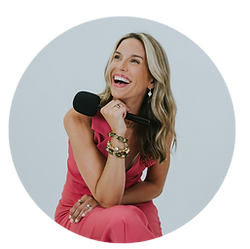


Angela Chee: Why Being the Only One in the Room Is Your Superpower
Look around the room you were in last week. Were you the only woman? The only person of color? The only one who didn't quite fit the mold? My guest this week, Angela Chee, spent decades being that person, the only Asian American woman on air at some of the biggest stations in Los Angeles, and she just spent four years researching why that feeling might be the most powerful thing about you.
Angela grew up an Asian immigrant kid in the suburbs of Los Angeles, watching Connie Chung on the nightly news and thinking, that could be me. She built an entire career on that image: news anchor and reporter in Los Angeles and San Diego, host for E! Entertainment and HGTV, the launch anchor for Entertainment Tonight China. By 27 she had reached the pinnacle of the biggest media market in the country. Then a voice coach asked her one question that cracked the whole thing open: does being an Asian woman hold you back?
That question became the seed for her book, The Power of the Only, and for the framework she now teaches through her company, YOU, Amplified. Being "the only" isn't a weakness to push through, it's a strength most women never learn to use, because they're too busy trying to disappear into the room instead of owning it. That framing matters more than ever. Lean In and McKinsey's 2025 Women in the Workplace report found that for every 100 men promoted into management, only 82 Asian women and Latinas make that same step, one of the sharpest promotion gaps in the entire study. Angela isn't just talking about a feeling. She's talking about a room women of color are still fighting to get into.
Angela built her five principles, own your opportunity, own your power, own your voice, own your communication, and own your future, after realizing most women never get told the data behind their own fear. Take the spotlight she says every one of us feels the second we walk into a room where we're the only one. Cornell psychologist Thomas Gilovich actually measured that feeling: in his landmark study, people guessed 46 percent of a room would notice something embarrassing about them, but only 23 percent actually did. Half the spotlight you're standing under exists only in your head. In this episode, Angela walks through exactly how to use that gap, and every one of her five principles, so the next room you're the only one in becomes the room you own.
TRANSCRIPT:
Erica: Hey, girl. By now, you know I have HER Collective, my online community for ambitious women who are done doing it alone. HER Collective is for the women who are smart, capable, and driven, but find themselves stuck on the sticky floors like self-doubt, burnout, and waiting for permission that quite honestly never comes. Inside HER, you get more than motivation. You get real support, real strategies, and real momentum.
Erica: We work on things like clarifying what you want now and what's coming next, building confidence without burning yourself out, navigating hard conversations, career moves, and leadership moments with clarity, and surrounding yourself with women who actually get it. This isn't about hustling harder. It's about moving intentionally with the right tools and the right people in your corner. If you're ready to stop spinning, start choosing yourself, and build a career and life that actually feels aligned, I'd love to welcome you inside HER Collective. You can learn more and join us at www.joinhercollective.com.
Erica: Because honestly, girl, you were never meant to do this alone. Have you ever walked into a room and realized you're the only one like you? The only woman, the only person of color, the only one who doesn't seem to fit the mold. That feeling of being the only, it can be isolating, intimidating, and sometimes it can be downright exhausting. But what if I told you that being the only one is actually your superpower?
Erica: Today I'm joined by Angela Chee, a powerhouse media coach, former TV anchor, and keynote speaker who has spent decades breaking barriers. She's here to share how you can own your only, turn it into your greatest strength, and step fully into your power no matter the room you walk into. You are listening to the Glass Ceilings and Sticky Floors podcast, the show that's here to empower you to break free from limiting beliefs, ditch toxic behaviors, and unlock the infinite possibilities waiting for you. This is your time to live your best life unapologetically. I'm Erica Rooney, your host and biggest cheerleader on a mission to get more women into positions of power and keep them there where they belong.
Erica: If you're ready to shatter ceilings, crush self-doubt, and build a career and life overflowing with growth and abundance, you're in the right place. Here's the deal. We talk about the real stuff here. Imposter syndrome, perfectionism, fear, burnout, you name it. We talk about it.
Erica: It's raw, it's honest, and it's exactly what you need to level up. So grab a seat, pop in those earbuds, and let's dive in. Today, I am thrilled to welcome Angela Chee, a powerhouse in media and communication, to the podcast. Angela is a media and communication coach. She is an award-winning former TV anchor and a keynote speaker.
Erica: She is also the creator of YOU, Amplified, a transformative leadership network, and host of The Power of the Only podcast. Angela has decades of experience in media hosting shows for major networks like E! Entertainment, HGTV, and even launching Entertainment Tonight China. But beyond her accolades, Angela's mission is clear: to empower people to own their story and lead with authenticity. And she has a book coming out in March 2025 called The Power of the Only.
Erica: So, Angela, welcome to the Glass Ceilings and Sticky Floors podcast. It's so great to have you here.
Angela: Oh, thank you so much, Erica. We've been waiting for this. I love talking to you.
Erica: Been waiting. So, Angela, for all my friends who don't know you as well as I do, give me a little background, personally, professionally. Who is Angela?
Angela: Yeah. Well, right now, I'm a crazy person in book launch mode with two teenagers, juggling all that. But yes, I am a former TV news anchor and reporter, had a long journalism career. Imagine this: ever since I was little, I wanted to be like Connie Chung.
Angela: So that's kind of how it all started. Imagine an Asian immigrant child growing up in the suburbs of Los Angeles, and I feel like I saw her on TV, and something awoke in me. My dad said, hey, you could be like Connie Chung. And I was like, really? Me?
Angela: And I think that planted a seed, and I kind of became that extra overachiever high schooler that had that set path. But I didn't go into news right away. I took a detour into entertainment.
Angela: That's stage one of my career. Then after I had my first child, I had reached the pinnacle of Los Angeles. I was a news anchor in San Diego as well. And I just kind of took a step back and thought, what do I really want to create?
Angela: I had been working nonstop, waking up at 2am and 3am every morning. I took a step back and stepped into this motherhood thing. I raised two kids, but all throughout that, people started asking me, how do I get on TV? How do I do this? And I really had to sit down and ask, what do I want my life to be?
Angela: What is that next phase? I thought I was just going to host shows, take care of the kids, still do some speaking. And I really sat down with myself, and that's when YOU, Amplified happened, which is: who are you, what do you stand for, and how do you want to show up in the world? My work for the last decade has really been about helping leaders, entrepreneurs, and corporate leaders step into who they are, but through communication. I'm a communication coach.
Angela: I'm like your life coach meets communication coach. And now for this next phase, I'm launching the new book. My kids are teenagers now, and it's always been a juggle. Your audience, I know they're always juggling, and there are so many chapters to our life. So it's hard to summarize it all in one piece, but yes, that's how I transitioned from a wannabe reporter to a TV news anchor and now to a keynote speaker and communication coach. My goal is to really awaken that gift in each individual, because we all struggle with similar things, but going through that journey and peeling back those layers to get to that YOU, Amplified core is really what I'm here to help people do.
Erica: Oh, I love the whole road map of that.
Angela: Yeah, it's a lot.
Erica: A lot of people would say, you got it, you made it, you're on the news, that's it. But you're like, no, no, that's not it for me. There's so much more I want to do in this world.
Angela: Yeah. For news, it was the pinnacle, and news has shifted, and I love and believe in journalism so much. I left the industry because my life was shifting. The chapters of my life were shifting, and the station, if it hadn't gone through certain shifts, I might have stayed a little longer.
Angela: But circumstances happen. Just like you may love your career, the job situation may shift. So for those of you out there maybe in transition, just know it could be the same chapter in a different company, or it could be a whole new chapter, and that's what's exciting. But yeah, I'd reached that pinnacle, but it wasn't the end.
Erica: And in your book, The Power of the Only, you talk about the experience of being the only. So detail what you mean by that. How were you the only, and how did that shape your life?
Angela: Yes. Growing up as an Asian immigrant child, I was always the only one in the neighborhood, and it didn't really bother me. I grew up in Los Angeles, pretty diverse, but in my neighborhood I was the only Asian girl growing up, and I struggled with that a little bit until my teen years. Then, obviously, in competitive industries like entertainment and news, I was mostly the only woman, and sometimes the only Asian woman. As a keynote speaker, many times you're the only woman in the room.
Angela: I'm sure your audience and listeners know that too, that you're in rooms sometimes where you're the only one. Sometimes it can be super powerful, but it's definitely hard. What happened for me is I looked through this string of my life and all these stories. I was at a mastermind conference about six or seven years ago, and someone asked me about my story. I said, well, I was the only one in this, the only one in that.
Angela: And she said, me too, the only one. We looked at each other, and I said, but there's power in being the only. It was like something in me erupted. I know certain people can find power in it, but because it's so hard navigating certain spaces, a lot of times the women I talk to don't see the power in it. I'll speak, and young women come up to me and say, I have imposter syndrome, or I have this, how did you do that?
Angela: I want people to see that it's not that it's easy, that you just decide to be confident and you'll overcome it. It's that there is power. Being the only is not a weakness. It's your greatest strength.
Angela: I spent the last four or five years interviewing CEOs, filmmakers, authors, entrepreneurs to really get to the core of why some people feel the power of the only and some don't. And then I backed it with research. That's really what the book is about. I felt the power of the only, and I did certain things to navigate spaces. So how can we own our voices and thrive in any environment?
Angela: We don't have to wait for the world to change to step into our greatness. That is my gift to the world: all that research and my personal belief, backed with a whole bunch of other stories to move that forward.
Erica: I love that. What were some of the reasons why some people don't lean into the power of the only? Is it fear?
Angela: Well, I broke it down into five principles, and they're pretty vague and sound familiar, but it starts with owning your opportunity. Owning your opportunity isn't just taking what's available to you, not just breaking through fear, but also when someone says it's not possible. All the people I spoke to who stepped into their only, they owned their opportunity even when they were told it wasn't possible. I've been told no so many times and figured out a way to navigate around it, so that's not easy. Owning your power, knowing that you already have it. It's not your title.
Angela: It's not a certain thing. It's a mindset shift, knowing that you have that power. But in our society, women are often told we don't have that power, and we often see it too. We may be confident, but there's this subconscious thing we feel because it lives in society. Own your voice.
Angela: Owning your voice isn't just speaking up. It's knowing that what you say matters. I know you deal with this and talk about it often, those inner voices. It's not just the voice we use externally, but the voice we use internally to talk to ourselves.
Angela: Those who truly step into their power know when those voices come up. It doesn't mean we don't have them, but they're able to overcome it, and I have some research and exercises in the book for that. And most importantly, owning your communication, and that's where my communication skills come in. I believe that with AI, with all the changes in technology, the most important thing is still how you communicate and connect with others.
Angela: So that is super important. And owning your future. You can own your future if you're in survival mode and not thriving. For most of us, as women, if we're overachievers, if we're successful, we've been pushing, pushing, pushing. My whole thing is: what got me to where I was was great, I reached the top, but it's not what's going to allow me to thrive into the future with two teenagers and a full life ahead of me. So we have to move into a new mode of thriving rather than survival. I talk to so many leaders about burnout and the tools they have so we can continue to thrive in any environment.
Angela: I know that's a lot, but together we can focus on each of these areas and see where we get stuck, then have the tools and strategies to navigate around them.
Erica: Alright, so the five principles are owning your opportunities, owning your power, own your voice, own your communication, and own your future. I want to dig in on this own your power piece, because I believe that, but I also know so many people struggle and feel as if they're in situations where they don't have control. They don't feel like they have any power over the situation. What would you say to that person?
Angela: This is where I talk about discernment a little bit. You can own your power internally, but you're still going to run into corporations, titles, hierarchies. There are certain cultures that just don't fit. We can do all that we can, but it's also recognizing sometimes the system doesn't work with us. I think in the past, a lot was put on women, like, if you just do this, then you can own your power. It's not as simple as that. So in the book I tell stories not only of what owning your power is, but why we don't own our power.
Angela: Knowing why we don't own our power gives us a little more leverage. The discernment comes in knowing when it's in your head and when it's a reality. And when it's a reality, sometimes there comes a point where you have to have discernment. What do I let in? What do I let out? What do I push for? What do I sit out on?
Angela: It doesn't mean you're weak, it doesn't mean you don't have power. I think part of owning your power is knowing that you have the power to decide when to use your power to push against something, or when to sit back, navigate around it, or create something else. I think that is powerful.
Erica: I love that. And what I also love, and preach a lot about, is people will say, I don't have power over the situation, I don't have any control over that. And it's like, yes, but you always have choice, right, to stay or to go. You have the power, if you're in a toxic environment at work, you don't have to work there. You can leave and find another job. I'm not saying quit your job and go run away and be irresponsible if you're the breadwinner and you've got a family to take care of. But you have the choice to say, okay, I'm not going to tolerate it.
Erica: I'm going to start laying the groundwork for what's next. And I think the big thing I want to really express is that sometimes these powerful choices take a long time to come to fruition.
Angela: And that's why I talk about thriving in any environment. I was very specific and careful with this book. It is a leadership empowerment, go-girl book, and it's not just for women. But I also didn't want to dismiss actual realities. I write about this in the book: there are a lot of people who say, burn all the bridges, it's not working, go do this.
Angela: We have to recognize that's not the same reality for everyone. Some people are locked in, they have certain things they need to meet, and that's where the discernment comes in, and that's where your power comes in. You get to decide what you need to do, and sometimes you need to understand that another person may be able to say, you know what, burn all the bridges, I'm out of here, I'm doing that. And also honor that sometimes people move at different paces for whatever circumstances are in their life. So I have a lot of exercises for people to look at their holistic life and choose what they want to do and what they don't want to do.
Angela: By looking at your own story, not comparing yourself to somebody else. It's not, well, if I want to have power, then I need to do this. It's more about understanding why I personally feel like I don't have power in this situation, and then, now how do I navigate for my individual needs? How do I navigate for this situation, for this company? That may change, or navigate for the stage of your life. You may live your life one way in the early part of your career, and in the latter part, you've changed.
Angela: That's why I also take a deep dive into creating your new vision. I do that for myself every four or five years, because we change as people, and what we value and how we want to see our lives changes too.
Erica: Hey there, listeners. If you have ever felt like you're stuck in a place, held back by self-doubt, perfectionism, or that pesky inner critic, you're not alone. We all face those sticky floors that keep us from reaching the heights we dream of. But guess what? It's time to shatter those limiting beliefs and toxic behaviors to uncover infinite possibilities.
Erica: My book, Glass Ceilings and Sticky Floors, is your ultimate guide to smashing through barriers, overcoming limiting beliefs, and stepping into your full potential. This book has been endorsed by none other than Mel Robbins, best-selling author and motivational powerhouse. It's also been featured in Success Magazine, so you know it's packed with insights that work. Inside, you'll find real-life sticky floor stories, practical strategies to help you navigate your own sticky floor moments, and a whole lot of inspiration to keep you climbing. This isn't just a book.
Erica: It's your roadmap to success, confidence, and freedom. Grab your copy of Glass Ceilings and Sticky Floors today at www.ericaandersonrooney.com. Whether you're in the boardroom, the classroom, or just starting out, this book is for you, because no one, and I mean no one, deserves to stay stuck, no one deserves to feel small, and you have glass ceilings to shatter. Let's do this.
Erica: I want to get back though. You said you have a lot of exercises where people can really work through the discernment. Can you share one of those with us?
Angela: Yes. One of the ones you talked about is fear, why people don't do certain things. I find it interesting that, not really an exercise, but there's a study called the spotlight effect. I'm not sure if you're aware of that, that we think people notice us more than they do. There was an experiment where people were wearing T-shirts, and it's like, oh, if I wear this certain T-shirt with the logo on it, 50% of people will notice.
Angela: It turns out that 25% or less even know what's going on or remember what you're wearing. That kind of takes the edge off. What the exercise does is show that there's research around, oh, people aren't paying attention to me as much as I think they are. In practice, for my on-camera coaching clients or communication clients, they'll say, I have a fear of this or a fear of that.
Angela: The reframe is thinking, it's not actually fear, it's shifting from fear to energy. When you're about to do something big, you feel uncomfortable, there are those sensations, people call it the pit in my stomach or my palms get sweaty, but it's your energy activating. So instead of seeing it as fear coming towards you, it's your body revving up to do something big, and you can be proud of that and use that energy for you. Another exercise I do for people who aren't feeling in their power is: we have a tendency to forget how much we've accomplished or who we are. Especially if we're in a down point, and you just asked me to summarize my whole life in a minute.
Angela: For anyone in a down point, you're going to forget all those things prior because of what's happening. So a tool I like to have people do is sit down and write down all the things they're proud of, that they appreciate about themselves. It could be an accomplishment, it could be a trait, it could be something you tackled this week. I think it's really important to honor who we are and remember, because our brain likes to forget the good things and remember the bad things, and there's actually research behind that too. So this is flipping your cognitive brain and reminding ourselves of all the good in our lives.
Angela: It doesn't have to just be accomplishments, it could be traits or things that generate more positive energy for us, to go, oh yeah, that did happen. How many times has that happened to you? Like, wait, I did do that. Wait, I did that too. Wait, I already accomplished that. Why am I so upset about this? We need reminders.
Erica: And I also think, as women, we tend to brush those off. People will tell me, oh my gosh, that was so amazing, I can't believe you did that. And I'm like, oh, it's no big deal, move on to the next thing.
Angela: Yeah.
Erica: So for me, I struggle to sit in that celebration and really own it sometimes. Gosh, so I would add a number six, own your wins.
Angela: You're going to laugh, that's one of the chapters, celebrate your wins, and it's part of thriving. In order for us to move into a thriving mindset, there's actually research around celebration too. Celebration allows it to move: when you have a recognition of something, and you pause and focus and savor that moment, it actually moves it from your short-term brain to your long-term brain.
Angela: So when we brush things off, we're actually ignoring it. When you take a moment to say thank you, to savor, to think about why you're celebrating, or even to market for yourself, those little moments train your brain in the long term to move it into memory so you don't forget it, and it also increases all those activations of endorphins, dopamine, serotonin, all those feel-good chemicals. When you feel good, what happens? You're more productive, you end up doing more, and you're able to break down those voices that come up.
Angela: So it's all this biochemical stuff coming through too. All those things people say, celebrate your wins, there's actually purpose behind it.
Erica: Oh my gosh. Well, I'm a big evidence and science-backed girl, so I love that you shared that, because so many people want to skip the fluff. I could not tell you, Angela, it took me years to sit down and just do my own values exercise.
Angela: Oh yeah, it seems so simple. It's too simple. It's like, okay, great, what is writing them down going to do?
Erica: Right. But now I know it really does act as my moral compass if I'm stuck with a decision, and my values are courage, growth, and health and wellness.
Angela: Yes.
Erica: So, am I doing the thing a courageous person would do? Am I doing something a growth-minded individual would do? Is this what a healthy person would do? It varies, it's very black and white when you put it like that, and it helps me keep my decisions and stay true to myself. But if you don't do the fluff work, you're not going to get there.
Angela: I know. And what's interesting is this research has been going on for ages, people just didn't recognize it. It became, like you said, fluff or woo-woo. What's interesting is now that there's neuroscience, it's become a study. Neuroscience wasn't even really a field before, people weren't looking at the brain and how it affects performance and communication. So what I wanted to do with this book is, yes, I'm that spiritual, go-get-them girl, do all these things. But I'm also a journalist, so I backed it with stories, evidence, and studies, because I was like, I celebrate my wins, but what does that mean for my brain? How does that make us better? It's important for us to ground it in that, especially for people who are more into tangible evidence. There's so much research out on all these things we've been taught that sounded kind of good, but people think, that doesn't apply to me, I don't need to do it.
Angela: You're literally training your brain to be aware of certain things. It's the subconscious programming that's so important, by aligning your values. I have my speaking clients do that too, before I have them walk into a room. I'll give you another exercise: I have them pick four adjectives of how they want to show up in their energy, because your energy walks in before you do. People may say, oh, energy, whatever, I'll just memorize my slides, I'm going to walk in, I'm going to say what I'm going to say. But any type of person presenting energy or information needs to get ready.
Angela: One of the ways to get ready is to think about how I want to feel and how I want other people to feel. I write down four adjectives, and I almost channel and embody those emotions, so that when I show up on that stage, I'm not thinking, do I want to be inspirational, centered, energetic, informative, I just know for this audience, that's how I want to serve them by writing them down. It's almost like programming the computer, and then you let your body, your energy, and your true core take over. But you're programming yourself.
Erica: You know what I think is really powerful about that? I remember very early in my speaking career, and this circles back to that spotlight effect you were talking about, I would go into it thinking, I want to be seen as this, I want them to think I am competent, smart, a good speaker, and it's all about what I want them to think of me, not how I want to show up. It's a very subtle shift, but I think it's so powerful because it takes back a little bit of the control.
Erica: I can't control how they view me or what they think, but I can control how I show up.
Angela: Yes. Just by feeling it, and how I want them to feel. When I speak to a group of high schoolers, it's very different than when I do corporate trainings with just women, or corporate trainings with men and women.
Angela: The energy shifts. What I say, my expertise, the topic I'm talking about, that does not change. That is who I am. I'm not going to wobble back and forth for different audiences, but I do shift my connection for each audience, because I'm thinking about how I can serve them. What are they thinking about, what are they dealing with? What a high schooler is thinking about is different than what a male or female CEO is thinking about. We need to think ahead about how we can serve them without changing who we are.
Erica: To go a little deeper on that, I know a lot of the women I work with and speak with have attempted to be authentic, but then that authenticity, because of societal norms, gets made into a negative. For example, you're too aggressive, you're too much, you're too extra. How does the woman who is being told all of those things communicate in an effective and authentic way?
Angela: It's a hard balance, because when they say that, I don't necessarily say be authentic. I'm always like, who are you, and how do you connect in this situation? I think if you connect and are strategic about how you connect in each situation, you are being authentic. So my goal for people is to know who they are, first of all, and take the time to look at their values, who they want to embody, how they want to be overall, and how they want to be for this specific situation. When you know who you are and you're aligned, it kind of just sits within you.
Angela: If you do that work beforehand, it becomes part of who you are. Then you think about each room: how am I going to navigate this situation in this room? I'm not asking people to be their full, authentic self every single time. That's not being inauthentic.
Angela: It's being a good communicator. When you're a good communicator and a good connector, you ask, how am I serving this audience, how am I serving my team members, how am I serving this pitch, how am I serving this environment at this moment? Sometimes people say, if you're not doing this, then you're not authentic. I think being authentic is embodying who you are, but you need discernment and to choose when to let that part show. It is hard, because one of the reasons people don't show up fully is that sometimes some rooms aren't safe.
Angela: They are not safe. You are not welcome, you can feel it, and it just depends on the situation. Sometimes the feeling of not being welcome is because you've played into your own stereotypes, and it's internal. Sometimes it's real, and it's really hard. It takes knowing how to read a room properly, from working in corporate. I don't want to tell people to read the room and then, if they read it wrong, act on it wrong. Sometimes it's that internal talk track: you are welcome in that room, you've been invited into that room, so act like you are.
Angela: But there are times when you already know you're going to be navigating spaces that are a little more uncomfortable, where your power maybe isn't appreciated, and then you can choose which parts of your authenticity you want to show. I really feel like it's being strategic about it, and I know that's a hard answer. But these days, we know there are unconscious biases that show up. So we really have to understand who we're talking to, what the situation is, and how we're going to show up and meet that.
Erica: Well, I'm glad we're talking about this, because authenticity is always the buzzword, show up authentically. And I get that, but also, I'm an ex-chief human resource officer, so please don't. I say that with a little bit of joke and a little bit of love, but you're right, I don't need people seeing how I am at home in the workplace sometimes. That's just not what we do.
Angela: And it doesn't mean you're not authentic. It's like, I know who I am, I know what I represent, and when you feel that inside, you are authentic.
Angela: I come to every situation as whole as I can be. But if you're a smart communicator navigating certain spaces, I'm also in tune to what the purpose of this meeting is, what the purpose of this exchange is. If I'm hanging out with my friends, you probably shouldn't have any guard up, that's the whole point of being friends.
Angela: But if you're in a workplace trying to achieve a common goal, work towards something, or express yourself, you want to think, how am I showing up fully in a way that serves this situation? I can save the other pieces for later, but it doesn't mean I'm being inauthentic, it just means I'm not bringing that to the table right now. It's not part of the conversation, it's not part of the situation, and it's not necessary.
Angela: It is a fine line. Even when people bring their full selves to the table for a specific event and are being discerning, there can be unconscious biases in other people that still affect it, and that is out of your control, which is really hard. So you do your best to be centered in who you are, be as authentic as possible, and bring your full self to the situation that serves that moment. Then the rest is part of that discernment, where you can't control how other people react to you.
Erica: You cannot.
Angela: Nope.
Erica: Oh my gosh, Angela. I'm going to take us on a left turn, because you broke so many barriers being the power of the only, being the first Asian American woman in many ways. What sticky floors, limiting beliefs, or toxic behaviors did you encounter personally? Which one resonates with you or stands out, and what did you do to overcome that?
Angela: Yes, it's interesting, it's an evolution, and I want people to see themselves as layers. Who I am as that young, shy Asian girl who got a little bullied when I was younger, with a little bowl cut, is different from who I was as that overachieving high schooler who was class president but still didn't have it all together. That was all image, all packing it on, like, I'm this, I'm that, I'm going to get into college. Even when I made it to the top of my career at 27 years old, I still had to peel back the layers. I remember I had a voice coach, and I wanted to go to that next level. I had made it to the top market, but to be at the top market, you have to think, how can I get, I'm still only 27, I have so much to learn and a whole career ahead of me.
Angela: I remember I was doing voice lessons, and the coach said to me, does being a woman and an Asian woman hold you back? I looked at him and said, excuse me, what do you mean? I'm a TV reporter in Los Angeles, I've made it, what do you mean hold me back? I'd never really dealt with race, I'm sure it colored all of my being, but I just moved forward as much as I could for myself. I looked at him, thinking, what is he talking about? What he was talking about was those inner voices. As I dove deeper into my career when I was younger, I blocked everything out, and I just pushed, and I worked hard, and I got to the top. Then as you go through your career, you start noticing those inner voices, how you were raised. I was raised to not rock the boat.
Angela: Anytime I would stand out, my mom would scold me. It's like, don't do that, don't say that. And I fought through all of that, because I went on television.
Erica: And then you became a news reporter, it kind of went completely opposite.
Angela: So I broke through all that. But did I own my space? When he was talking about voice coaching, it was like, you're talking too fast, Angela. Do you own your space? Why do you have to rush? I said, I'm not rushing.
Angela: Because you don't own your full power, that was it, even though I owned my voice, I didn't fully own my voice. I was a rookie reporter. By embodying who I was, I realized, oh, I do have that voice still, oh, I'm not as good as I thought I was. But now I know when it comes up. It was something he wanted me to look at so I was more centered. I'm a fast talker normally, and I love it, me and you converse like that, but when you're owning your space, that's another thing you do: do you pause, are you okay with silence, do you own that room? It's so powerful to pause and be okay with that space.
Angela: But you asked me how I overcame it, so that's a little side detour. Basically, what I was saying is I had those voices even when I reached the pinnacle of my career. Then when I became a new mom and left my career, I talk about this in the book too, I had to shift my external status for internal status, because I no longer had the title, I was no longer on TV. This will happen to you many times in your career when you make a career change: who am I, what am I? Especially if you're so successful and everything you did was your identity, your identity may have been wrapped around your career. I had to create a whole new identity as a new mom, but that doesn't mean I lost all of that, all those years I worked and everything I achieved, but I had to create a new identity. In those down moments, all those voices came back way louder, and I was like, that's why I tell people to make that list, because I was like, I know nothing, I'm starting my own business.
Angela: I had been speaking already and emceeing events, and I'm like, who am I, what am I? That's where YOU, Amplified came from. Now moving into being a mom of teenagers and moving into that next phase, there are always layers. I've overcome, I can say that I do own my power, I do own my voice, I own my opportunities, but as I was writing this book, I said to myself, I cannot finish this book, because I am going through the middle of the thriving part. And I still am, it's layers. That's why I think it took four years of research, because I'm like, I'm not ready to finish this book, because I am still going through it. The interesting thing is I finished the book, it's filled with things, but I'm still going to be going through it, I'm almost going to have to open each chapter for myself. But I can say, for the most part, I do own my voice.
Angela: I do own my power, but that surviving-to-thriving part, all of us are going to have to continue to unwire that in us. Because if we are successful, if we did reach the top, we created a set of skills that allowed us to be that. Now it's about, that got me here, but in order for me to continue to thrive without burning out, some of those skill sets I learned aren't as good for me anymore, so what do I want now? That's where creating the new vision and rewiring ourselves matters, and doing that every several years, because we change in our life stages.
Erica: I'm a big fan of that. I always tell people, new level, new devil, right? Every phase of life. And with you, your kids are going to be out of the house and in college, and it's going to be you and your partner. Then what? What does that life phase look like for you?
Angela: I want people to be optimistic about it. I don't see it as, oh my gosh, I conquered that, and now I have to deal with it again. It's more like, what's next? If you're comfortable staying at the level you are, that's okay, but you'll know when it's tugging at you and you're like, there's more, I'm moving. You don't have to do this all the time.
Angela: Maybe you'll reach the pinnacle and you're like, I'm good. But you'll know when you're like, this isn't working for me right now, and it just means there needs to be a recalibration of our vision, of our values, and what our north star is. My north star back in the day was to be like Connie Chung and get that job in LA. I didn't care about anything else, I didn't care about my boyfriend, I didn't care about where I lived, I was like, this is what I'm doing. Then I got there, and it was like, oh, what is the next phase of my life going to look like?
Angela: Even now, with the book launch and my kids, I just want to appreciate this time, because my son is going to college soon, we're starting the college process. What can I still achieve in my personal life without shutting it down and waiting till they're all out of the house, but also still savor the moment I'm in? I don't want to wish it away.
Erica: No, because then they're just going to be old, oh my gosh, I think about this all the time.
Angela: It's really hard for any working woman. It's like push, pull, push, pull, and you shouldn't have to give up everything you've worked for and your own ambitions. But you also need to honor what life stage you're at, because those little moments are very, very important. It's something I struggle with every day, but I'm trying. Just this past Monday, I spent the whole day volunteering for this wonderful thing called Challenge Days, personal development for teenagers where they were in group discussions, and I wanted to be a supportive group volunteer for that. Then it was college prep. Now this week I'm more focused on work. But I wanted to do that because that's the life stage I'm in.
Erica: That's where we're at. Oh my gosh, Angela, if you could go back in time to the little girl who's wishing she was going to be Connie Chung when she grew up, what piece of advice would you give her today?
Angela: I would give her a big hug and let her know that all is good, and you are seen just the way you are, and it's all okay. That's kind of a little bit of an inner child exercise, but I actually go visit her often, because I think where most of us get stuck is it all starts from our childhood. It really does. As you do more deeper work, leadership work, personal development work, you're like, what, from that? Even as a midlife woman in my career, I've accomplished all my goals, but we still have to go back to that little girl and give her a big hug. It's like, it all works out, you are good just the way you are. And I think for a lot of us, not just the little girl, you are enough just the way you are.
Erica: That's beautiful. I know my mother always used to say, it'll always be okay in the end, and if it's not okay, it's not the end.
Angela: Amazing. I love it so much.
Erica: Oh my gosh. Well, Angela, we're going to be able to buy your book on Amazon, Barnes and Noble, all the places where books are sold. If somebody wants to work with you, bring you into their organization, learn more about you, where can they find you?
Angela: Yes, I'm at angelachee.com. The book is at thepoweroftheonly.com, and you can always find me online at Angela Chee TV on all of social media.
Erica: Amazing. All of that will be linked in the show notes. Angela, thank you so much for this amazing conversation on the power of the only. There were so many gems in here, my brain was ping-ponging all over the place with all the amazing things you shared with us today. So thank you.
Angela: Thank you. I appreciate you so much, and I'm so honored to be part of your conversation with your community.
Erica: Oh my gosh, if you don't feel fired up now, I don't know what to tell you. But Angela just dropped some serious wisdom on how to own your space, navigate tough environments, and redefine power on your own terms. If you're ready to step into your power and break through any limiting beliefs holding you back, make sure you check out her book, The Power of the Only, dropping this week, March 4, 2025. And if you want to learn more, check her out at her website and follow her on social media.
Erica: I'll drop all those links in the show notes so you have them handy. And if this resonated with you, please take a screenshot, tag us, and share your biggest takeaway on Instagram and LinkedIn. Make sure you also head over and check out HER Collective, the online community for women who are looking to grow, connect, and level up. I'll see you next time.
RESOURCES MENTIONED IN THIS EPISODE:
- Ready to close your own gap and get more women into rooms of power? Join HER Collective, Erica's community for women in corporate America.
- Never miss an episode of Glass Ceilings & Sticky Floors.
- Grab Erica's book, The AI Gap, and start closing the gap for yourself.
- Angela Chee's book, The Power of the Only.
- Angela Chee's website and coaching.
- The Power of the Only podcast with Angela Chee.
- Angela Chee on social media.
RELATED EPISODES:
FREQUENTLY ASKED QUESTIONS:
What does "the power of the only" mean?
It's Angela Chee's term for being the only woman, the only person of color, or the only one who doesn't fit the mold in a room, and realizing that difference is a strength rather than a liability. Angela built the concept after years of being the only Asian American woman in newsrooms and boardrooms, then spent four years interviewing CEOs and entrepreneurs and backing it with research.
What are Angela Chee's five principles for owning your power?
Angela's five principles are owning your opportunity, owning your power, owning your voice, owning your communication, and owning your future. Each one is about recognizing a place women get stuck, like waiting for permission or shrinking your voice, and choosing to step into it deliberately instead.
Why do I feel like everyone is watching me when I'm the only one in the room?
That feeling has a name: the spotlight effect. A landmark Cornell study found people guessed 46 percent of a room would notice something embarrassing about them, when only 23 percent actually did. Most of the spotlight you feel when you walk into a room is happening in your own head, not in everyone else's.
MORE FROM ME
Follow me on Instagram @ericaandersonrooney and @joinhercollective
SUBSCRIBE & REVIEW
If you loved this episode, please take a moment to subscribe and leave a review on Apple Podcasts. Your support helps us reach more women who need these insights. Thank you for tuning in to the Glass Ceilings and Sticky Floor podcast. See you next week!
Hi, I'm Erica!
In the last 15 years, I climbed to Chief People Officer, 6x'd my income, walked away from a culture that stopped matching my values, wrote two books, and built HER Collective to help thousands of women rise to power and lead in the age of AI. I've learned a thing or two about smashing ceilings and closing gaps, and Glass Ceilings & Sticky Floors is where I open the playbook, the receipts, and the real stories to share it all with you.
_JPG.jpg)