


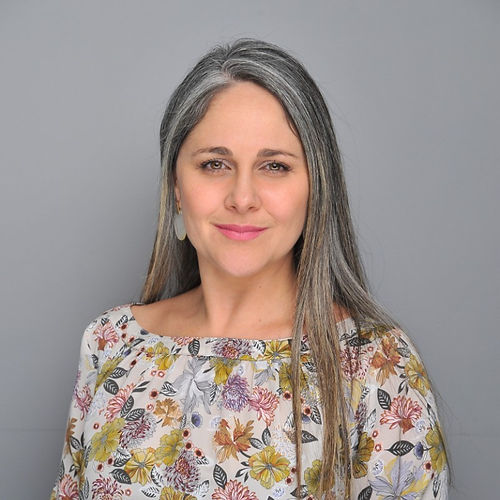



Do I Belong Here? How Adriana Rubio Turned Self-Doubt Into a Seat at the Table
Think about the last big meeting you sat in. Did you say the thing you were thinking, or did you wait to see whether somebody else said it first? My guest this week, Adriana Rubio, is a managing director at one of the largest professional services companies in the world, and the sticky floor that almost kept her quiet was three words long. Do I belong here?
Adriana leads strategy and growth globally for the fastest growing business group at her firm. She chairs the Philadelphia Young Professionals Network, sits on the board of the Greater Philadelphia Hispanic Chamber of Commerce, and is raising two little kids. Right now she is building connection across a group of just under 5,000 people and scaling it toward 10,000. And early in her career, she says the limits on her were not coming from the people around her. She was putting them on herself.
So what is a sense of belonging at work? It is the feeling that you were asked into the room on purpose and that what you say in it carries weight. EY's Belonging Barometer found that 41% of workers say the workplace is where they feel their greatest sense of belonging, second only to home, and that the biggest single contributor is somebody checking in on how you are actually doing. Adriana had the seat for years before she accepted it.
Her second sticky floor was motherhood. She was so focused on her career that she was afraid a baby would cost her the trajectory she had built, and she is clear that nobody ever said that to her face. Then she had two kids and her productivity went up, not down, because she got ruthless about what actually needed her. Meanwhile the structural math is real. The 2025 Women in the Workplace report from McKinsey and Lean In found that for every 100 men promoted to manager, only 93 women were, and that just 31% of entry level women have a sponsor compared with 45% of men. This is not a motivation problem for women. It is a support problem.
Adriana's advice comes down to three things. Keep learning. Get your hands on real experience and then be loud about what you are good at. Build the network before you need it, and be a mentor while you are still looking for one. And if there is no chair at the table, pull up your own folding chair and sit down anyway. Then say the thing, because as she puts it, there is no stupid question, and half the room is waiting for somebody brave enough to ask it.
TRANSCRIPT:
Erica: Hey, girl. By now, you know
Erica: I have Her Collective, my online community for ambitious women who are done doing it alone. Her Collective is for the women who are smart, capable, and driven, but they find themselves stuck on the sticky floors like self doubt, burnout, and waiting for permission that quite honestly never comes. Inside HER, you get more than motivation. You get real support, real strategies, and real momentum. We work on things like clarifying what you want now and what's coming next, building confidence without burning yourself out, navigating hard conversations, career moves, and leadership moments with clarity, and surrounding yourself with women who actually get it.
Erica: This isn't about hustling harder. It's about moving intentionally with the right tools and the right people in your corner. If you're ready to stop spinning, start choosing yourself, and build a career in life that actually feels aligned, I'd love to welcome you inside her collective. You can learn more and join us at www.joinhercollective.com. Because honestly, girl, you were never meant to do this alone.
Erica: Welcome to the podcast from now to next. I am your host, Erica Rooney. Thank you for joining. Today, I have with me Adrianna Rubio, who is the managing director at one of the largest professional services companies in the world. Now Adrianna leads strategy and growth globally for the fastest growing business group focused on customer experience management for enterprise level clients.
Erica: She combined several years of experience in the digital marketing industry, working with top leading technology innovators and agencies in the space. And before her current role, she held various leadership roles in alliances, business development, marketing, consulting, and sales. And Adrianna is doing all of the things because she also serves in her community as the chair of the Philadelphia young professionals network. And as a member of the board of directors of the greater Philadelphia Hispanic chamber of commerce and is a mom of two little kids. So that is a ton of stuff that you've got going on.
Erica: Adrianna, thank you for joining me today. How are you?
Adriana: Erica, doing great. How are you? Thank you for having me.
Erica: Yeah. So I am very excited to have you on the show. Adrianna and I actually used to work together back in the day, not too long ago. So it's always great to have her and reconnect with her, but she is here to talk about sticky floor moments so we can kind of jump right in. Adrianna, tell me a little bit about you, who you are, anything outside of that introduction
Adriana: that we just went over. Well, first of all, thank you for the opportunity as well as for even the thought and the action of getting a podcast together as a platform to talk about these sometime not so discussed topics. So this is such a wonderful opportunity, Erica. Thank you for doing that. And, yes, I think the intro said it all.
Adriana: What's going on with me, just in general, as you try to balance your all the different pillars, all the different things that you do in your life from my involvement with the community. I do what you said there, supporting the youth as well as young professionals in the Greater Philadelphia area, which is a big passion of mine. I'm on boarded on the board of director for the, for the Greater Philadelphia Hispanic Chamber of Commerce. Incredible opportunity there for Hispanic owned businesses in the Philadelphia area and all the different programs that we have. Also, in my day to day in my professional life, just completely different view and perspective serving big enterprise level companies, right, these these different challenges that enterprise companies have, whether it's from from management conversations to strategy consulting technology, and then, ultimately, my day to day as my personal life, right, being a wife and a mom of two.
Adriana: So just it's always fun. Every every stage of the day is just different and fun, whether early morning, starting with breakfast and getting people ready for school all the way to after hours, going back to working on community things. So it's, it's all good.
Erica: I love how you break it down into the stages of the day. Right? Cause it's almost like how many different hats do we wear in one day as a wife, mom, professional, and then you, especially with your philanthropic serving of the community, I think is awesome. So kind of getting to this place. Right?
Erica: And I've talked to you about the concept of sticky floors and glass ceilings and how it isn't necessarily a glass ceiling that holds us back, but our own sticky floors. What's what was your sticky floor?
Adriana: My sticky floor. I think, Erica, I think we all find sticky floors throughout our career, and it doesn't matter where you stand. I think even CEOs, multibillion dollar companies, CEOs, I get and we all have our own sticky floors, and there are, like, constant challenges that we need to find ways to get out of our sticky floors. For me, if I think about it, early in my career, my sticky floor was, like, myself, like, my own my own hesitations, my own doubts. Do I belong here?
Adriana: What happens if I say x y z? Right? So I think I put more limitations on myself than the people around me. And I think that was just the sense of belonging and really acknowledging that I had a seat at the table, and it was because I was asked to be there. There was people so value in what I had to say, but accepting that and allowing myself to open up and realize that, I think that was sometimes my sticky floor.
Adriana: Right? Yeah.
Erica: No. I think that's a really great one, and I think I've got a couple ideas just floating around in my head, but the first one is that is such a big thing that all businesses need to take away is that a lot of not just women, but people out there probably feel this sense of, do I belong here? Right? So really focusing on creating a sense of belonging. It's not just making sure you have a diverse work group or a talented team, but having a sense of belonging and creating that trust.
Erica: And I think, I mean, that's a whole nother discussion is how do you create a sense of belonging within the team, within the department, within the company. Right. So I think that's a huge thing too. And then another thing that I always think about is how many people, and, and I don't know the answer to this, but when they get offered a job right off the bat and they started a new company, how many of those people absolutely feel like I belong here off the jump? Or like, do all of us go through this with every new opportunity that we get and when we start?
Adriana: Yes. I think, I mean, personally, I, I, I can't speak for others, but for myself, I think we all it's, it's just a natural human instinct to belong. Right? So you try to find your place where you add value. How do you integrate with the teams?
Adriana: The people that you lead, how can you help them and serve them in the in the best possible way? So I think it does take time to adjust to the culture. How do I fit in the picture, but also what do I bring you? Right? Because you're being brought to a team to add value.
Adriana: So what is that value add that you're gonna bring on your day to day experience with your team? And don't go to farming. That's that's your job. Fine. But even go to basic human things, like, when we switch a neighborhood.
Adriana: Right? You're new to a neighborhood. Yeah. How do you get to know the neighbors? What how can you help in your community?
Adriana: How do you belong? Right? How do you become part of that community and help? So I think it's just a natural human instinct. And but, again, go taking it back to my professional life as my own sticky floor early in my career was that self doubt, that hesitation of should I say, should I share.
Adriana: You touched on something. You touched on gender diversity briefly there. And I think for female, it is especially female that are exceeding in their careers, and they have a seat at the table, say, for c level conversations or executive level conversations, etcetera. It's just so dominated by men. It's it's we still we still don't have, an equal fair representation.
Adriana: So knowing that you're there and that you have that platform to speak up and share, it also paved the path for others to come after you. I think that it's it's also, like, a responsibility of your own just by being there. How do you really speak up? And also, how do you pave the path for the next ones to come and open new doors for other female to be part of those conversations? So yeah.
Erica: No. And I think that's a big piece of it, right, is when you are the only female in the room or the only female at the table, you notice it. When you notice how the conversations shift and change, and you may or may not be accepted depending on people's true beliefs. Right? And these are, like, ingrained unconscious biases that they don't even really realize that they're necessarily having.
Erica: So if you get that seat at the table, even if you have to pull up your own folding chair to get to the table, because sometimes we have to do that. Yes. Pull up your folding chair, sit at the table, but make sure that you are voicing your opinion. And it may be the hardest for you, but it will get easier for all of the people behind you. Yes.
Erica: Speaking with Michelle Obama who said make sure that you're turning around and lifting up the person behind you. And, like, I firmly believe that's such a huge piece for all of the women in leadership is to realize how important just holding that role and being at the table really is.
Adriana: Yes. Yes. I agree. 100%.
Erica: So that's your early on sticky floor, which I completely I've that resonates with me when I really shifted into HR because I came from a very heavy fitness focused background, like which I was super comfortable in. And so when I shifted into HR, I was like, why would they ever think that someone who does fitness can do HR? Like, those are not related. And at the end of the day, the common core is helping people, but that was very hard for me at a young early age in my career to showcase. Going, looking through the evolution of your career, we've covered the do I belong here.
Erica: Once you've kind of felt like you conquered that a little bit, what other sticky floors did you feel like you encountered?
Erica: Hey there, listeners. If you have ever felt like you're stuck in a place, held back by self doubt, perfectionism, or that pesky inner critic, you're not alone. We all face those sticky floors that keep us from reaching the heights we dream of. But guess what? It's time to shatter those limiting beliefs and toxic behaviors to uncover infinite possibilities.
Erica: My book, Glassy Leads and Sticky Floors, is your ultimate guide to smashing through barriers, overcoming limiting beliefs, and stepping into your full potential. This book has been endorsed by none other than the great Mel Robbins, best selling author and motivational powerhouse. It's also been featured in Success Magazine, so you know it's packed with insights that work. Inside, you'll find real life sticky floor stories, practical strategies to help you navigate your own sticky floor moments, and a whole lot of inspiration to keep you climbing. This isn't just a book.
Erica: It's your roadmap to success, confidence, and freedom. Grab your copy of Glass Ceilings and Sticky Floors today at www.ericaandersonrooney.com. Whether you're in the boardroom, the classroom, or just starting out, this book is for you because no one, and I mean no one, deserves to stay stuck, no one deserves to feel small, and you have glass ceilings to shatter. Let's do this.
Adriana: What other sticky floors? What not comes to mind? And, again, I'm not I'm not necessarily putting it on other people or on the system or I think I'm the one who puts the sticky floors. One that I would highlight is one challenge for me to overcome was I was so focused on my career. Mhmm.
Adriana: For me, my professional development, my career was a huge priority. And, when I decided to start a family, it was it was challenging for me to decide when it was the right time for me to become a mother because becoming a mother was going to take away a lot of the time that I had to focus on my career. Right? So as that is prior to being a mother. Right?
Adriana: Now being a mother, it has so many benefits to your career. You your productivity goes it's it's skyrockets. Right? It's it's incredible. And you can do so many things, and it all works out.
Adriana: It's doable. But prior to being a mom, I had, I, I felt fear, like legitimate fear of what it meant to be a mother and not just a mother, the best mother. Right? What my kids needed, the attention they needed, the development they needed, everything that it took for me to make them incredible human beings. Right?
Adriana: And also keeping up with, fast paced career and not just stall, but continue to grow. Right? And that was a sticky floor for a moment of doubt, fear, hesitation. Ultimately, I made the decision. Yes.
Adriana: We're moving forward with this. It's it's it's part of what I wanna do as well. And everything worked out. Right? I learned how to manage and be by being present, I'm actually present.
Adriana: Yes. I travel. When I before COVID, yes. I was out three days, four days, sometimes a week. Fine.
Adriana: But when I'm present, I am 100% present for them. So it was just one of those other moments in my life, my career that it felt like a sticky floor, but I was able to get out of it. And Once you've got that in your own way, right, you're
Erica: like, this is just something that I know is important to me and I wanna do it. So I'm gonna do it. I would say what's interesting about that is that is such a huge debate, right, of like, can you be a successful leader, executive, professional, and be the best mom? Right? Because we all wanna be the best mom.
Erica: We all wanna do all the things. And I do think that we put so much pressure on ourselves to make sure we're baking the cookies to send to the school. And then our kid has the right costume for whatever event is going on at school. Or like for me, one of my kids has a field day that I need to go do with the middle of the day. So how do I make all this work?
Erica: Right. And I love that you said that once you actually got into it, there were so many benefits to being a mother and being a professional. Can you kind of elaborate on like what, what types of benefits you experienced?
Adriana: Yes. I think let me think about it. The one that I would point out first is productivity. Mhmm. Right?
Adriana: You think you think you can only do so much, and then you're tested to the limits, and you realize you can do so much more. Right? So it I thought by by having split attention or dedicate time to kids and their development, etcetera, that I was gonna be taking time away from my career or that I was gonna be taken that opportunities were gonna be taken away from me in a sense that I was not gonna continue to scale and grow in different positions or not positions necessarily, but ambitious, tricky challenges that I love solving for professionally. Right? And no.
Adriana: All of that was, was a lie that I had in my head. I don't know where it comes from. Not sure if it's media, if it's something that you just put in your own head, if it's perception. I truly don't know. I never had somebody tell me you are not gonna be successful professionally if you have kids.
Adriana: Like, that nobody has ever told me that to my face. So not sure where the belief comes from, but it was a it was a it was a fear. But I would point back to your question, productivity was probably one of the things that I realized that it's your productivity, skips, yeah, skyrockets.
Erica: I will tell you, like, that is just making me completely laugh out loud because when I don't have my kids, like, if my mom is watching them or something, I'm like, what am I supposed to be doing? Like, I feel like there's something I'm missing out on because I've gotten everything done and then there's just no kids around. So it makes me think back to like all of the time I had before kids, because they do take up a lot of time, but you're right. We've become very efficient. We've become very skilled at how we schedule things and how we get things done.
Erica: And maybe you outsource certain things. Maybe you lean on others for greater help, or maybe you just don't spend fifty hours on one thing. You condense it down into two. Because I too agree with that. Like I'm not doing less than, because I'm a mom, I've added to it.
Erica: The there's still twenty four hours of the day. So big slurred on sleep. I'm still getting eight hours of sleep at night. I'm still getting my workouts in most days of the week. All things that are very important to me, but it doesn't make it any less than it's just added to it.
Erica: But I completely see that because it makes me think that when people have kids and they go through the thought process, I'm not gonna be able to travel internationally for work, or I'm not gonna be able to do the late night meetings because I have kids. And those are all your choices. Maybe you don't.
Adriana: And you work it out. You become also more selective, of do I really need to be part of that call? Can my team handle the call? Do I trust my team enough that I know they are capable of doing and taking it on their own. Fantastic.
Adriana: I don't need to be part of it. There are some cases where you need to be part of it, and then, you know, that takes priority over dinner time. And you're not a bad mom because you skip one dinner time. Right? Doesn't make you a bad mom.
Adriana: Doesn't make me a bad mom to be away for an entire week for work if I'm consistent with calling them every day in the morning, at night, being on top even if there was a time difference, also being cognizant of that and knowing what bedtime is for my kids so that I can be present even if it's for a short two minute call, right, to say hi, to see how was talk about the day briefly, things of that nature. So I think you make it work. It's just finding the way to make it work.
Erica: Yeah. I read in a book a while back and it talked about like saying no to things. And it was that big of you're not saying when you say no to something, you're saying yes to something else. So if you say no to a meeting, it means yes to dinner with your family or no to kids soccer game. It means yes to a business trip.
Erica: And they talked about what you said is really be selective about where you're choosing your time and where what's important. Right? Really prioritizing.
Adriana: And I had examples. I didn't I it didn't come to me like, oh, yeah. I will do this because No. I had examples in my career of people that had greater responsibility than I had, and I saw them making these choices. And I saw them, like, vocalizing, verbalizing the fact that they were gonna skip the call because there was something like, there was a baseball practice they wanted to be part of.
Adriana: And it's okay. You don't need to say, oh, I can't be I'm double booked. I have another call. So I it's okay to accept that we're humans, that we have a life outside of work, and that specific moment is gonna take priority over a meeting that as a leader, your team can
Erica: Perfect. You need
Adriana: to be on it. Exactly. Right? So I had I had that example. I'm very grateful for that because it was a learned behavior for me to allow myself just to make those decisions.
Erica: Well, and I think what's really
Erica: key there is taking what you
Erica: just said about having those leaders vocalize, hey, I have to drop because I have to take my kid to the dentist or whatever the situation is, tying that back to creating a sense of belonging. Right? I have always said that in order for me to be a successful mom and professional, I need to be able to talk about those things. And, and my team should be able to talk about those things because that is a big part of who I am. And I refuse to work for companies that don't embrace that.
Erica: And, and luckily for me, I've never had to make that decision. I have had to coach people on those things, but the people who I've worked for have been very open about that. Even this morning was one of my CEO's kids' birthdays, and he was like, I have to go do cake now. Like, we've I've gotta drop. I have a I have a hard stop because I have to go do birthday cake.
Erica: Good. Not because I have another meeting or I'm double booked like you said, which is that tendency that people cling to of, like, I have to look productive at all times. I have to look like I'm invested in the business at all times. But being a parent gives you such a different perspective on a lot of things. I think it does help you prioritize a lot better within life and in your business.
Erica: So, yeah, I think it's really important to show that part of who you are and especially men too, because we do know that the majority of the workload falls to the mom. That's just how it still is. Right? There are plenty of dads out there who carry the load them themselves and hats off to them, but the mental workload of the mother and all of those things right now is very tough.
Adriana: Oh, so When you have
Erica: men in leadership positions who do things like that, it empowers the woman to say, okay, great. I have to stop and go do something because it's my kid's birthday. Yes.
Adriana: I get it.
Erica: Allowing them to bring their full self to work, allowing them to be more productive for you. Which by the way, the leader that
Adriana: I told you about that inspired me, it's a male. You know? He is he is a male. He had greater responsibility and it was like, it was okay to say it. So, and I will tell
Erica: you, there was one time in my life when I was starting for a new company and I was reporting to a male. It was the first man I'd ever reported to actually. And I remember being fearful because not only was I a mom, but I was also pregnant and I was like, how am I going to go into this new job with a man who doesn't understand what it's like to be a mom? But it worked out wonderfully because come to find out he was like one of like nine or 10 kids or something. So he was and had a couple of kids himself.
Erica: So he was very flexible with all those things, but, but the struggle can be real. And there are plenty of people out there that, that don't embrace that. So I think it's really important to shed the light on how positive it can be. And I just I love how you were like, there are so many benefits to being a work experience. I'll add my 2¢.
Erica: Like, I do think the productivity is a huge one. I think that's a huge superpower of the parent, but I think it's it really does help that sense of belonging that we were talking about.
Adriana: I agree. I don't know
Erica: what the percentages of people working parents and what that is out there, what it looks like in the ecosystem of different companies, but it's gotta be huge. So we have all that playing field. It's super important.
Adriana: And what I think the last two years have really taught the world that accepting family priorities are good. But it's like before before two years ago, I think people were, like, it was two worlds. Right? And in the over the last two years, we've all learned also how to how to coexist with both worlds at the same time. So it became more natural and normal for people to feel safe in sharing.
Adriana: I have to step out. I have to take care of something personal. Right? Things little things. So that's a that's a positive thing that I guess have left from the last two years of pandemic.
Adriana: Leveled the playing field.
Erica: It did. It did. No. Because for those those first few months when everything was truly locked down, schools were not open, kids were running in and out of people's meetings, and that was happening to everyone across the whole organization. Dogs barking.
Erica: So I do agree with you. I think that was a really positive thing is that it really leveled the
Erica: playing field for all people, and it forced people
Erica: to be more vulnerable about their situation.
Adriana: Yeah. I remember one of the first calls during pandemic that I had. My kid had a tantrum. He needed something. I was so tense and it was an important call.
Adriana: And, I was so tense. I muted myself. I took care of him, but not in the best way, not in the, like, care it was it was like a good parenting, teaching opportunity, and I took it in a different direction. But then thinking in retrospective, when I went back off mute and back to the meeting, I remember the guy that I was having the meeting with, he said, it's it's completely fine if you have to go and take care of your kid. And I'm like, no.
Adriana: It's okay. It's we can continue. And I finished the call. In that moment, I'm like, what did I just do? Like, it is okay.
Adriana: It is okay to pause for a minute or call back or if it's something that really needs your attention in the moment. I was able to take care of it in the best possible moment, not that it was a, like, an emergency or somebody was dying. It was just a little tantrum. But I would have, approached that situation in a different perspective, like a parenting teaching moment for my son if I wouldn't have been so tense because of the situation. But it was a learning moment for me to then pivot and in future tense moments like that, I would accept and allow myself to say, it is okay.
Adriana: We're all going through these. There is that level of empathy because I'm not alone. Everybody's going through the same challenge. Yeah. So it was it I remember that day
Erica: very soon. That's a perfect learning moment, and I think probably everybody here has
Adriana: several responses. Yes. Yes.
Erica: And maybe even continue to happen. Her.
Adriana: Mhmm.
Erica: I always love it when I'm on the Zoom calls with people and I see them, like, trying to motion their child away Yes. Yes. Yes. Out of the street. I feel like, oh, you're right.
Erica: I mean, we're all there and we're all doing the best we can. Yes. Well, cool. Well, thank you for sharing that. I think that's awesome.
Erica: And kudos to whoever that was that you were on the call with that was like, take your take your moment. It's fine.
Adriana: Yes. Yes. Yes. Well, yep.
Erica: I think that's a big thing that anyone who's listening can kinda take away is if when you were on the other end of that screen to encourage that, like vocalize it.
Adriana: It's empathy because we've all been there. So it's like the same when you were in a plane and you have the crying kid in the plane and the mom everybody has the eyes on the mom. The mom's doing everything she can to stop the kid from crying. Right? And you get the angry person or the person saying something.
Adriana: It's just as basic as empathy. Yeah. Right? And it really helps. That really helped me calm down and, and just, like, yeah, learn in the moment, the spot, like, okay.
Adriana: It is okay. Yeah.
Erica: I love that. So cool. So awesome, Ari. We talked about belonging. We talked about being a working mom and how that has impacted you over the years and how that was your sticky floors making the leap into motherhood.
Erica: What would what advice would you give to somebody who is facing one or either of those challenges that we talked about?
Adriana: I go back to something that I've learned in my career, and I really stick back to those elements. It boils down to mainly three. There are a lot more, but I would say mainly three, which is learning, right, continuous learning, staying curious, and just being open to learning at all times. It allows you to be more confident, right, and to open up to new topics and new ways to adding value to conversations. So that's always, like, a constant for me.
Adriana: The second piece would be experience. Right? When you put hands on the learning, right, when you when you actually practice and you craft a skill and you become good at it, be proud of it. Showcase it. Right?
Adriana: It's it's it's okay to if you're really, really good at x y z, raise your hand. There's people out there that would love to hear, that would love to learn from you. So the experience, having hands on experience, crafting your skill is super important. Then the third piece that I think it has been one of the most important ones, and it's part of my community work. It's part of my day to day belief.
Adriana: It's continue to grow and refine the network. Find the people that it's okay to not necessarily establish incredible relationships with everybody. It's okay. Like, that you don't click with everybody, but find your people, your people everywhere, your people at work, your people in your community, you have even making your social life. It's very important.
Adriana: And looking at it through the because we're talking professionally through the professional lens, your network is extremely powerful. And it's finding those advocates, finding those mentors, allowing yourself to also mentor other people. Right? It's it's very powerful, the network.
Erica: I am a huge believer in networking. In fact, I somebody actually just asked me earlier today, like, how do I, how do I do my networking? And I was like, I will talk to anyone, anywhere, anytime. Just give me the opportunity. Are you talking about the seven degrees of Kevin Bacon or whatever it is?
Erica: But somebody knows somebody who knows somebody. Oh, yeah. Your tribe and your people. And one of the biggest things, and it's a sticky floor that I deal with sometimes is just not being afraid to reach out. For example, you're like, Adrianna, who do you think could help me?
Erica: It people are so and myself, so they don't wanna just do that. For what reason? I couldn't tell you. Right. Or else I'd be doing it every day, but there's that hesitation almost of people to be like, well, I don't want to ask them.
Erica: I don't want to, you know, encroach and it's like, most people love it and they want to help you and they want to reach out, and they and they wanna connect too because that is the basics of all, like, human beings being around is connection.
Adriana: And it's at both ways. As I said, it's also looking for the network of just your general network, but looking for mentors. Right? Those people you look up to, those people that can guide you, that can solve for some, that can connect you, that and then also mentees. Right?
Adriana: Allowing yourself to be a mentor for others because those that are hesitant to reach out to you that there that you might be also at a level where you wanna reach out to others above of you. It's the same it's looking up to who is the network out there that I that I admire, that I wanna connect with, and that I could see as potential mentors? And then the same, how do I give back to others in my network also that well, to help?
Erica: Yeah. That's such a powerful one. I love that. I'm so glad that you included that. So cool.
Erica: Well, awesome. Those are all really good things. What is next? What's your biggest challenge on the horizon right now?
Adriana: Wow.
Erica: And you may not know. I don't know. Sometimes I never know what that is.
Adriana: My challenge in the horizon is still my current challenge, and it's really settling and taking my current role because it's still somehow new. It's under a year. Just making sure that I'm adding the greatest value that I can possibly add to the team. It's such a large organization that every day, I'm still learning. It's under a year, right, that I've been here, but still learning, connecting.
Adriana: And because it's because of its nature of such large organization, it's very easy to duplicate, triple efforts. So one of my biggest challenges for me professionally at an organization of this size is making sure that I can add value, but also connect all the siloed dots that I see happening that are duplicating efforts and mostly bringing it together. And a lot of what I'm talking about right now, internally on my day to day, It's about creating community and a sense of belonging. So it connects full circle back to how we started this conversation. Way.
Adriana: Right? And but we're talking the circle connection of 3,500, six a little under 5,000 people and how to grow it really scale it to about 10,000 people. So it's just it's very, very fun. Very it's it's my current challenge, but I see that still as, my near term two to three
Erica: year Oh, boy. Yeah. Yes. Yeah. That's that's gonna be a process for sure.
Erica: Well, cool. Yes. You have to keep me posted on how that goes.
Adriana: I will, for sure.
Erica: So knowing what now is managing partner doing all this wonderful stuff that you just talked about. If you were looking back at the Adriana who was having this sticky floor of belonging where you are, right? What advice would you tell yourself from back then? If you could look back and say, Adrianna, here's what you need to know. What would that be?
Adriana: Well, something that have has helped me and I continue to be mindful of it is no numbers, I guess. Know your numbers. Yep. When and looking at it through the lens of your career development, it's when you're coming into a meeting, when you are connecting with your people lead, when you are talking to your team, say you lead people, know where people stand. No metrics.
Adriana: No numbers. Like, where do we stand? How do we measure success? How do we drive together towards a joint unified goal? Like, that is very important, and data speaks volumes.
Adriana: When you're just when you're just talking but don't necessarily reference data, it's it's not necessarily credible. So I think knowing your numbers from where you're at and where you wanna be and but not just the number itself, but how do the greater joint effort can help us drive towards a unified goal. I think that's something that I say a lot. And then another thing is ask questions. I say it over and over again.
Adriana: There is no stupid question. As long as it's a genuine question, there is stupid people that don't ask questions. Okay? And I stand by that. There's no stupid question.
Adriana: There's stupid people that don't ask questions. And I guarantee you, when you ask a question, you're solving for a for a question that half of the room had, but half of the room didn't didn't venture into raising the hand or speaking up and asking the question. You're clarifying something, I guarantee you, for half of the room. And I remember this even from my college days because I asked a lot of questions every class. Sometimes people didn't like it much, but whatever.
Adriana: It helped me a lot. I got to a point where people were coming behind me saying, hey. Can you ask this? It's like, oh my god. The room has questions, but they don't wanna be the dumb one Right.
Adriana: To ask the a question because it might be a dumb question. No. There is no stupid question. There are stupid people that don't ask questions. Yeah.
Adriana: So as long as it's genuine, as long as you're not trying to trick the person you're with, with
Erica: Yeah. That's what meant you know, this question. Teach our kids all the way up to our top level executives. Yes. Yes.
Erica: And then what would you tell the woman who has that growth mindset? Like you who's focused on the career, but also wants to be a mom, but might be hesitant to take the leap because they're worried about how that could impact their career. What advice would you give them?
Adriana: I would say it's okay to feel that way. It's okay to be, have that fear. So one is accepting and validating the feeling. It's okay. But it's not okay to just stay and hang on to that feeling.
Adriana: Right? That is not okay. So looking for the right support, right, whether it's your partner, whoever that is, your broader family, your broader community, surrounding yourself by, like, the people that are gonna allow you and support you in continuing to grow in your career. That is very important. Taking action, really.
Adriana: As I said, the validating the feeling is important and it's very it's healthy, but you cannot just cling onto it. You need to take action to overcome that fear or overcome that feeling. So surround yourself with the right people that will allow you to succeed as a mother as well as a professional. Love it. Love it.
Adriana: Yeah.
Erica: Well, thank you. So where can people
Erica: find you if they wanna connect with you? LinkedIn or where's the best place to get you?
Adriana: Yes. LinkedIn. For sure. That is the easiest, fastest way. LinkedIn as Adriana Rubio.
Adriana: And if you are local to the Philadelphia Greater Philadelphia area, you will also find me at any event related to the Greater Philadelphia Hispanic Chamber of Commerce and the Young Professionals Network. So that's that's also places where you can find me.
Erica: Oh, I think that's awesome. And I hope a lot of people in the Philadelphia area reach out and join you and help support you in the community with that as well.
Erica: Thank you. Thank you. But thank you for your time today.
Erica: Thank you for talking with me. I love all of the things that we talked about. I think they're really impactful. I know that we have a lot of moms who listen in on the podcast who are working moms or even stay at home moms who are trying to figure out how to get back into the professional world. And I think kind of just hearing other women talk about motherhood and being a professional mom and being a successful mom and a successful professional is really important to share.
Erica: So I appreciate it.
Adriana: Thank you. Thank you. Thank you so much, Erica, for inviting me, for making me part of your show. And I hope you have I'm looking forward to episodes because I'm sign me up. I'm gonna be there.
Adriana: I'm gonna be listening to these conversations. There is so much to learn. So thank you again for building this platform for to have these these types of conversations that will help others.
Erica: Awesome. Well, thank you.
RESOURCES MENTIONED IN THIS EPISODE:
- Ready to stop doing it alone and get into rooms of power? Join HER Collective, Erica's community for ambitious women in corporate America.
- Get Erica's book Glass Ceilings and Sticky Floors and start clearing your own.
- Never miss an episode of Glass Ceilings & Sticky Floors.
- Adriana Rubio on LinkedIn.
- The Greater Philadelphia Hispanic Chamber of Commerce.
RELATED EPISODES:
FREQUENTLY ASKED QUESTIONS:
What is a sticky floor at work?
A sticky floor is the internal thing keeping you stuck, not the external barrier above you. It shows up as self doubt, perfectionism, or the quiet belief that you have not earned the room you are already sitting in. Adriana Rubio's sticky floor was the question do I belong here, and it followed her into leadership roles she was more than qualified for.
How do you build a sense of belonging at work?
Belonging gets built in small repeated moments, not in a policy. EY's Belonging Barometer found that checking in on how someone is actually doing is the single biggest contributor to belonging at work. Adriana's version is naming the value you bring to a team out loud, and leaders talking openly about their own lives so everyone else gets permission to.
Does having kids hurt your career?
Adriana was afraid it would, and she found the opposite. Her productivity went up after becoming a mom because she got sharper about prioritizing, delegating, and trusting her team. The real barrier is structural rather than personal. McKinsey and Lean In found only 31% of entry level women have a sponsor, compared with 45% of men at the same level.
MORE FROM ME
Follow me on Instagram @ericaandersonrooney and @joinhercollective
SUBSCRIBE & REVIEW
If you loved this episode, please take a moment to subscribe and leave a review on Apple Podcasts. Your support helps us reach more women who need these insights. Thank you for tuning in to the Glass Ceilings and Sticky Floor podcast. See you next week!
Hi, I'm Erica!
In the last 15 years, I climbed to Chief People Officer, 6x'd my income, walked away from a culture that stopped matching my values, wrote two books, and built HER Collective to help thousands of women rise to power and lead in the age of AI. I've learned a thing or two about smashing ceilings and closing gaps, and Glass Ceilings & Sticky Floors is where I open the playbook, the receipts, and the real stories to share it all with you.
_JPG.jpg)